

15 Easy Crops You Can Grow in Buckets Year-Round
Estimated reading time: 7 minutes
Disclosure: This article contains affiliate links. If you purchase through these links, I may earn a commission at no extra cost to you. I only recommend products I genuinely believe will help your gardening journey.
The Ultimate Guide to Bucket Gardening
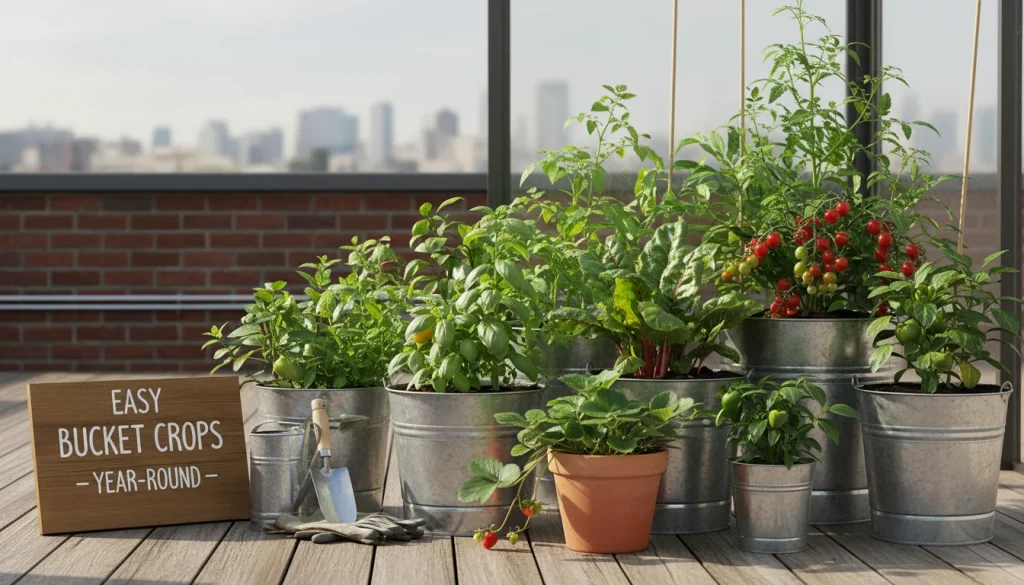
You do not need a sprawling backyard or acres of land to grow your own food. In fact, you do not even need a garden bed. The solution to fresh produce lies in a humble, plastic vessel you likely already own. I have found that utilizing five gallon containers is the most efficient way to cultivate a thriving garden in small spaces, such as balconies, patios, or even sunny driveways.
This method allows you to control the soil quality entirely and move your plants to follow the sun or avoid the frost. Whether you are an urban dweller or simply want to maximize your patio space, these crops you can grow in buckets year-round offer high yields with minimal maintenance. By drilling a few drainage holes and selecting the right potting mix, you turn a plastic pail into a food production machine.
What can you grow in buckets?
Almost any vegetable will thrive in a container if it has enough depth for the roots and adequate drainage. However, some plants adapt much better to this environment than others. Through my experience and research into the best crops you can grow in buckets year-round, I have identified these 15 winners that consistently perform well in confined soil.
1. Tomatoes
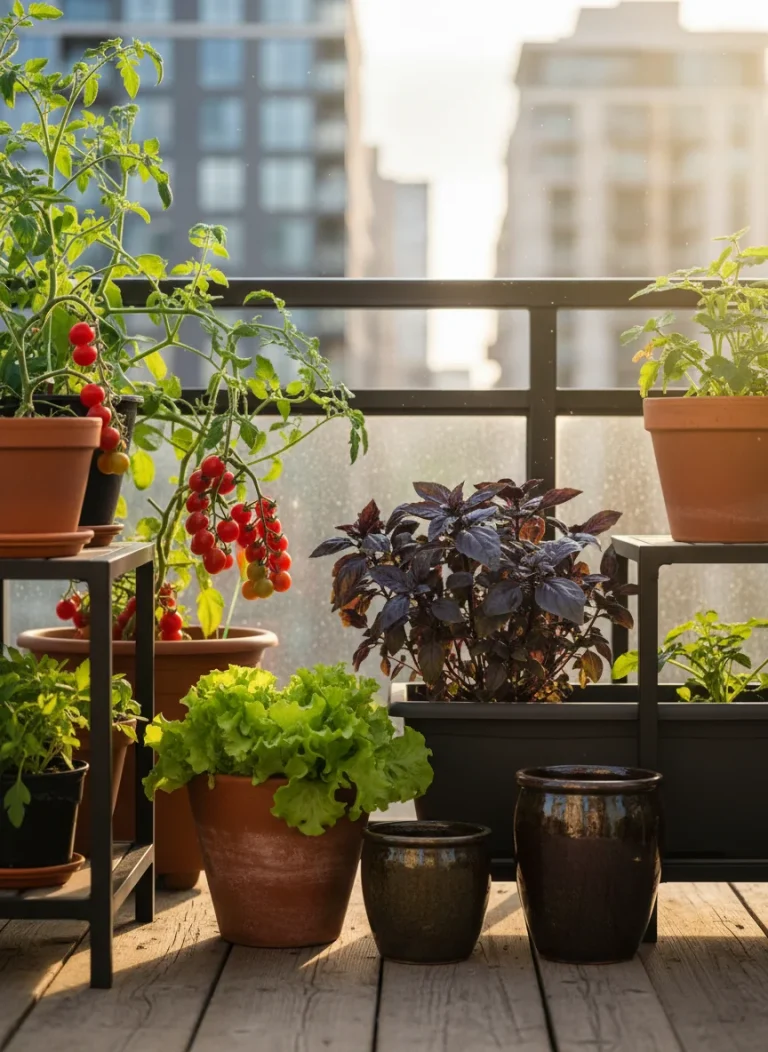
Tomatoes are the kings of container gardening. I recommend choosing determinate or “bush” varieties, as they grow to a compact height and do not require massive trellises. A single cherry tomato plant in a bucket can provide hundreds of fruits.
2. Peppers
Both sweet bell peppers and hot chili varieties love the heat retained by plastic buckets. They have relatively compact root systems, making them perfect candidates for a five gallon home.
3. Lettuce
Leafy greens have shallow roots, meaning you can actually grow multiple heads of lettuce in a single bucket. This is a staple crop that prefers cooler weather but can be moved into the shade during summer heat.
4. Kale
Kale is incredibly hardy and can survive frost, making it a true year round option in many climates. It produces a continuous harvest; you simply pick the outer leaves and let the center continue to grow.
5. Spinach
Similar to lettuce, spinach grows quickly and does not require deep soil. It is packed with iron and grows best in the cooler months of spring and autumn.
6. Radishes
If you lack patience, plant radishes. They have very shallow roots and mature incredibly fast. You can grow a large bunch of them in a single bucket without overcrowding the container.
7. Carrots
Standard carrots need deep soil to grow straight, which makes a tall bucket the ideal environment. Choose loose, sandy soil to ensure your carrots do not become stunted or misshapen.
8. Herbs
Basil, cilantro, parsley, and mint are excellent choices. You can often fit two or three different types of herbs in one container to create a portable kitchen garden.
9. Bush Beans
Look for “bush” varieties rather than “pole” beans. Bush beans grow in a compact mound and produce a heavy yield without needing a tall support structure.
10. Peas
Sugar snap peas or snow peas are delightful in containers. While they might need a small stick or cage for support, their root systems are perfectly happy in a bucket.
11. Strawberries
Strawberries are perennials, meaning they come back every year. They thrive in containers because the elevation keeps the fruit away from ground pests like slugs.
12. Onions
Green onions or scallions are incredibly space efficient. You can bunch them together tightly. For bulb onions, you will fit fewer in a bucket, but they will still grow successfully.
13. Garlic
Garlic is a “set it and forget it” crop. You plant cloves in the fall and harvest them the following summer. They require very little attention during the winter months.
14. Potatoes
Growing potatoes in buckets is fun because harvesting feels like digging for gold. You simply tip the bucket over when the vines die back. This eliminates the risk of accidentally slicing potatoes with a shovel.
15. Cucumbers
Select bush varieties of cucumbers for the best results. These plants love water, and since buckets can dry out, you must ensure you keep the soil consistently moist for crisp fruit.
Quick Crop Reference Table
| Crop | Bucket Size | Days to Harvest | Sunlight | Difficulty |
| Lettuce | 3 gal | 30–50 days | Partial shade | Very easy |
| Herbs (Basil) | 3 gal | 30 days | Full sun | Very easy |
| Spinach | 3 gal | 30–45 days | Partial shade | Very easy |
| Tomatoes | 5–10 gal | 60–80 days | Full sun | Easy |
| Kale | 3 gal | 50–60 days | Partial shade | Easy |
| Radishes | 1 gal | 25–35 days | Partial sun | Easy |
| Carrots | 5 gal | 60–80 days | Full sun | Easy |
| Bush Beans | 5 gal | 50–60 days | Full sun | Easy |
| Peas | 3 gal | 60–75 days | Partial sun | Easy |
| Strawberries | 3 gal | 60–90 days | Full sun | Easy |
| Garlic | 3 gal | 90–120 days | Full sun | Easy |
| Potatoes | 5–10 gal | 70–100 days | Full sun | Easy |
| Cucumbers | 5 gal | 50–70 days | Full sun | Easy |
| Peppers | 3–5 gal | 70–90 days | Full sun | Medium |
| Onions (Bulb) | 3 gal | 90–120 days | Full sun | Medium |
table credit: greensandgratitude
What is the easiest crop to grow?
Without a doubt, lettuce is the easiest crop for a beginner to cultivate in a bucket. It demands very little from the gardener. Unlike tomatoes or peppers, which require pollination to produce fruit, lettuce is grown strictly for its leaves.
This means you do not need to worry about bees or flowers. Furthermore, lettuce tolerates partial shade, so you do not need a perfectly sunny spot. It utilizes a “cut and come again” harvest method. You can trim the leaves you need for a salad, and the plant will regrow new leaves from the center, providing food for weeks on end.
If you’re excited about growing lettuce and other easy vegetables but want a complete roadmap for your entire growing season, I’ve found The 5-Minute Garden system incredibly helpful. It includes a detailed guide specifically for container gardening (perfect for bucket growing) plus a quick-reference chart that takes all the guesswork out of timing your plantings. For beginners, having that step-by-step framework makes the difference between hoping things work out and knowing exactly what to do next.
Which crop takes the shortest time to grow?
Radishes are the undisputed champions of speed. Some varieties, such as the Cherry Belle, can go from seed to harvest in as little as 25 days.
This rapid turnover makes them incredibly satisfying for new gardeners who want to see immediate results. Because they mature so quickly, you can plant a new batch of seeds every two weeks. This technique, known as succession planting, ensures you have a constant supply of fresh radishes throughout the spring and fall.
What is the most profitable small farm crop?
If you are looking to monetize your bucket garden, fresh herbs and microgreens offer the highest value per square foot.
Crops like basil, cilantro, and specialty mints are in high demand by local restaurants and farmers markets. They grow quickly, take up very little space, and sell at a premium price compared to standard vegetables like carrots or potatoes. Because you can harvest herbs repeatedly from the same plant, a single bucket of basil can generate significant yield over a season, making it a highly profitable choice for small scale growers.
Key Takeaways
- Drainage is Vital: You must drill holes in the bottom of your buckets to prevent root rot.
- Portability: Buckets allow you to chase the sun or hide from the frost, extending your growing season.
- Soil Quality: Never use garden soil in buckets; use a potting mix that stays fluffy and drains well.
- Watering: Containers dry out faster than the ground, so check the moisture levels daily during summer.
Frequently Asked Questions
Do I need to fertilize bucket crops?
Yes. Potting mix runs out of nutrients after a few weeks. You should add a slow release fertilizer or use liquid plant food every two weeks to keep yields high.
Can I reuse the soil next year?
You can, but you must refresh it. Old soil often contains pests or depleted nutrients. Mix in fresh compost and new potting soil before planting a new season of crops.
How much money can I realistically save with bucket gardening?
Many container gardeners report saving $150-300 per month on organic produce, especially when growing high-value items like herbs, lettuce, and tomatoes. The initial investment in buckets and soil pays for itself within the first few harvests.
Taking Your Bucket Garden to the Next Level
The beauty of bucket gardening is that you can start small with just 2-3 containers and gradually expand as you gain confidence. Most people who try it find themselves hooked after their first harvest of sun-warmed tomatoes or freshly picked basil.
If you’re ready to move beyond experimenting and want to create a systematic approach that produces food year-round, consider investing in a comprehensive guide. The 5-Minute Garden is currently available at a significant discount and includes everything from container setups and planting schedules to pest management and succession planting strategies. The Container Garden Mastery bonus alone is worth checking out if you’re working with limited space—it shows you exactly how to maximize production from buckets, window boxes, and small patios.
The goal isn’t perfection; it’s progress. Every bucket you plant brings you one step closer to fresh, organic food that you grew with your own hands. Start with one or two easy crops, learn as you go, and enjoy the journey.

One Comment