5 Clever Spots You Have Probably Never Thought to Put a Plant
Unlock the Hidden Potential of Your Home
We all reach a point in our gardening journey where we feel stuck. You have filled every windowsill. Your coffee table is at maximum capacity. You might even have a large Monstera taking up the corner of your bedroom. You look around and think you are simply out of room. Here is the reality of indoor gardening. You likely have twice as much space as you think you do. You are just looking at the wrong surfaces.
Most of us view our homes horizontally. We look for flat surfaces like tables, desks, and floors. However, professional designers and expert gardeners look at a room vertically. They look for dead space that feels empty or cold. These are the spots that transform a house into a lush, living sanctuary. We need to look at your home with fresh eyes. We need to find those forgotten corners and high ledges that are begging for a touch of life.
This guide will walk you through five specific areas you have likely ignored. We will discuss why these spots work. We will also cover exactly which plants thrive there. Let’s be honest. Putting a plant in a difficult spot is useless if you cannot keep it alive. We will solve that problem too.
1. The Kitchen Canopy: Above the Cabinets
Walk into your kitchen and look up. Unless you have custom cabinetry that goes all the way to the ceiling, you likely have a gap. This is the space between the top of your upper cabinets and the ceiling itself. Usually, this area collects dust and old grease. It is a wasted opportunity.
This space is perfect for trailing plants. When you place greenery here, it draws the eye upward. This makes your ceilings feel higher. It also softens the hard, boxy lines of kitchen cupboards. It adds an organic texture to a room that is usually full of metal and stone.
The Technical Strategy
You cannot just throw any flower up there. Heat rises. The air near your ceiling is warmer and often drier than the air at floor level. You need tough plants. You also need plants that do not require frequent watering, as getting a step stool out every two days is annoying.
Boring, but essential. You must check your lighting. If your cabinets are dark, you need low-light-tolerant plants. If there is a skylight or a nearby window, you have more options.
Best Plants for This Spot
- Golden Pothos: This is the champion of high places. It tolerates low light and irregular watering. Its vines will cascade down beautifully.
- Heartleaf Philodendron: Similar to the Pothos but with a more matte finish. It is incredibly resilient.
- ZZ Plant: If you have enough vertical clearance, a ZZ plant looks structural and architectural. It also thrives on neglect.
2. The Magnetic Garden: On the Fridge
The refrigerator is often the largest object in a kitchen. It is a massive, cold, metal box. We usually cover it with magnets, photos, or calendars to distract from its bulk. This is often overlooked, but the side or front of your fridge is a prime vertical gardening surface.
You do not need to drill holes. You do not need to install shelves. You can utilize magnetic planters. These are small pots with heavy-duty magnets attached to the back. They stick directly to the appliance. This turns a boring appliance into a living wall.
Why This Works
This technique brings greenery to eye level without using counter space. Kitchen counters are valuable real estate. You need that space for chopping and cooking. Moving your decor to the vertical surface of the fridge keeps your workspace clear.
Plant Selection and Safety
Since these pots are usually small, you need plants with small root systems. You also need plants that do not mind the occasional vibration from the fridge motor opening and closing.
- Air Plants (Tillandsia): These are perfect because they do not need soil. They are lightweight, so the magnets will hold them easily.
- Small Succulents: If your kitchen gets bright light, small succulents work well. Just be careful not to overwater them, as they can rot in small containers.
- Lucky Bamboo: Small stalks of bamboo in water tubes can work if the magnets are strong enough.
3. The Living Room Dead Zones: Behind the Sofa
Pull your sofa away from the wall for a moment. Or look at the corner where your sectional meets the wall. There is often a strange triangle of empty space there. It is too small for a table. It is too dark for a reading chair. It is a dead zone.
This is the perfect location for a “surprise” plant. You can tuck a large pot in that back corner. The goal is to have the foliage spill over the top of the cushions. It creates a cozy, nestled feeling. It makes the sofa feel like it is part of a garden rather than just furniture in a box.
The Hidden Ledge Strategy
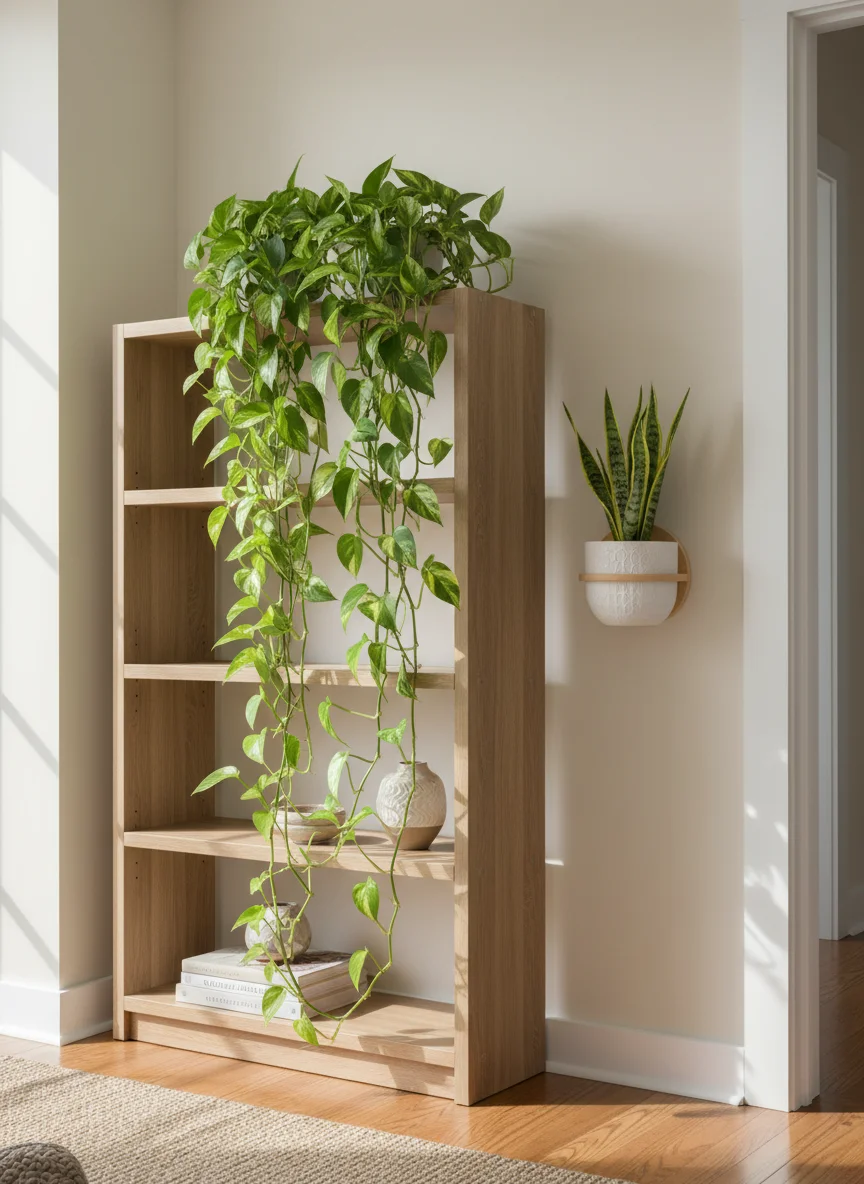
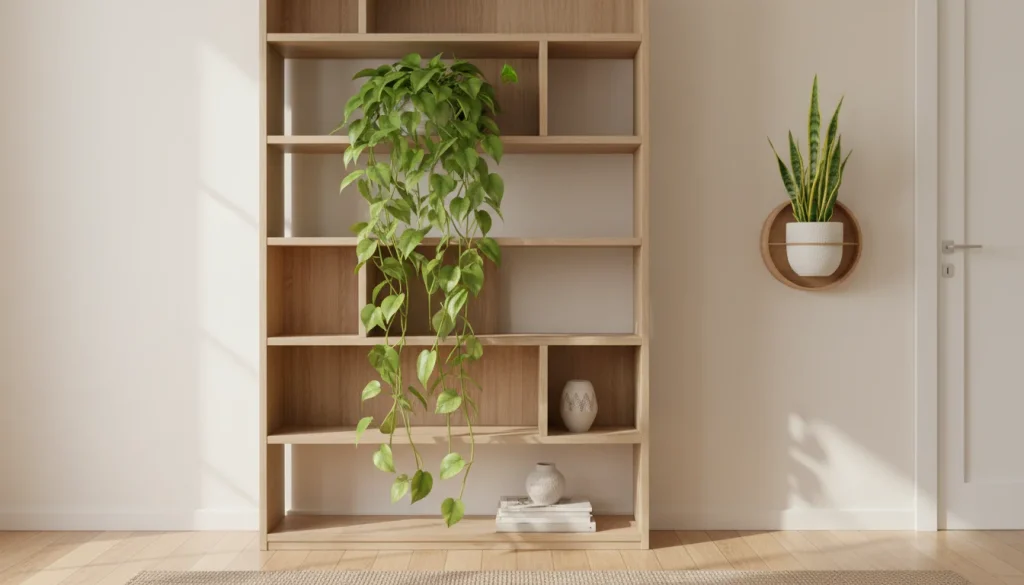
Beyond the sofa, look at your bookshelves. Most people place plants on the shelf. Try placing a plant on the very top, hidden back edge of a bookshelf. Position a trailing plant so the pot is invisible from the ground. The vines will appear to be growing out of the furniture itself. This creates a lush, overgrown library aesthetic that is very popular in high-end design.
Best Plants for Behind the Sofa
- Snake Plant (Sansevieria): These grow straight up. They do not spread wide, so they fit in tight corners behind furniture. They also tolerate the shadows cast by the couch.
- Cast Iron Plant: As the name suggests, these are nearly impossible to kill. They love the dark corners behind furniture.
- Peace Lily: If you want lush, dark green leaves peaking over your shoulder while you watch TV, this is a great choice. Just remember, they droop when thirsty.
4. The Bathroom Sanctuary: Towel Racks and Tub Ledges
The bathroom is arguably the best environment for many tropical plants. The humidity from your shower creates a greenhouse effect. Yet, many people avoid putting plants here because they lack floor space. We need to stop thinking about the floor. Look at the fixtures.
If you have a towel rack, the top shelf is often used for extra towels that gather dust. Swap those towels for a fern. The soft texture of the plant contrasts beautifully with the hard chrome or brass of the rack. If you have a bathtub, the corners or the ledge against the wall are prime real estate. This creates a spa-like atmosphere immediately.
The Humidity Factor
You must choose plants that love moisture. A cactus will rot in a bathroom. Period. You want plants that naturally grow in rainforests. They will absorb the ambient moisture and thrive with very little effort from you.
Top Bathroom Picks
- Boston Fern: This is the classic bathroom plant. It loves the steam. It looks incredible perched on a towel rack.
- Spider Plant: These are great for tub ledges. They reproduce quickly and fill the space with arching leaves.
- Orchids: If you have a window in your bathroom, an orchid will love the humidity. It adds a touch of luxury.
5. Thresholds and Passageways: Beside Door Frames
Walk through your hallway. Look at the space immediately to the left and right of your door frames. There is usually a strip of wall about six to twelve inches wide. We walk past this space dozens of times a day. We rarely use it.
You can install slim, wall-mounted planters in these narrow strips. Alternatively, you can install a simple hook and hang a macramé planter. This frames the doorway. It acts as a portal. Walking from one room to another becomes a transition through nature.
The Bedside Gap
A similar principle applies to the bedroom. Look at the space between your nightstand and the wall. Or the space between the nightstand and the bed frame. It is often a gap of just a few inches. A tall, slender plant stand can fit here. It brings fresh oxygen to the area where you sleep.
Plants for Narrow Spaces
- String of Hearts: Delicate and thin. It hangs beautifully next to a door frame without blocking the path.
- English Ivy: This can be trained to climb up or around a door frame for a fairytale cottage look.
- Dracaena Marginata: For the bedside gap, this plant grows on a thin, woody stem with a burst of leaves at the top. It has a very small footprint.
Essential Care Tips for Hard-to-Reach Plants
Placing plants in clever, high, or hidden spots looks amazing. However, it introduces a logistical challenge. How do you water a plant that is on top of a kitchen cabinet? How do you check the soil moisture behind a sofa?
If you make it hard to care for the plant, the plant will die. You need a system.
1. The Step Stool Rule: Keep a lightweight step stool nearby. If you have to drag a heavy ladder from the garage to water your pothos, you will stop doing it.
2. Long-Spout Watering Cans: Invest in a watering can with a long, thin neck. This allows you to reach up and into pots without spilling water down the side of your bookshelves.
3. The Ice Cube Trick: For hanging baskets that are very high up, some gardeners place a few ice cubes on the soil surface. As they melt, they water the plant slowly. This prevents water from rushing through the pot and dripping on your floor. Use this sparingly, as tropical plants prefer tepid water, but it works in a pinch.
4. Dust Management: Plants in high places gather more dust. Dust blocks sunlight. Every few months, you must bring the plants down and wipe the leaves. This is non-negotiable for plant health.
By utilizing these five overlooked areas, you can dramatically increase the amount of greenery in your home. You do not need a bigger house. You just need to be smarter with the space you have.
Read More
How to Grow Blueberries in Containers (A Beginner Guide)
11 Indoor Herbs That Actually Survive and Taste Amazing
The Ultimate Guide to Growing Broccoli in Containers for Small Spaces