Do Container Vegetables Need Special Fertilizer?
Disclosure: This article contains affiliate links. As an Amazon Associate, I earn from qualifying purchases at no extra cost to you. I only recommend products I would use myself.
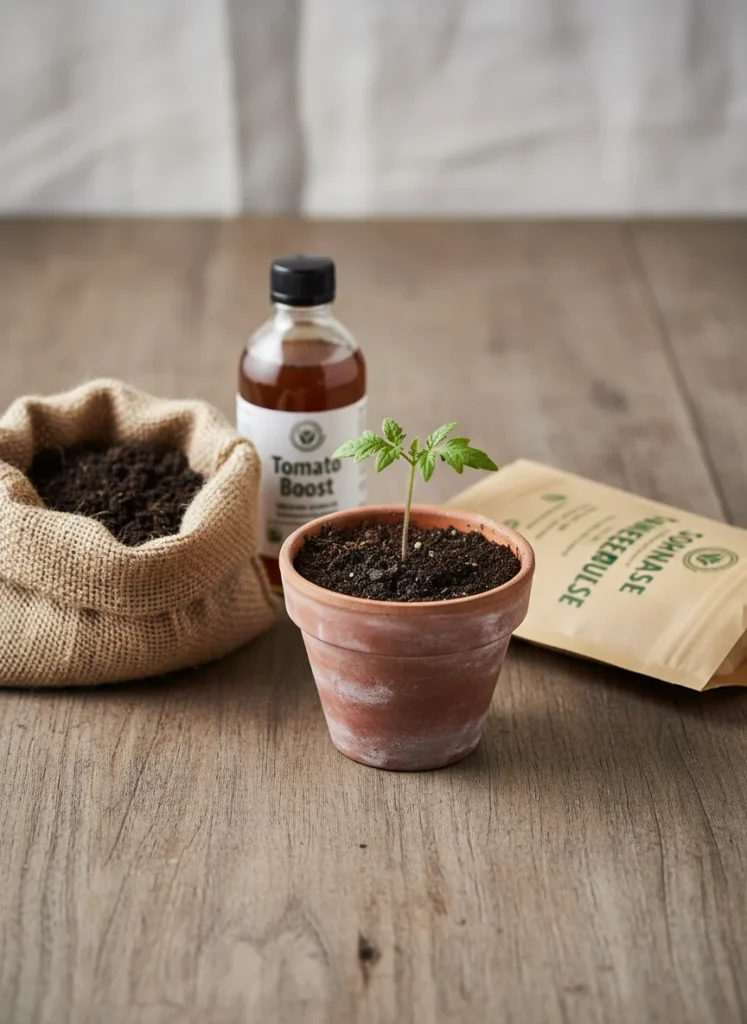
Yes, and the reason is straightforward. Every time you water a container, nutrients dissolve and drain out through the holes at the bottom. In a garden bed, plant roots travel outward and downward to find fresh nutrients. In a container, there is nowhere to go. Whatever the pot started with is all the plant has access to, and that supply depletes faster than most beginners expect.
Most quality potting mixes contain enough nutrients to support a young plant for around four to six weeks. After that, without additional feeding, growth slows, leaves pale, flowers drop, and fruit production stalls. Fertilizing container vegetables is not optional. It is as essential as watering.
The good news is that the system is simple once you understand the two-phase approach: a slow-release base at planting, and a liquid top-up throughout the growing season.
Understanding NPK: What the Numbers on the Bag Mean
Every fertilizer label carries three numbers, for example 5-3-3 or 10-5-8. These represent the percentage of nitrogen (N), phosphorus (P), and potassium (K) in the product. Each nutrient does a specific job:
- Nitrogen (N) drives leafy, vegetative growth. It is what makes plants green and bushy.
- Phosphorus (P) supports root development and early establishment.
- Potassium (K) fuels flowering, fruit development, and overall plant health.
For most container vegetables, a balanced ratio is the right starting point. For fruiting crops like tomatoes, peppers, and cucumbers, you want higher potassium once flowering begins. Giving a fruiting plant too much nitrogen at the wrong time pushes lush leaf growth at the expense of the harvest you are actually waiting for.
The Two-Phase Fertilizing System for Container Vegetables
Phase 1: Slow-Release Fertilizer at Planting
When you fill your container and plant your seedling, mix a slow-release granular fertilizer into the potting mix at the rate specified on the package. Slow-release granules are coated so they break down gradually over two to six months, feeding the plant steadily without requiring you to remember weekly applications.
This forms your base layer of nutrition and covers the early weeks when the plant is establishing roots and putting on initial growth.
A balanced slow-release vegetable fertilizer works well for most crops at this stage. Check slow-release vegetable fertilizer on Amazon.
Worm castings are an excellent addition at this stage. They are gentle enough that they cannot burn roots even when used generously, they introduce beneficial microbial activity to the potting mix, and they release nutrition slowly over the season. Mix in one part worm castings for every five parts of potting mix at planting. Check worm castings on Amazon.
Phase 2: Liquid Fertilizer Throughout the Season
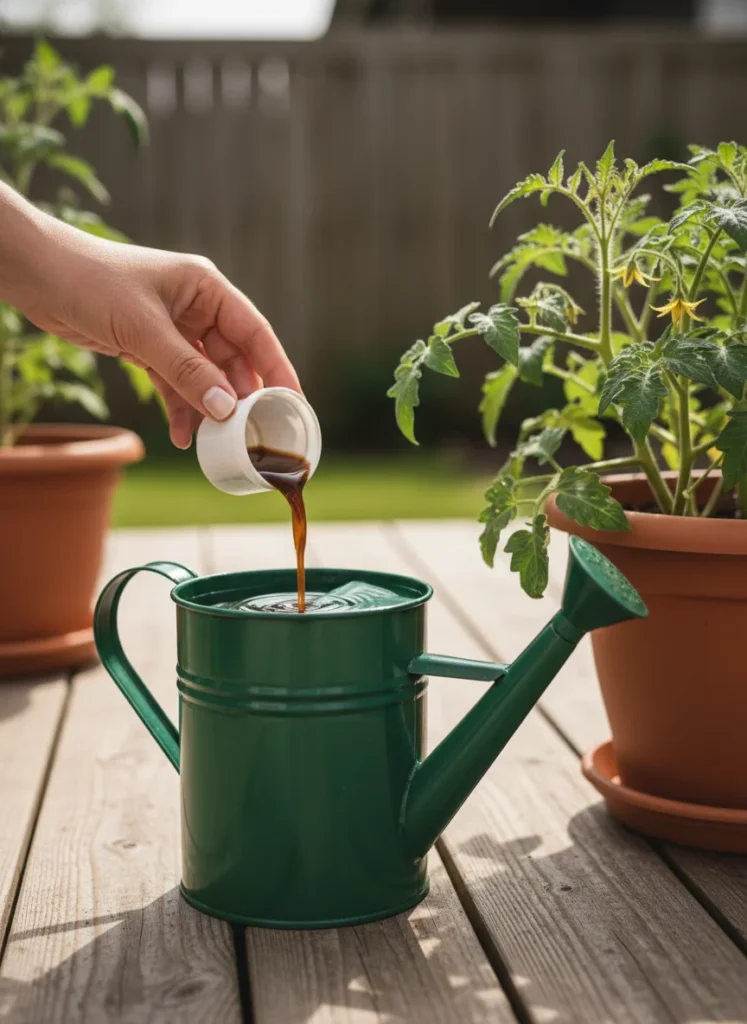
Slow-release granules cover the base, but they cannot match the pace at which container plants deplete nutrients during active growth and fruiting. From around week four to six after planting, begin supplementing with a liquid fertilizer applied every one to two weeks.
Liquid fertilizers are fast-acting because they go straight into solution in the soil and are absorbed immediately through the roots. This makes them ideal for correcting deficiencies quickly and for supporting the heavy demands of fruiting crops mid-season.
Which Fertilizer to Use and When
Different crops and growth stages call for different formulations. Here is a simple reference:
| Growth Stage | Best Fertilizer Type | NPK Focus |
|---|---|---|
| Planting | Slow-release granular | Balanced (e.g. 5-5-5) |
| Early vegetative growth | Liquid balanced | Equal N-P-K |
| Pre-flowering | Liquid balanced | Equal N-P-K |
| Flowering and fruiting | Liquid tomato or pepper feed | Low N, high K |
| Leafy greens all season | Liquid balanced or fish emulsion | Higher N |
| Herbs | Minimal feeding needed | Light balanced if any |
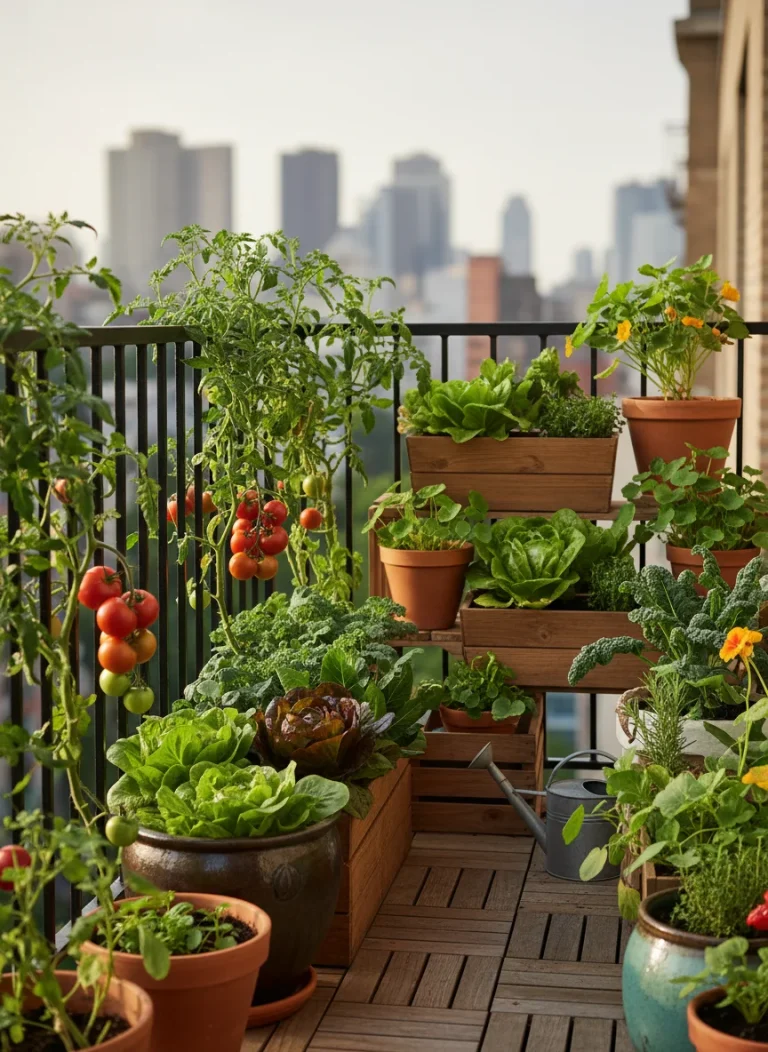
For leafy greens: Lettuce, spinach, kale, and chard are after nitrogen above all else. A balanced liquid feed or diluted fish emulsion every two weeks keeps them growing steadily. Do not switch to a high-potassium feed for leafy crops. They are not fruiting and potassium will not improve them.
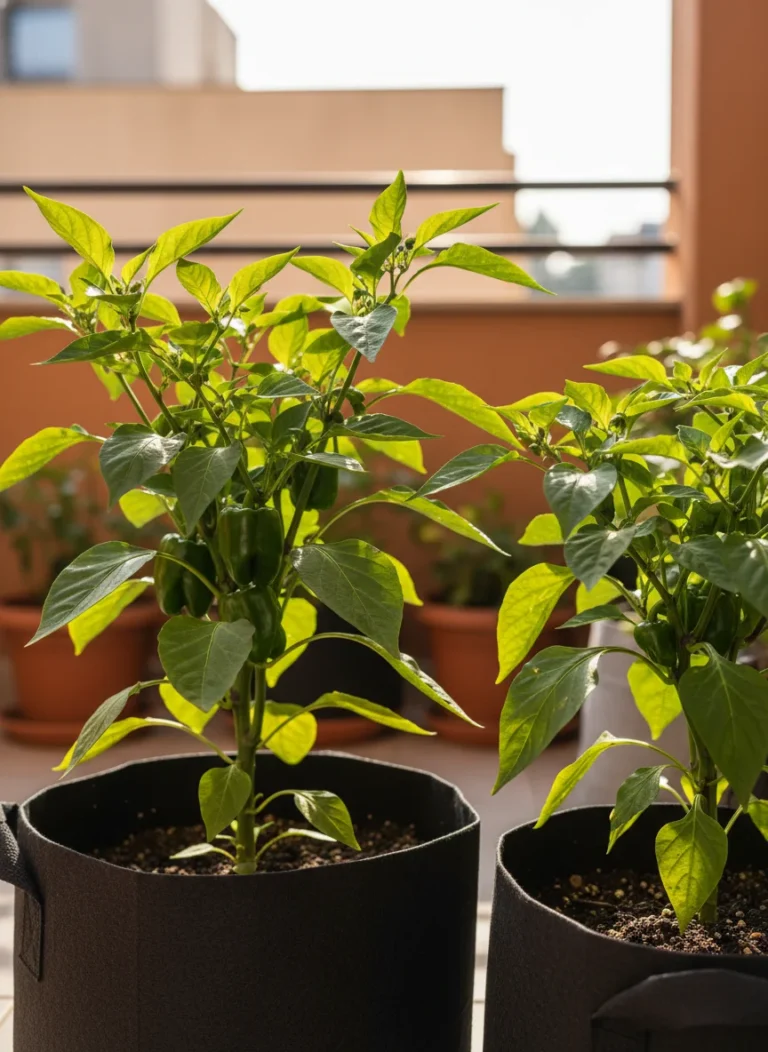
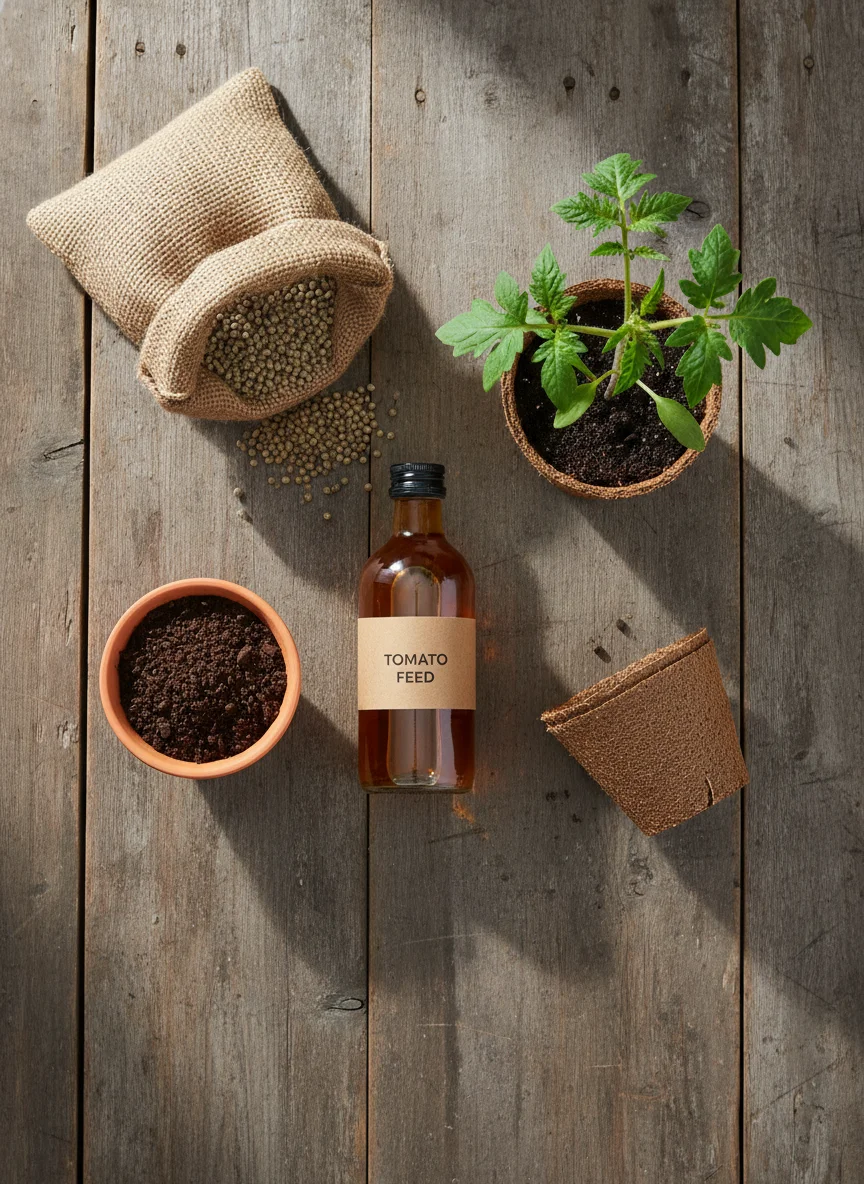
For tomatoes and peppers: Start with a balanced feed and switch to a dedicated tomato or pepper fertilizer once you see the first flower buds forming. These formulas are low in nitrogen and higher in potassium and are specifically designed for this stage. Continuing with a high-nitrogen feed past this point is one of the most common reasons container tomatoes and peppers produce masses of leaves but very little fruit. Check liquid tomato and pepper feed on Amazon.
For herbs: Most herbs, especially Mediterranean varieties like rosemary, thyme, and oregano, prefer lean, nutrient-poor conditions. They do not need regular feeding and can become floppy and less flavourful if overfed with nitrogen. Basil is the exception: it benefits from a light balanced feed every three to four weeks during the growing season.
How Often to Fertilize Container Vegetables
As a general guide:
- Slow-release granules: Once at planting, then again mid-season if the product recommends a top-up
- Liquid feed for most vegetables: Every one to two weeks during active growth
- Liquid feed for fruiting crops at peak season: Weekly
- Worm castings top-dress: Once every four to six weeks throughout the season
Do not feed a plant that is visibly stressed from underwatering, overwatering, or extreme heat. Feed only when the plant is in stable, normal growing conditions. A stressed plant cannot process fertilizer effectively and excess nutrients can make things worse.
Signs Your Container Vegetables Need Feeding
Pale or yellowing older leaves with newer growth staying green is usually a nitrogen deficiency. The plant is pulling nitrogen from older leaves to support new growth because the soil supply is exhausted.
Slow growth despite good watering and sunlight is a general sign of nutrient depletion, particularly if it appears six or more weeks after planting.
Flowers dropping without setting fruit in tomatoes and peppers can point to insufficient potassium, though inconsistent watering is also a common cause. If watering is already consistent, switching to a high-potassium feed is worth trying.
Dark purple tinting on leaf undersides can indicate phosphorus deficiency, particularly in cool weather when phosphorus uptake slows down.
Organic vs Synthetic Fertilizers for Container Vegetables
Both work. The main practical differences are speed and soil biology.
Synthetic fertilizers are immediately available to plants and deliver fast, predictable results. They do not improve soil structure or microbial life, and excess application can cause salt build-up in containers over time, which damages roots and reduces water uptake.
Organic fertilizers, including worm castings, fish emulsion, compost teas, and seaweed extracts, feed the soil as well as the plant. They work more slowly but build a healthier microbial environment in the potting mix, which improves nutrient availability and root health over the season. For container vegetable growing, a combination approach works well: organic slow-release at planting, and either organic liquid feeds or a quality synthetic tomato feed during fruiting.
Does the Potting Soil You Use Affect How Much Feeding Is Needed?
Yes, significantly. A high-quality potting mix with a generous proportion of compost and worm castings will need less supplemental feeding in the first two months than a basic, peat-heavy mix with little organic matter. Over time, all mixes deplete, but the starting quality determines how much of a head start your plants get.
If you are reusing potting soil from a previous season, the nutrient reserves will already be partially or fully depleted before you even plant. In that case, begin supplemental liquid feeding earlier, from around week two or three rather than week four to six. For guidance on assessing old soil before reusing it, read our guide on can you reuse potting soil in containers.
The mix’s structure also affects how well roots can absorb nutrients. A compacted or hydrophobic potting mix that does not drain properly will limit nutrient uptake regardless of how much you feed. Getting the soil right before planting reduces how much corrective feeding you need later. Our guide on how often to water vegetables in containers covers how watering practice affects soil health over the season.
A Simple Fertilizing Routine to Follow From Day One
If you want one clear routine to follow from the start, here it is:
- At planting, mix slow-release granular fertilizer and worm castings into the potting mix
- From week four, begin liquid feeding every two weeks with a balanced fertilizer
- Once flowers appear on fruiting crops, switch to a high-potassium tomato or pepper feed weekly
- For leafy greens, continue with the balanced liquid feed every two weeks all season
- Top-dress with a small handful of worm castings every four to six weeks throughout the season
- Stop feeding about four weeks before your expected first frost as growth slows naturally
That is the complete system. It does not require expensive products or complicated timing. The consistency of the routine matters more than the specific brand you choose.
The Bottom Line
Container vegetables do need fertilizer, and they need it more regularly than most beginners expect. The soil depletes faster in a pot than in the ground, and without supplemental feeding, even a well-watered, well-positioned plant will eventually stall.
Start with a slow-release base at planting, add worm castings, and switch to regular liquid feeding from week four onwards. Match the fertilizer to the crop and the growth stage, and your container vegetables will have everything they need to produce well all season.