How to Prune Tomato Plants for Massive Yields
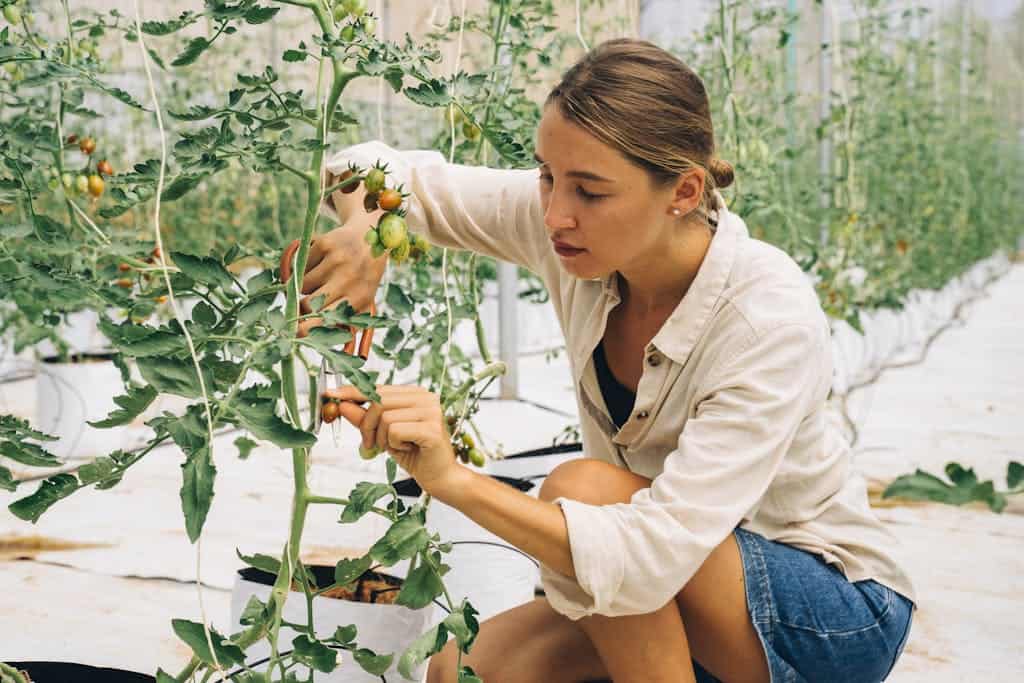
There is a specific smell that sticks to your hands after working in the garden—that earthy, spicy, yellow-green resin of a tomato vine. It’s the scent of summer. But if you let nature take its course completely unchecked, that scent comes from a chaotic, tangled jungle of leaves rather than a tidy row of heavy fruit.
Many gardeners hesitate to cut their plants. It feels counterintuitive to hack away at green, healthy growth. But gardening is often about making hard choices to get better results.
Pruning isn’t just about tidiness; it is about resource management. Your soil has a finite amount of nitrogen, potassium, and phosphorus. Your plant has a limited “energy budget.” If you allow the plant to spend that budget building miles of green stems and foliage, it has little left over for the expensive process of producing large, flavorful fruit.
By pruning, we aren’t hurting the plant; we are telling it exactly where to spend its money.
First: Know Your Patient
Before you even pick up the shears, you must know what you are growing. This is the most common mistake new growers make.
Determinate (Bush) Tomatoes: These varieties (like Roma or Celebrity) grow to a set height, set all their fruit at once, and then stop. Do not heavily prune these. If you cut the branches of a determinate plant, you are literally cutting off your harvest. You generally only need to clean up the bottom leaves for airflow.
Indeterminate (Vining) Tomatoes: These are the wild children (like Brandywine, Better Boy, or Sungold). They will grow vertically until the frost kills them. They prioritize climbing over fruiting. These are the plants we prune.
The Anatomy of the “Sucker”
To prune effectively, you have to identify the “sucker.”
Picture the main stem of the tomato plant growing straight up from the ground. Now, look at a large leaf branch growing outward horizontally. In the “armpit”—the 45-degree angle between the main stem and the leaf branch—you will see a small, new shoot emerging.
That is the sucker.
If left alone, that sucker will become an entirely new main stem. It will grow its own leaves, its own flowers, and its own suckers. It sounds great in theory, but in practice, it creates a dense canopy that traps moisture (inviting blight) and produces many small, inferior tomatoes rather than fewer, massive ones.
The Pruning Protocol
1. Timing and Hygiene
The best time to prune is when the plant is dry. Pruning while the leaves are wet from dew or rain is a recipe for spreading fungal spores and bacteria like wildfire.
If you are using shears, keep a small cup of rubbing alcohol or a bleach solution nearby. Dip your blades between plants. It seems tedious, but it’s the only way to ensure you aren’t the vector for disease.
2. The “Snap” Technique
For small suckers (under 2-3 inches), you don’t even need tools. They are tender and crisp. Simply grab the base of the sucker between your thumb and forefinger and rock it back and forth. It should snap off cleanly. This heals faster than a cut because it crushes the cells slightly, sealing the wound, rather than slicing them open.
3. Selecting Your Leaders
You have a choice in how you shape the architecture of the plant:
•The Single Leader: You remove *every* sucker. The plant grows as one long vine. This is ideal for square-foot gardening or tight spaces. You get the earliest fruit and the largest individual tomatoes, though perhaps fewer in total count.
•The Double Leader: You allow the very first sucker (usually the one right below the first cluster of flowers) to grow. Now you have two main stems growing upward. This is often the sweet spot for home gardeners—it doubles your yield potential without creating a jungle.
4. The “Missouri Pruning” Compromise
Sometimes, a sucker has grown too large (over a foot long) before you catch it. If you snap it off now, you leave a large open wound on the main stem.
In this case, use the “Missouri Prune.” Snip the top of the sucker off, leaving one or two leaves behind. This shocks the plant less and keeps some foliage to shade the fruit (preventing sunscald), but stops the sucker from stealing energy for vertical growth.
The Bottom-Up Cleanse
Beyond suckers, we need to talk about the “skirts” of the plant.
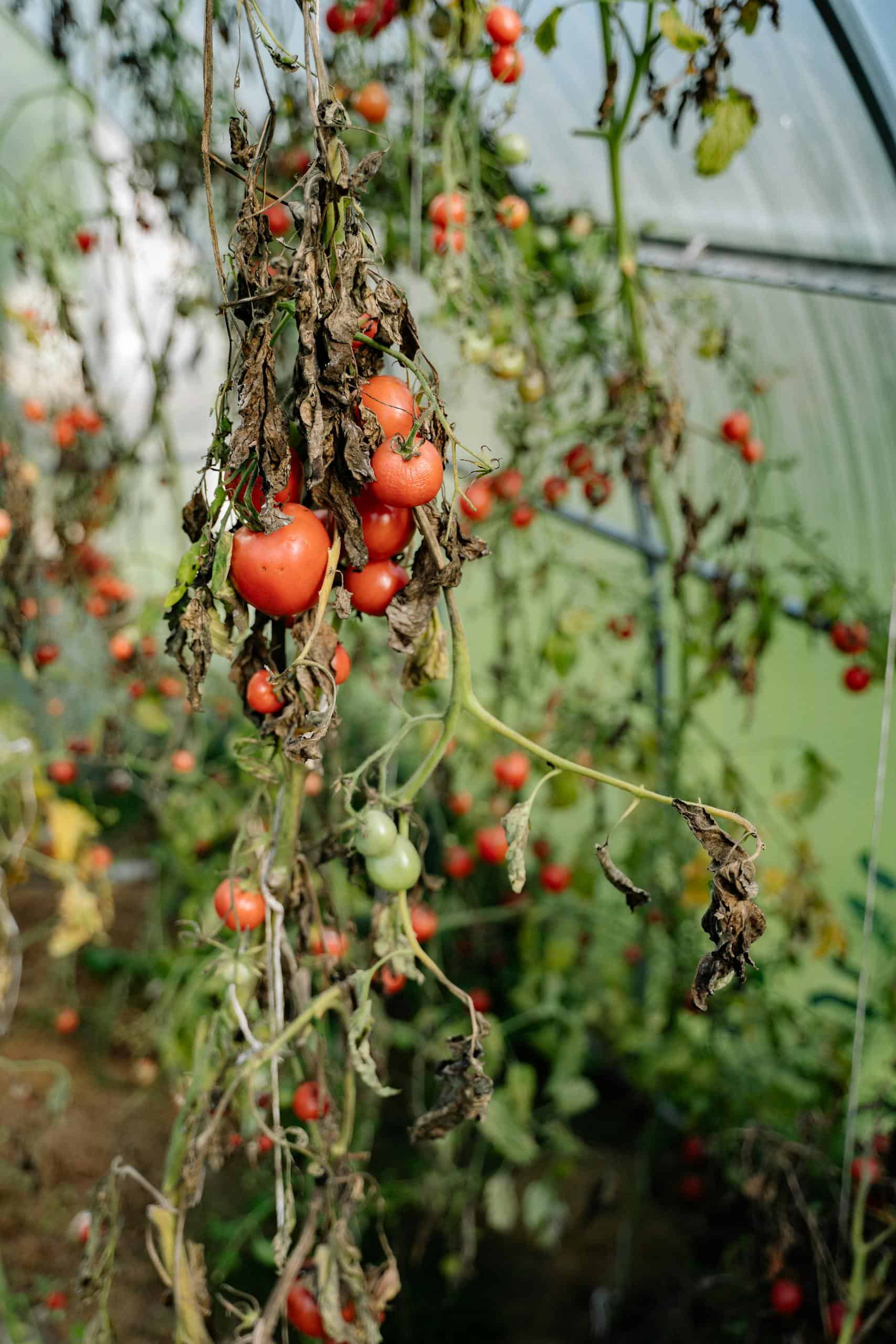
Early blight almost always starts from the soil. Rain splashes soil-borne pathogens onto the lower leaves, where they take hold and yellow the plant from the bottom up.
Once your plant is established and about 12-18 inches tall, remove the bottom 6-10 inches of leaves entirely. The stem should be bare at the bottom. This improves airflow around the base and breaks the bridge between the soil and the foliage.
The Baking Soda Trick: Fact vs. Fiction
You asked about sprinkling baking soda, and it’s a popular piece of garden folklore that actually holds some water—if you understand the chemistry.
For Sweetness: Some gardeners believe sprinkling baking soda on the soil sweetens the tomatoes by lowering the acidity. The science on this is mixed. Tomatoes naturally love slightly acidic soil (pH 6.0-6.8). Making the soil too alkaline with baking soda might actually lock out nutrients.
For Disease (The Real Winner): Where baking soda shines is as a *foliar spray*. A mixture of 1 tablespoon of baking soda, a teaspoon of vegetable oil, and a drop of dish soap in a gallon of water creates an alkaline environment on the leaves. Blight and powdery mildew hate alkalinity. They cannot thrive in it. Using this as a preventative spray is far more effective than dumping powder on the soil.
The Late Season “Top”
As the season winds down—about 4 weeks before your first expected frost—you need to be ruthless.
Look at the top of your main stems. Cut the terminal bud (the growing tip) off completely. This is called “topping.”
You are telling the plant: *“Stop. The season is over. No more growing up. No more new flowers.”*
This forces the plant to redirect its remaining panic-energy into ripening the green fruit currently hanging on the vine, rather than wasting time trying to grow new leaves that will just freeze in October.
A Final Thought
Pruning is an ongoing relationship with your garden. You can’t do it once in June and walk away. Visit your plants with your morning coffee. Snap a sucker here, trim a yellow leaf there. By keeping the plant open, airy, and focused, you aren’t just growing tomato plants—you are growing tomatoes.
FAQ Section
Q: How do you prune tomatoes for maximum yield?
A: To maximize yield on indeterminate tomatoes, prune them to one or two main “leaders” (stems). Remove all “suckers” (the growth between the main stem and leaf branches) regularly. This forces the plant to send sugars to the fruit rather than creating excess foliage. Also, keep the bottom 10 inches of the plant bare to prevent disease, which extends the plant’s life and harvest window.
Q: Which branches do you prune on a tomato plant?
A: You primarily prune the suckers, which are the shoots growing at a 45-degree angle between the main stem and the horizontal leaf branches. You should also prune any leaves touching the ground, and any leaves that look yellow or diseased. Late in the season, you prune the very top of the main stem (topping) to stop vertical growth.
Q: Why should you sprinkle baking soda around your tomato plants?
A: While some claim it sweetens the fruit by reducing soil acidity, its best use is actually as a preventative fungicide. Baking soda creates an alkaline environment that fungal spores (like blight and powdery mildew) cannot survive. It is best applied as a diluted spray on the leaves rather than just sprinkled on the soil.
Q: Can I prune determinate (bush) tomatoes?
A: You should be very careful with determinate varieties. Because they stop growing at a certain height and set fruit on terminal buds, over-pruning them will significantly reduce your harvest. Only prune the bottom leaves for airflow; do not remove suckers on determinate plants.
Q: What happens if I prune too much?
A: If you remove too many leaves, you risk “sunscald.” The fruit needs some canopy shade to protect it from the harsh midday sun. If a tomato is exposed to direct, scorching sunlight, it can develop white, blistered patches that ruin the fruit.