How to Grow Ginger at Home (Even in Small Spaces)

Estimated reading time: 6 minutes
The Core Overview: Growing Ginger at Home
Growing ginger (Zingiber officinale) at home is surprisingly simple, requiring little more than a healthy rhizome, warmth, and patience. Unlike many garden crops that demand full, scorching sun, ginger is an understory tropical plant that thrives in filtered light and rich, moisture-retentive soil.
Whether you are gardening in a backyard raised bed or a small apartment container, the process remains the same: plant shallowly, keep the soil warm (ideally 75°F to 85°F), and maintain high humidity. While it is a long-season crop—taking 8 to 10 months to reach full maturity—you can harvest “baby ginger” earlier for a milder flavor and stem-free texture.
Can I grow ginger from a piece of ginger?
Yes, growing ginger from a store-bought piece is the most common propagation method. You do not need seeds. Instead, you plant the rhizome (the root part you eat).
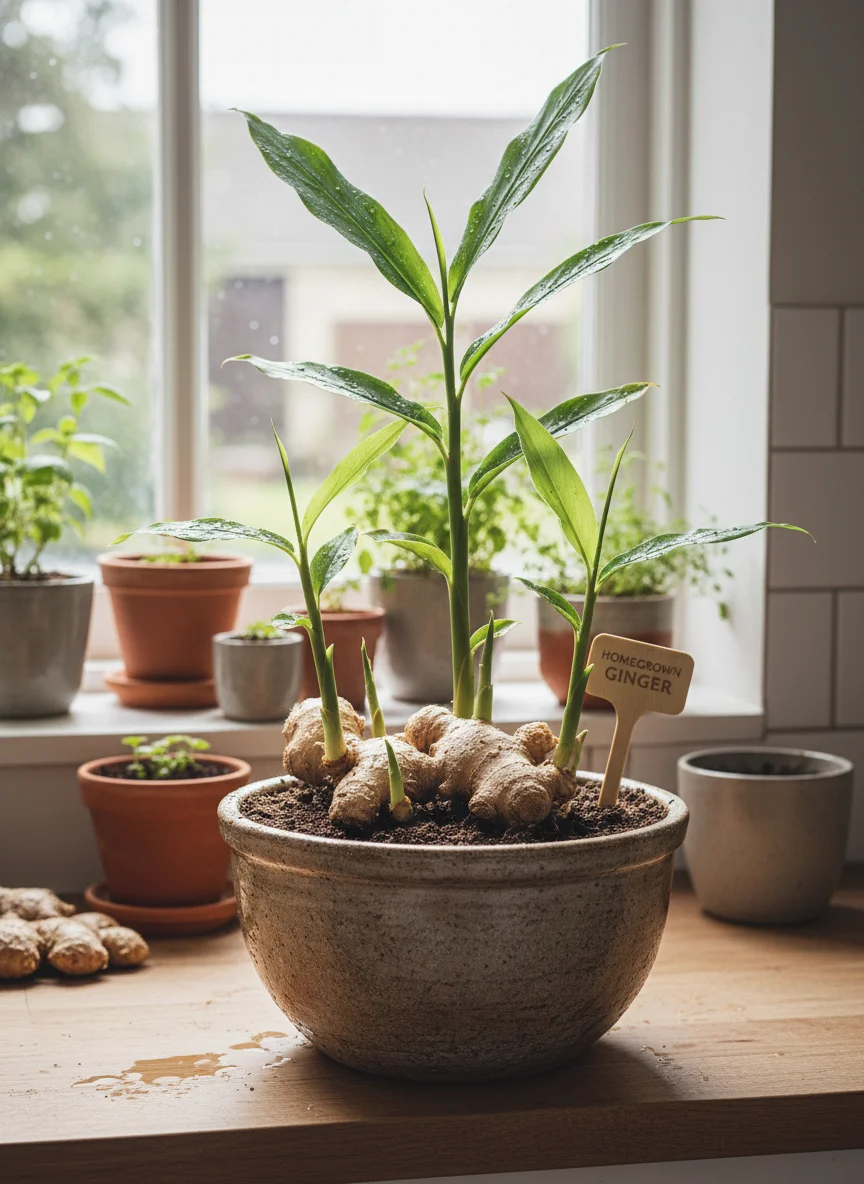
To succeed, select a piece of ginger that is plump and firm, not shriveled or dry. Look for “eyes”—small, bump-like buds similar to potato eyes—on the skin. If you are using grocery store ginger, it has likely been treated with a growth inhibitor to stop it from sprouting on the shelf. To remove this, soak the rhizome in warm water overnight before planting.
Pro Tip: If you have a large root, you can cut it into smaller pieces, ensuring each piece has at least two or three “eyes.” Let the cut ends cure (dry out) for 24 to 48 hours to prevent rot before planting.
How do you grow ginger for beginners? (Pots, Bags, and Indoors)
Ginger is exceptionally well-suited for containers, making it perfect for beginners and small spaces. Because ginger roots grow horizontally rather than vertically, the width of your container matters more than the depth.
Step-by-Step Planting Guide:
- Choose the Vessel: Use a wide pot or a fabric grow bag. Fabric bags are excellent for ginger because they prevent waterlogging, which is the fastest way to kill the plant.
- Prepare the Soil: Ginger craves rich, loose soil. Mix high-quality potting soil with compost. The soil must drain well; soggy soil leads to root rot.
- Plant Shallow: Fill your pot with soil, leaving 3 inches at the top. Place your ginger root with the eyes facing up. Cover it with only 1 to 2 inches of soil.
- Water and Wait: Water lightly. Do not soak the soil until you see green shoots emerge, which can take 2 to 3 weeks.
If growing indoors, place the pot in a warm spot but out of direct, harsh afternoon sun. A grow mat can help speed up sprouting if your home is cool.
What are the best conditions for ginger root to grow?
Ginger is a tropical plant, and mimicking its native environment is the key to a heavy harvest. According to the Virginia Cooperative Extension, ginger is extremely frost-sensitive and should not be planted outdoors until temperatures are consistently above 50°F (10°C).
- Temperature: Ginger stalls below 55°F. The “sweet spot” for vigorous growth is between 75°F and 85°F.
- Light: Unlike tomatoes, ginger burns in direct, midday sun. It prefers dappled shade, morning sun, or filtered light.
- Humidity: Ginger loves humidity. If growing indoors during winter, mist the leaves regularly or place the pot on a pebble tray with water to increase ambient moisture.
- Wind: Protect the plant from strong winds, which can dry out the soil and damage the tall, reed-like foliage.
How to grow ginger in water without soil?
While ginger grows best in soil, you can sprout it or grow it strictly for greens in water (hydroponically). However, growing a massive rhizome harvest in standing water is difficult due to rot risks.
To grow in water:
- Suspension Method: Insert toothpicks into the side of the ginger piece and suspend it over a glass or jar of water.
- Water Level: Ensure only the bottom third of the root touches the water. Do not submerge the whole root.
- Maintenance: Change the water every few days to prevent bacterial growth.
- Transition: Once roots develop and green shoots appear, it is highly recommended to transplant it into soil or a proper hydroponic system with an air stone to prevent the root from rotting.
How long does it take to grow ginger?
Ginger is a lesson in patience. From planting to a full harvest, it takes 8 to 10 months.
- Baby Ginger (4–6 months): You can harvest early. This ginger has a cream-colored skin that doesn’t need peeling, no fibrous stringiness, and a milder flavor. It is prized by chefs but doesn’t have a long shelf life.
- Mature Ginger (8–10 months): Wait until the leaves turn yellow and the stems begin to fall over. This signals the plant has gone dormant. The skin will be thick (requiring peeling), and the flavor will be intense. This ginger cures well for long-term storage.
Key Takeaways
- Start with Quality: Use plump, organic ginger with visible “eyes.” Soak non-organic store-bought ginger overnight to remove growth inhibitors.
- Go Wide, Not Deep: Use wide pots or grow bags because ginger spreads horizontally.
- Warmth is Non-Negotiable: Keep soil temperatures above 70°F for best results. Bring plants inside if temps drop below 50°F.
- Filtered Light: Avoid scorching midday sun; ginger prefers partial shade.
- Patience Pays Off: Harvest at 4 months for tender “baby ginger” or 10 months for cured, spicy roots.
Frequently Asked Questions
What is the best fertilizer for ginger?
Use a balanced, slow-release organic fertilizer at planting. Once stems emerge, switch to a low-nitrogen, high-potassium fertilizer (like a liquid kelp or fertilizer meant for root vegetables) every few weeks to encourage rhizome expansion rather than just leafy growth.
Can I leave ginger in the ground over winter?
Only if you live in USDA Zone 8 or higher (tropical/subtropical climates). If the ground freezes, the ginger will turn to mush. In cooler climates, dig it up or bring the pot indoors.
Why are my ginger leaves turning brown?
Brown tips usually indicate low humidity or underwatering. If the leaves are turning yellow and the stems are drooping, it may be harvest time (dormancy) or, if it’s early in the season, it could be a sign of root rot from overwatering.