The ‘Black Thumb’ Rehab: 15 Apartment Plants That Survive Neglect (And How Not To Kill Them)
The Executive Resolution
Stop buying plants based on aesthetics; buy them based on your light exposure. For 90% of apartments, the Snake Plant (Sansevieria) and ZZ Plant are the only correct answers because they tolerate low light and weeks of neglect. The number one killer of indoor plants is not drought, it’s kindness. Do not water on a schedule; water only when the soil is bone dry. If you have pets, stick to the Spider Plant or Parlor Palm.
The Secret Logic: Stop “Loving” Them to Death
Here is the brutal truth most garden centers won’t tell you: You don’t have a “black thumb.” You are just a helicopter parent.
The vast majority of apartment plants die because of root rot. You see a plant, you think “it needs love,” and you water it. A week later, you do it again. The roots sit in stagnant, muddy water, they suffocate, and the plant turns yellow. You think, “Oh no, it’s thirsty!” and you water it again. Game over.
The Golden Rule of Apartment Gardening:
Benign neglect is your best friend. In an apartment where air circulation is lower and light is often filtered, plants metabolize water much more slowly than they do in a greenhouse. Your job is not to nurture them constantly. Your job is to replicate their natural environment (usually the floor of a dry forest) and then leave them the hell alone.
If you can master the urge to do nothing, you can grow a jungle.
The Deep-Dive Blueprint: 15 Immortal Plants
We are categorizing these not by species, but by function. What is your apartment’s specific limitation? Low light? Drafty windows? Or are you just forgetful? Let’s break down the survivors.
The “Dungeon” Dwellers (Low Light Warriors)
Most apartments have that one corner that never sees the sun. These plants don’t just survive there; they won’t complain about it.
1. Snake Plant (Sansevieria)
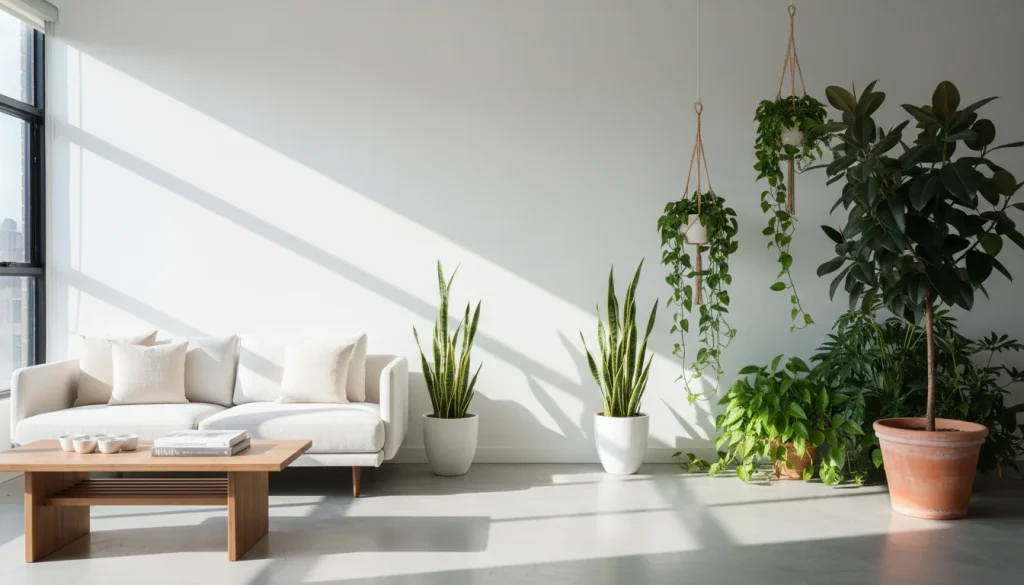
This is the tank of the plant world. It’s practically indestructible. It has vertical, architectural leaves that look modern and sleek.
The Strategy: Put it in your hallway or bathroom. Water it once a month. Seriously. If the soil is even slightly damp, walk away. It purifies air better than almost anything else, releasing oxygen at night.
Warning: Toxic to pets if chewed.
2. ZZ Plant (Zamioculcas zamiifolia)
If the Snake Plant is a tank, the ZZ plant is a cockroach (in a good way). It evolved in drought-prone Africa. It grows from rhizomes (potato-like tubers) that store water for months.
The Strategy: This is the best plant for windowless offices or basement apartments. It barely needs photosynthesis to stay green. Water every 3-4 weeks. If the leaves turn yellow, you are watering too much.
Warning: Toxic to pets.
3. Cast Iron Plant (Aspidistra elatior)
The Victorians loved this plant because it could survive the fumes of coal-burning stoves. It’s not the flashiest plant, but it has a lush, leafy vibe that brings softness to stark rooms.
The Strategy: It grows slowly. Put it in a corner and forget it exists. It hates direct sun and hates soggy soil. It is the definition of “set it and forget it.”
The “Communicators” (They Tell You What They Need)
These plants remove the guesswork. They physically change shape when they are thirsty, preventing you from overwatering.
4. Peace Lily (Spathiphyllum)
The biggest drama queen in the kingdom. One minute it looks dead. Leaves drooping flat against the pot—and two hours after watering, it’s perky and blooming.
The Strategy: Do not water until it droops. This prevents root rot. It tolerates low light well but needs a bit more indirect sun to produce the white flowers. Note: The pollen can be messy, and it is toxic to cats.
5. Pothos (Epipremnum aureum)
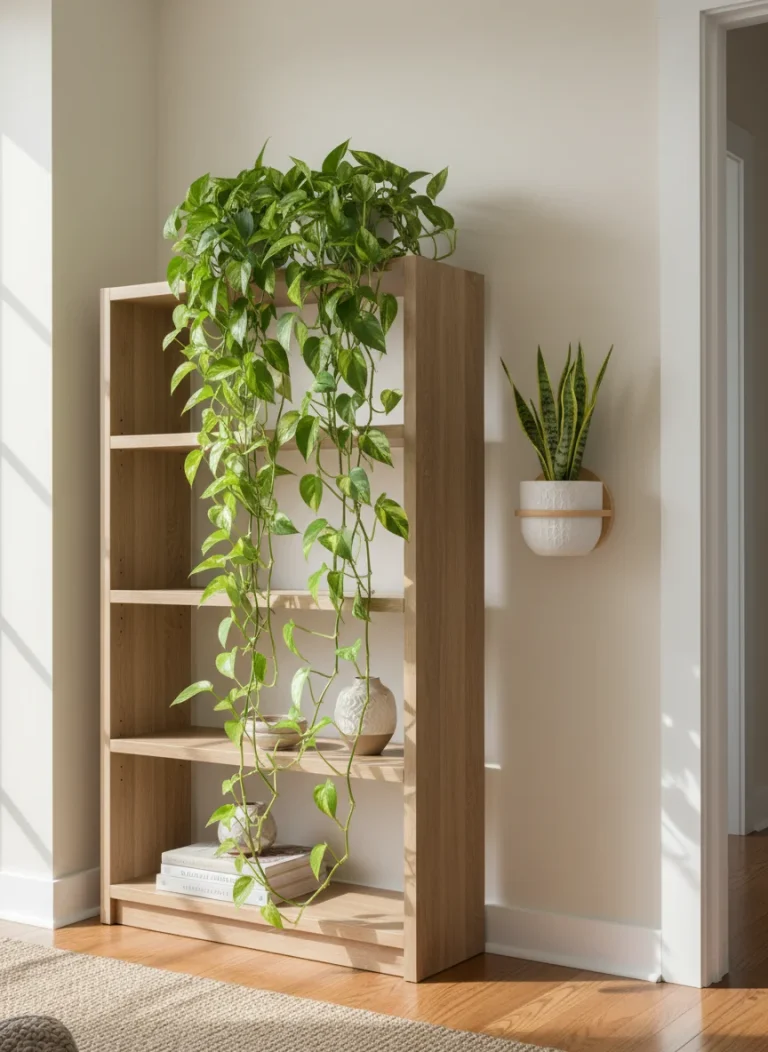
The ultimate trailing plant. It grows fast, looks incredible hanging from a bookshelf, and is nearly impossible to kill. When it’s thirsty, the leaves look matte and slightly curled.
The Strategy: You can propagate this endlessly. Cut a stem below a “node” (the bump on the stem), stick it in water, and you have a new plant in 3 weeks. It tolerates everything from low light to bright office fluorescents.
6. Heart-Leaf Philodendron
Often confused with Pothos, but with softer, matte leaves. It’s slightly more elegant and less chaotic in growth.
The Strategy: This plant tells you if the light is wrong. Leggy vines with small leaves? Too dark. Pale leaves? Too bright. Adjust accordingly. It prefers to dry out completely between drinks.
The “Deserts in a Pot” (High Light, Zero Water)
If you have a south-facing window that gets blasted with heat, or if you travel for work for weeks at a time, these are your guys.
7. Aloe Vera
Functional and structural. Everyone knows it soothes burns, but it’s also a great décor piece.
The Strategy: Needs direct sun. Do not put this in a dark corner; it will turn to mush. Water it heavily, then don’t touch it for a month. The leaves should feel firm. If they are squishy, you’ve drowned it.
8. Jade Plant (Crassula ovata)
It looks like a miniature tree. In Feng Shui, it brings good luck and money. In reality, it brings zero stress.
The Strategy: The leaves are water reservoirs. If they wrinkle, water the plant. If they are plump, stop. Over time, the stem turns woody, making it look like a bonsai without the hard work.
9. Haworthia (Zebra Plant)
Small, spiky, and striped. It looks like an Aloe but stays compact, making it perfect for tiny apartment windowsills or desks.
The Strategy: Unlike other succulents, it doesn’t need blazing hot sun. Bright indirect light is fine. It has very shallow roots, so don’t put it in a massive pot or the soil won’t dry out fast enough.
The “Pet-Safe” Jungle (Non-Toxic)
If you have a cat that snacks on greenery, your options are limited, but these picks are safe.
10. Spider Plant (Chlorophytum comosum)
It shoots out “babies” on long stems that you can replant. It gives a wild, grassy texture to a room.
The Strategy: It thrives in hanging baskets. If the tips turn brown, it’s likely from the fluoride in tap water (switch to distilled) or low humidity. But honestly? Brown tips won’t kill it. It’s a survivor.
11. Parlor Palm
Want tropical vibes without the high maintenance of a fern? This is it. It grows slowly and stays relatively compact.
The Strategy: It hates direct sun (it scorches the leaves). It likes consistent moisture but not a swamp. It’s one of the few palms that won’t die immediately in dry apartment air.
The Statement Pieces (Big Impact)
Sometimes you need one big plant to anchor a room.
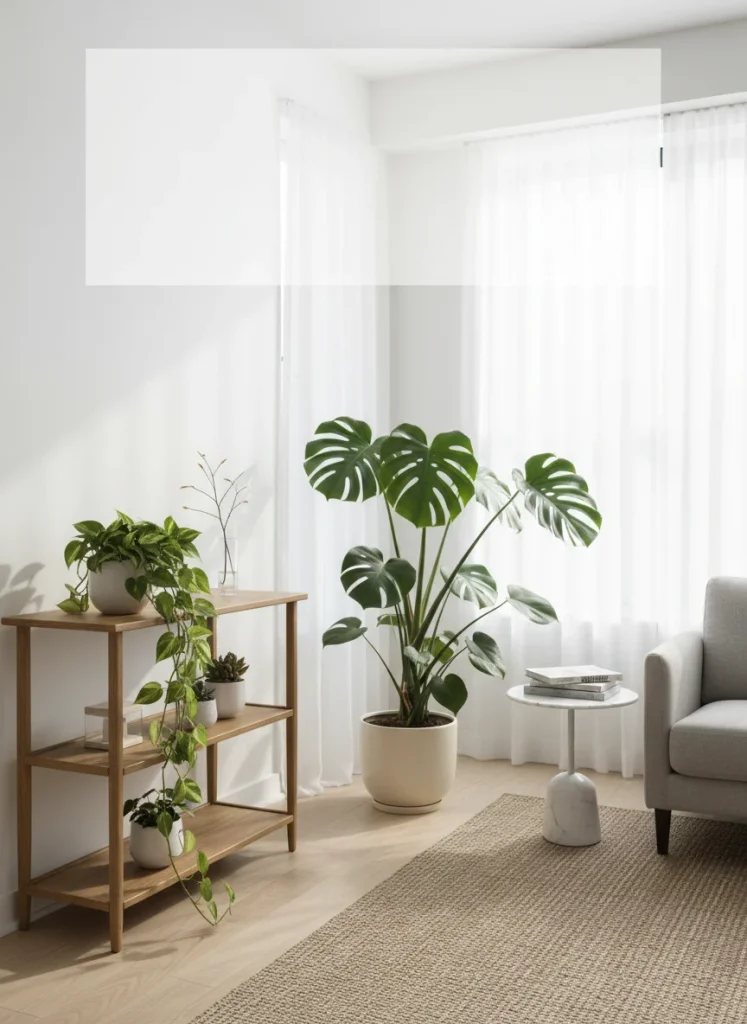
12. Monstera Deliciosa (Swiss Cheese Plant)
The Instagram darling. It gets huge and develops those iconic holes (fenestrations) in the leaves.
The Strategy: It climbs. You will eventually need a moss pole for support. It needs bright, indirect light to develop the holes. If it stays in the dark, the leaves remain small and solid. Wipe the leaves weekly to keep dust off so it can breathe.
13. Rubber Plant (Ficus elastica)
Dark, moody, glossy foliage. It looks expensive.
The Strategy: It hates being moved. Pick a spot with bright, indirect light and leave it there. If it drops lower leaves, it’s usually reaching for light. Keep it distinctively dry; it is prone to rot.
14. Chinese Evergreen (Aglaonema)
If you want color (pinks, reds, silvers), this is your plant. It is incredibly tolerant of varying conditions.
The Strategy: The lighter the variegation on the leaf, the more light it needs. Dark green varieties can handle lower light. Keep it away from AC vents; it hates cold drafts.
15. Air Plants (Tillandsia)
No dirt. No mess. They absorb water through their leaves.
The Strategy: Don’t just mist them; that’s a myth. Soak them in a bowl of room-temperature water for 20 minutes once a week, then shake them upside down to dry. If water sits in the center rosette, they rot.
The Unsexy Maintenance Guide
You have the list. Now, here is how you keep them alive long-term.
- The Finger Test is Law: Stick your finger two inches into the soil. If it is cold or damp, do not water. If it is dry and crumbly, water thoroughly until it runs out the bottom.
- Drainage Holes are Non-Negotiable: Never plant directly into a decorative pot without a hole. Keep the plant in its cheap plastic nursery pot (which has holes) and set that inside the decorative pot. When you water, take the plastic pot out, water it in the sink, let it drain, then put it back.
- Dust Kills: In apartments, dust accumulates fast. A layer of dust blocks sunlight and reduces photosynthesis. Wipe leaves with a damp microfiber cloth once a month.
Save This Blueprint!
The Skeptic’s Corner (FAQ)
Q: My apartment has literally zero natural light (bathroom/hallway). Will these really work?
A: Only two will truly work long-term: The ZZ Plant and the Snake Plant. Even then, they won’t “grow” much; they will just sustain. If you want them to thrive, buy a cheap $15 grow light bulb and put it in a lamp nearby. Leave it on for 8 hours a day. It changes everything.
Q: I keep getting little flying bugs (fungus gnats). How do I stop them?
A: Gnats thrive in wet soil. You are overwatering. Stop watering immediately. To kill the larvae, mix one part hydrogen peroxide with four parts water and water the soil with it. Put “Mosquito Bits” in your soil or yellow sticky traps to catch the adults.
Q: Should I repot them as soon as I buy them?
A: No! This is a rookie mistake. The plant is already stressed from moving from the greenhouse to the store to your house. Let it acclimate for at least a month. Repotting immediately often shocks the roots and kills the plant.
Q: Can I use dirt from outside?
A: Absolutely not. Garden soil is too dense for pots and often contains bugs, weed seeds, and pathogens. Buy a bag of high-quality indoor potting mix. It has perlite (the white rocks) which helps drainage.
Q: I travel for 3 weeks at a time. Which one should I get?
A: Snake Plant or ZZ Plant. Water them right before you leave, and they will be perfectly fine (maybe even happier) when you return.
Q: My tap water is really hard. Is that a problem?
A: For most plants, no. But Calatheas, Spider Plants, and Peace Lilies can be sensitive to fluoride and chlorine, causing brown tips. If you see that, leave your water pitcher out overnight so the chemicals evaporate, or use filtered water.