15 Houseplants That Thrive With Zero Sunlight
The Truth About Gardening in the Dark
We need to look at what “low light” actually means before we buy a single pot. Here is the reality of indoor gardening. No plant can survive in absolute darkness. Plants operate like solar panels. They need light to convert energy into food. If you put a living thing in a closet with zero light, it will eventually starve. Period.
However, nature is incredibly adaptable. Many plants naturally grow on the jungle floor beneath the thick canopy of massive trees. These plants have evolved to capture speckled, dim light and turn it into energy. We can use these resilient species to bring life into our windowless bathrooms, dim hallways, and shady office corners.
This guide covers 15 specific plants that do not just survive in the shade. They thrive there. We will also cover the specific care rules you must follow when the sun is scarce.
Save this pin to your Pinterest gardening board to easily find it later
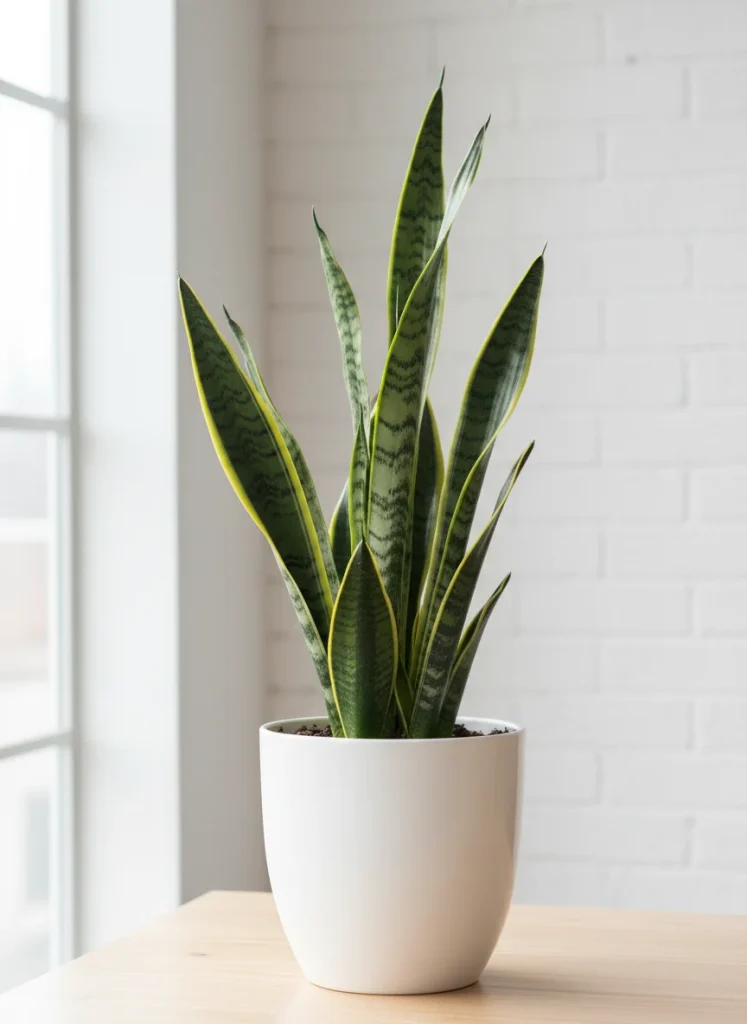
1. Snake Plant (Sansevieria)
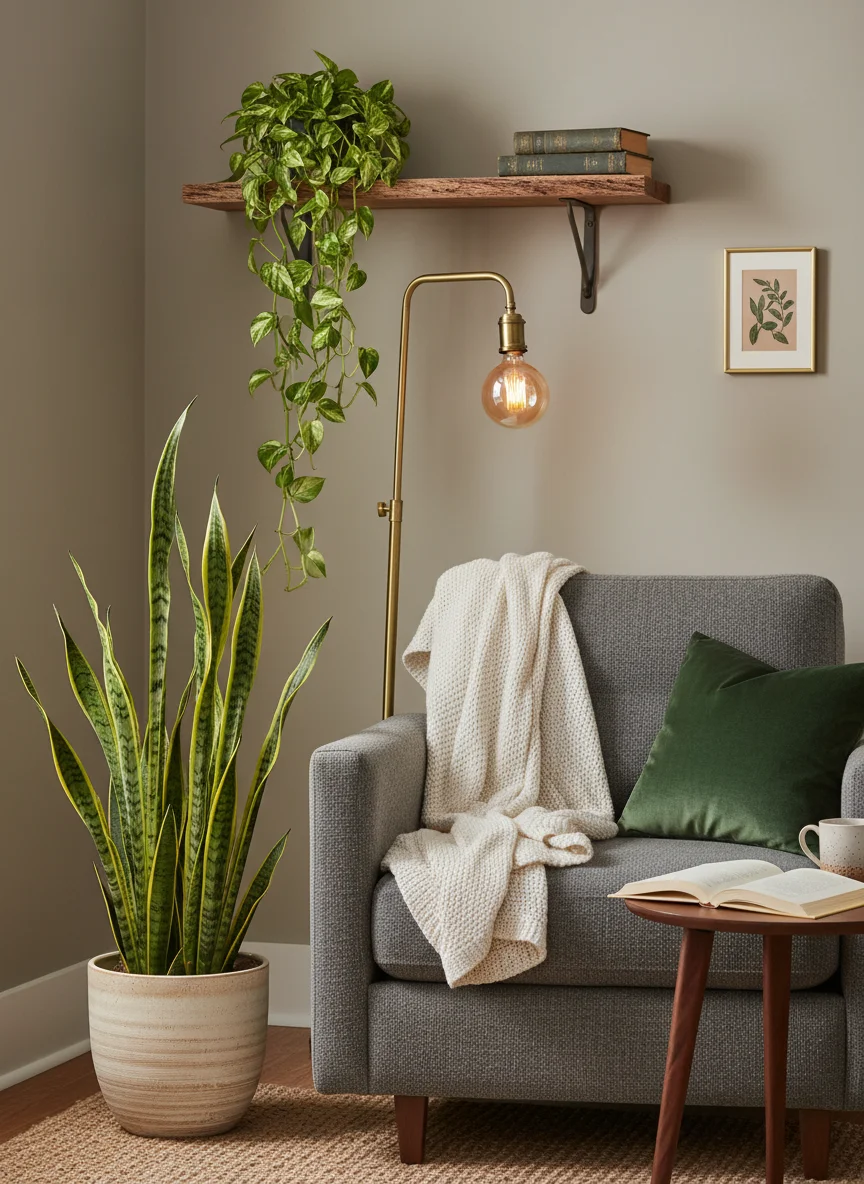
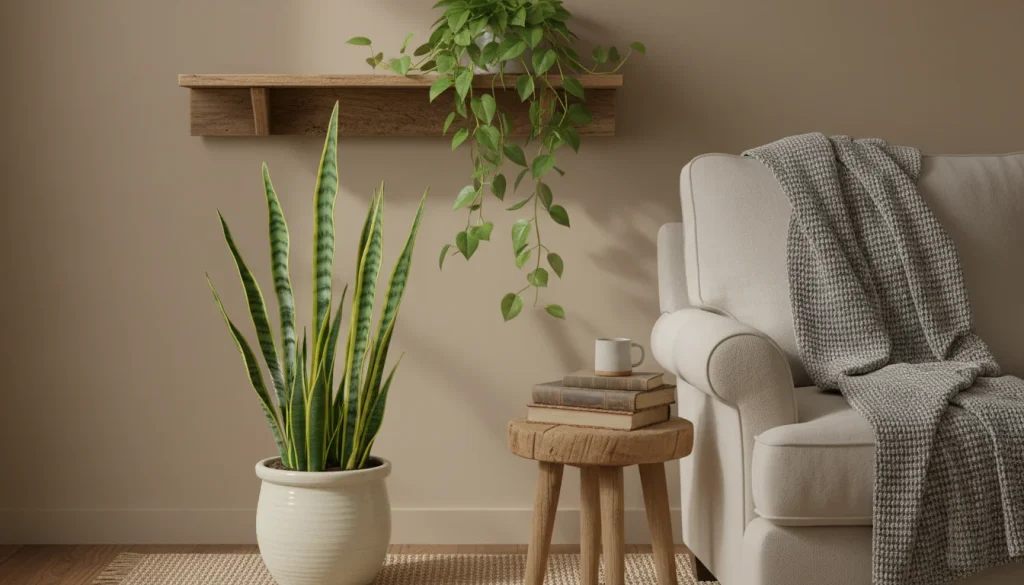
The Snake Plant is arguably the toughest houseplant you can own. It features tall, architectural leaves that shoot straight up. This makes it perfect for narrow corners. It is famous for its air-purifying qualities.
This plant is a succulent. It stores water in its thick, waxy leaves. You can ignore it for weeks at a time. In fact, it prefers neglect. It thrives in low light but will grow faster if you eventually move it to a brighter spot. It is the gold standard for dark rooms.
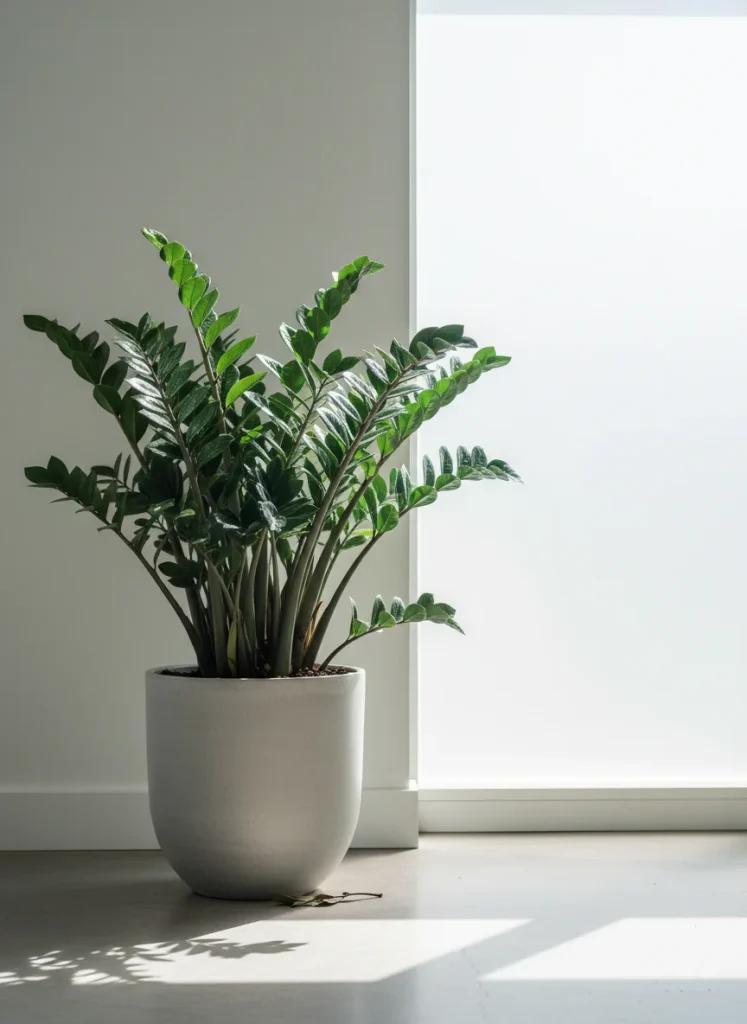
2. ZZ Plant (Zamioculcas zamiifolia)
If you have a history of killing plants, the ZZ Plant is your redemption. It has glossy, dark green leaves that reflect light beautifully. This plant grows from rhizomes, which look like potatoes buried in the soil. These rhizomes store water for long periods.
The ZZ Plant is drought-tolerant and handles low light better than almost anything else. It grows slowly in the shade, meaning you rarely need to repot it. It is almost indestructible.
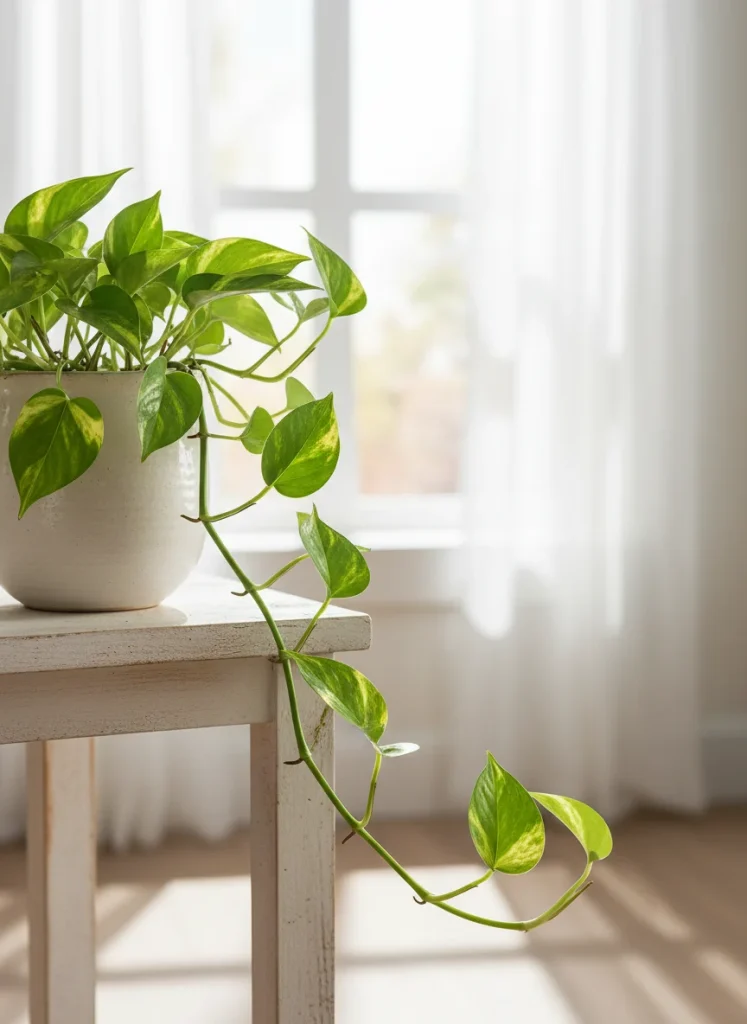
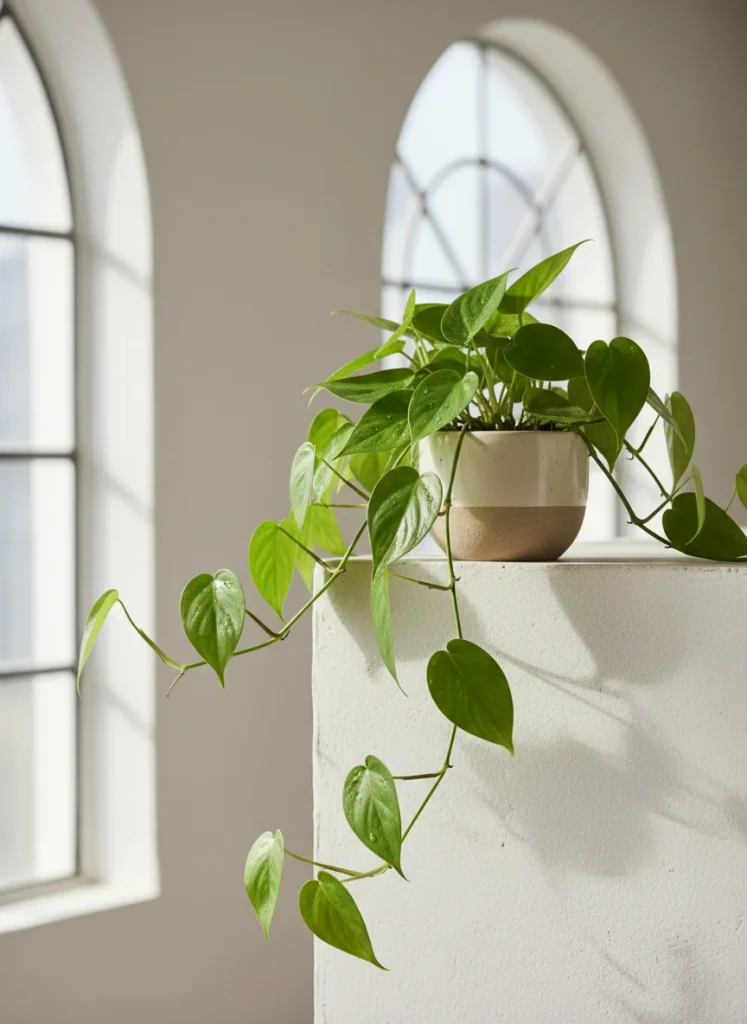
3. Pothos (Devil’s Ivy)
Pothos is the classic trailing vine. It is incredibly easy to care for and adapts to almost any environment. In low light, the leaves may lose some of their variegation (the white or yellow patterns) and turn solid green. This is the plant’s way of creating more chlorophyll to absorb limited light.
You can let it trail down from a high shelf or train it to climb a moss pole. It communicates clearly. When it looks droopy, it needs water.
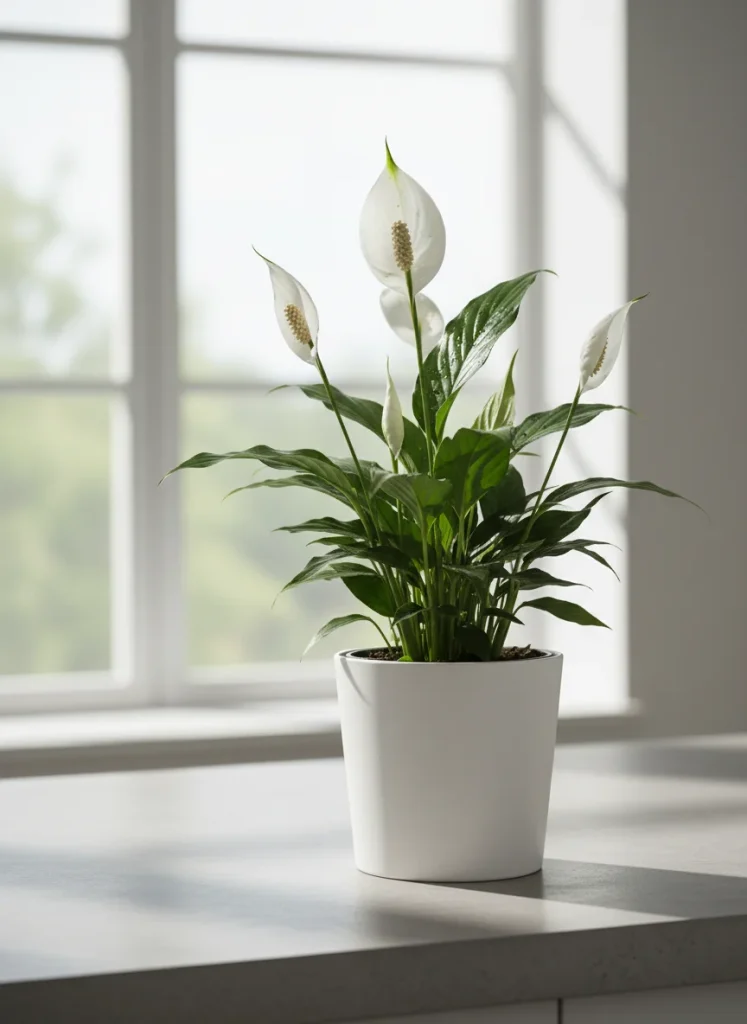
4. Peace Lily
The Peace Lily is beloved for its elegant white flowers and lush foliage. It adds a touch of sophistication to any room. Unlike the succulents mentioned above, the Peace Lily enjoys moisture.
This plant is dramatic. When it gets thirsty, the entire plant will collapse and droop sadly. Once you water it, it perks back up within hours. It is an excellent communicator for beginners who struggle with watering schedules.
5. Cast Iron Plant (Aspidistra elatior)
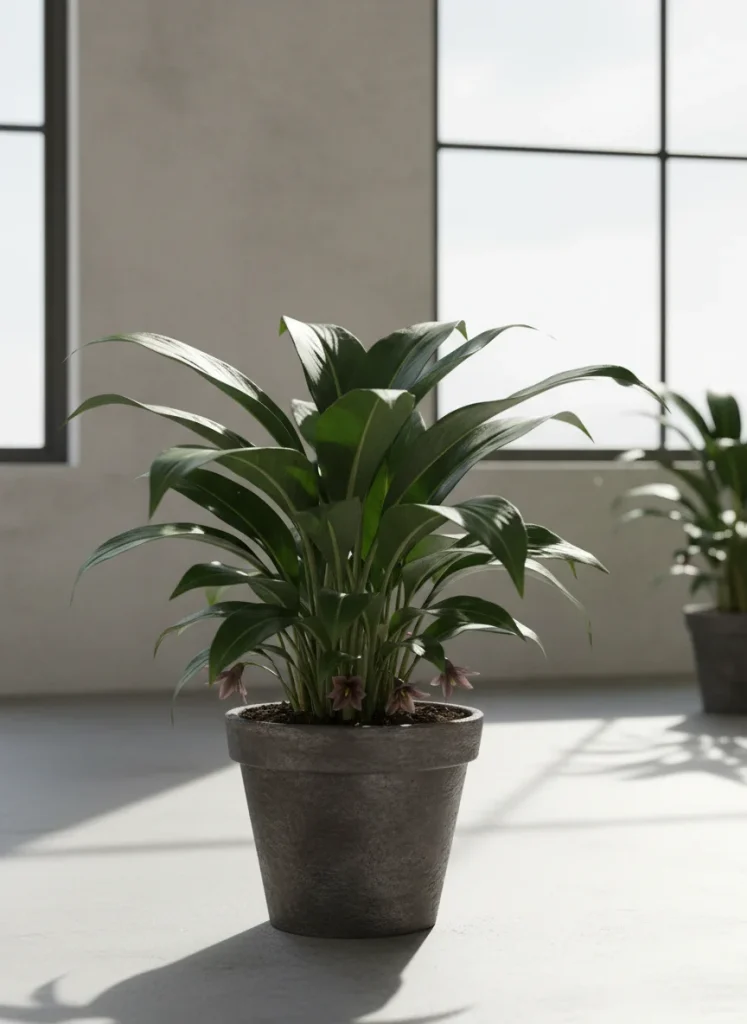
This plant earned its name during the Victorian era. It survived the fumes of gas lamps and coal heating when nothing else could. The Cast Iron Plant is virtually unkillable. It has wide, dark green leaves that bring a tropical feel to cool, dark spaces.
It grows very slowly. Patience is key here. It tolerates deep shade, temperature fluctuations, and infrequent watering. It is a true survivor.
6. Chinese Evergreen (Aglaonema)
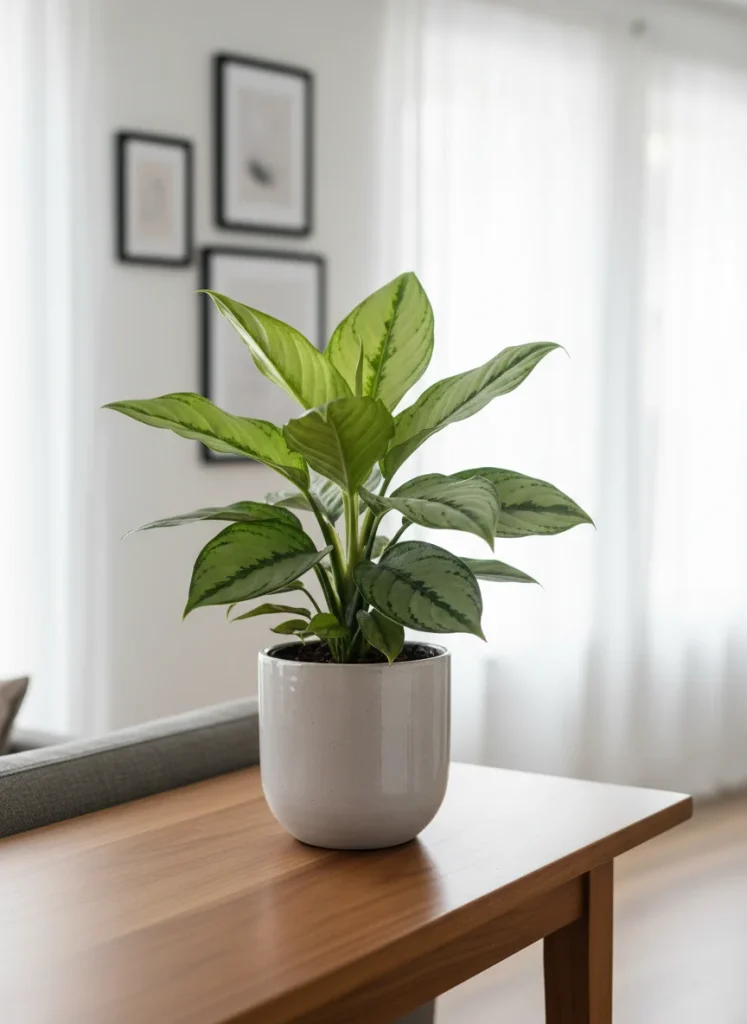
Most low-light plants are dark green. The Chinese Evergreen is the exception. It offers beautiful patterns of silver, pink, or red on its leaves. It is perfect for adding a pop of color to a dim room.
Older varieties with green and silver leaves handle low light best. The varieties with bright pink or red usually need slightly more light to maintain their color. They grow slowly and stay compact, making them great for desks.
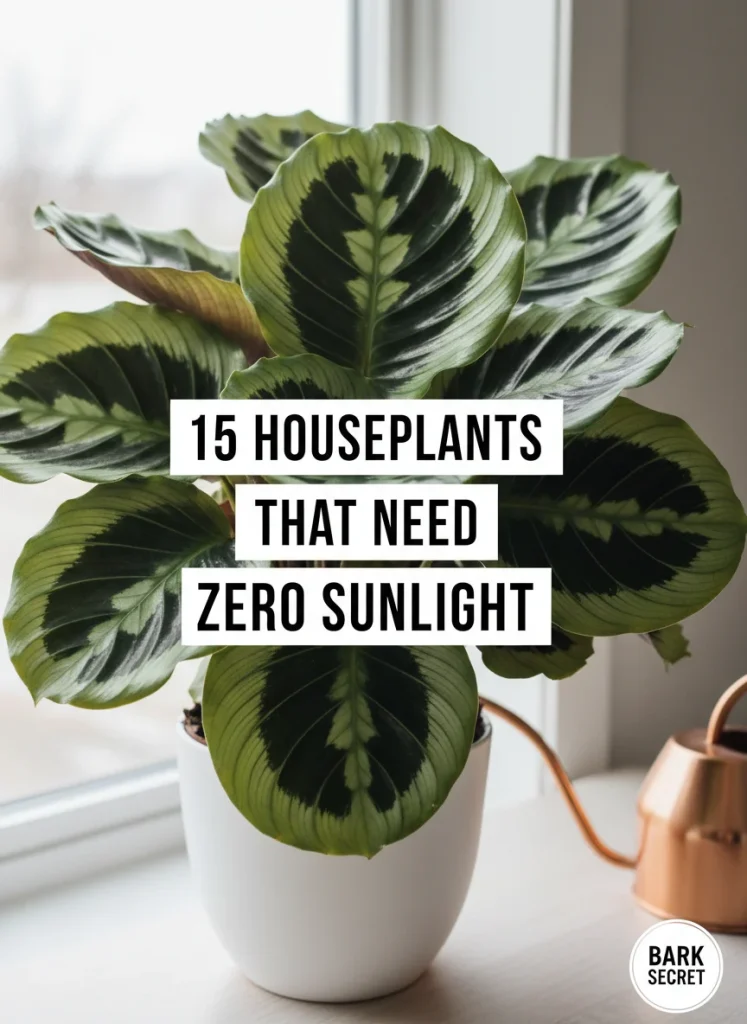
7. Prayer Plant (Maranta)
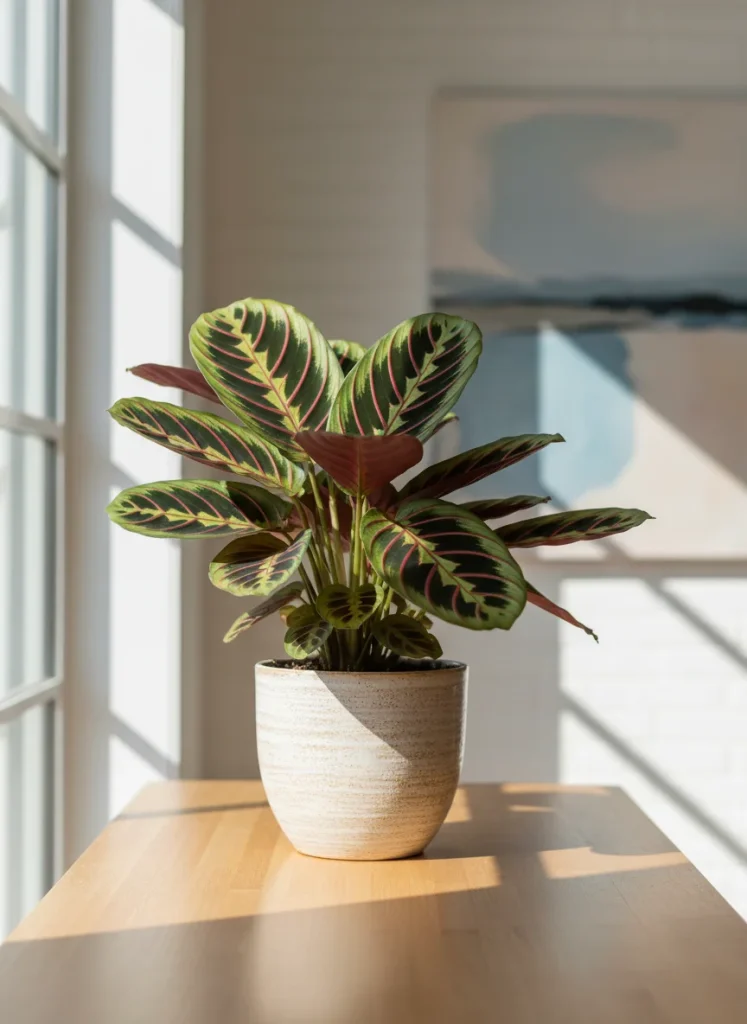
The Prayer Plant is fascinating to watch. Its leaves lie flat during the day to catch the sun. At night, they fold upward like hands in prayer. This movement is called nyctinasty.
These plants have stunning, intricate patterns on their foliage. They do require higher humidity than the Snake Plant or ZZ Plant. A bathroom with a small window is often the perfect home for them.
8. Spider Plant
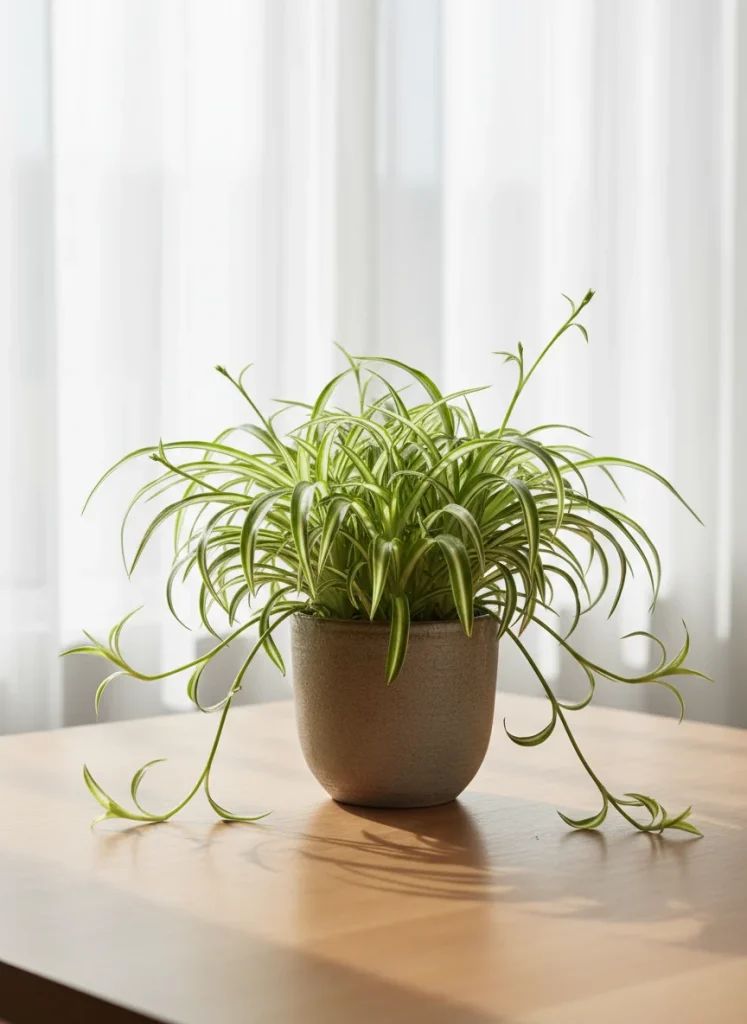
The Spider Plant is a retro favorite that never goes out of style. It produces arching leaves that look like a fountain. When the plant is happy, it sends out long stems with small white flowers and “pups” or baby plants.
You can cut these babies off and plant them in soil to create new gifts for friends. They tolerate low light well, though they may produce fewer babies in the shade.
9. Parlor Palm
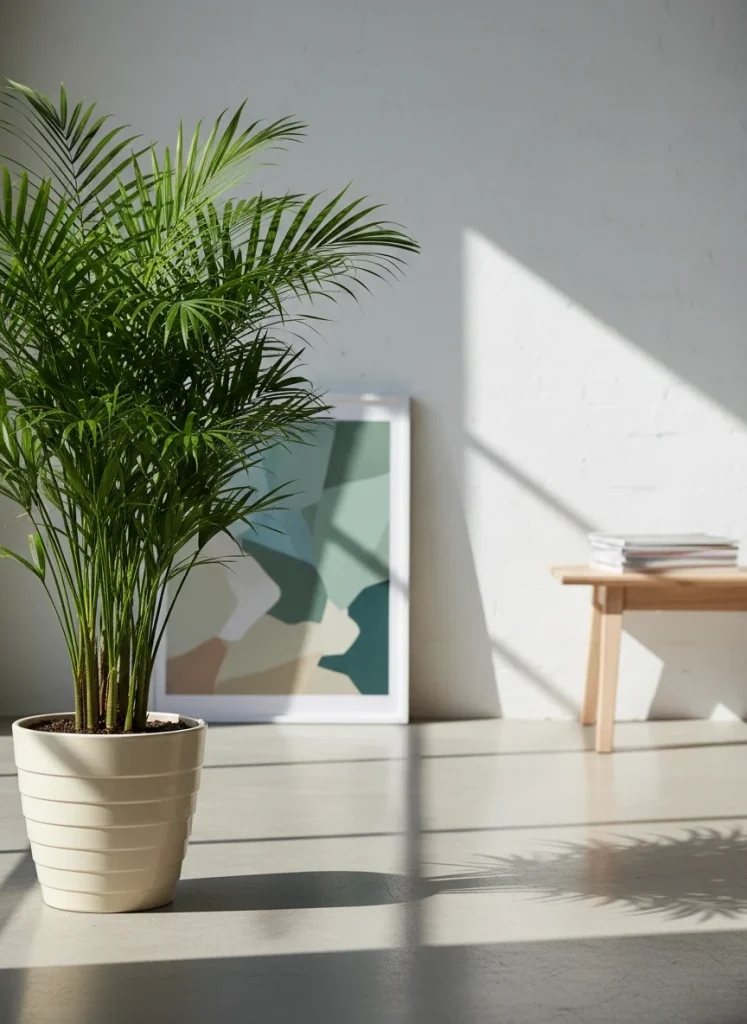
This is another Victorian classic. The Parlor Palm brings elegance and height without taking up much floor width. It grows in clumps of feathery fronds.
It thrives in indirect light and hates direct sun, which can scorch its delicate leaves. It grows very slowly, so it will not outgrow its space for years. It is an ideal choice for a dining room corner.
10. Dumb Cane (Dieffenbachia)
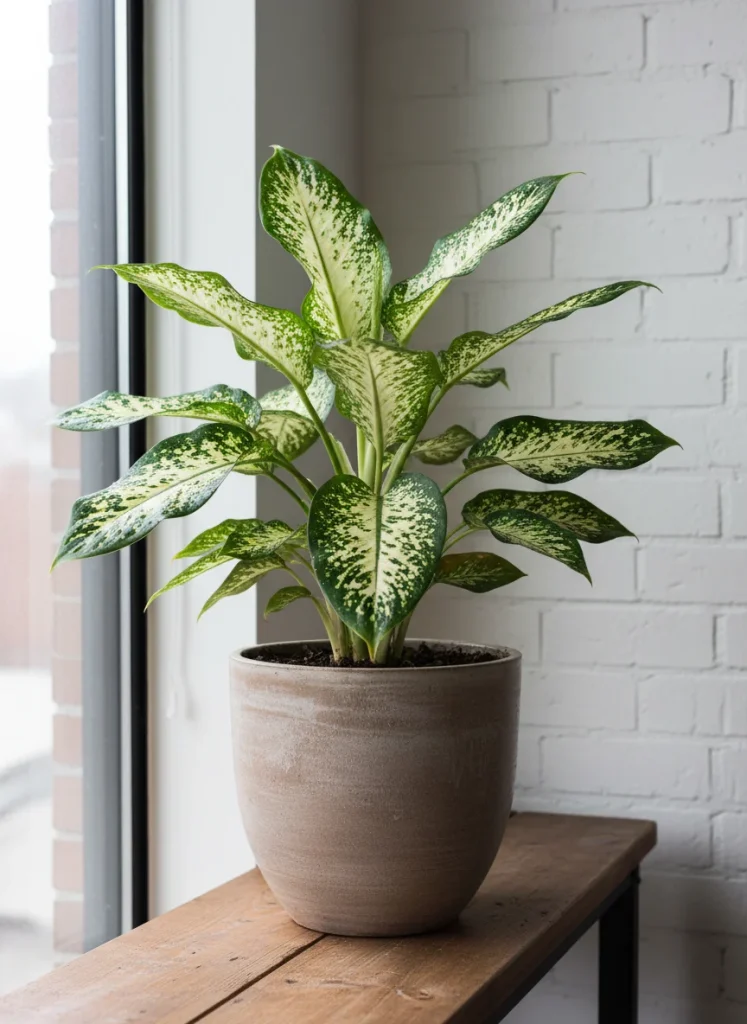
Dieffenbachia features large, showy leaves speckled with cream or yellow. It provides a lush, jungle look. It is tolerant of filtered light.
We must note a safety warning here. The sap can cause swelling if ingested, which is why it is called Dumb Cane. Keep this one away from curious pets or small children. Aside from that, it is a sturdy and reliable grower.
11. Bird’s Nest Fern
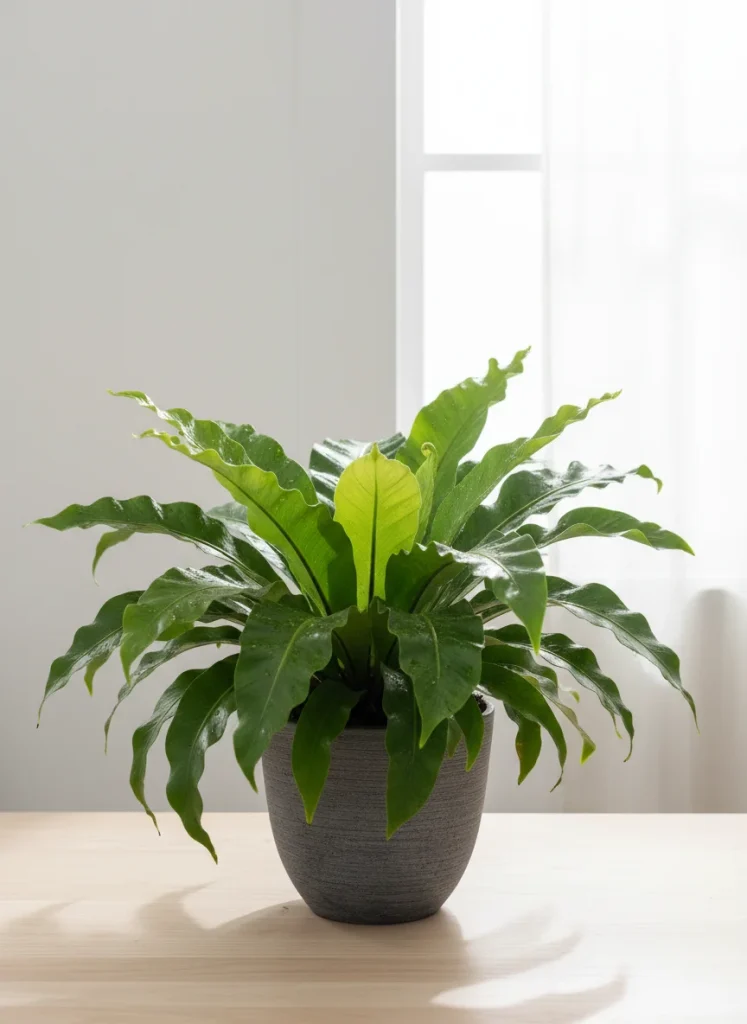
Ferns can be tricky, but the Bird’s Nest Fern is more forgiving than most. It has thick, rippled fronds that grow from a central rosette. It looks like a green nest.
This plant loves humidity. It does not like dry soil. If you have a dark bathroom that gets steamy when you shower, this plant will be very happy there.
12. Heartleaf Philodendron
This is often confused with Pothos. They look similar and serve similar purposes. The Heartleaf Philodendron has smoother, heart-shaped leaves and thinner stems. It is elegant and trails beautifully.
It is incredibly adaptable. It can live in low light for years. Like the Pothos, it is easy to propagate in water.
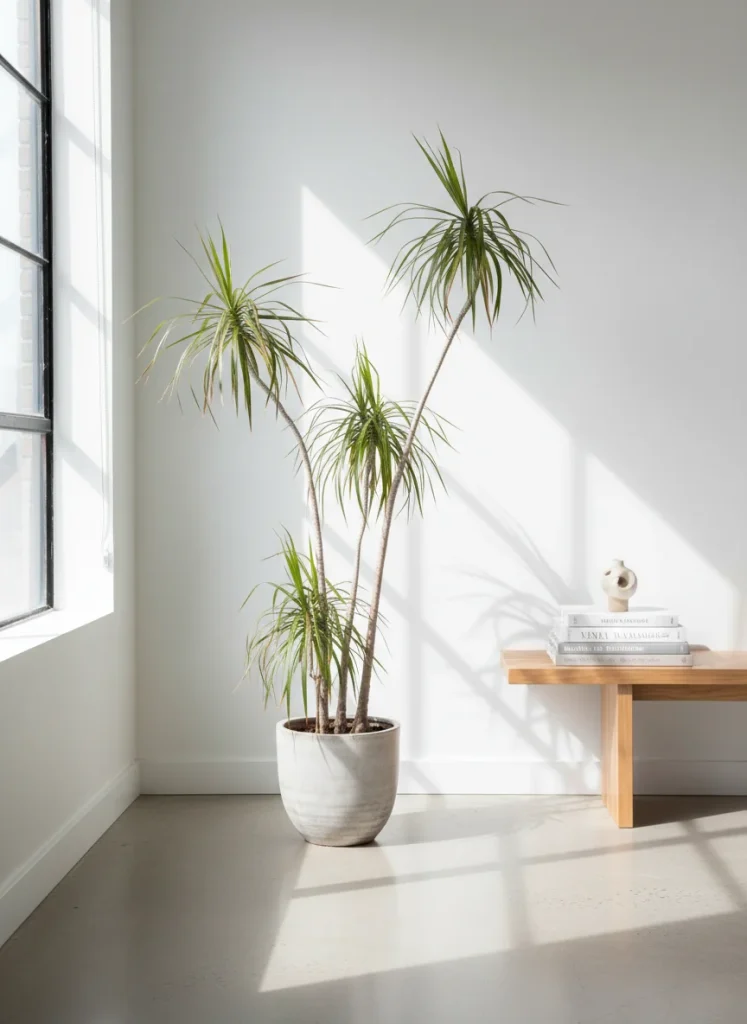
13. Dracaena (Dragon Tree)
Dracaena plants come in many varieties. Most have woody stems with tufts of spiky leaves on top. They look like small palm trees. The ‘Janet Craig’ and ‘Lisa’ varieties are specifically known for their low-light tolerance.
They add vertical height to a room. You must be careful not to overwater them. Their roots rot easily if they sit in wet soil.
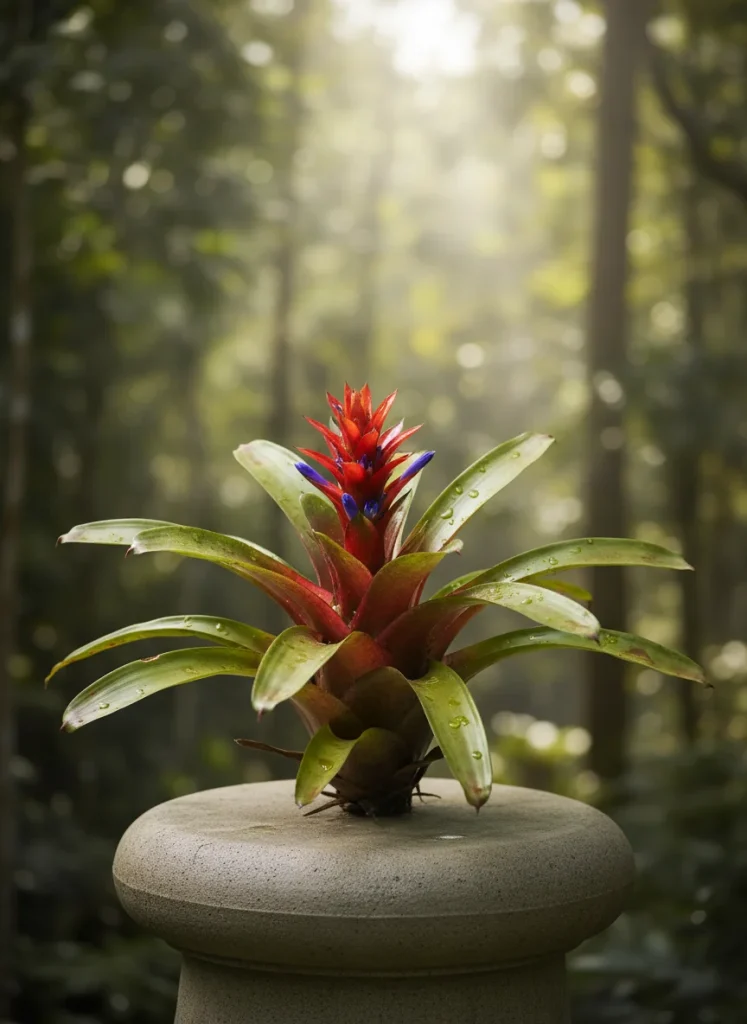
14. Bromeliad
Bromeliads add an exotic, tropical touch. Many people think they need blazing sun, but many varieties actually prefer shady environments. In nature, they often grow on tree branches shaded by leaves above.
They have a unique way of drinking. They have a central “tank” or cup in the center of the leaves. You water the tank rather than just the soil. They bring vibrant colors that can last for months.
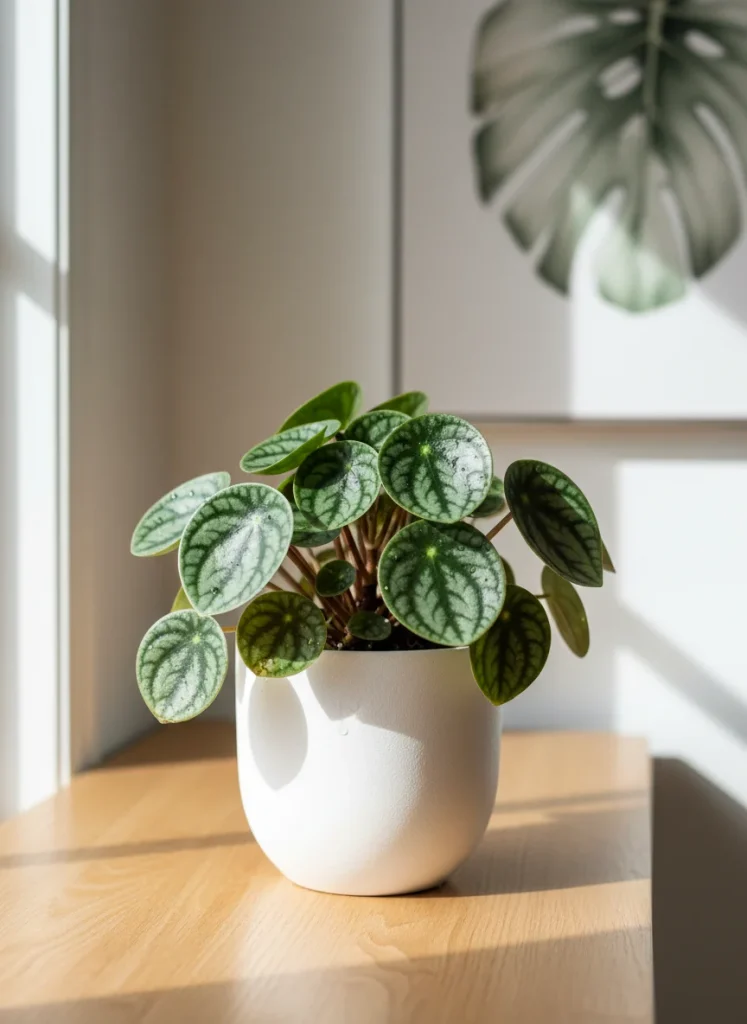
15. Watermelon Peperomia
This plant is adorable. The leaves look exactly like the rind of a watermelon. It is a small plant, making it perfect for shelves or side tables.
Peperomias generally handle lower light well. They have semi-succulent leaves, so they do not need constant watering. It is a great choice if you want interesting texture without a lot of work.
The Golden Rules of Low-Light Care
Choosing the right plant is only step one. Caring for a plant in the dark requires a different strategy than caring for a plant in a sunny window. Let’s be honest. Most people kill low-light plants with kindness.
1. Water Less. Much Less.
This is the most critical rule. Light is energy. Plants use energy to drink water. In low light, the plant’s metabolism slows down significantly. It drinks very slowly.
If you water a low-light plant once a week, you will likely rot the roots. You must check the soil with your finger. If it feels damp, walk away. You might only need to water these plants once every two or three weeks. In winter, it might be once a month.
2. Dust is the Enemy
This is often overlooked, but dust blocks light. In a sunny window, a little dust doesn’t matter much. In a dark corner, every photon counts. A layer of dust on a leaf acts like a blackout curtain.
You need to wipe the leaves down gently with a damp cloth every few weeks. This helps the plant breathe and photosynthesize efficiently. Boring, but essential.
3. Watch the Temperature
Dark corners can sometimes be drafty corners. Most of the plants on this list are tropical. They hate cold drafts from air conditioners or leaky windows. Keep them in a spot where the temperature stays relatively stable.
4. Fertilizer is Optional
Because these plants are growing slowly, they do not need much food. Fertilizing a plant that isn’t growing is a recipe for chemical burn. Only fertilize sparingly in the spring and summer. Dilute the fertilizer to half strength. Never feed them in the winter.
You can transform the feel of your home with these plants. They bring life, oxygen, and calm to the spaces we usually neglect. Start with a Snake Plant or a ZZ Plant if you are nervous. They will build your confidence. You have more options than you think.
Continue Reading
5 Clever Spots You Have Probably Never Thought to Put a Plant