The Best Plants for Small Apartments That Don’t Need Sunlight
Executive Summary & Direct Answer
For small apartments with limited natural light, the most resilient choices are the Snake Plant (Sansevieria) and the ZZ Plant, both of which thrive on neglect and low photosynthesis rates. For trailing greenery, the Pothos and Philodendron offer vertical growth without demanding direct sun. If you desire flowering or patterned foliage, opt for a Peace Lily or Chinese Evergreen. Success in low light relies less on finding a plant that “needs” darkness (none do) and more on choosing species that tolerate it by processing energy slowly.
Most people assume their apartment is a plant graveyard simply because they lack floor-to-ceiling south-facing windows, but in reality, some of the most stunning botanical specimens actually prefer the cool, filtered embrace of the shade.
The Science of “Low Light” Gardening (And Why Most People Fail)
Before we curate your shopping list, we must address the technical reality of low-light environments. This is where most indoor gardeners fail. They buy a “shade-tolerant” plant, place it in a dark hallway, and continue to water it as if it were sitting on a sun-drenched patio.
Here is the botanical truth: Light is energy. Plants use energy to process water. In a low-light apartment, your plant’s metabolism slows down significantly. It is not “drinking” water rapidly because it isn’t photosynthesizing rapidly. The number one killer of low-light plants is not the lack of light; it is root rot caused by overwatering.
Defining “Low Light”
To a botanist, “low light” has a specific definition. It does not mean a windowless bathroom. It generally refers to:
- North-facing windows: Consistent, soft light with no direct sunbeams.
- Deep room placement: Placing a plant 8 to 10 feet away from an East or West window.
- Obstructed views: A window facing a brick wall or shaded by a large outdoor tree.
If you can comfortably read a book without turning on a lamp, you have enough light for the plants listed below. If you cannot read, you need a grow light.
Tier 1: The “Unkillables” (Structural & Architectural)
These plants are the backbone of apartment gardening. They provide height, structure, and air purification while demanding almost nothing in return.
1. The Snake Plant (Sansevieria / Dracaena trifasciata)
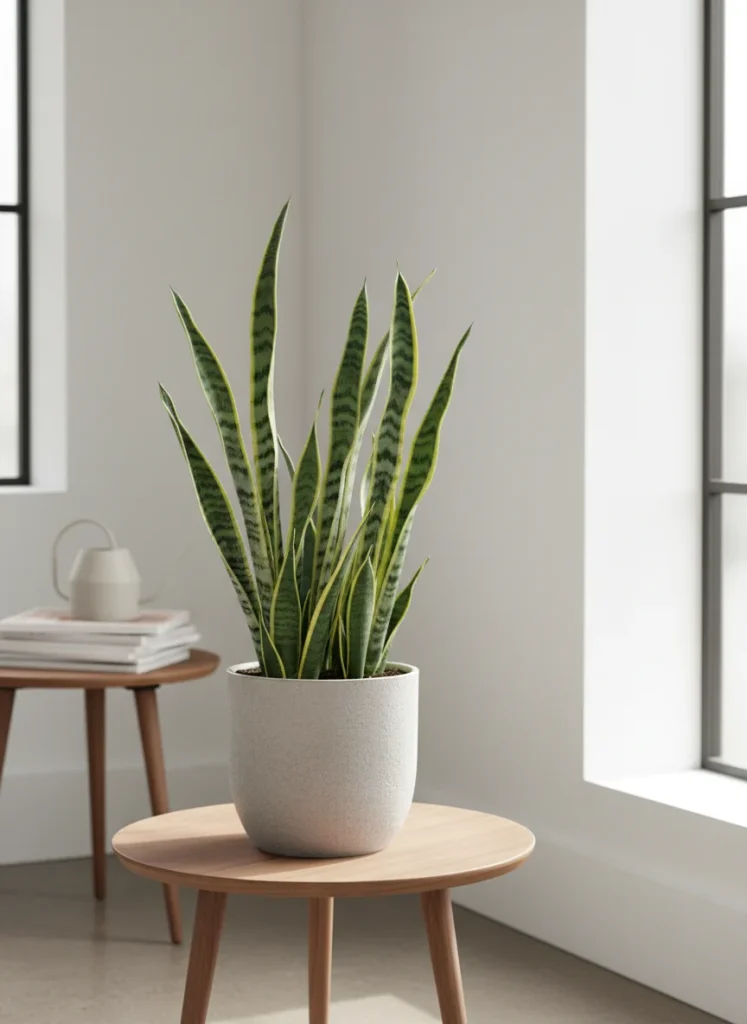
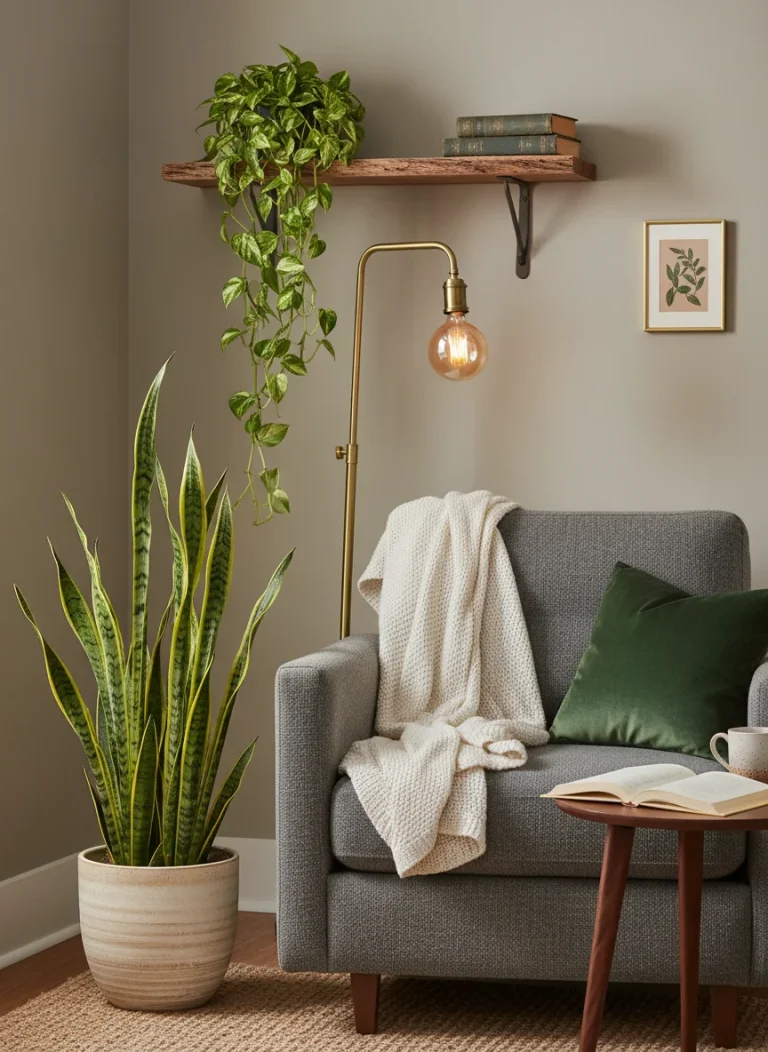
The Snake Plant is the gold standard for low-light resilience. Its vertical, sword-like leaves make it perfect for small apartments where floor space is at a premium. Unlike broad-leaf plants that spread outward, the Snake Plant grows upward.
Advanced Strategy: The Snake Plant utilizes Crassulacean Acid Metabolism (CAM). This means it opens its stomata (pores) at night to minimize water loss, releasing oxygen while you sleep. This makes it the premier choice for bedroom decor.
- Watering: Extremely low. In deep shade, water once every 3-4 weeks. Allow the soil to dry completely.
- Styling: Use a basket planter to soften its rigid architectural lines.
2. The ZZ Plant (Zamioculcas zamiifolia)
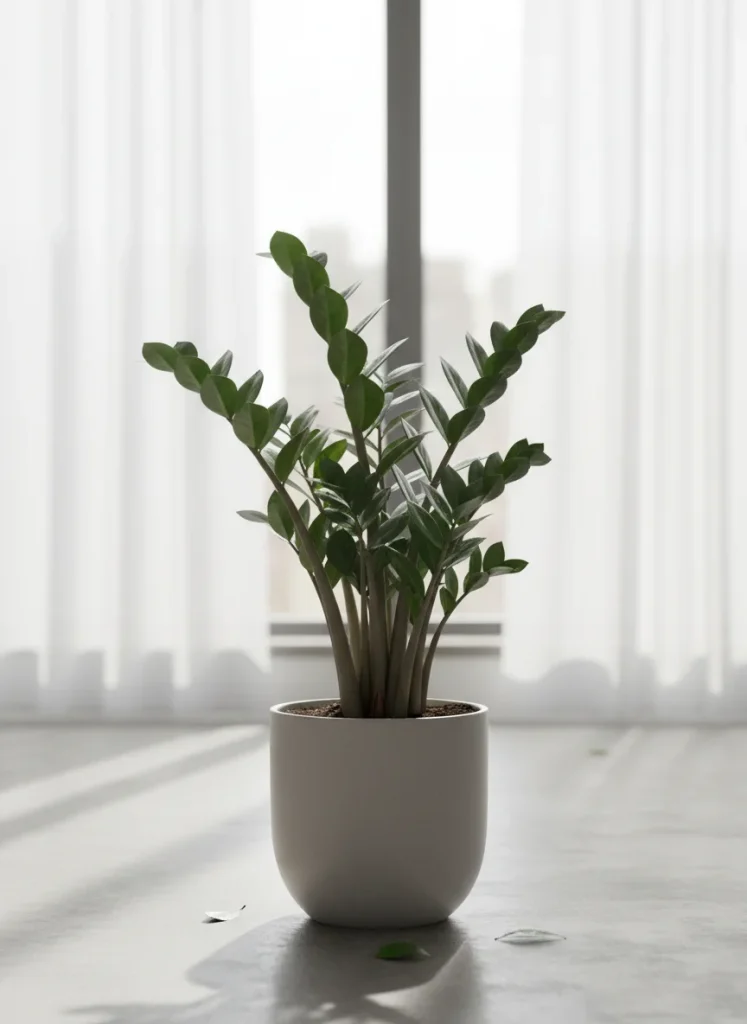
If the Snake Plant is the king of resilience, the ZZ Plant is the queen. Native to drought-prone Eastern Africa, it has evolved to survive months without water. It features glossy, dark green leaves that reflect light, helping to brighten dim corners.
The Secret Weapon: Below the soil, the ZZ plant has potato-like rhizomes that store water. This is why it survives neglect. If you water this plant weekly, you will kill it. In low light, ignore it for a month at a time.
3. The Cast Iron Plant (Aspidistra elatior)
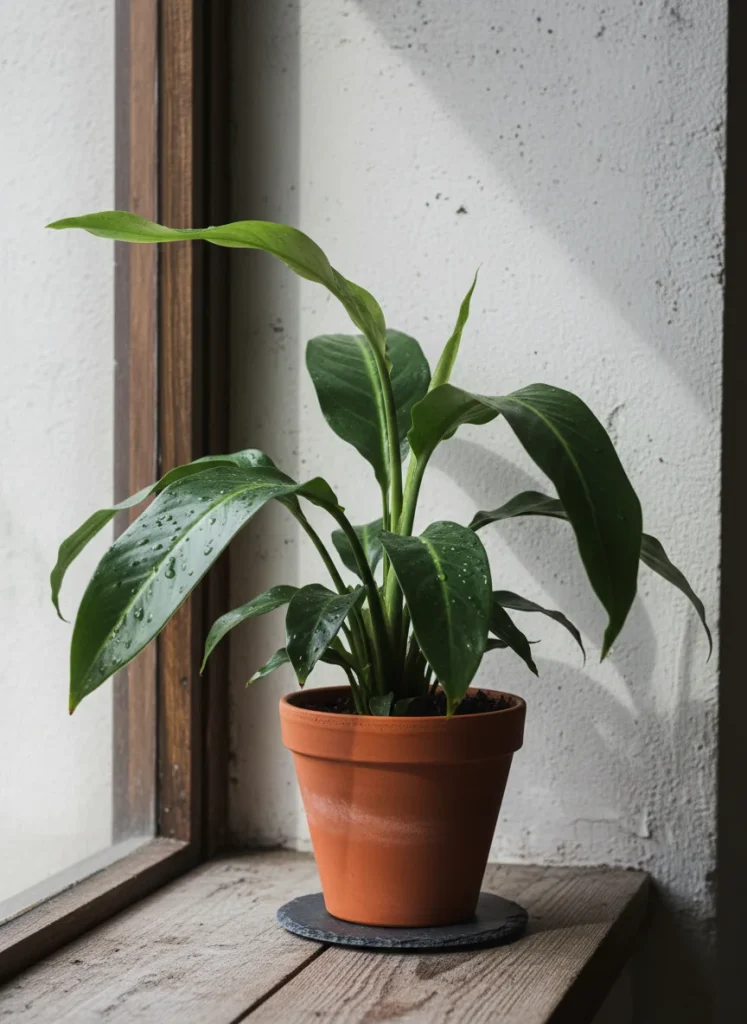
A Victorian-era favorite, this plant earned its name because it could survive the fumes of gas lamps and the gloom of 19th-century London parlors. It is virtually indestructible. It grows slowly and isn’t flashy, but its deep green, leather-like leaves bring a sense of permanence and calm to a room.
Tier 2: Trailing Vines (Vertical Space Maximizers)
In a small apartment (under 600 sq ft), surface area is scarce. You need plants that can hang from ceilings or trail off bookshelves.
4. Pothos (Epipremnum aureum)
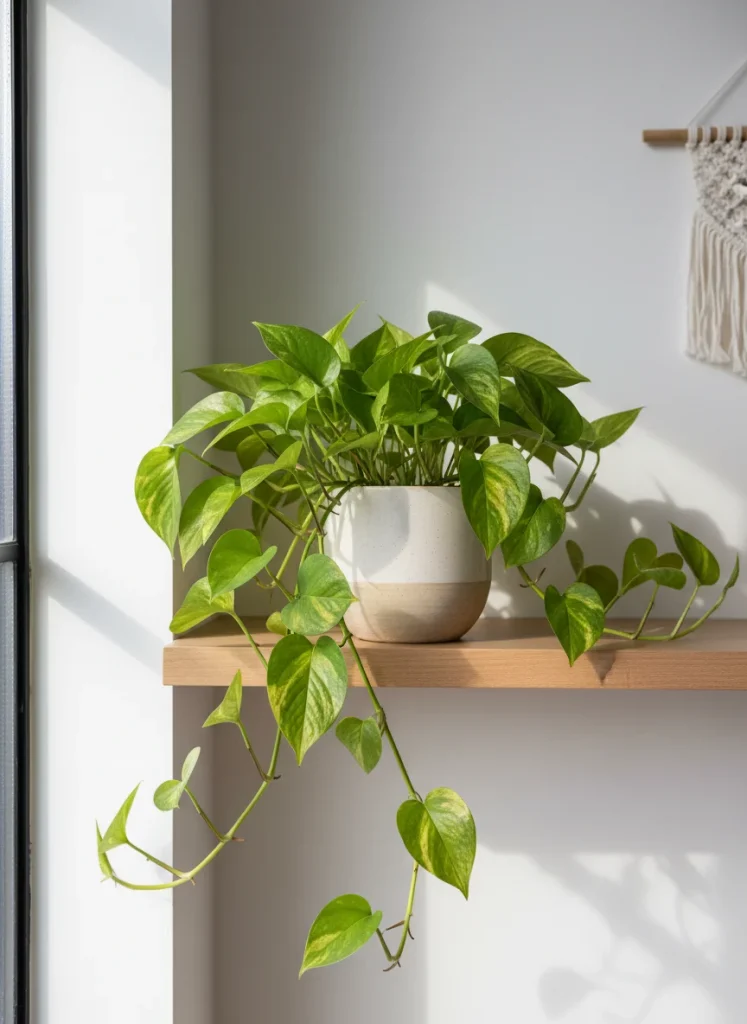
Often called “Devil’s Ivy” because it is nearly impossible to kill, Pothos is the ultimate trailing plant. In low light, it will grow slower and the leaves may remain smaller, but it will persist.
Technical Nuance: If you choose a variegated variety (like Marble Queen or Golden Pothos), note that low light will cause the plant to revert to solid green. The plant produces more chlorophyll (green pigment) to maximize photosynthesis in dim conditions. To keep the white or yellow streaks, it needs slightly more ambient light.
5. Heartleaf Philodendron
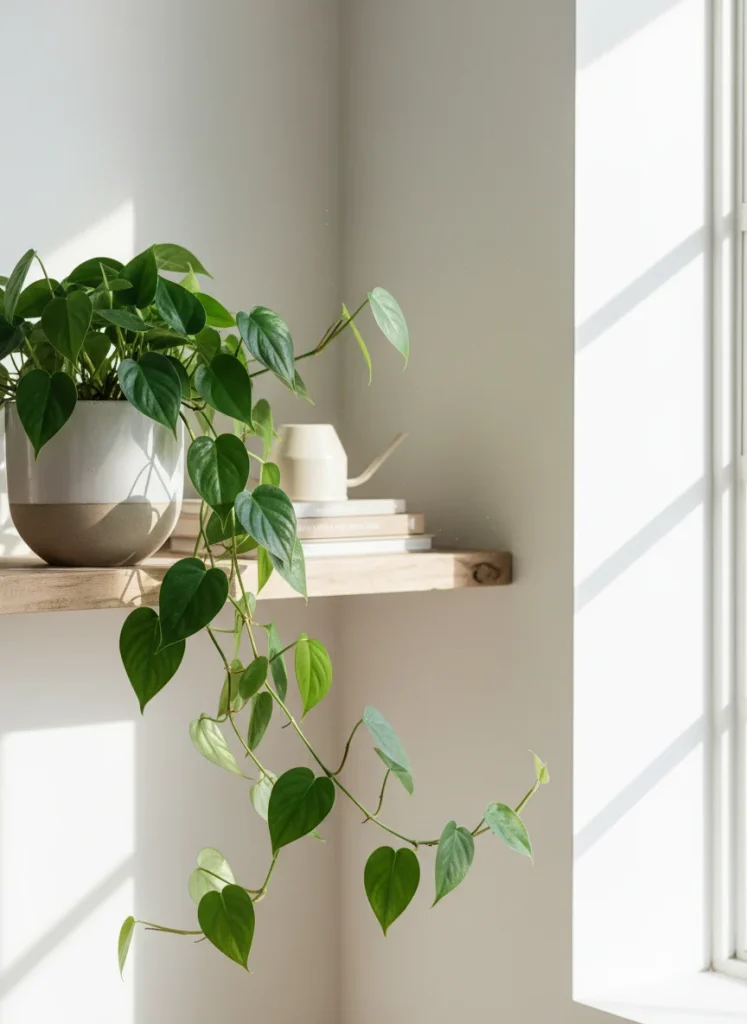
Similar in care to the Pothos but with a more matte texture and heart-shaped leaves. It is generally more tolerant of dark corners than the Pothos. It communicates clearly: if the leaves curl, it is thirsty. If they yellow, it is overwatered.
Tier 3: The Communicators (Flowering & Patterned)
Low light doesn’t have to mean boring green foliage. These plants add texture and color.
6. Peace Lily (Spathiphyllum)
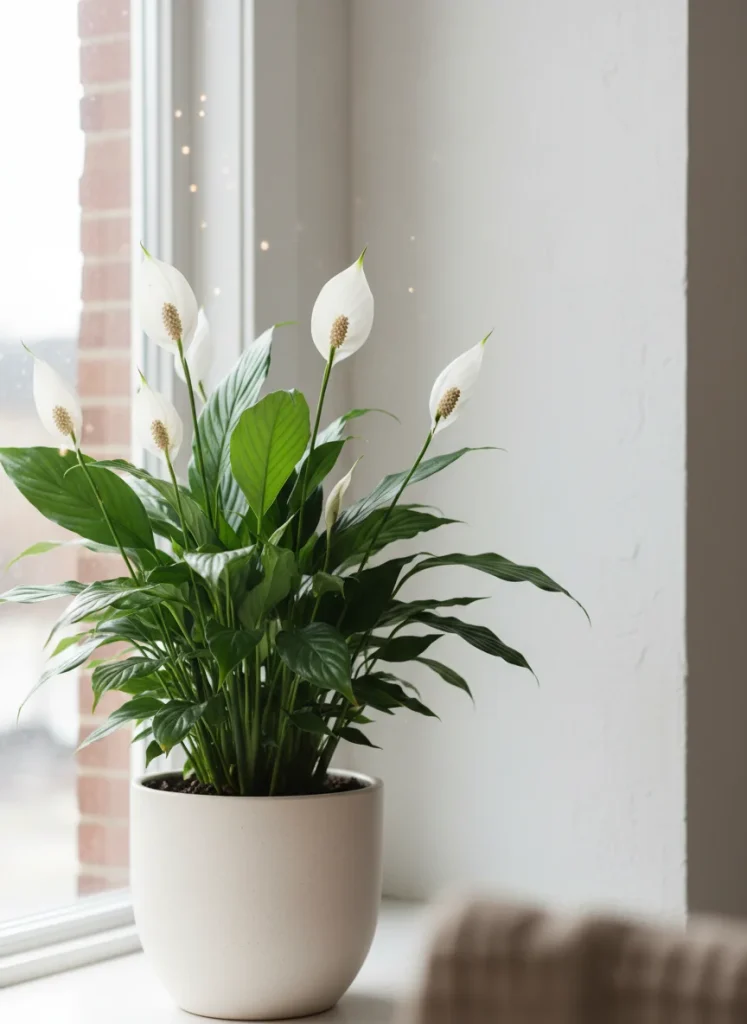
The Peace Lily is one of the few low-light plants that flowers reliably indoors. The white “flowers” are actually modified leaves called bracts.
Why Beginners Love It: It is dramatic. When a Peace Lily is thirsty, it droops completely, looking dead. Give it a cup of water, and within two hours, it perks back up perfectly. It removes the guesswork from watering schedules.
7. Chinese Evergreen (Aglaonema)
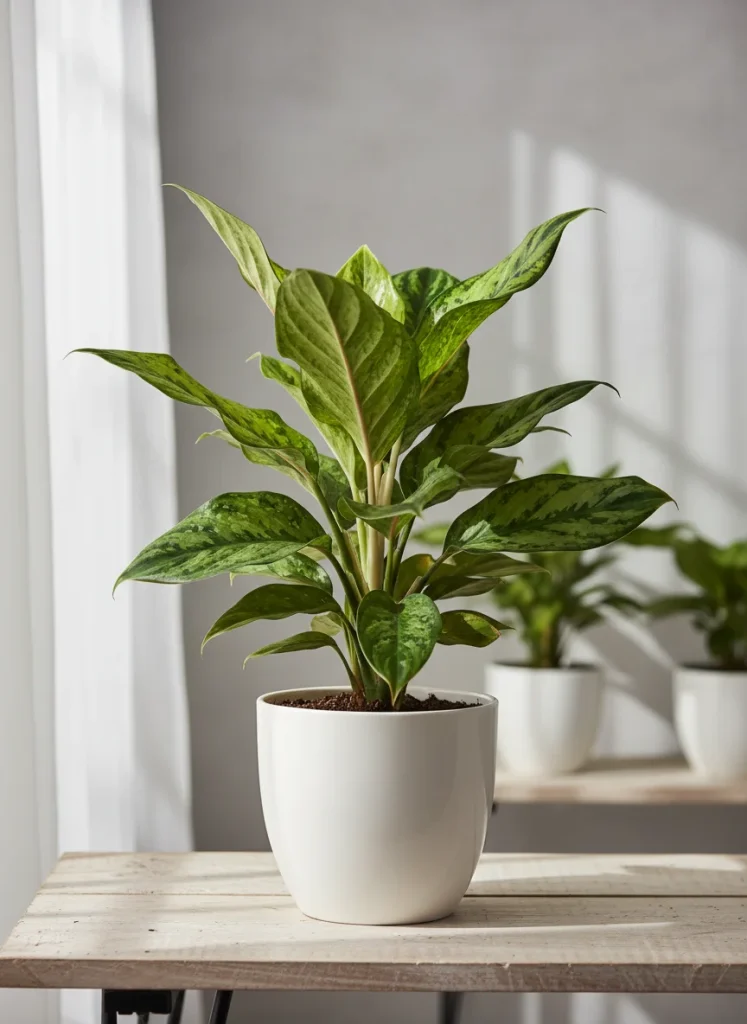
Aglaonemas are the unsung heroes of low-light design. They come in stunning varieties of silver, pink, and red. The darker the leaf, the more shade it can handle. Avoid the bright pink varieties for dark corners; stick to the ‘Maria’ or ‘Silver Bay’ cultivars for the best low-light performance.
Advanced Strategy: The “Dark Corner” Soil Mix
Standard potting soil is often too dense for low-light plants. Because evaporation is slow in the shade, dense soil stays wet too long, leading to root rot. To build a Best-on-Web environment for your plants, you should amend your soil.
The Recipe:
- 2 Parts High-Quality Potting Mix
- 1 Part Perlite (for aeration)
- 1 Part Orchid Bark (for drainage)
This “chunky” mix ensures that even if you accidentally overwater, the excess liquid flows through quickly, protecting the delicate root systems of your Snake Plants and Monstera.
Step-by-Step Blueprint: Styling a Low-Light Living Room
Step 1: Assess the Lux.
Download a free light meter app on your phone. Measure the light in your chosen corner at noon. If it reads below 50 foot-candles, you need a grow light. If it is between 50-200, the plants listed above will survive.
Step 2: Layering Heights.
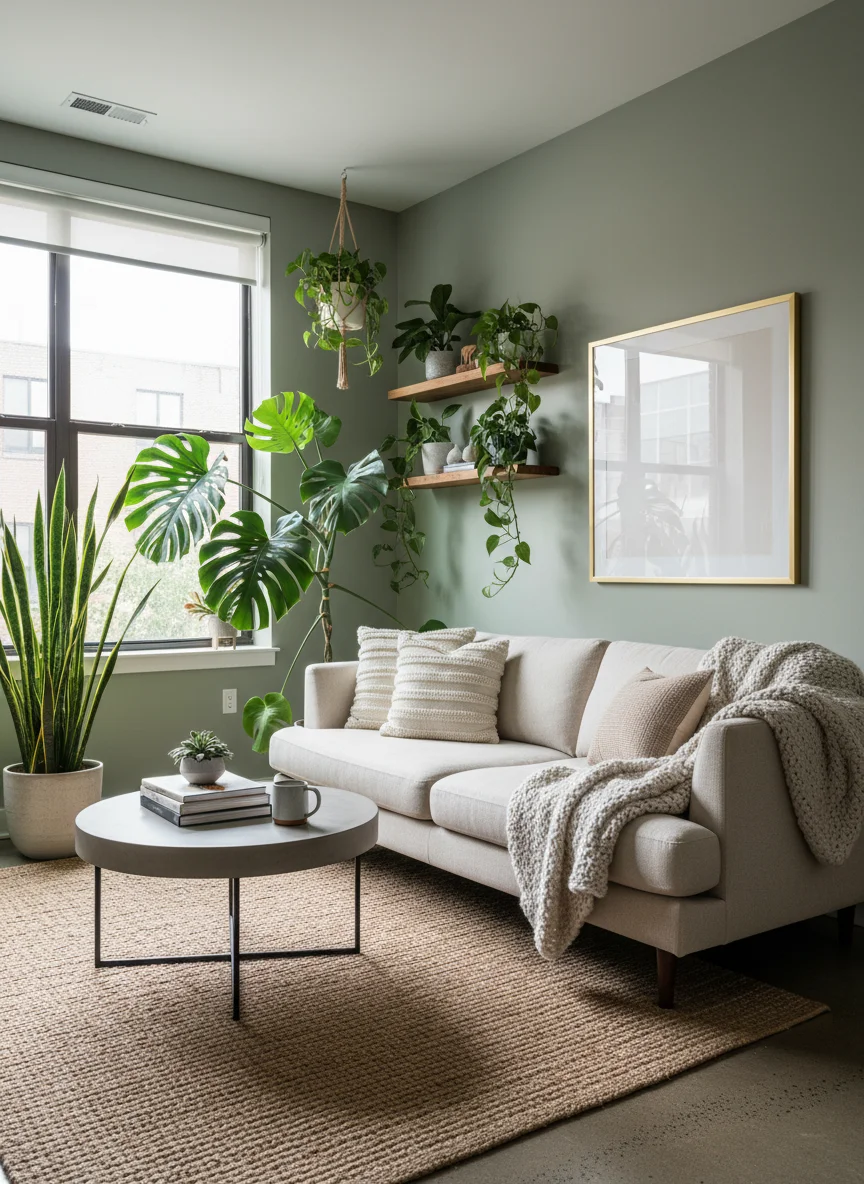
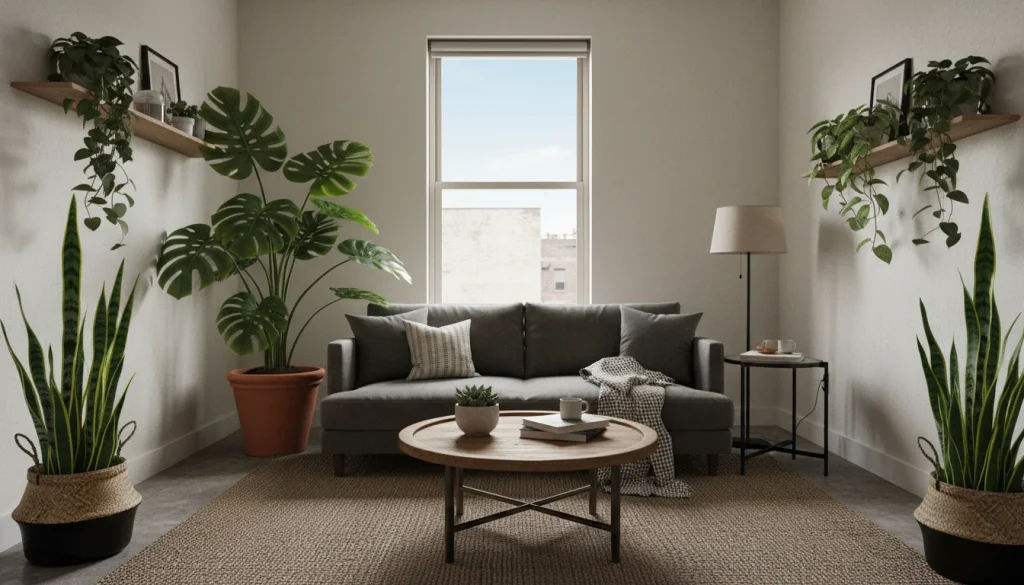
Place a tall Snake Plant in a floor stand in the back corner. Place a bushy ZZ plant on a mid-level side table. Place a Pothos on the top shelf of a bookcase. This creates a “green wall” effect without using much floor space.
Step 3: The Dusting Routine.
In low light, dust on leaves acts like a sunblock, preventing the plant from absorbing what little light is available. Wipe leaves with a damp microfiber cloth every two weeks. This is crucial for low-light survival.
Edge Cases: Can You Grow Monstera in Low Light?
You will often see the Monstera Deliciosa listed as a low-light plant. This is a half-truth. Can a Monstera survive in low light? Yes. Will it look like the ones on Instagram? No.
In low light, a Monstera will become “leggy” (long stems stretching for light) and it will stop producing fenestrations (the iconic Swiss-cheese holes). If you want a Monstera in a dark apartment, you must accept a looser, wilder look, or supplement with an artificial grow bulb.
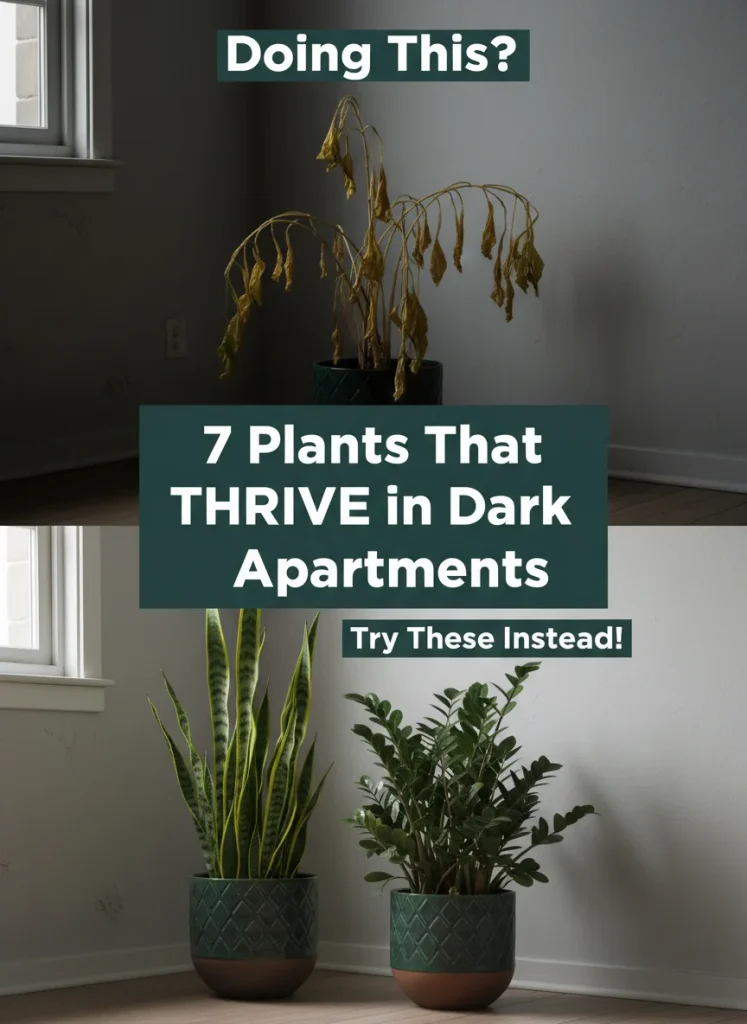
Pin This Post!
Common Questions (FAQ)
Q: Do low-light plants need fertilizer?
A: Rarely. Because they are growing slowly due to lack of sun, they don’t use up nutrients quickly. Fertilizing them too often can cause “fertilizer burn” on the roots. Dilute your fertilizer to 1/4 strength and use it only once or twice during the summer months.
Q: Are these plants safe for pets in small apartments?
A: This is a critical consideration. Unfortunately, the most resilient plants (Snake Plant, ZZ Plant, Pothos, Peace Lily, Monstera) are all toxic to cats and dogs if ingested. If you have a pet that chews, stick to the Spider Plant, Cast Iron Plant, or Prayer Plant (Maranta), which are non-toxic and safe.
Q: Can Lucky Bamboo really grow without soil?
A: Yes. Lucky Bamboo (Dracaena sanderiana) is hydroponic-friendly. You can grow it in a vase filled with decorative pebbles and water. However, ensure you change the water every 2 weeks to prevent algae and bacterial growth. It is an excellent choice for windowless bathrooms.
Q: Why are the tips of my Spider Plant turning brown?
A: Spider Plants are sensitive to fluoride and chlorine found in tap water. This causes “tip burn.” To fix this, fill your watering can and let it sit out for 24 hours before watering (allowing chemicals to evaporate), or use distilled water. It is not usually a sign of low light stress.
Q: What is the difference between “Low Light” and “No Light”?
A: No plant can survive in “No Light” (total darkness). They all require photosynthesis. If you have a room with zero windows, you must use a grow light or rotate your plants. “Low Light” implies ambient reflection or distance from a window. If you put a live plant in a windowless closet, it will slowly starve to death.