
Best Organic Bug Spray for Vegetable Garden: Top Picks That Actually Work
Meta Description:
Disclosure: This article contains affiliate links. As an Amazon Associate, we earn from qualifying purchases at no extra cost to you. We only recommend products we have tested or thoroughly researched.
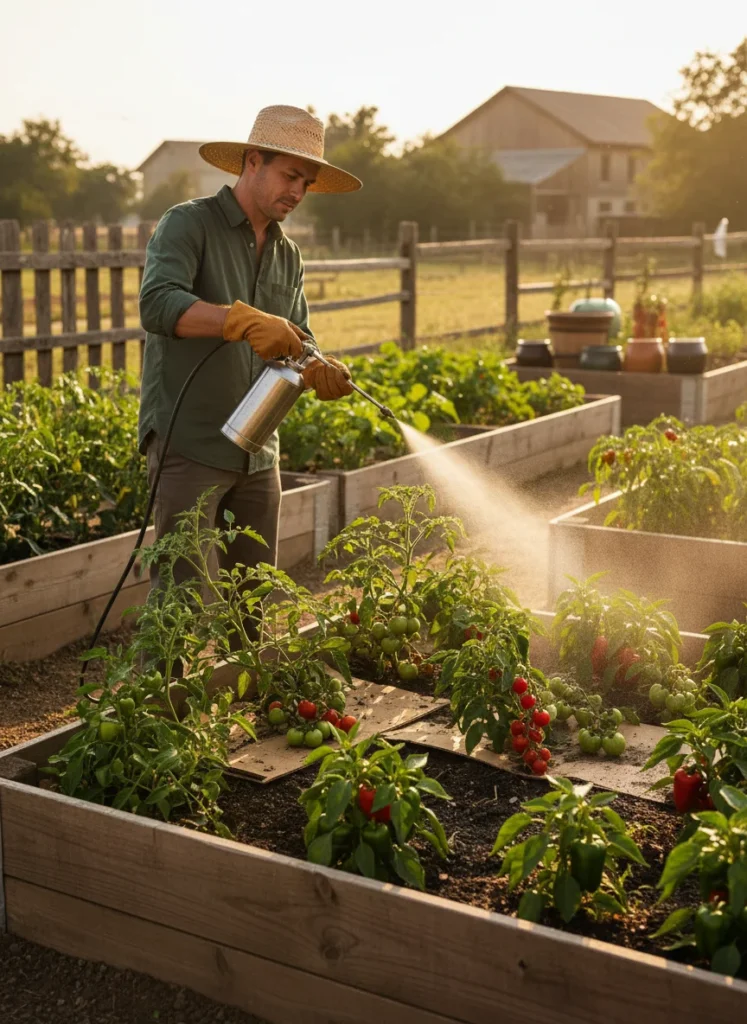
If bugs are taking over your vegetable garden and you want something you can spray without worrying about what ends up on your food, you are in the right place. Finding the best organic bug spray for vegetable garden use does not have to be complicated, but with so many products making big claims on the label, it helps to know what actually delivers results.
This guide cuts through the noise. Whether you are dealing with aphids on your kale, caterpillars on your tomatoes, or whiteflies on your peppers, there is an organic spray that will handle it. And if you want the full picture on organic pest control beyond just sprays, our complete guide to the 7 Best Organic Pesticides for Vegetable Gardens (Safe & Effective) covers every major option in detail.
What Separates a Good Organic Bug Spray From a Mediocre One
Not every bottle with a leaf on the label deserves space in your garden shed. A genuinely good organic bug spray does three things well: it targets the pests you actually have, it breaks down quickly without leaving harmful residue on your food, and it does not demolish the beneficial insect population that is quietly working in your favor.
The clearest quality signal is an OMRI Listed certification. That means the Organic Materials Review Institute has independently verified the product meets National Organic Program standards. It is not a marketing claim, it is an actual audit. Look for it on the label before you buy.
Beyond certification, the active ingredient tells you most of what you need to know. Neem oil handles a wide range of pests and also provides some fungal disease protection. Insecticidal soap works fast on soft-bodied insects like aphids and spider mites. Pyrethrin delivers the quickest knockdown for severe outbreaks. Spinosad is your best tool specifically against thrips and leafminers. Knowing which ingredient fits your problem saves you time and money.
Best Organic Bug Sprays for Vegetable Gardens
Best Overall: Bonide Neem Oil Concentrate
Neem oil is the one product experienced vegetable gardeners keep reaching for season after season. It comes from the seeds of the neem tree and contains azadirachtin, a compound that disrupts insect feeding, molting, and reproduction at the hormonal level. Pests do not develop resistance to it the way they do with single-mode-of-action chemicals, and it handles an impressive range of species including aphids, whiteflies, spider mites, thrips, fungus gnats, and various beetle larvae.
What makes Bonide’s concentrate a smart buy is the value per application. A small amount goes a long way when mixed with water and a drop of liquid dish soap. It also pulls double duty as a mild fungicide, which is useful if you are dealing with powdery mildew alongside your pest pressure.
Apply in the evening to avoid harming foraging bees and reapply every 7 to 14 days or after significant rainfall. Keep in mind that neem oil can cause leaf scorch if applied in direct midday sun or at concentrations higher than recommended.
Best for Soft-Bodied Insects: Safer Brand Insect Killing Soap
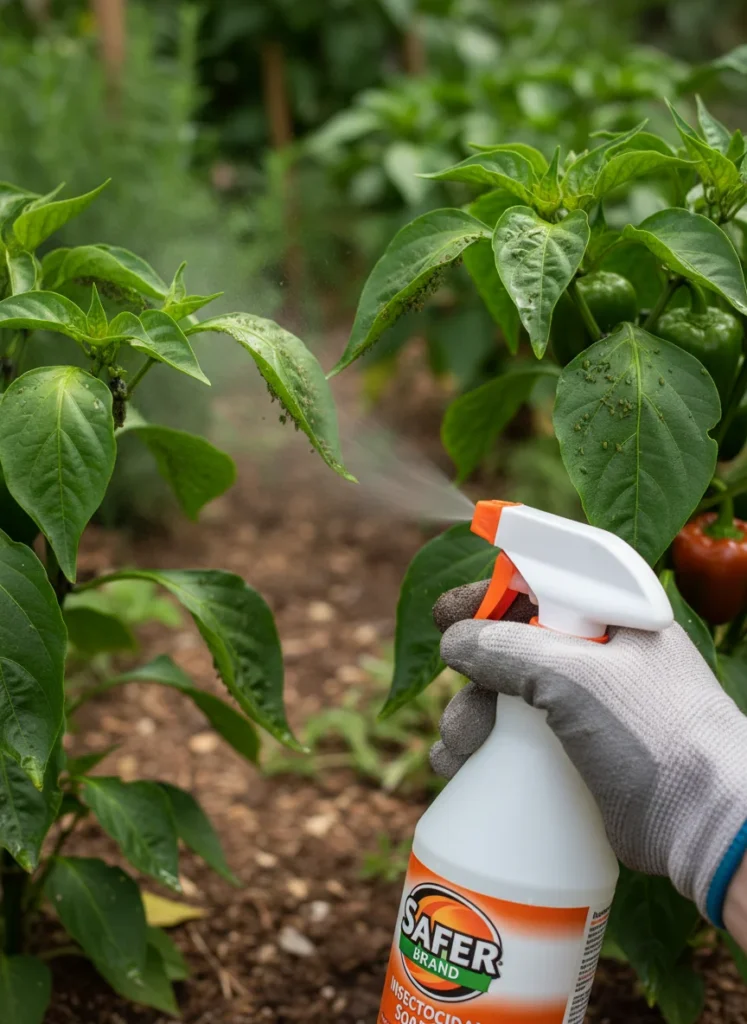
When aphids, spider mites, or whiteflies are your main problem, insecticidal soap is the most direct solution. Potassium salts of fatty acids penetrate the soft outer membrane of these insects and kill them through dehydration, typically within minutes of contact. It is fast, clean, and leaves no residue once it dries.
Safer Brand is one of the most trusted formulations because the concentration is carefully calibrated for plant safety. Homemade dish soap sprays can work in a pinch but carry a real risk of leaf burn, especially on cucumbers, squash, and other thin-leaved crops. The commercial formula is more predictable across different vegetable types.
The limitation is that it has no residual activity. Once the spray dries, it stops working. That means you need to apply it directly to pest colonies and repeat every 4 to 7 days until the population collapses. Coverage of leaf undersides is essential since that is where most soft-bodied insects live and feed.
Best for Caterpillars: Monterey BT Worm and Caterpillar Killer
If cabbage worms are shredding your brassicas or hornworms are attacking your tomatoes, Bt is in a category of its own. Bacillus thuringiensis is a naturally occurring soil bacterium that produces proteins lethal to caterpillar larvae when ingested. The larva stops feeding within hours and dies within a few days.
The remarkable thing about Bt is its specificity. It affects only the caterpillar stage of moths and butterflies and has zero impact on bees, earthworms, beetles, birds, or humans. You can spray it without any concern about harming the rest of your garden ecosystem.
It does break down in sunlight within 3 to 5 days, so timing is important. Apply when you first spot fresh damage or visible larvae. Repeat applications every 5 to 7 days through peak caterpillar season to maintain coverage.
Best for Severe Outbreaks: PyGanic Gardening Pyrethrin Spray
When a pest infestation escalates quickly and plants are visibly suffering, pyrethrin delivers the fastest organic knockdown available. Derived from chrysanthemum flowers, it works on contact and causes rapid paralysis across a wide spectrum of insect pests. It breaks down within 24 hours in sunlight, leaving no lasting residue on produce.
PyGanic is the most respected pyrethrin formulation for home vegetable gardens and carries OMRI Listed status. Use it as a targeted intervention when things get serious, not as a routine spray. Pyrethrin is toxic to beneficial insects including bees and predatory wasps, so apply strictly in the evening, only on affected plants, and avoid any open flowers entirely.
Best for Thrips and Leafminers: Captain Jack’s Deadbug Brew
Spinosad, the active ingredient in Captain Jack’s Deadbug Brew, comes from a soil-dwelling bacterium and works by overstimulating the insect nervous system. It is the most effective organic option specifically for thrips and leafminers, two pests that many other organic sprays fail to control adequately.
It also handles caterpillars, spider mites, and certain beetles, making it a versatile option when you are dealing with mixed pest pressure. It carries a one-day pre-harvest interval, so plan applications at least 24 hours before picking. Like pyrethrin, it can harm bees before drying, so stick to evening applications and keep it away from flowers.
Quick Reference: Match the Spray to the Pest
| Pest Problem | Best Organic Bug Spray |
|---|---|
| Aphids, whiteflies, mites | Insecticidal soap or neem oil |
| Caterpillars and worms | Bacillus thuringiensis (Bt) |
| Thrips, leafminers | Spinosad (Captain Jack’s) |
| Beetles, mixed pests | Neem oil |
| Severe, fast-spreading outbreak | Pyrethrin (PyGanic) |
How to Get the Best Results From Organic Bug Sprays
The product is only part of the equation. How and when you apply it determines whether you get results or waste your time.
Spray in the evening. Most organic sprays carry some risk to pollinators while wet. Evening application gives the product contact time overnight and lets it dry before bees become active the next morning. It also reduces the chance of leaf burn on hot days.
Cover leaf undersides thoroughly. Aphids, spider mites, and whiteflies cluster on the undersides of leaves. Spraying only the tops of leaves while the colony lives underneath is a common reason organic sprays appear not to work.
Plan for multiple applications. Organic bug sprays rarely solve a pest problem in a single treatment. Most require 2 to 4 applications spaced 5 to 10 days apart to break the population cycle completely. Consistency matters more than the strength of the product.
Rotate between active ingredients. Rotating between neem oil, insecticidal soap, and spinosad across a season prevents pest populations from developing tolerance to any single compound.
Reapply after rain. Nearly all organic sprays wash off with rainfall. Check treated plants after any significant rain and reapply if necessary.
Mistakes That Undermine Organic Spraying Programs
Spraying at the wrong concentration is one of the most common problems. Too dilute and the product has no effect. Too concentrated and you end up with leaf burn, particularly with neem oil and insecticidal soap. Follow label dilution rates precisely.
Applying during midday heat causes problems on two fronts. The spray evaporates before it has time to work and the combination of heat and certain surfactants damages plant tissue. Early morning is acceptable but evening is better for most products.
Treating without identifying the pest first is a significant waste of effort. Yellowing, curling, and wilting can all result from nutrient deficiency, disease, or pests, and spraying an insecticide on a plant with iron deficiency does absolutely nothing. Confirm what you are dealing with before reaching for the sprayer.
Ignoring beneficial insects is a longer-term mistake. Broad, indiscriminate spraying kills the ladybugs, lacewings, and parasitic wasps that naturally suppress pest populations. Targeted applications on affected plants, rather than calendar spraying of the entire garden, keeps your natural allies intact.
Pro Tips Worth Knowing
Start with the gentlest effective product. Try insecticidal soap before escalating to pyrethrin. Preserve your beneficial insect population for as long as possible and only bring out the stronger tools when the situation genuinely requires them.
Combine spraying with companion planting. Basil near tomatoes deters aphids and whiteflies. Nasturtiums draw aphids away from vegetables as trap crops. Dill and fennel attract predatory wasps. These strategies reduce how often you need to spray in the first place.
Keep a simple spray log. Record what you applied, when, which plants you treated, and what the pest response looked like a week later. After one full season you will have real, specific knowledge about what works in your garden rather than starting from scratch each spring.
For a deeper look at the full range of organic pest control options including non-spray products like diatomaceous earth and kaolin clay, visit our main guide: 7 Best Organic Pesticides for Vegetable Gardens (Safe & Effective).
Frequently Asked Questions
What is the safest organic bug spray to use the day before harvest? Insecticidal soap and neem oil both carry a zero-day pre-harvest interval, meaning you can harvest on the same day as application as long as you rinse produce well. These are your safest choices when harvest is imminent.
Can I mix different organic bug sprays together? Some combinations work fine, but others can cause plant damage or reduce effectiveness. Neem oil and sulfur-based products should not be mixed. When in doubt, apply them separately on alternating days rather than combining in the same sprayer.
How do I know if an organic bug spray is actually working? Look for a reduction in live pest numbers within 3 to 7 days of application, not necessarily immediate death. Bt users should look for caterpillars that have stopped feeding and appear lethargic. Insecticidal soap kills on contact so you should see dead insects on leaves shortly after application.
Are organic bug sprays safe around children and pets? They are significantly safer than synthetic pesticides, but basic precautions still apply. Keep children and pets out of the treated area during application and until the spray has fully dried. Pyrethrin specifically can irritate cats, so use it only in areas cats cannot access.
Why do organic bug sprays seem less effective than synthetic ones? Organic options generally work more slowly, require more frequent reapplication, and need more precise targeting than synthetic pesticides. They are not weaker in terms of results over time, but they do demand more consistency and attention to application technique.
Final Thoughts
The best organic bug spray for vegetable garden use is less about finding a single magic product and more about matching the right tool to the specific pest you are dealing with. Neem oil handles the widest range of problems and is the most practical starting point for most gardeners. Insecticidal soap is your fastest tool for aphids and soft-bodied insects. Bt is the clear choice for caterpillars. Spinosad covers thrips and leafminers. And pyrethrin is there when things escalate quickly.
Use them consistently, apply at the right time of day, cover your leaf undersides, and plan for multiple applications. That is what actually works in a real vegetable garden.