Best Organic Insecticide for Vegetable Garden: What Actually Works
Disclosure: This article contains affiliate links. As an Amazon Associate, we earn from qualifying purchases at no extra cost to you. We only recommend products we have tested or thoroughly researched.

There is nothing more frustrating than watching bugs slowly destroy a vegetable garden you have spent weeks tending. You want them gone, but you also do not want to spray something toxic on food you are going to eat. That tension is exactly why so many gardeners are searching for the best organic insecticide for vegetable garden use.
The good news is that organic insecticides have come a long way. The options available today are genuinely effective against the most common vegetable garden pests, safe for your family and pets, and gentle enough to leave beneficial insects largely unharmed when used correctly.
This guide focuses specifically on insecticides: products that target and kill pest insects, as opposed to repellents or physical barriers. If you want a broader look at organic pest control tools including fungicides and physical deterrents, check out our full guide to the 7 Best Organic Pesticides for Vegetable Gardens (Safe & Effective).
What Makes an Insecticide Truly Organic?
The word “organic” gets thrown around a lot in gardening products, so it is worth being precise about what it actually means in this context.
A genuinely organic insecticide:
- Is derived from natural sources, either botanical, microbial, or mineral
- Breaks down relatively quickly in the environment without leaving persistent toxic residues
- Is approved for use in certified organic food production
- Carries minimal risk to mammals at recommended application rates
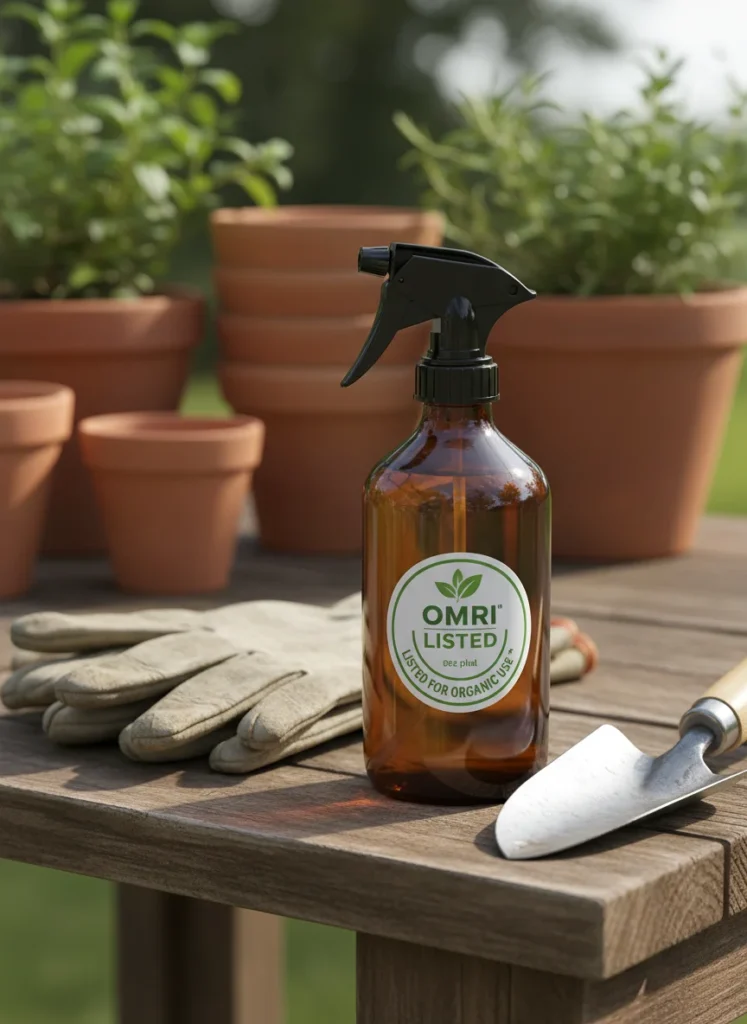
The most reliable indicator is OMRI Listed status. The Organic Materials Review Institute independently verifies that a product meets the standards set by the National Organic Program. If a product carries the OMRI seal, it has been properly vetted.
Avoid products that market themselves as “natural” without any certification. Natural does not always mean safe or effective, and it is not a regulated claim.
The Best Organic Insecticides for Vegetable Gardens
Neem Oil: The All-Rounder
Neem oil remains the single most versatile organic insecticide you can keep in your garden shed. Pressed from the seeds of the neem tree, it contains azadirachtin, a compound that disrupts the feeding, molting, and reproductive cycles of a wide range of insect pests.
What makes neem oil stand out is its broad spectrum activity combined with relatively low impact on beneficial insects. Because it works by disrupting hormonal systems rather than killing on direct contact, pollinators that briefly land on treated leaves are not significantly affected as long as you follow proper timing guidelines.
Pests it controls: Aphids, whiteflies, spider mites, thrips, beetle larvae, fungus gnats, and more.
How to apply: Mix a concentrate with water and a few drops of liquid dish soap to help it emulsify. Apply in the evening or early morning. Reapply every 7 to 14 days or after rainfall.
Recommended product: Bonide Neem Oil Concentrate
Insecticidal Soap: Best for Soft-Bodied Insects
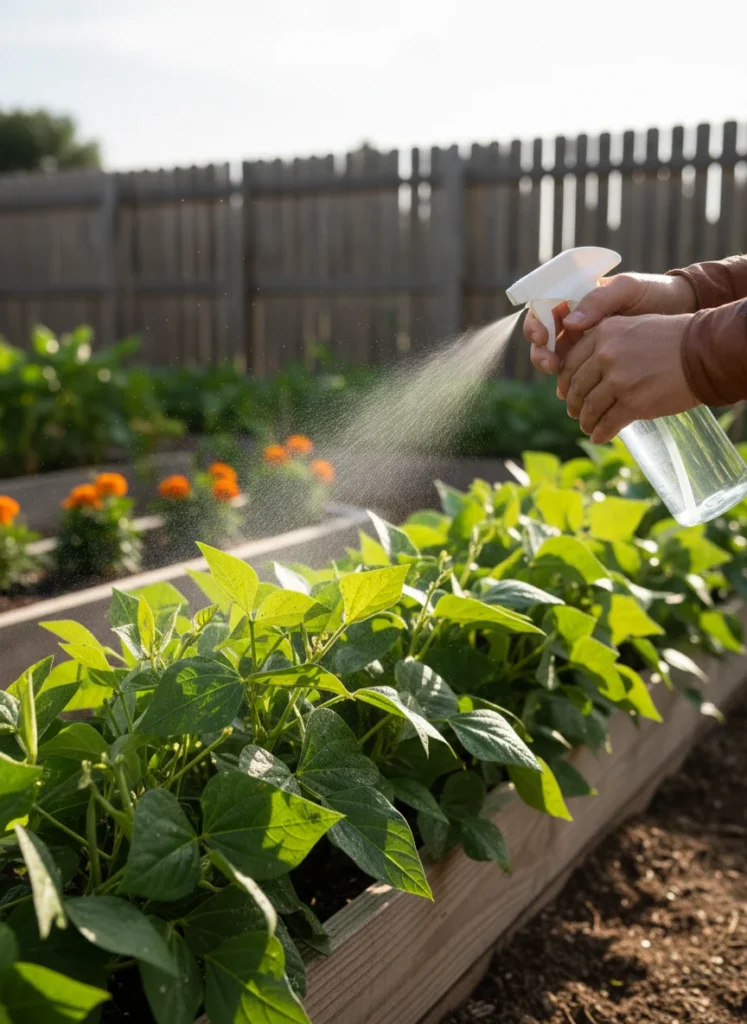
If aphids, whiteflies, spider mites, or mealybugs are your problem, insecticidal soap is your fastest and most reliable organic tool. Potassium salts of fatty acids penetrate the soft outer membrane of these insects and cause them to dehydrate and die within minutes of contact.
It is contact-only, meaning it has no residual activity after it dries. But it works quickly, leaves no harmful residue on produce, and has a zero-day pre-harvest interval.
The commercial formulations like Safer Brand Insect Killing Soap are better calibrated than homemade dish soap sprays, which can cause leaf burn, particularly in hot weather or on sensitive crops like cucumbers and squash.
Pests it controls: Aphids, spider mites, whiteflies, mealybugs, soft-bodied beetles.
How to apply: Spray directly onto pest colonies, focusing on leaf undersides. Apply in the morning or evening. Repeat every 4 to 7 days until the population drops.
Recommended product: Safer Brand Insect Killing Soap
Bacillus thuringiensis (Bt): Best for Caterpillars
Bt is a naturally occurring soil bacterium that produces proteins toxic to caterpillar larvae when ingested. It is one of the most target-specific organic insecticides ever developed.
When a caterpillar eats foliage treated with Bt, the bacterial proteins create pores in the gut lining, causing the larva to stop feeding within hours and die within 2 to 3 days. It has zero effect on humans, mammals, birds, earthworms, beetles, or bees.
This specificity is both its greatest strength and its main limitation. Bt handles caterpillars brilliantly and nothing else. If your problem is aphids or beetles, look elsewhere.
Timing matters with Bt. It breaks down in sunlight within 3 to 5 days, so applications need to coincide with when young larvae are actively feeding. Apply at the first sign of caterpillar damage or when you spot eggs hatching.
Pests it controls: Cabbage worms, tomato hornworms, corn earworms, cabbage loopers, squash vine borers (when applied at egg hatch).
Recommended product: Monterey BT Caterpillar Killer
Spinosad: Best for Thrips and Leafminers
Spinosad is derived from a soil bacterium and works by overstimulating the nervous system of insects that ingest or contact it. It is notably more effective against thrips and leafminers than most other organic options.
Captain Jack’s Deadbug Brew is the go-to formulation for home gardeners. It is OMRI listed, approved for organic production, and works against a useful range of pests beyond just thrips, including caterpillars, spider mites, and certain beetle species.
One important note: spinosad is moderately toxic to bees before it dries. Always apply in the evening and keep it away from flowering plants.
Pre-harvest interval: 1 day.
Recommended product: Captain Jack’s Deadbug Brew
Pyrethrin: Best for Severe or Fast-Moving Infestations
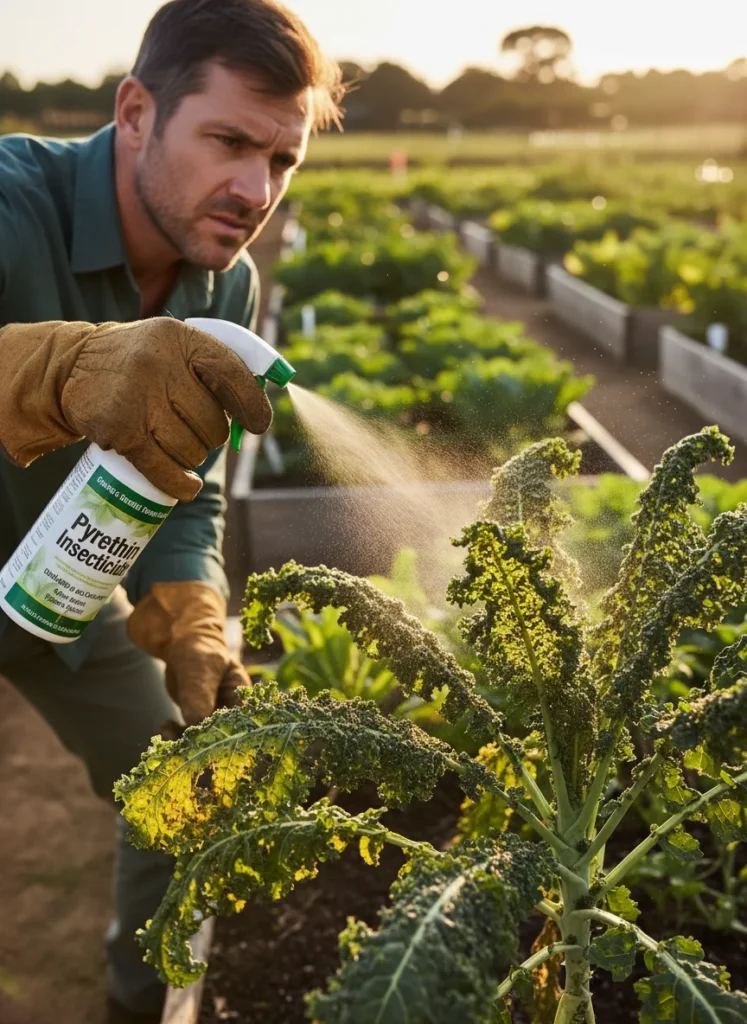
Derived from chrysanthemum flowers, pyrethrin is the most potent organic knockdown insecticide available. It works on contact and causes rapid paralysis and death in a wide range of insect pests.
When an infestation has escalated quickly and plants are at serious risk, pyrethrin is the appropriate tool. It breaks down within 24 hours in sunlight, leaving no persistent residue.
The trade-off is that pyrethrin is also toxic to beneficial insects, including bees, predatory wasps, and lacewings. Use it selectively: only on plants with visible infestation, only in the evening, and avoid spraying flowers entirely.
Pests it controls: Aphids, beetles, caterpillars, leafhoppers, whiteflies, thrips.
Recommended product: PyGanic Gardening
How to Choose the Right Organic Insecticide for Your Situation
Not every product works on every pest. Matching the insecticide to the specific insect you are dealing with is the most important factor in getting results.
| Problem | Best Organic Insecticide |
|---|---|
| Aphids, whiteflies, spider mites | Insecticidal soap or neem oil |
| Caterpillars, hornworms | Bacillus thuringiensis (Bt) |
| Thrips, leafminers | Spinosad |
| Japanese beetles, cucumber beetles | Neem oil or pyrethrin |
| Mixed or unknown pests | Neem oil as a starting point |
| Severe, fast-spreading infestation | Pyrethrin |
Application Tips That Make a Real Difference
Getting the application right is half the battle. Here is what consistently works:
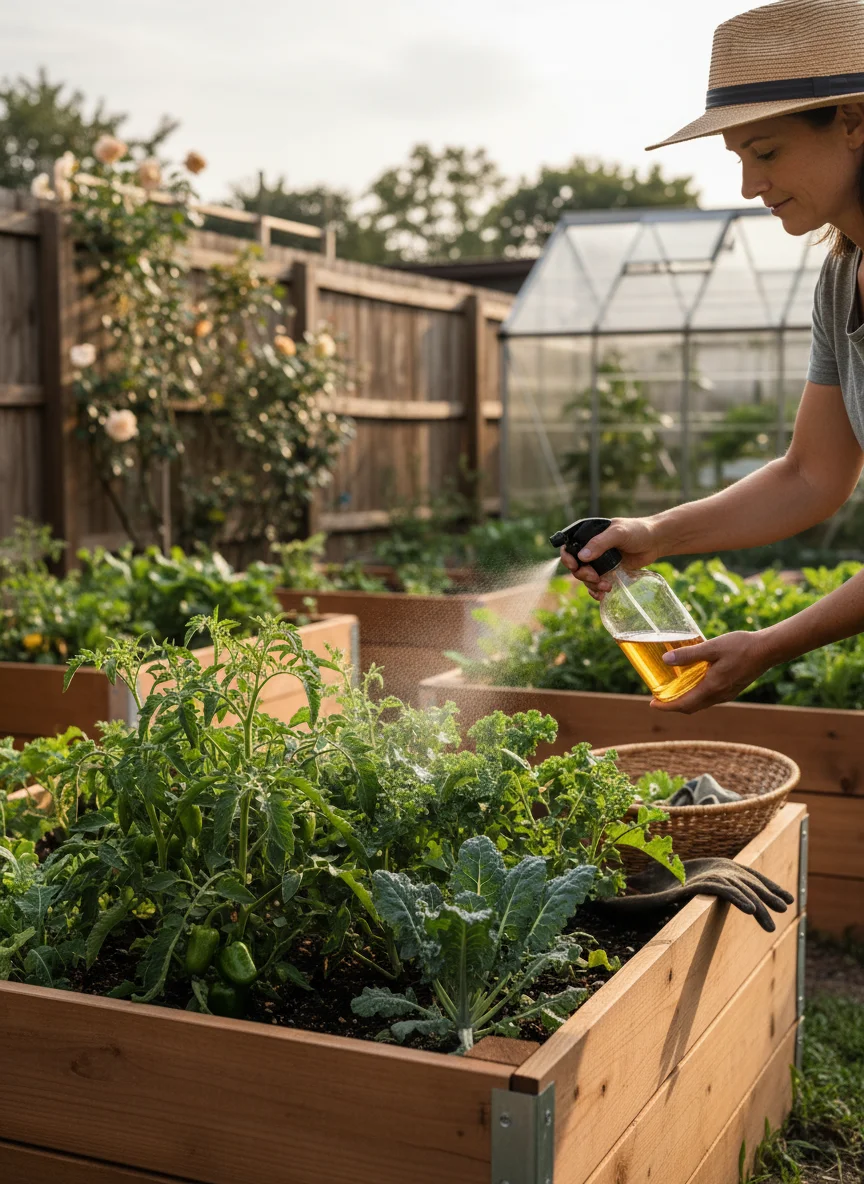
Apply in the evening. Most organic insecticides are safest for pollinators once they have dried, and applying in the evening gives the product overnight contact time before morning sun degrades it.
Target leaf undersides. Aphids, spider mites, and whiteflies predominantly live on the undersides of leaves. If you only spray the tops, you are missing most of the population.
Rotate products. Using the same insecticide repeatedly over an entire season can lead to pest populations developing tolerance. Alternate between neem oil, insecticidal soap, and other active ingredients across a season.
Do not skip coverage. Thorough, complete coverage of the affected plant is more important than using a larger quantity of product. A missed colony on one plant will repopulate the whole garden within a week.
Reapply after rain. Most organic insecticides wash off with rainfall. Keep track of when you last applied and after any significant rain, reapply to affected plants.
Common Mistakes to Avoid
Using concentrated products without diluting properly. Too much neem oil in a solution will cause leaf scorch. Always follow the label dilution rate.
Spraying in full midday sun. Heat plus certain insecticides equals plant damage. Stick to early morning or evening applications.
Treating the symptom instead of confirming the pest. Yellowing leaves can be nutrient deficiency, disease, or pests. Applying insecticide to a plant with nitrogen deficiency does nothing except waste product.
Expecting one application to solve the problem. Pest populations require consistent pressure over 2 to 3 weeks to bring under control. Plan for multiple applications.
Neglecting beneficial insects. If you spray indiscriminately and wipe out your predatory insects, pest populations will rebound faster than before. Targeted, thoughtful application keeps your garden’s natural pest management intact.
Pro Tips From the Garden
Start with the weakest effective option. Try insecticidal soap before pyrethrin. Use neem oil before you escalate to stronger measures. This preserves beneficial insect populations and is easier on your plants.
Combine organic insecticides with companion planting. Basil near tomatoes deters aphids and whiteflies. Nasturtiums act as trap crops, drawing aphids away from your vegetables. Marigolds repel nematodes and certain beetles. These strategies reduce how often you need to spray at all.
Keep a spray log. Note the date, product used, pest targeted, and result. After one growing season you will have genuinely useful data about what works in your specific garden conditions.
Inspect plants twice a week. Early detection is the single most effective pest management tool. A colony of 20 aphids is easy to handle. A colony of 2,000 is a crisis. Weekly checks and quick responses keep problems manageable.
For a complete overview of organic pest control tools beyond just insecticides, including fungal disease treatments and physical deterrents, visit our full guide: 7 Best Organic Pesticides for Vegetable Gardens (Safe & Effective).
Frequently Asked Questions
What is the safest organic insecticide to use right before harvest? Insecticidal soap and neem oil both have a 0-day pre-harvest interval, meaning you can harvest on the same day you apply them as long as you rinse produce well. These are the best choices if you have a pest problem close to harvest time.
Can I use organic insecticides on seedlings? Yes, but use caution. Young seedlings are more sensitive to leaf burn than established plants. Use the lower end of the recommended dilution rate and avoid application during hot weather. Insecticidal soap and diluted neem oil are generally the gentlest options for seedlings.
How long do organic insecticides last after mixing? Neem oil emulsions should be used within a few hours of mixing as the active compounds begin to degrade once diluted. Commercial ready-to-use formulations like insecticidal soap have longer shelf lives if stored sealed and away from temperature extremes.
Will organic insecticides wash into my soil and harm earthworms? Most organic insecticides break down quickly and pose very low risk to soil life at normal application rates. Bt is completely harmless to earthworms. Neem oil applied to foliage rarely reaches the soil in concentrations that affect soil biology. Pyrethrin can affect soil invertebrates if applied heavily directly to the soil, so restrict it to foliar application.
Do I need to wear protective equipment when applying organic insecticides? Basic protection is always wise. Wear gloves and avoid breathing spray mist. Pyrethrin in particular can cause skin and respiratory irritation in some people. For all products, wash hands thoroughly after application and avoid touching eyes and mouth during use.
Final Thoughts
The best organic insecticide for vegetable garden use is not one single product. It is having 2 to 3 well-chosen options on hand and knowing which situation calls for which tool. Neem oil for general prevention and mixed pest pressure, insecticidal soap for aphids and soft-bodied insects, Bt for caterpillars, and spinosad or pyrethrin reserved for when things get serious.
Organic pest management rewards consistency and observation. Check your plants regularly, act early, apply correctly, and you will spend less time fighting pests than you might expect.
Your vegetable garden is producing food for your table. It deserves the most thoughtful, effective, and safe approach you can give it.