Best Pots for Growing Herbs Indoors: What Actually Works
This post contains affiliate links. If you buy through my links I may earn a small commission at no extra cost to you. I only recommend products I have personally used or would use myself.
I have grown herbs indoors for years and the pot was the problem almost every single time. Wrong size, no drainage, wrong material. The herb looked fine for two weeks and then slowly died and I had no idea why. Once I figured out what actually matters in an indoor herb pot, everything changed. This guide covers exactly what to look for, which pots work best for which herbs, and the ones I personally use and recommend.
My Top Picks (If You Are in a Hurry)
| Pot | Best For | Size | Link |
|---|---|---|---|
| Terra cotta pot with saucer | All-around herbs | 6 inch | Amazon link |
| Self-watering herb pot | Busy schedules | 5 inch | Amazon link |
| Drainage tray set | Window sill rows | 4 inch set | Amazon link |
| Large ceramic pot | Mint, lemon balm | 8 inch | Amazon link |
| Hanging herb planter | Small kitchens | Multi-pocket | Amazon link |
What Actually Matters in an Indoor Herb Pot
Most people pick a pot based on how it looks. That is how you end up with dead basil. Here is what actually determines whether your herb survives indoors.
Drainage holes. This is the single most important thing. Herbs hate sitting in water. Their roots rot fast when water has nowhere to go. If a pot has no drainage hole, either drill one yourself or skip it entirely. No exceptions.
The right size. Smaller than you think. Most kitchen herbs like basil, thyme, oregano, and chives do well in a 4 to 6 inch pot. Going too big causes the soil to stay wet too long between waterings, which causes root rot just as fast as no drainage at all.
Material. Terra cotta is the best default choice for beginners. It is porous, which means it breathes and dries out at a natural pace. Plastic holds moisture longer, which can work if you tend to forget watering. Glazed ceramic sits in the middle. All three work, but terra cotta is most forgiving.
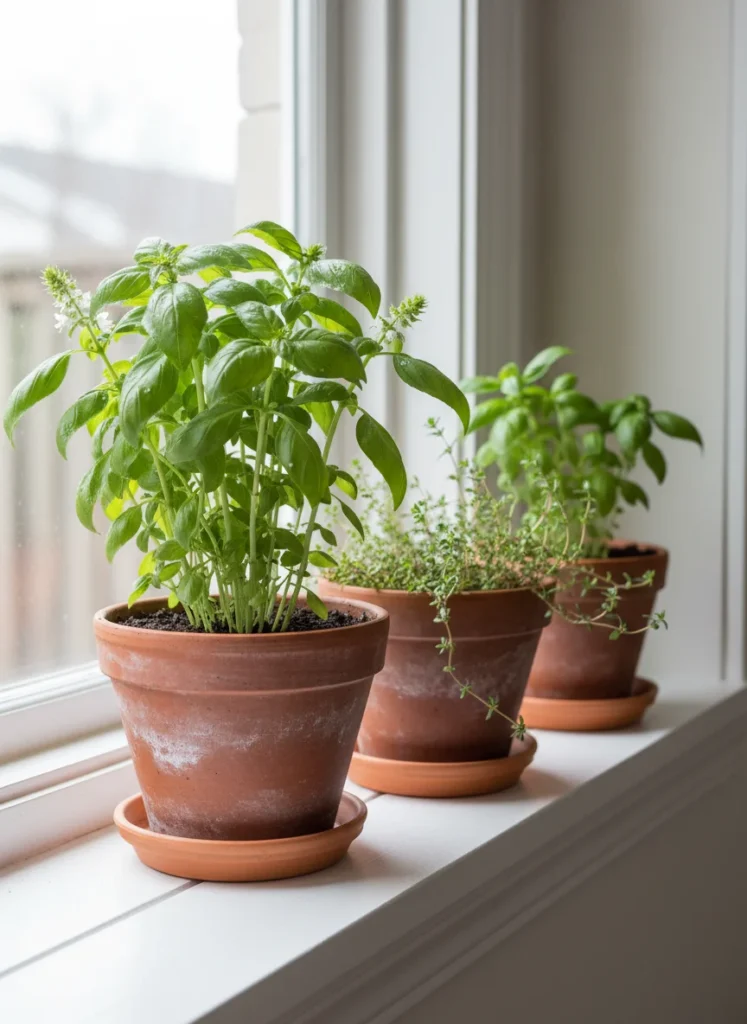
A drainage tray. You need something under the pot to catch water, especially indoors. A simple plastic saucer works fine. Some pot sets come with one included, which saves you hunting for the right size separately.
The 5 Best Pots for Growing Herbs Indoors
Best Overall: Terra Cotta Pot with Saucer
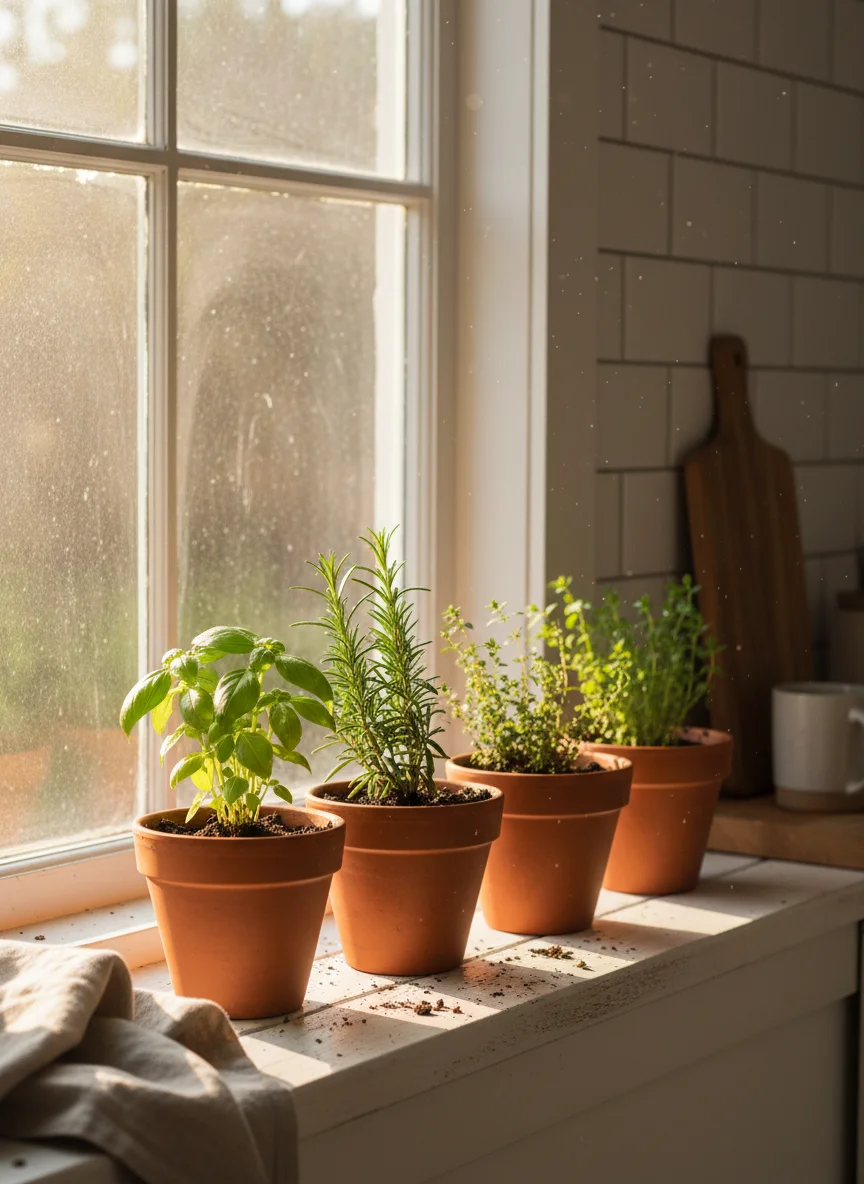
Terra cotta is what I come back to every time. It is cheap, widely available, breathes well, and looks good on a windowsill. The 6 inch size works for basil, parsley, cilantro, and rosemary. Buy a few of the same size so they stack and store easily. What I like: affordable, dries evenly, easy to find replacements. What to watch: dries out faster in dry climates so you may water more often. Link to terra cotta pots on Amazon
Best for Busy People: Self-Watering Herb Pot
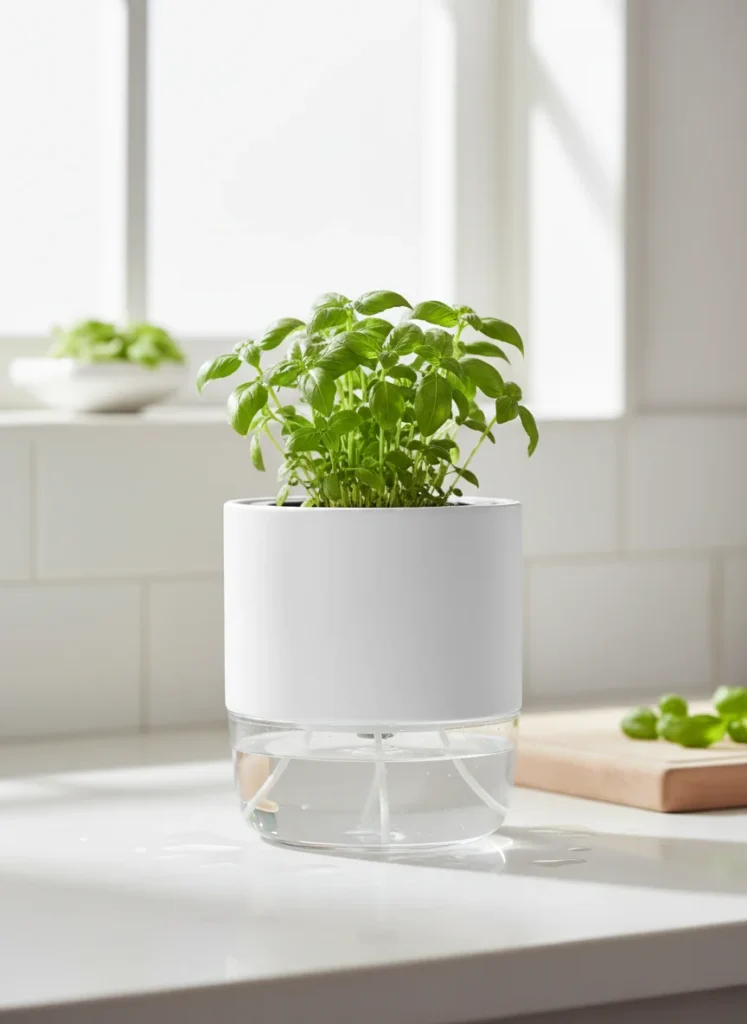
If you forget to water or travel regularly, a self-watering pot is worth every penny. It has a water reservoir at the bottom that the roots draw from as needed. I have left basil in one of these for 10 days without watering and it was completely fine. What I like: forgiving for irregular waterers, keeps moisture consistent. What to watch: costs more upfront, reservoir needs occasional emptying to prevent stagnation. Link to self-watering herb pot on Amazon
Best for Window Sills: Small Drainage Tray Set
A set of matching 4 inch pots with built-in trays is perfect for lining up along a kitchen window. You get 6 to 8 pots, everything matches, and the trays are already the right size. Great for thyme, chives, mint, and smaller herb varieties. What I like: neat and uniform, tray is built in, good for small spaces. What to watch: too small for large herbs like rosemary or lemon balm. Link to drainage tray set on Amazon
Best for Large Herbs: 8 Inch Ceramic Pot
Mint and lemon balm grow fast and wide. They need more room than a standard 6 inch pot gives them. An 8 inch ceramic pot with a drainage hole is my go-to for these. The weight of ceramic also keeps the pot from tipping when the plant gets top-heavy. What I like: sturdy, good for fast-growing herbs, looks good. What to watch: heavier to move, costs more than terra cotta. Link to ceramic pot on Amazon
Best for Small Kitchens: Wall-Mounted Herb Planter
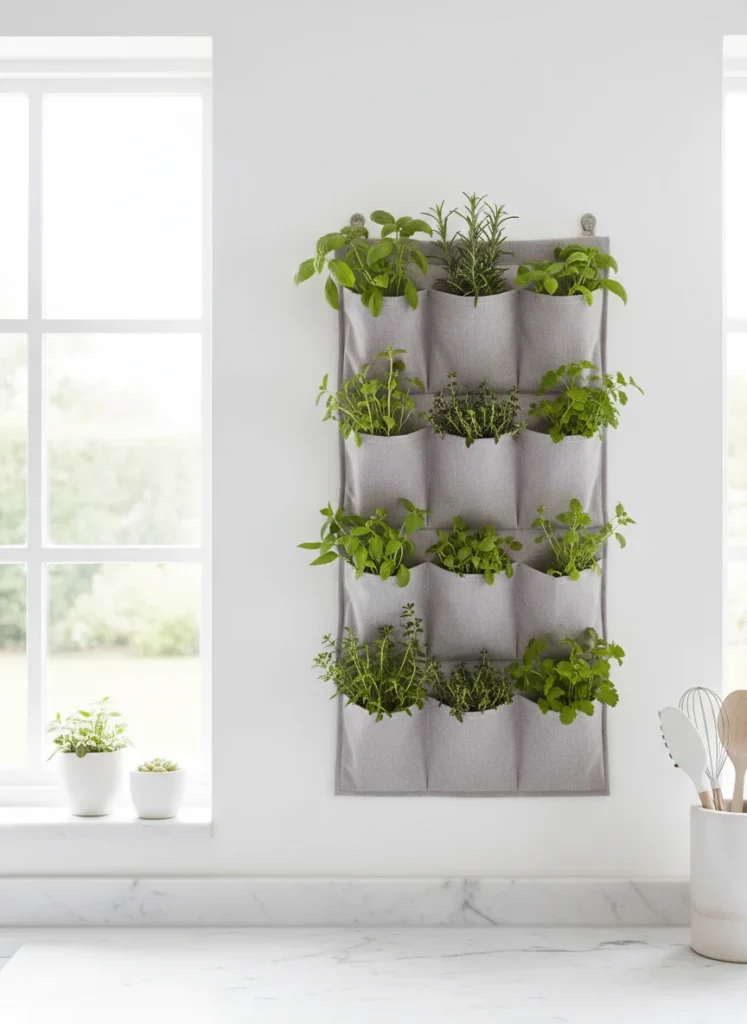
If you have no counter space or window sill, a wall-mounted multi-pocket planter solves the problem. Mount it near a window, plant 6 to 8 small herbs, and you have a full herb garden taking up zero counter space. What I like: space-saving, looks great in a kitchen, easy to harvest. What to watch: individual pockets are small so not suitable for large herbs, watering requires care to avoid overflow. Link to wall herb planter on Amazon
Which Pot Size for Which Herb
| Herb | Minimum Pot Size | Notes |
|---|---|---|
| Basil | 6 inch | Goes bigger in summer if near a bright window |
| Thyme | 4 to 6 inch | Likes to dry out between waterings |
| Oregano | 6 inch | Spreads wide, give it room |
| Chives | 4 inch | Grows in clumps, stays compact |
| Mint | 8 inch | Spreads aggressively, keep it contained |
| Rosemary | 8 inch | Needs depth for roots, goes dry between waterings |
| Parsley | 6 to 8 inch | Deeper roots than most herbs |
| Cilantro | 6 inch | Bolts fast, succession plant every few weeks |
| Lemon balm | 8 inch | Grows fast and large |
Do You Need a Drainage Tray?
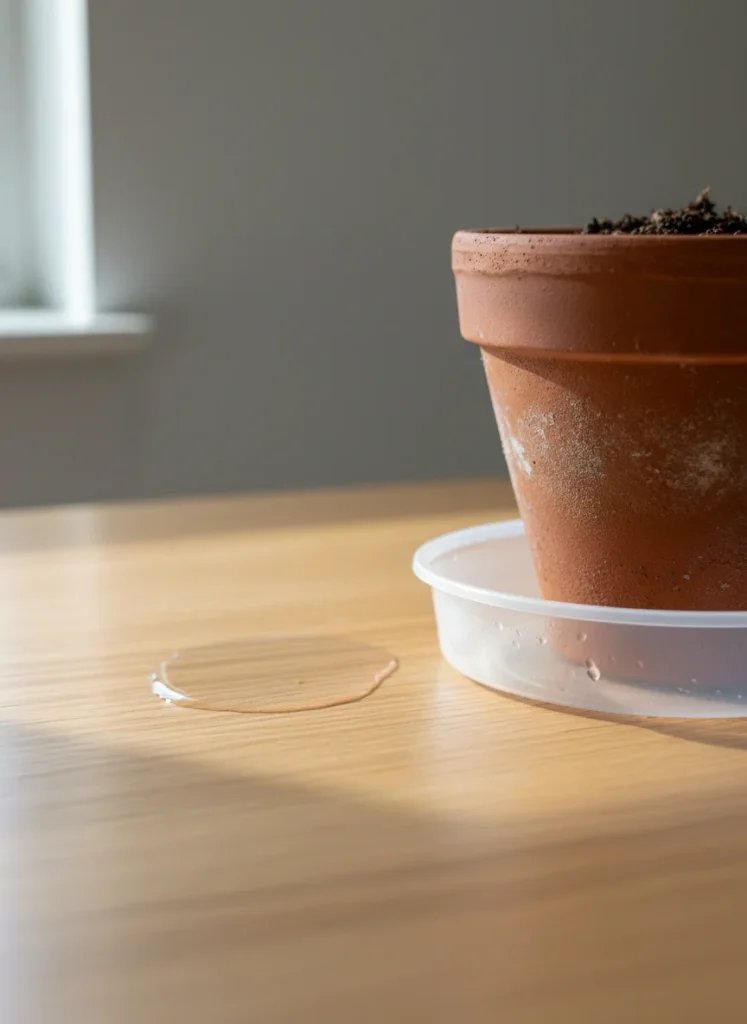
Yes, if you are growing indoors. Water running straight onto your windowsill or counter will damage the surface over time and create mold underneath the pot. The easiest option is to buy pots that already come with a matching saucer. If yours did not come with one, measure the base of your pot and search for a saucer 1 to 2 inches wider than the base. One thing to be careful about: do not let water sit in the tray for more than a day. Empty it after each watering. Sitting water at the base of the pot keeps the soil too wet and brings you right back to root rot territory.
What I Actually Use
For my kitchen windowsill, I use terra cotta 6 inch pots for basil, thyme, and oregano. I use an 8 inch ceramic pot for mint because it keeps trying to take over. For parsley I switched to a self-watering pot because parsley is finicky about moisture and the self-watering setup keeps it consistent. Everything sits on individual plastic saucers that I empty every time I water. That setup has kept herbs alive year-round for me with minimal fuss.
Frequently Asked Questions
Can I grow herbs in pots without drainage holes? You can try by adding a thick layer of gravel at the bottom to create a buffer zone, but it is risky. Roots will still sit in moisture if you overwater even slightly. If the pot matters to you aesthetically, place a smaller pot with drainage holes inside it as a liner.
What is the best material for indoor herb pots? Terra cotta for beginners, hands down. It breathes, it dries at a natural rate, and it is cheap enough to replace if you crack one. Plastic works if you live somewhere dry or tend to underwater. Ceramic works well but holds moisture longer so water less frequently.
How often do I need to water herbs in terra cotta pots? Stick your finger about an inch into the soil. If it is dry, water. If it is still moist, wait. Terra cotta dries faster than plastic so you may water every 2 to 3 days in a warm kitchen. In winter near a radiator, sometimes every day.
Can I plant multiple herbs in one large pot? Yes, with caveats. Group herbs with similar water needs together. Thyme, oregano, and rosemary all like to dry out between waterings so they work well together. Basil and parsley both like more consistent moisture. Do not plant mint with anything else because it will crowd everything out.
My Recommendation
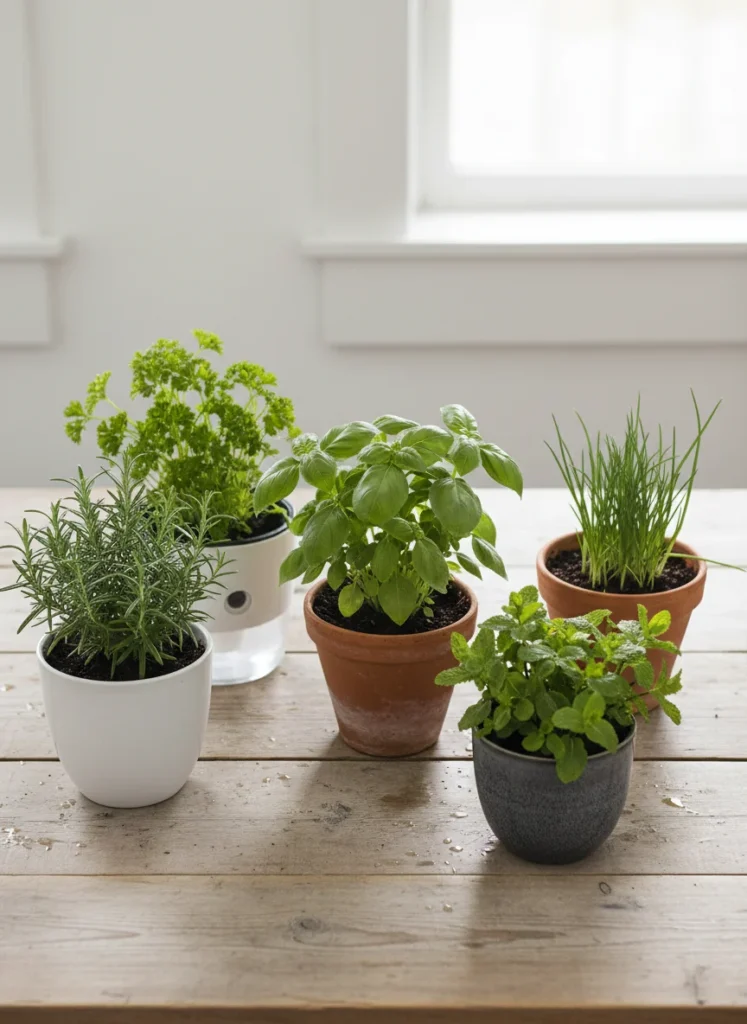
If you are just starting out, buy a set of 6 inch terra cotta pots with saucers. They are inexpensive, widely available, and work for almost every common kitchen herb. Once you get comfortable with watering habits, a self-watering pot for one or two of your herbs makes the whole thing more low-maintenance. The pots I link above are the ones I have used or would buy today. Nothing overly expensive, nothing you need to replace in six months. Shop all recommended herb pots on Amazon