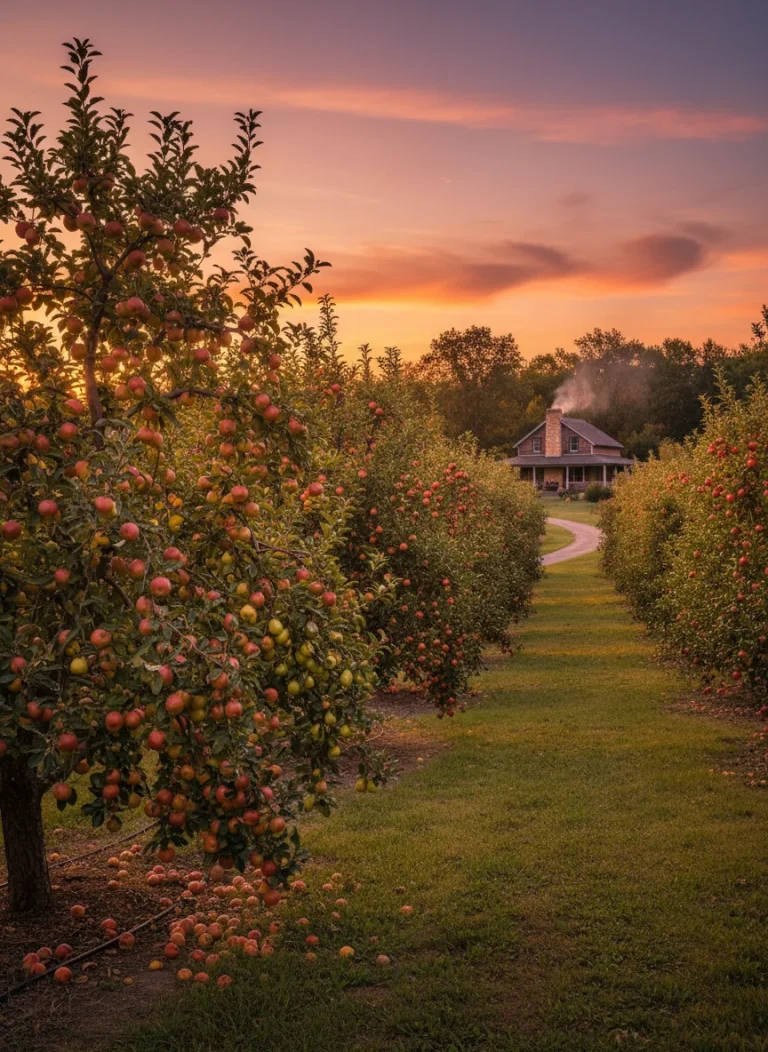
Zero-Budget Gardening: The Ultimate Guide to Growing Food for Free
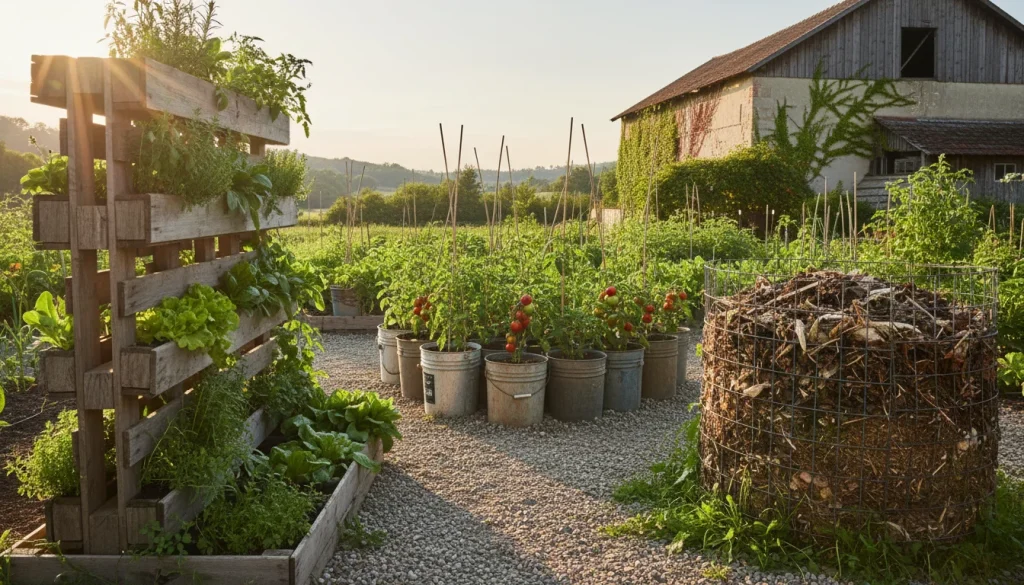
To garden broke, you must prioritize resource loops over retail purchases. Focus on composting kitchen scraps to create free fertility, sourcing wood chips from local arborists for mulch, and upcycling containers like yogurt cups or buckets with drainage holes. Avoid nursery starts; instead, rely on seed saving, propagation from cuttings, and community swaps to eliminate plant costs entirely.
While scavenging for containers will save you ten dollars here and there, the real secret to long-term zero-budget gardening isn’t just about reusing trash; it is about building a biological system that generates its own inputs year after year, rendering the garden center obsolete.
This is how you start gardening on a zero budget.
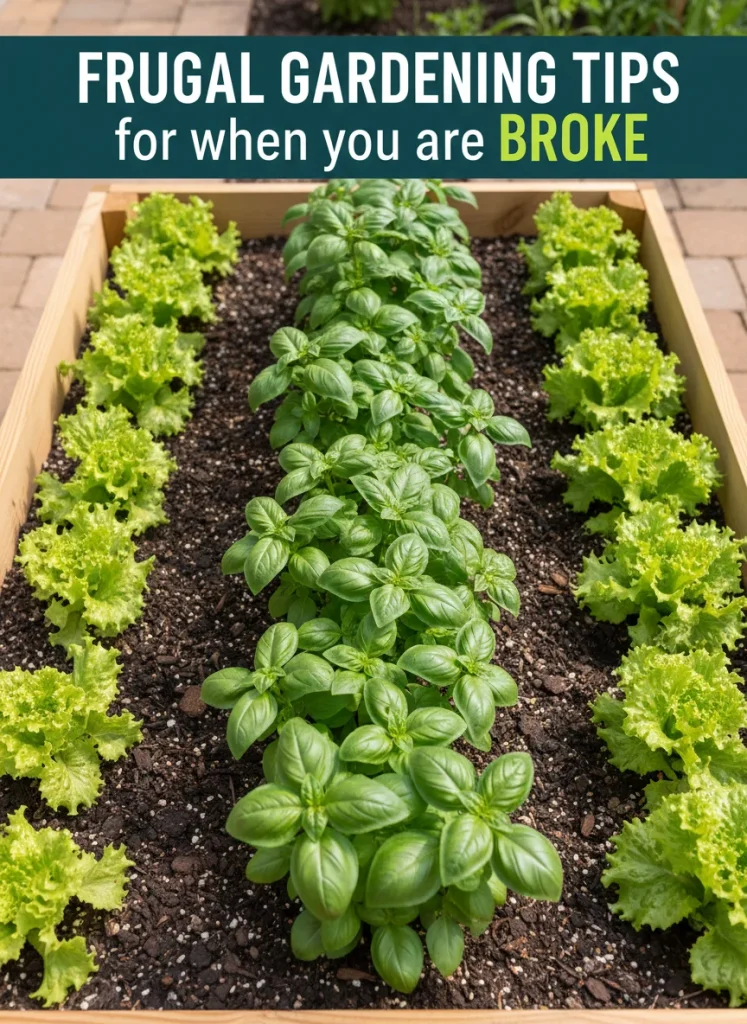
Save this pin to your Pinterest gardening board to easily find it later
The Economics of Dirt: Generating Free Fertility
Let’s be honest. The biggest expense in gardening is rarely the plants themselves. It is the soil, fertilizers, and amendments required to keep those plants alive. If you are buying bagged soil from a big-box store, you have already lost the battle for a budget garden. To garden for free, you must become a manufacturer of soil.
Mastering the Compost Pile
Composting is the engine of a broke garden. It turns waste into black gold. However, many beginners fail because they treat their compost pile like a garbage can. To create high-quality soil amendment without spending a dime, you need to manage your carbon-to-nitrogen ratio.
- Green Materials (Nitrogen): Kitchen scraps, coffee grounds, and fresh grass clippings. These provide the heat and nutrients.
- Brown Materials (Carbon): Cardboard, dried leaves, newspapers, and sawdust. These provide structure and aeration.
The reality is that you likely generate enough waste to feed your garden, but you need to balance these inputs. A pile that is too wet needs more cardboard. A pile that is not breaking down needs more grass clippings. This process creates humus, which retains water and nutrients, reducing your need for outside fertilizers.
The Power of Wood Chips
Mulch is non-negotiable. It suppresses weeds, retains moisture, and breaks down into soil over time. Buying bagged mulch is a waste of money. Instead, utilize services like Chip Drop or contact local tree trimming companies. They are often desperate to offload wood chips for free to avoid landfill fees. A thick layer of wood chips mimics the forest floor, creating a fungal network that feeds your plants. Boring, but essential.
Calcium and Micro-Nutrients
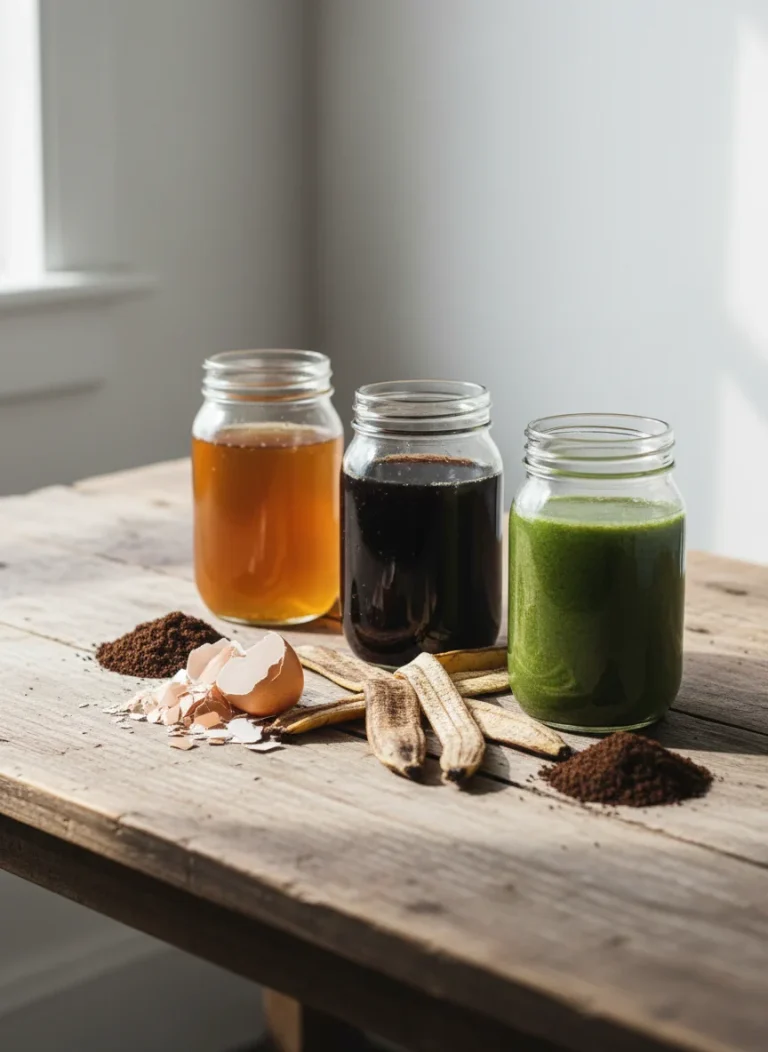
Do not buy fancy calcium sprays. Crush your eggshells into a fine powder and sprinkle them around your nightshades (tomatoes, peppers, eggplants). This helps prevent blossom end rot. Similarly, banana peels can be soaked in water to create a potassium-rich “tea” for flowering plants.
Infrastructure: Upcycling and Repurposing
Gardening infrastructure—pots, trellises, and raised beds—can cost thousands of dollars. It serves the same function whether it is made of mahogany or repurposed pine. The plant does not care how much you spent on the container; it only cares about root space and drainage.
Safe Pallet Gardening
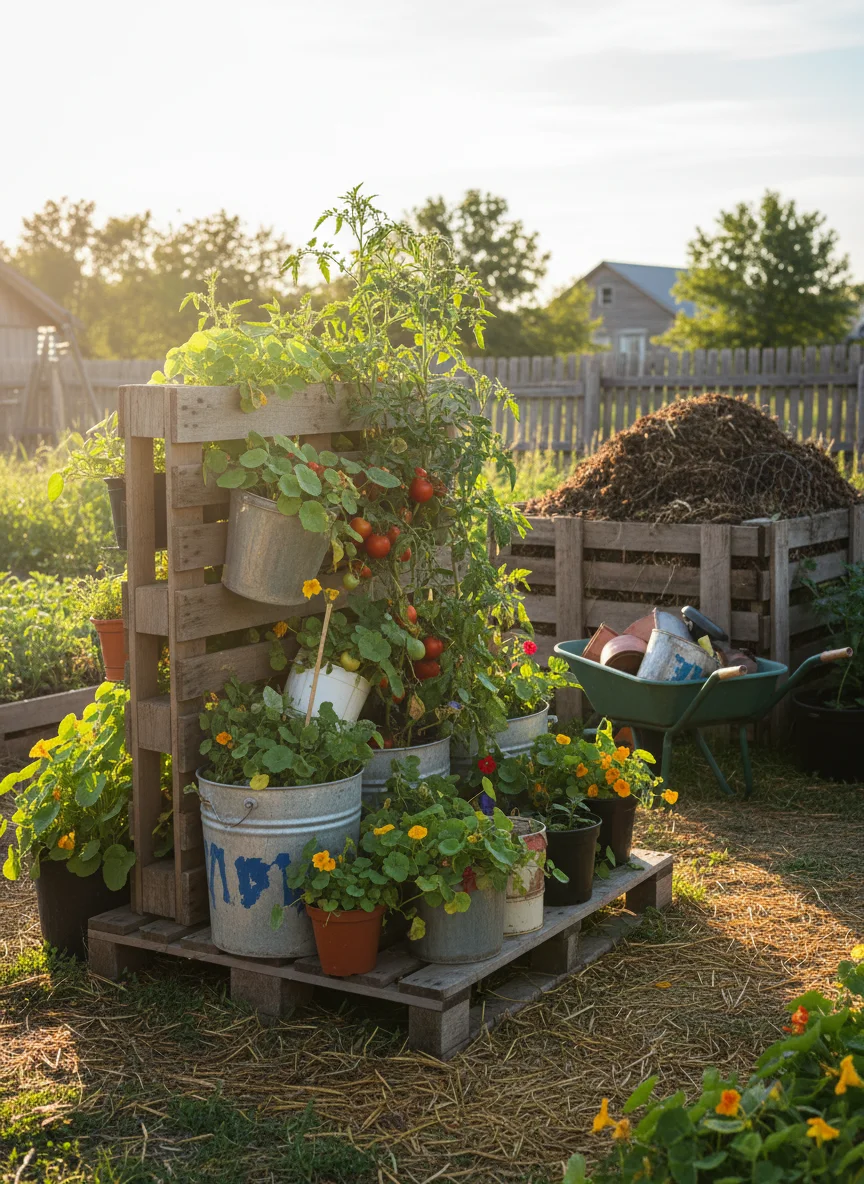
Wooden pallets are the backbone of budget garden construction. They can be dismantled for lumber or used whole for vertical planters. However, you must inspect the stamps on the wood.
- HT (Heat Treated): Safe to use. The wood was heated to kill pests.
- MB (Methyl Bromide): Toxic. Do not use these for food crops.
Sand down rough edges to prevent splinters, and you have free lumber for raised beds or compost bins.
The Container Scavenger Hunt
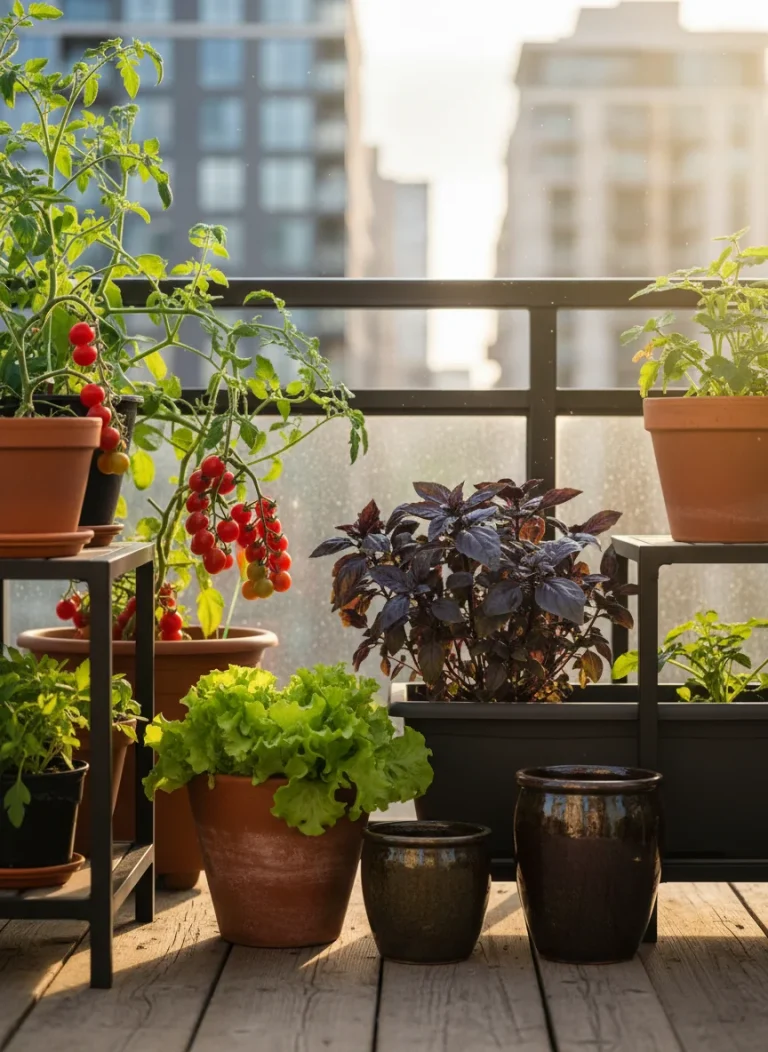
Anything that holds dirt is a pot. The only requirement is drainage. If you use 5-gallon buckets from a bakery or construction site, drill half-inch holes in the bottom. Yogurt cups, egg cartons, and plastic bottles make excellent seed starters.
This is often overlooked, but the color of your container matters. Dark containers absorb heat, which can cook roots in the summer or warm them in the spring. If you are scavenging black nursery pots, consider painting the exterior white if you live in a hot climate.
DIY Cold Frames and Greenhouses
Extending your season means more food for less money. Old windows and shower doors are frequently given away during home renovations. By placing an old window over a simple wooden frame (or even straw bales), you create a cold frame. This captures solar energy, allowing you to start seeds weeks earlier than your neighbors or grow greens late into the winter.
Plant Material: Propagation and Seeding
Buying a tomato plant for $5.00 is bad math. Buying a packet of 50 seeds for $2.00 is an investment. Getting a cutting for free is pure profit.
The Art of Propagation
Many plants can be cloned. This is called vegetative propagation. If a friend has a basil plant you love, snip a four-inch stem, remove the lower leaves, and place it in a glass of water. In a week, it will have roots. You can do this with tomatoes, mint, peppers, and many perennials. This is the fastest way to expand your garden without spending money.
Perennials: The Investment That Pays Dividends
Annuals die every year. Perennials come back. When designing a broke garden, prioritize plants that return. Asparagus, rhubarb, berries, and herbs like oregano and thyme are one-time acquisitions. Furthermore, many perennials like daylilies or hostas can be divided every few years. You dig up the clump, split it in half with a shovel, and replant. You now have two plants for the price of one.
Seed Saving and Swaps
You should never have to buy seeds for the same crop twice. Learn to save seeds from your best performers. Let your best lettuce bolt (go to seed) and collect the thousands of seeds it produces. Dry them and store them in a cool, dark place.
Additionally, look for local seed libraries. Many public libraries now maintain drawers where you can take seeds for free, provided you try to return some at the end of the season. This is a community resource that drastically lowers the barrier to entry.
Water Wisdom and Maintenance
Water is a utility bill that can creep up on you. To garden broke, you must harvest what falls from the sky.
Rainwater Harvesting
Set up a catchment system. It does not need to be a fancy rain barrel. Trash cans placed under downspouts work perfectly fine. Ensure you cover them with a fine mesh screen to prevent mosquitoes from breeding. Mosquito larvae can ruin a garden experience, and the diseases they carry are no joke. Period.
Strategic Watering
When you water matters as much as how much you water. Water early in the morning. This reduces evaporation loss caused by the midday sun. Watering at night can encourage fungal diseases because the leaves stay wet too long. Mulching heavily, as mentioned earlier, is the best way to keep that water in the soil where it belongs.
Biological Pest Control
Pesticides are expensive and damage the ecosystem. Instead, attract beneficial insects. Allow some “weeds” like dandelions or clover to bloom. These provide early-season food for pollinators and predatory wasps. If you have an aphid problem, do not buy spray. Blast them off with a hose or wait for the ladybugs to arrive. Nature balances itself if you stop interfering with chemicals.
The Scavenger Mindset
To succeed at zero-budget gardening, you must change how you view waste. A neighbor’s bag of leaves is not trash; it is mulch. A broken broom handle is a stake for your beans. Plastic clamshells from the grocery store are mini-greenhouses.
Start small. Do not try to convert your entire lawn in one season. Build one bed, fill it with homemade compost, and plant seeds you swapped for. As your skills and your compost pile grow, so will your garden. The most expensive part of gardening is impatience. If you are willing to wait for seeds to sprout and compost to rot, you can feed yourself for free.
Read Next
Beginner’s Guide to Your First Vegetable Garden | Easiest Vegetables to Grow
How Long Does Garlic Take to Grow? The Complete Timeline Guide