
How to Grow a Surprising Amount of Food in a Tiny Space (Even If You’ve Killed Every Plant You’ve Ever Owned)
Disclosure: This article includes affiliate links. If you click and make a purchase, I may earn a small commission at no extra cost to you. It helps support this site and allows me to keep creating helpful content.
I used to think you needed a homestead to grow food. I was wrong.
Let’s be honest. When most of us think about “growing our own food,” we picture sprawling fields, a tractor, and someone waking up at 4:00 AM to milk a goat.
That image stopped me from planting a single seed for years.
I lived in a small space with a tiny patio. I assumed that because I didn’t have a “back 40,” I was stuck buying wilted lettuce and tasteless tomatoes from the grocery store forever. Plus, I had a history of killing houseplants. Succulents didn’t stand a chance in my care.
But then, grocery prices started climbing. And the quality of fresh produce started dropping. I got frustrated.
Here’s what surprised me.
You don’t need acres. You don’t even need a yard. In fact, starting small isn’t just “okay.” It is actually the secret to better yields.
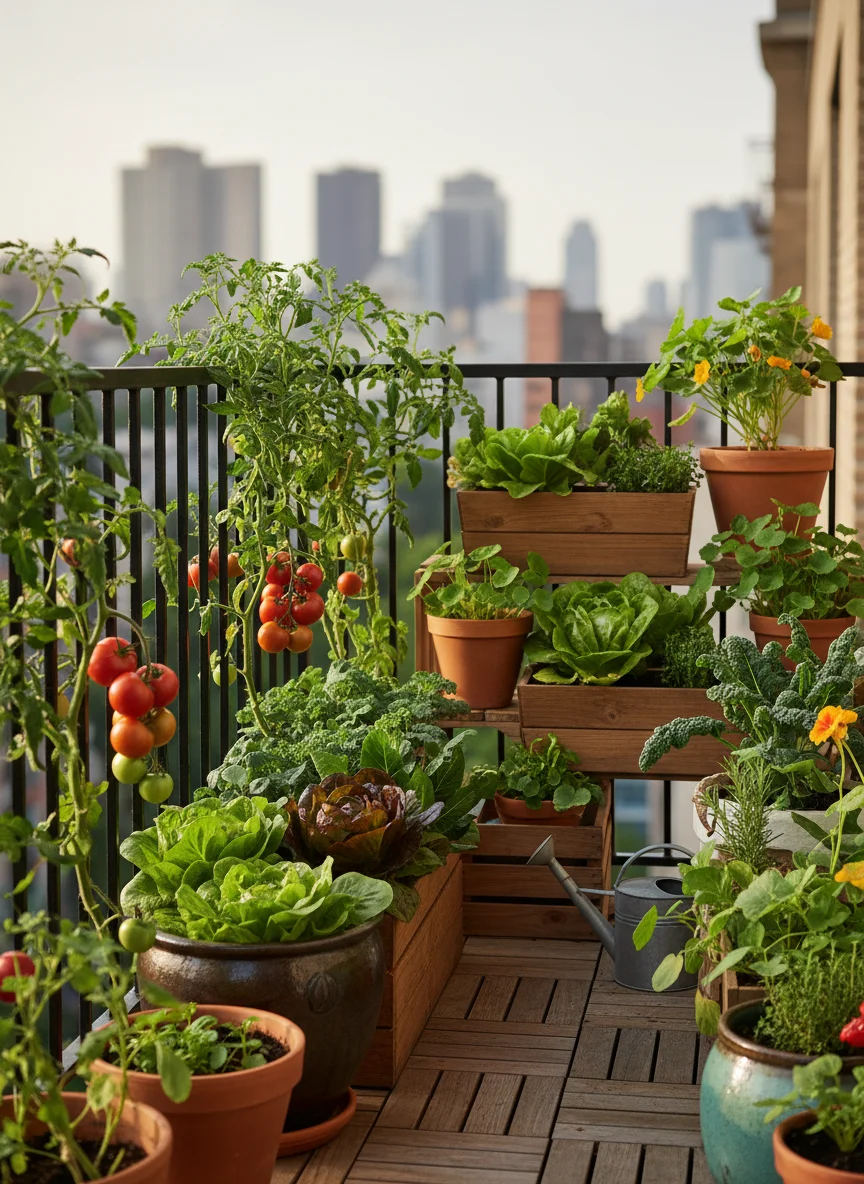
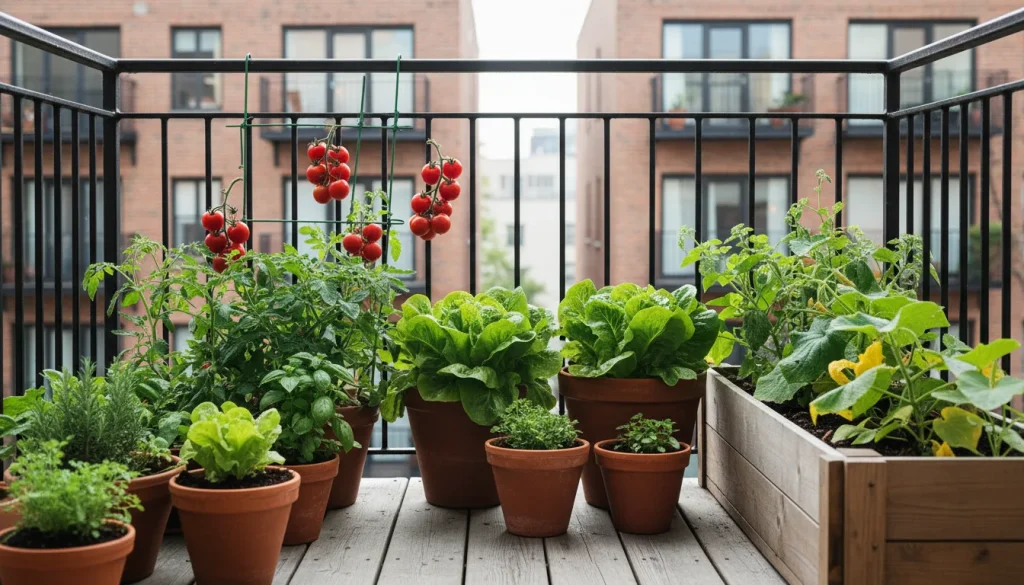
If you have a balcony, a small patio, or even a sunny corner of a driveway, you have enough space to make a significant dent in your grocery bill. This took me way too long to realize, but once I did, it changed everything.
Here is the no-nonsense, beginner-proof guide to starting a high-yield vegetable garden in a tiny space.
1. The Sunlight Reality Check
Before you buy a single pot or bag of soil, you need to become a stalker of the sun.
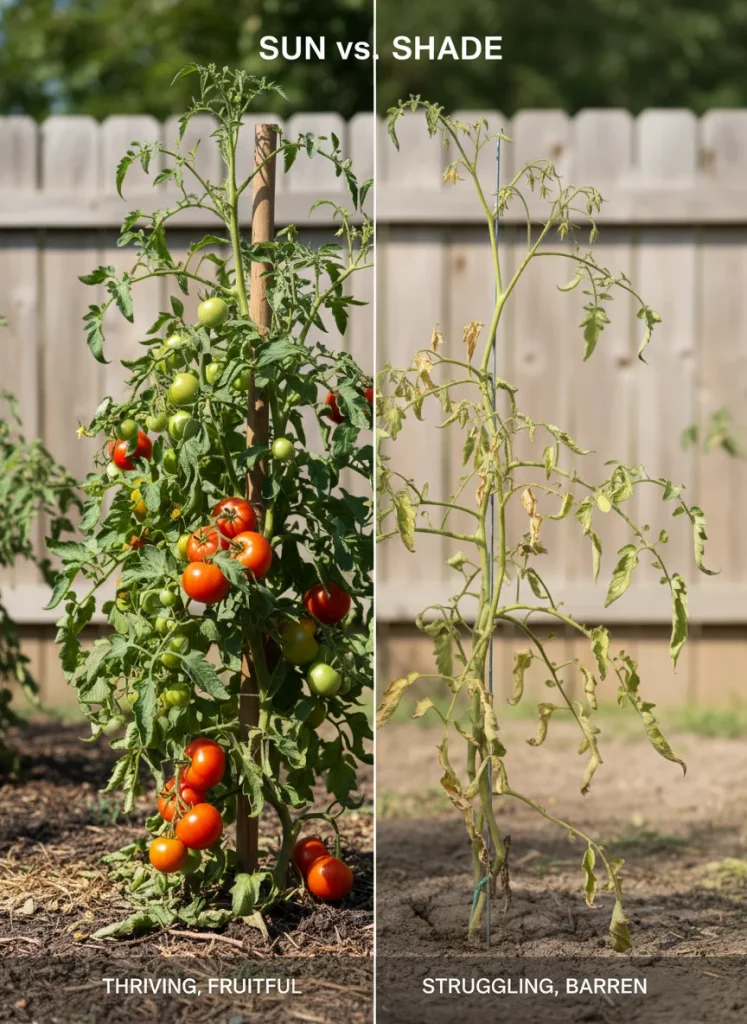
Most beginners skip this. They put a tomato plant in a corner because it “looks nice” there. Then they wonder why the plant gets leggy, pale, and refuses to produce fruit.
Here is the rule: Fruiting plants need energy.
Think of sunlight as the battery charger. If you want a plant to produce a fruit (like tomatoes, peppers, cucumbers, or beans), it needs a full charge. That means 6 to 8 hours of direct sunlight. Period.
If you only have 3 to 4 hours of sun? Don’t panic. You just have to change your menu.
Leafy greens like lettuce, spinach, kale, and most herbs will tolerate partial shade. In fact, in the heat of summer, they often prefer it. But if you try to grow a bell pepper in the shade, you are setting yourself up for heartbreak.
2. Soil: The “Dirt” Mistake
This is where 90% of new gardeners fail.
They go into the backyard, dig up some dirt, put it in a pot, and plant a seed. Three weeks later, the plant is dead.
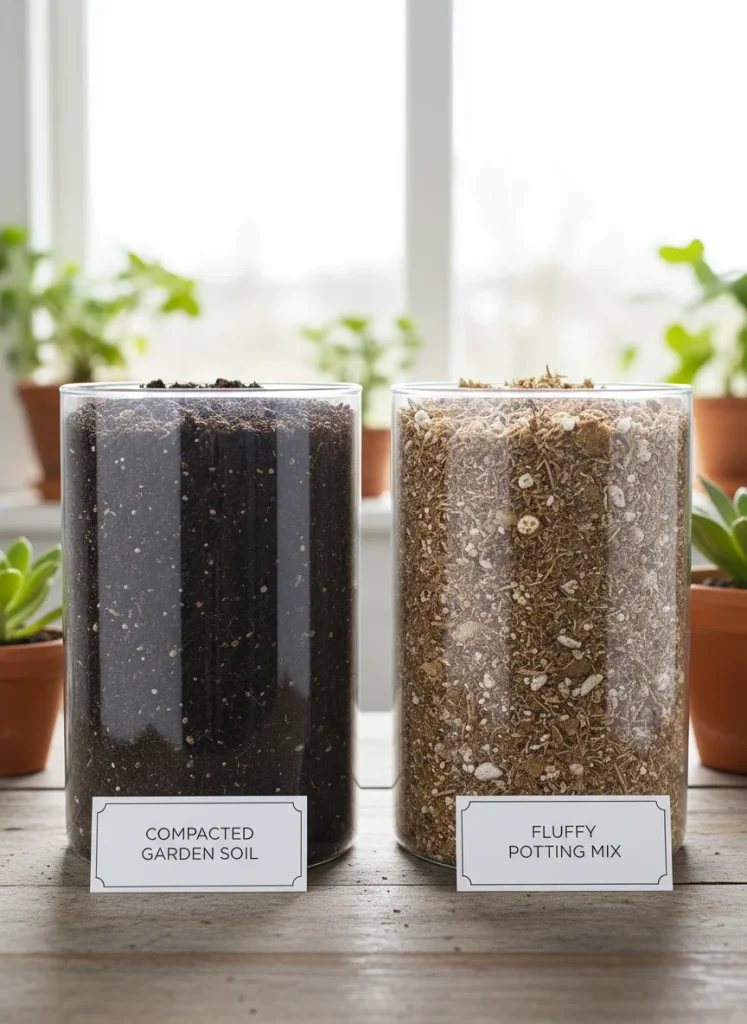
Why? Because garden soil is heavy. When you put it in a container, it compacts. It turns into a concrete brick that suffocates the roots. Roots need oxygen just as much as they need water.
Boring, right? But listen closely.
If you are gardening in small spaces (pots, containers, or raised beds), you are not using dirt. You are using Potting Mix.
You need a fluffy, light mixture that holds moisture but drains excess water instantly. You want a mix that feels like chocolate cake crumbs.
If you want to save money, mix your own. I usually aim for a blend of compost (for nutrients), peat moss or coco coir (for moisture retention), and vermiculite (for aeration). This creates the perfect environment for roots to race through the soil and uptake nutrients quickly.
3. The “Small Space” Crop Selection
When you have limited square footage, you have to be ruthless.
You cannot grow everything. You have to grow what offers the highest Return on Investment (ROI).
Corn? Terrible choice for small spaces. It takes up huge room, needs to be planted in blocks for pollination, and you get maybe two ears per stalk. It’s a waste of your precious real estate.
Pumpkins? Forget it. One vine will take over your entire balcony.
Instead, focus on these high-yield superstars:
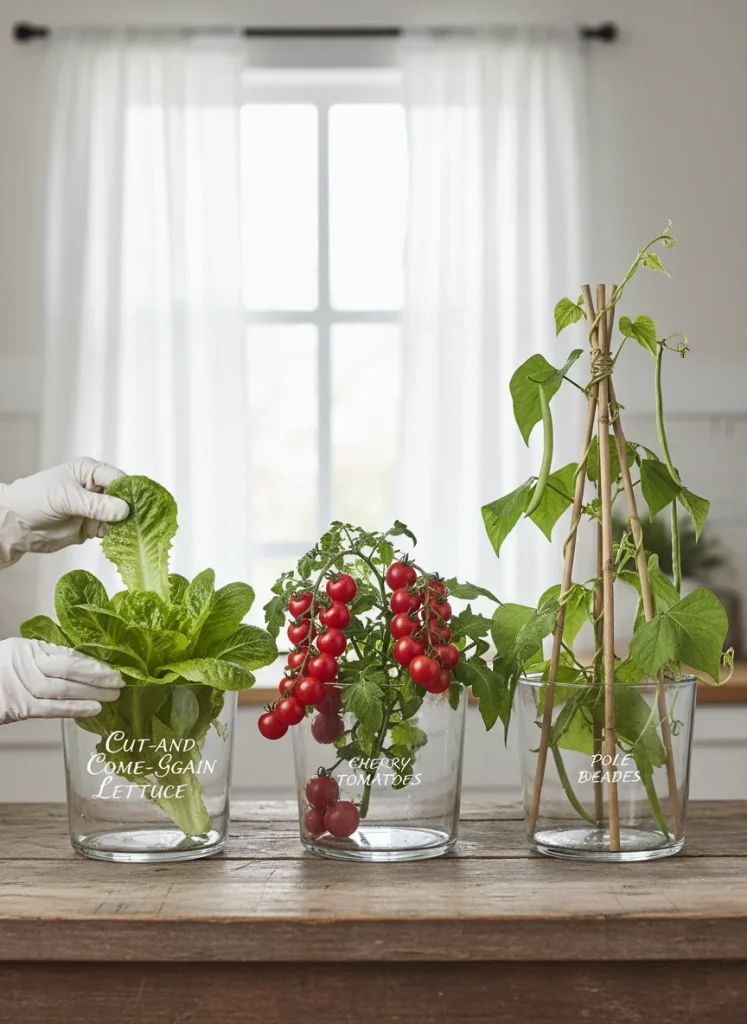
Cut-and-Come-Again Lettuce: You don’t pull the whole head. You trim the outside leaves, and the plant keeps growing. You can harvest a salad every three days from a single pot.
Cherry Tomatoes: Unlike beefsteak tomatoes which take all season to ripen, cherry tomatoes pump out fruit constantly. One healthy plant can give you hundreds of tomatoes.
Pole Beans: Bush beans grow low and stop producing. Pole beans grow up. Which brings me to my next point.
4. Think Vertical, Not Horizontal
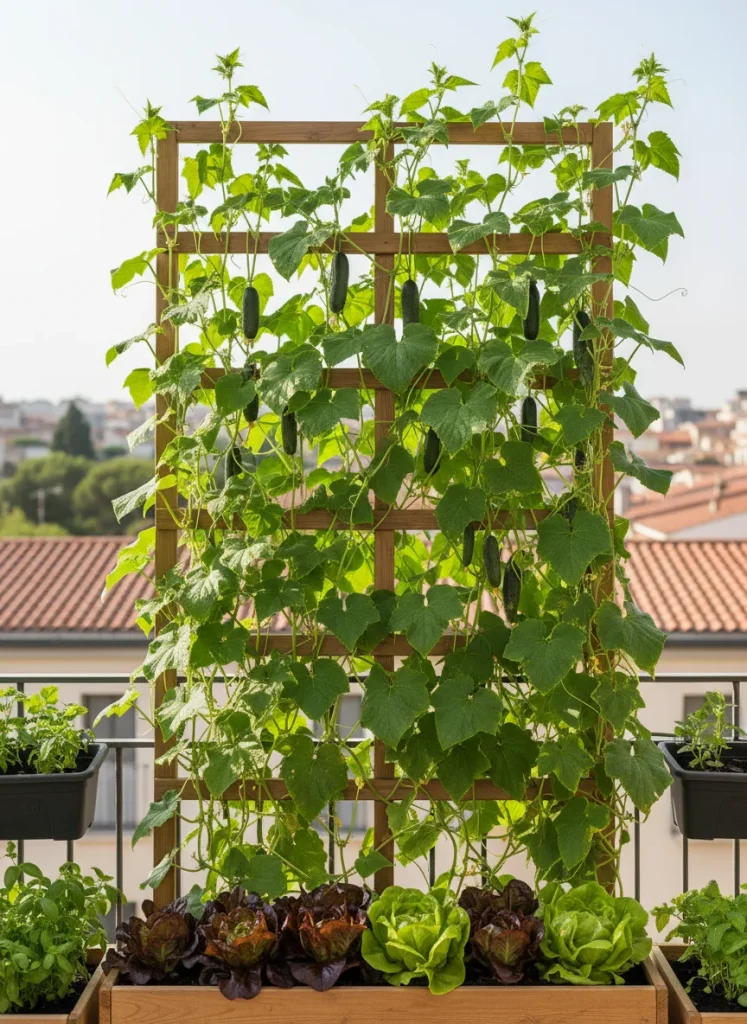
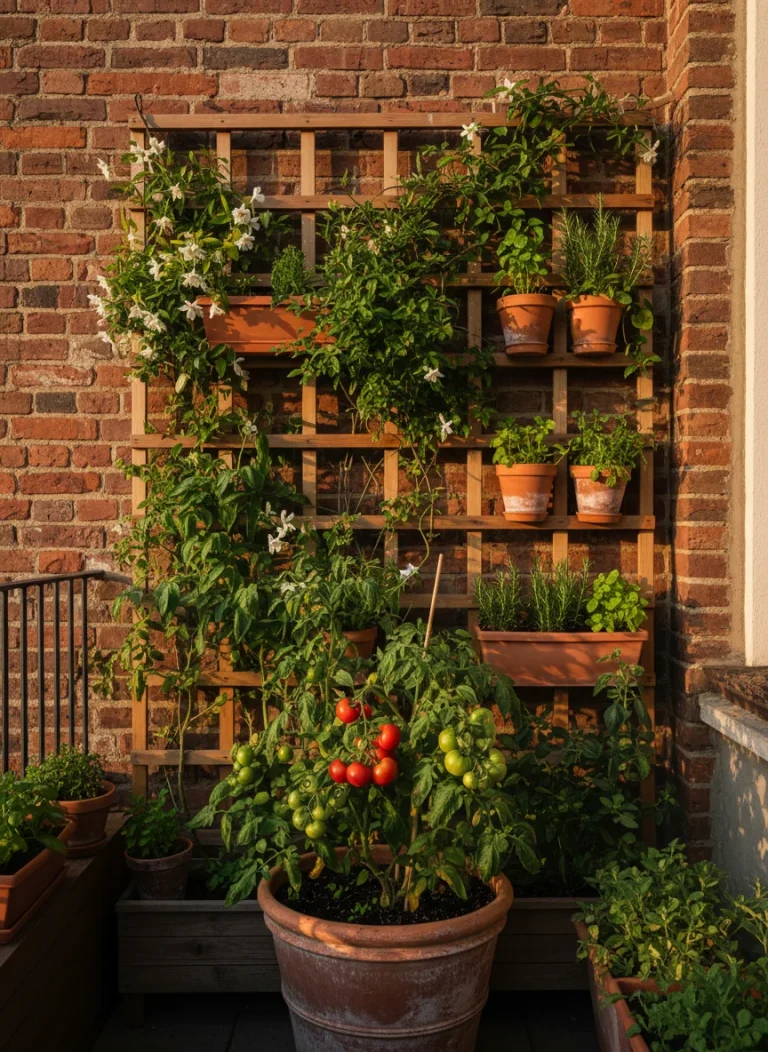
If you have 10 square feet of floor space, but you have a 6-foot high railing or wall, you actually have 60+ square feet of growing space.
Beginners think in 2D. Successful small-space gardeners think in 3D.
Use trellises, hanging baskets, or even string tied to a railing. Cucumbers, pole beans, and peas are natural climbers. By training them up a trellis, you keep the fruit off the ground (less rot and fewer bugs) and you leave the soil surface open for other plants.
I often plant lettuce at the base of my cucumber trellis. The cucumbers grow up toward the sun, and their leaves provide a little shade for the lettuce below. It’s a win-win.
5. Water: The Goldilocks Zone
In a small garden, particularly in containers, water is your biggest variable.
Pots dry out faster than the ground. On a hot July day, a black plastic pot can bake the roots of your plant in hours.
The secret isn’t to water on a schedule (like “every Monday”). The secret is the finger test. Stick your finger an inch into the soil. If it’s dry, water. If it’s damp, walk away.
Overwatering is actually more common than underwatering with beginners. If the roots sit in water, they rot. This is why drainage holes in your containers are non-negotiable. If your cute ceramic pot doesn’t have a hole in the bottom, it’s not a planter. It’s a coffin.
6. The System That Saved My Sanity
What actually burned me out wasn’t the gardening itself. It was the constant decision-making.
Every time I planted something, I was guessing. Am I spacing this right? Is this too much water? Am I wasting space? Should I even be growing this at all?
I spent more time thinking about the garden than enjoying it.
That’s when I realized the real problem wasn’t effort. It was the lack of a clear system.
I eventually came across a method built specifically around one idea. Grow a surprising amount of food in a very small space without overthinking every step.
The sweet spot was about 100 square feet. Not huge. Not overwhelming. Just enough to matter.
What I liked was how straightforward it was. No endless research. No conflicting advice. No fancy tools.
It laid everything out clearly. What to plant. Where to plant it. How to space it. And how to maintain it in just a few minutes a day.
It was designed for people like me. People with limited space. Limited time. And zero interest in turning gardening into a second job.
The system is called The 5 Minute Garden. It’s a digital guide, so I could read it instantly and start planning without waiting for anything to ship.
What sold me was how practical it felt. It doesn’t promise perfection. It just removes guesswork.
For me, that alone was worth it.
If you’re tired of researching and just want a clear, beginner-friendly blueprint for getting real results from a tiny space, this is what finally worked for me. You can check out The 5 Minute Garden here if you want to see exactly how it’s structured.
7. Just Start (Imperfection is Okay)
Gardening is a forgiving hobby. Plants actually want to grow. Your job is just to get out of their way.
You will kill a few plants. That’s not failure. That’s tuition. Every dead plant teaches you something about water, light, or pests.
But the feeling of walking out to your patio, snapping off a fresh pepper, and eating it right there? It’s unbeatable. The flavor is intense, the nutrients are higher, and the pride is real.
Don’t wait for the “perfect” season or the “perfect” yard. Start with one pot. Start with some good soil. Start today.
Read More
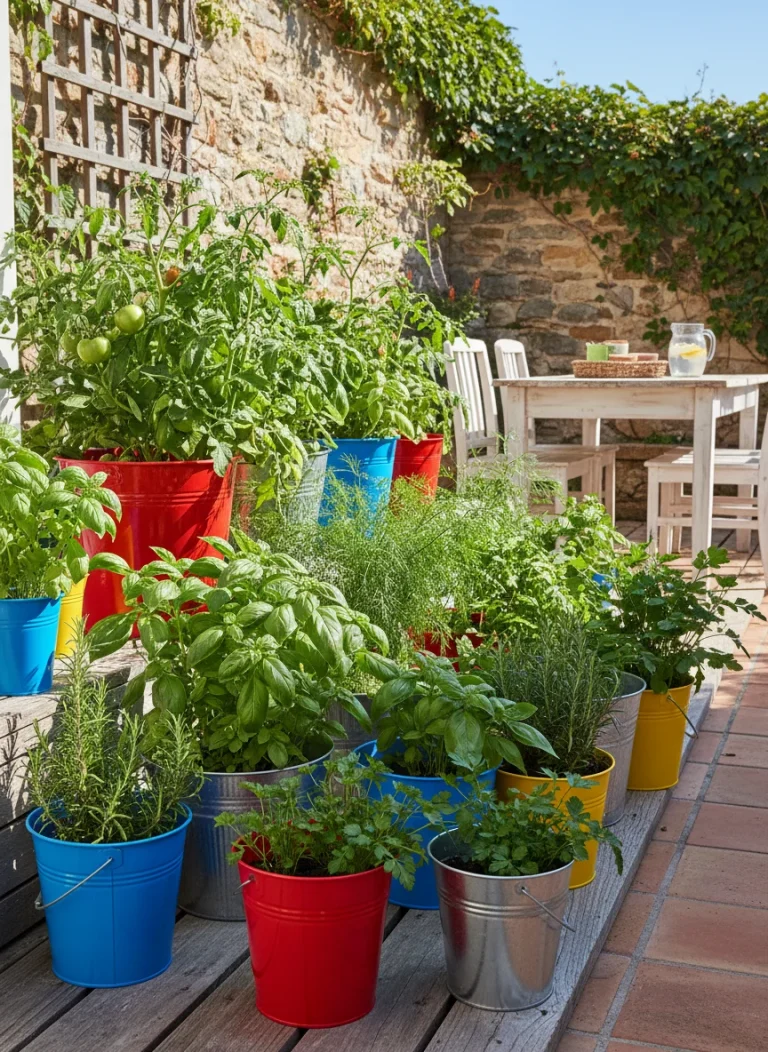
25 Foods You Can Grow In Buckets Year Round: Easy Guide


This is some great advice, I recently moved into a new apartment and I’m looking forward to growing a small vegetable garden. Thanks Sasha 💚