How to Grow Blueberries in Containers (A Beginner Guide)
Why Most Gardeners Fail with Blueberries
Blueberries are the crown jewel of the home garden. They are sweet, nutritious, and incredibly expensive to buy at the grocery store. However, they are also one of the most misunderstood plants in the backyard. Many enthusiastic gardeners plant a blueberry bush in the ground, water it diligently, and watch in confusion as it turns yellow and slowly dies.
The problem is rarely your effort. The problem is the soil. Blueberries are not like tomatoes or peppers. They require a very specific environment that most native garden soils simply cannot provide. They need high acidity to survive and thrive. This is why growing blueberries in containers is not just an alternative method. It is often the superior method.
When you grow in a container, you become the master of the soil chemistry. You control exactly what goes in and what stays out. You eliminate the struggle against your native clay or sandy loam. We are going to walk through exactly how to set up a container system that produces buckets of berries year after year.
Save this pin to your Pinterest gardening board to easily find it later
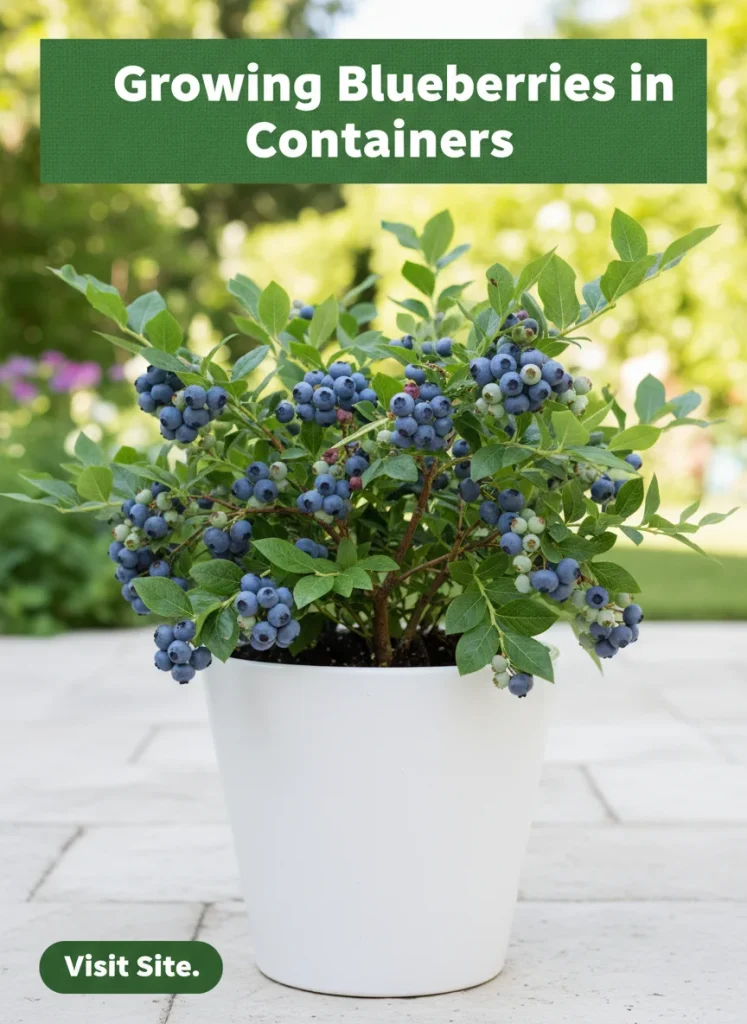
The Container Strategy
You cannot cut corners on the home for your roots. Blueberries are shrubs. They want to spread out. A small flower pot will stunt their growth and limit your harvest to a handful of berries.
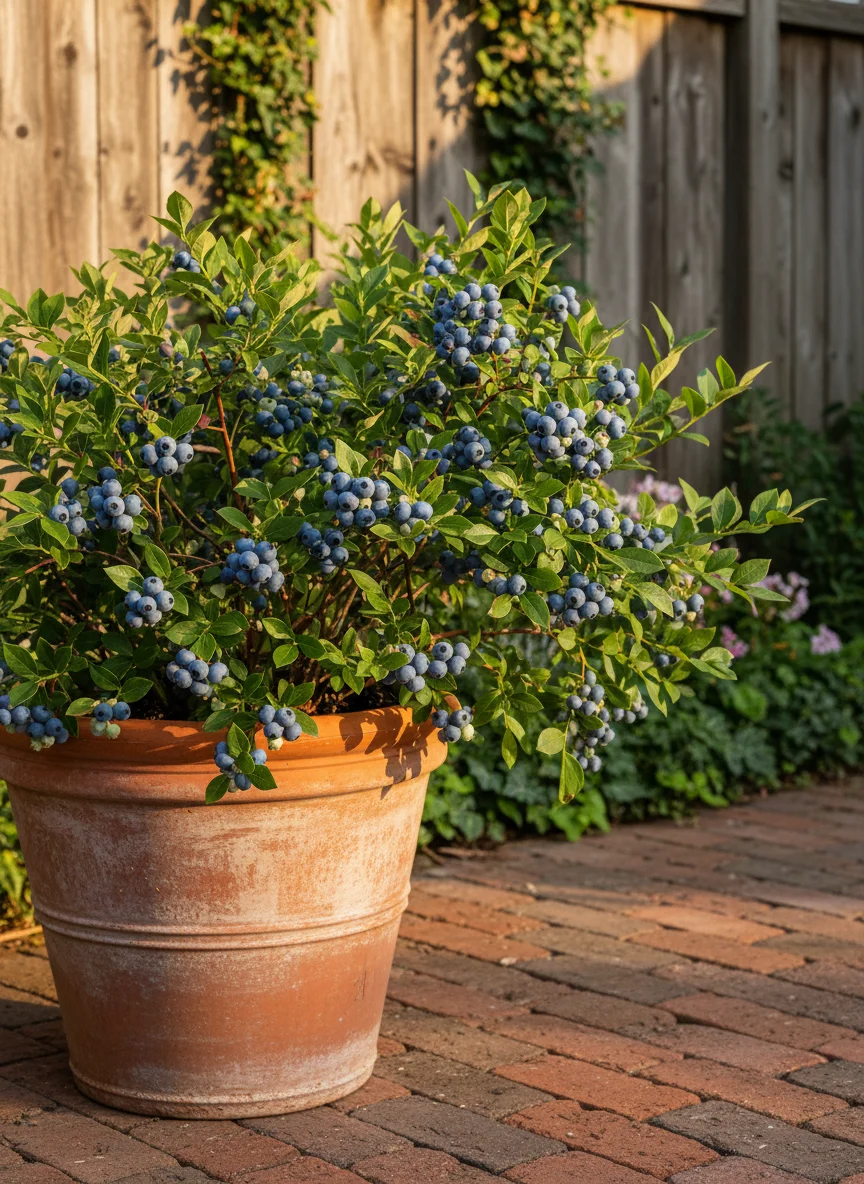
Here is the reality of container sizing. You need a large vessel. We recommend a pot that holds at least 20 to 24 gallons of soil. In terms of dimensions, look for something at least 24 inches wide and equally deep. This volume provides enough room for a robust root system. It also holds enough soil to retain moisture during hot summer days.
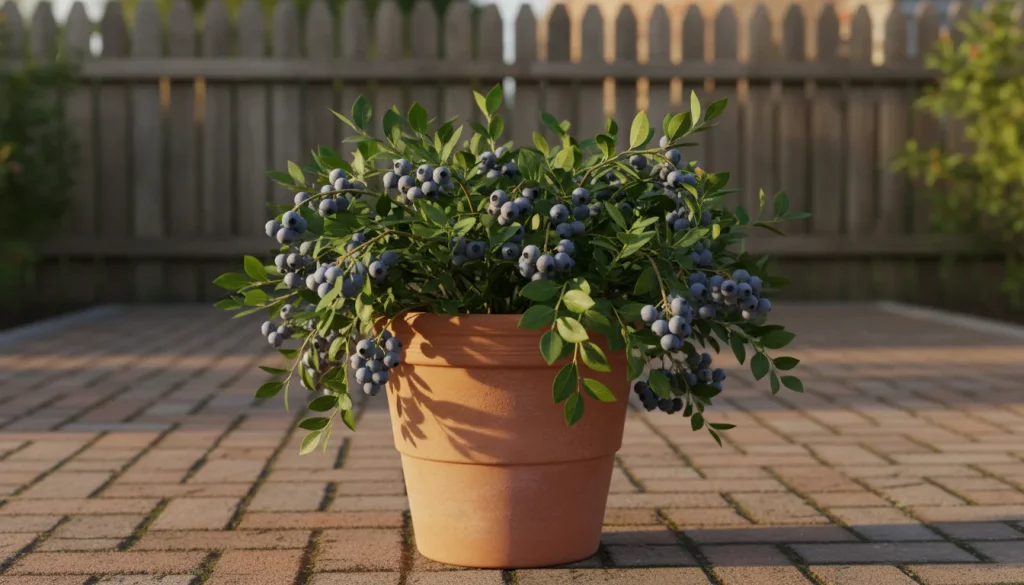
Material matters as well. Plastic pots are cheap and lightweight, but you must be careful with color. Black plastic pots absorb heat from the sun. This can cook the delicate root system in the height of July. If you use plastic, choose a light color or paint the exterior white. Terra cotta is beautiful and breathable, but it dries out very quickly. Glazed ceramic or thick resin pots often offer the best balance of insulation and moisture retention.
Boring, but essential. You must check the drainage. Blueberries love water, but they hate sitting in a stagnant puddle. Ensure your pot has multiple large drainage holes. If it only has one small hole, get a drill and add four or five more. We also suggest elevating your pots on bricks or pot feet. This ensures water can escape freely and improves air circulation under the container.
The Perfect Acidic Soil Mix
Let’s be honest. You cannot use standard potting soil for blueberries. If you buy a generic bag of garden soil, your plants will likely fail. Standard mixes usually have a pH that is neutral, around 6.5 or 7.0. Blueberries require a pH between 4.5 and 5.5. This is a massive difference in the world of chemistry.
When the pH is too high, the blueberry plant cannot absorb iron. The leaves will turn yellow while the veins stay green, a condition called chlorosis. The plant effectively starves to death even if there are nutrients in the soil.
You need to mix your own soil to guarantee success. Here is a reliable recipe that mimics the forest floor environment blueberries love:
- 40% Sphagnum Peat Moss: This is the primary source of acidity. It also holds moisture like a sponge.
- 40% Pine Bark (Shredded): This adds organic matter and acidity. It creates air pockets in the soil so roots can breathe.
- 20% Perlite or Pumice: These volcanic rocks ensure excellent drainage. They prevent the peat moss from compacting into a dense brick.
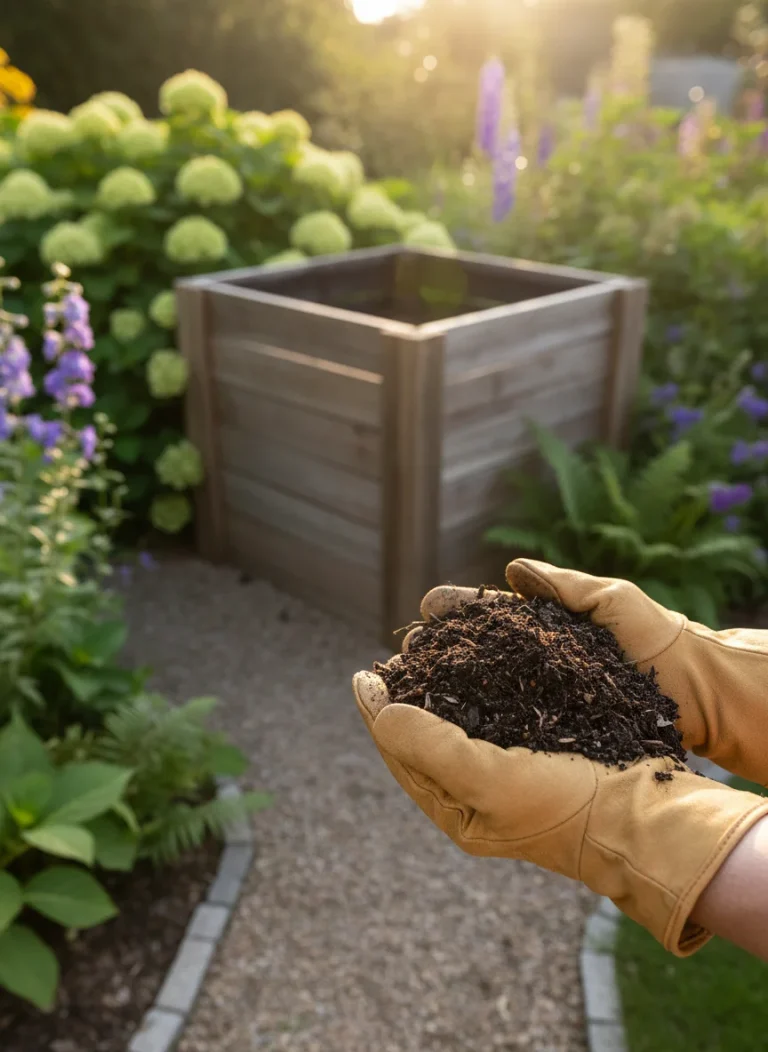
Mix these ingredients thoroughly in a wheelbarrow or on a tarp before filling your pots. This blend provides the low pH, moisture retention, and aeration necessary for a heavy harvest.
Planting Technique
Once you have your pot and your soil, the planting process is straightforward. Fill your container with your custom mix, leaving about three inches of space at the top. Water the soil before you plant to settle it down.
Remove the blueberry bush from its nursery pot. Take a close look at the roots. If they are circling tightly around the outside of the root ball, gently tease them outward with your fingers. You want to encourage them to explore their new home. Place the plant in the center of the pot. The top of the root ball should be level with the soil surface. Do not bury the stem deeper than it was growing previously. This can cause the stem to rot.
Fill in the gaps around the roots with more soil mix and press down firmly to remove large air pockets. Water deeply immediately after planting.
The Water Quality Factor
Watering is where many successful setups eventually fail. Blueberries have shallow, fibrous roots. They dry out much faster than deep-rooted plants. In a container, this risk is doubled. You must keep the soil consistently moist. It should feel like a wrung-out sponge. It should never be soggy, but it should never be bone dry.
This is often overlooked, but the source of your water matters as much as the frequency. Most municipal tap water is slightly alkaline. It contains dissolved minerals like calcium and magnesium. This is effectively liquid limestone. Over time, watering with tap water will slowly raise the pH of your soil. You might start with a perfect pH of 5.0, but after a year of tap water, it could creep up to 6.5.
Rainwater is the gold standard. It is naturally soft and slightly acidic. Set up a rain barrel if you can. If you must use tap water, you will need to test your soil pH annually. You may need to add soil acidifiers, such as elemental sulfur, to counteract the alkalinity of your water.
Feeding and Mulching
Blueberries are not heavy feeders, but they do need support. Because you are growing in a pot, nutrients wash out with every watering. You need to replenish them.
Use a fertilizer specifically designed for acid-loving plants. These are often labeled for Azaleas, Camellias, or Rhododendrons. Apply this in early spring, just as the buds are swelling but before the leaves fully open. Follow the package instructions carefully. Blueberries are sensitive to over-fertilization. Avoid products high in nitrates or chlorides, as these can burn the roots.
After fertilizing, apply a generous layer of mulch. Use pine bark nuggets or pine needles. A two-inch layer of mulch does three important jobs. First, it prevents water from evaporating. Second, it keeps the roots cool during the heat of summer. Third, as the pine bark breaks down, it adds a tiny bit of acidity back into the soil.
Sunlight and Pruning
Blueberries are sun seekers. They need full sun to produce sugars for the berries. Place your containers in a spot that receives at least six to eight hours of direct sunlight every day. If they get too much shade, the plants will grow leggy and produce very few berries.
Regarding pruning, patience is key. For the first two years, you barely need to touch them. Let them establish their structure. Starting in year three, prune them in late winter while they are dormant. Remove any dead, damaged, or diseased wood. Cut out any branches that are crossing and rubbing against each other. Your goal is to open up the center of the bush to allow sunlight and air to reach every branch.
Winter Protection
Growing in containers introduces a specific risk during winter. In the ground, the earth acts as a massive insulator. The soil rarely freezes solid. In a pot, the cold air surrounds the roots on all sides. If the root ball freezes solid, the plant dies.
If you live in a cold climate, you must protect your pots. Once the leaves have dropped and the plant is dormant, move the containers to a sheltered location. An unheated garage or a shed is perfect. You do not want to bring them into a heated house, as they need a period of dormancy. You just want to keep them from freezing solid. If a garage is not an option, move the pots against a south-facing wall and wrap the pots in burlap or bubble wrap for insulation.
A Note on Wildlife
You are not the only one who loves blueberries. Birds will watch your berries ripen with great interest. They can strip a bush clean in a single morning. The only effective defense is physical exclusion. As soon as the berries start to turn blue, drape a bird netting over the bush. Secure it tightly around the base of the pot so birds cannot sneak underneath.
Growing blueberries takes some initial setup. You have to get the soil right. You have to monitor the water. But once you establish this system, these plants are incredibly rewarding. They are long-lived perennials that will gift you with fresh fruit for years. Period.
Read More
11 Indoor Herbs That Actually Survive and Taste Amazing
The Ultimate Guide to Growing Broccoli in Containers for Small Spaces