Balcony Gardening Ideas That Work Even in High-Rise Apartments
The Executive Resolution
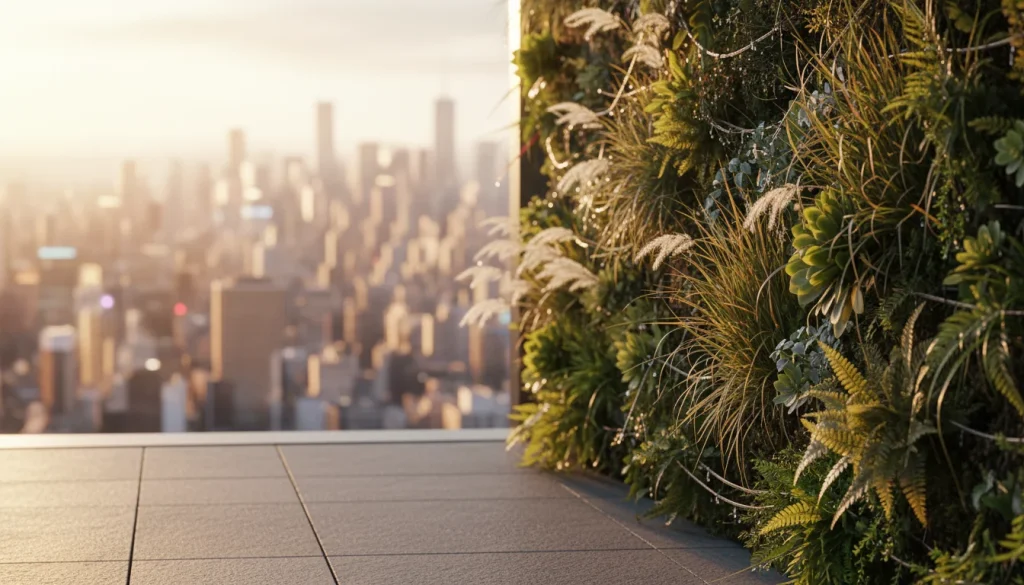
Stop treating your high-rise balcony like a suburban patio. The rules change above the 5th floor. To succeed, you must mitigate wind shear using woody, hardy perennials as a perimeter shield and utilize vertical tension-rod systems to maximize square footage without drilling. Prioritize self-watering containers to prevent neighbor-enraging runoff, and anchor every pot with zip-ties or heavy gravel drainage layers. Success isn’t about plant choice; it’s about micro-climate engineering.
The “Wind Tunnel” Protocol
Let’s get real immediately. The number one killer of high-rise gardens isn’t a lack of a green thumb, and it isn’t the sun. It’s the wind.
If you are above the tree line, your balcony is a wind tunnel. The wind strips moisture from leaves faster than the roots can drink it up. This is called transpiration burn. If you put a delicate fern or a broad-leafed tropical plant on the railing of a 15th-floor apartment, you aren’t gardening; you’re composting.
The Strategy: You need to build a “Green Fortress.”
- The Outer Shell: Place your toughest plants on the perimeter (railings and corners). Use ornamental grasses, bamboo (in contained pots), or rosemary. These act as a sacrificial windbreak.
- The Inner Sanctum: Once the windbreak is established, place your delicate herbs (basil, cilantro) and leafy greens on the floor or low shelves behind the tough plants.
- The Anchor Rule: If a pot isn’t heavy enough to break a toe, it’s light enough to blow off. Weigh down plastic pots with rocks at the bottom, or strap them to the railing with industrial zip-ties.
The Deep-Dive Blueprint: Engineering Your Sky Garden
Most people buy a few terracotta pots, water them once, and watch them die. To have a lush jungle that survives a lease term, you need to address the physics of the building and the biology of the plants. Here is the unsexy work required to make this happen.
1. The Structural Integrity Check (Weight Logistics)
Here is a terrifying fact: Wet soil weighs approximately 100 lbs per cubic foot. Large ceramic pots filled with wet dirt can easily exceed the point load limit of older balcony cantilevers if you cluster them all in the center.
The Fix: Keep the heavy stuff near the load-bearing walls (the wall where the door is). The further out you go toward the railing, the lighter your materials should be. Use resin or fiberglass pots instead of ceramic or concrete. Fill the bottom third of large planters with empty plastic bottles or packing peanuts before adding soil. This reduces weight and improves drainage without sacrificing the visual bulk.
2. Verticality Without Drilling (The Renter’s Hack)
Floor space is premium real estate. If you put everything on the floor, you can’t stand out there. You need to go up, but most landlords will keep your deposit if you drill into the exterior cladding.
The Solution: Tension Rod Gardens.
Look for heavy-duty, floor-to-ceiling tension styling poles (often sold for bathroom organization or room dividers). You can mount these tight against the wall and hang pots from them.
Alternatively, use over-the-rail brackets that face inward. Never hang planters facing outward on a high-rise. It’s a liability hazard, and in many cities, it’s illegal. Facing them inward also allows you to enjoy the flowers, rather than the drone flying by.
3. The Water Runoff Diplomat
Nothing starts a war with the neighbor downstairs faster than “brown water rain” dripping onto their white patio furniture every time you water your tomatoes.
You have two options here, and you must choose one:
- The Saucer Method: Every pot gets a deep saucer. You water slowly, stopping before the saucer overflows. You must empty these saucers after heavy rains to prevent root rot.
- The Wicking Bed (Superior Choice): Use self-watering planters with a water reservoir at the bottom. You fill the reservoir via a tube, and the soil pulls water up. No runoff, less evaporation, and you can go away for a weekend without your plants dying.
4. Mapping Your Exposure (The Sun Trap)
Balconies are binary. They are either baking ovens or dark caves. There is rarely an “in-between.”
South/West Facing (The Oven):
You get intense afternoon sun. Concrete walls absorb heat and radiate it back at night.
Plant List: Lavender, Thyme, Rosemary, Succulents, Geraniums, Cherry Tomatoes, Peppers.
Tip: Use light-colored pots. Black pots will cook the roots.
North/East Facing (The Cave):
You get cool morning light or shadow. Wind is usually colder here.
Plant List: Ferns (if protected from wind), Hostas, Begonias, Mint (Mint is invasive, keep it in its own pot), English Ivy, Swiss Chard.
5. The Edible ROI (Return on Investment)
Don’t try to grow zucchini on a 4×8 balcony. The leaf span is too wide, and the yield is too low. Focus on “High-Value, Low-Space” crops.
The Winners:
Chili Peppers: Compact, vertical, and expensive to buy fresh.
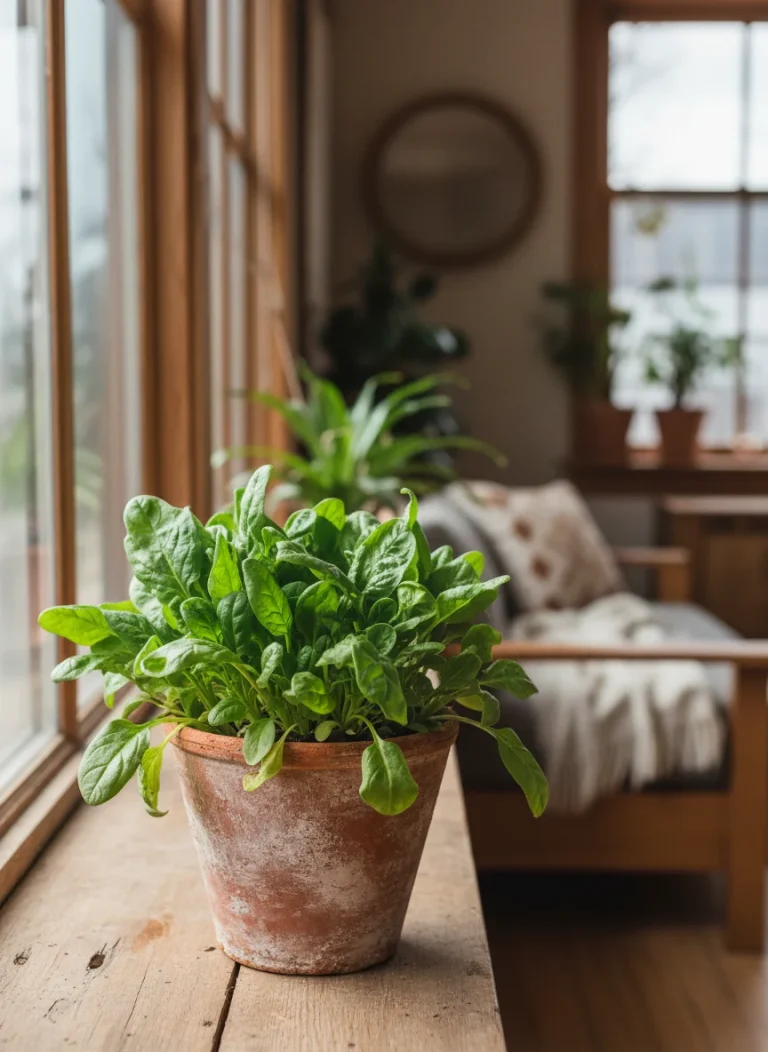
Leafy Greens (Cut-and-Come-Again): Lettuce, arugula, and spinach. You can harvest these weekly.
Herbs: The absolute highest ROI. A pack of thyme costs $3 at the store. A thyme plant costs $4 and lasts years.
The Losers:
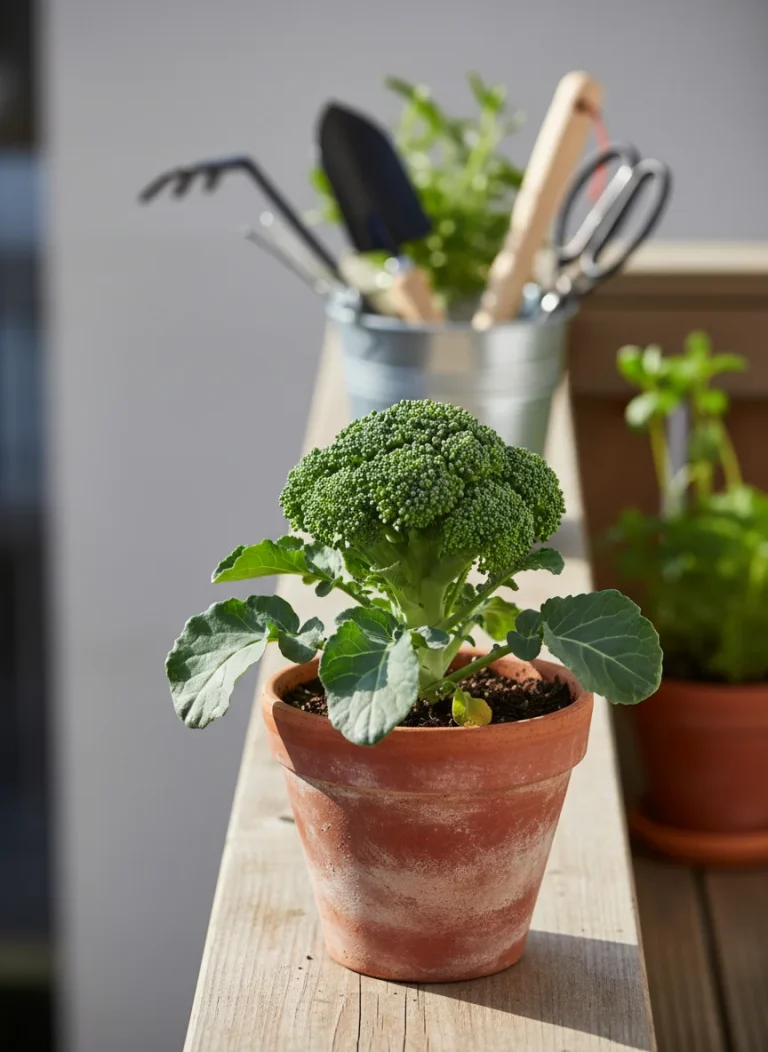
Broccoli, Cauliflower, Corn, Melons. They take up huge space, require massive soil volume, and give you one harvest per season.
Save This Blueprint!
The Skeptic’s Corner (FAQ)
Q: I don’t have an outdoor tap. Am I doomed to carry buckets?
A: No. Buy a “kitchen faucet adapter” and a lightweight coil hose. You unscrew the aerator on your kitchen sink, screw in the adapter, and snap the hose on. It reaches the balcony effortlessly. It’s a $15 life-saver.
Q: What about pigeons? They destroyed my last attempt.
A: Pigeons hate instability. If you use railing planters, use “bird spikes” or run a taut fishing line 2 inches above the railing. For the floor, keep the garden dense. Pigeons look for flat, open landing strips. If your balcony is a jungle, they won’t land.
Q: Can I use regular garden soil?
A: Absolutely not. Garden soil turns into a concrete brick in a pot. You must use “Potting Mix” (which usually contains no actual dirt, just peat moss, perlite, and pine bark). It stays fluffy and drains well. If you want to be a pro, mix in extra perlite to keep it lightweight.
Q: My balcony is mostly shade. Can I grow food?
A: Yes, but lower your expectations on fruit. Tomatoes and peppers need sun. In the shade, focus on the “leaf” and “root.” Lettuce, spinach, kale, radishes, and carrots will tolerate 3-4 hours of dappled light.
Q: What do I do with the pots in winter?
A: If you use terracotta, you must empty them or bring them inside, or they will crack when the wet soil freezes and expands. If you use resin, fiberglass, or heavy-duty plastic, they can stay out. Push them against the heated wall of the apartment to give the roots a few degrees of protection.
Q: Is it safe to hang things from the ceiling?
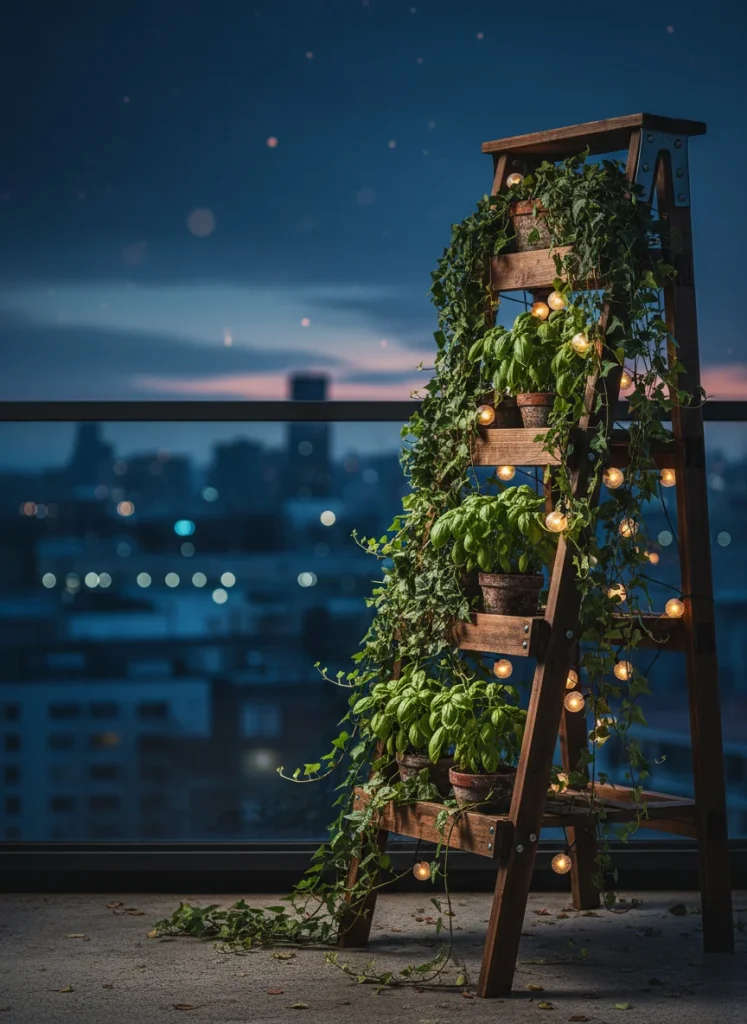
A: Only if you are drilling into concrete with a masonry bit and using proper anchors, which most rentals forbid. Stick to tension rods or wall-leaning ladder shelves. Never trust adhesive hooks with a heavy plant pot; gravity always wins.