How Often Should You Water Vegetables in Containers?
Disclosure: This article contains affiliate links. As an Amazon Associate, I earn from qualifying purchases at no extra cost to you. I only recommend products I would use myself.
One of the most common reasons container vegetables fail is not pests, not poor soil, and not lack of sun. It is watering gone wrong, either too much or too little, and usually without the grower knowing which one is the problem.
The honest answer to how often you should water is: it depends. But that is not a cop-out. The variables are specific, learnable, and once you understand them, you will never second-guess your watering again.
Why Container Vegetables Need More Frequent Watering Than Garden Beds
When a plant grows in the ground, its roots can travel downward and outward to find moisture. A container cuts that off entirely. The plant has only as much water as the pot holds, and that pot is exposed to air and sun on all sides, not just the top.
The result is that containers dry out significantly faster than garden beds, sometimes within 24 hours on a hot day. This is not a flaw in the system you can fix. It is just the nature of container growing, and it means watering needs to be an active, regular habit rather than something you do when you remember.
The Only Rule You Actually Need
Before any schedule or formula, learn this first:
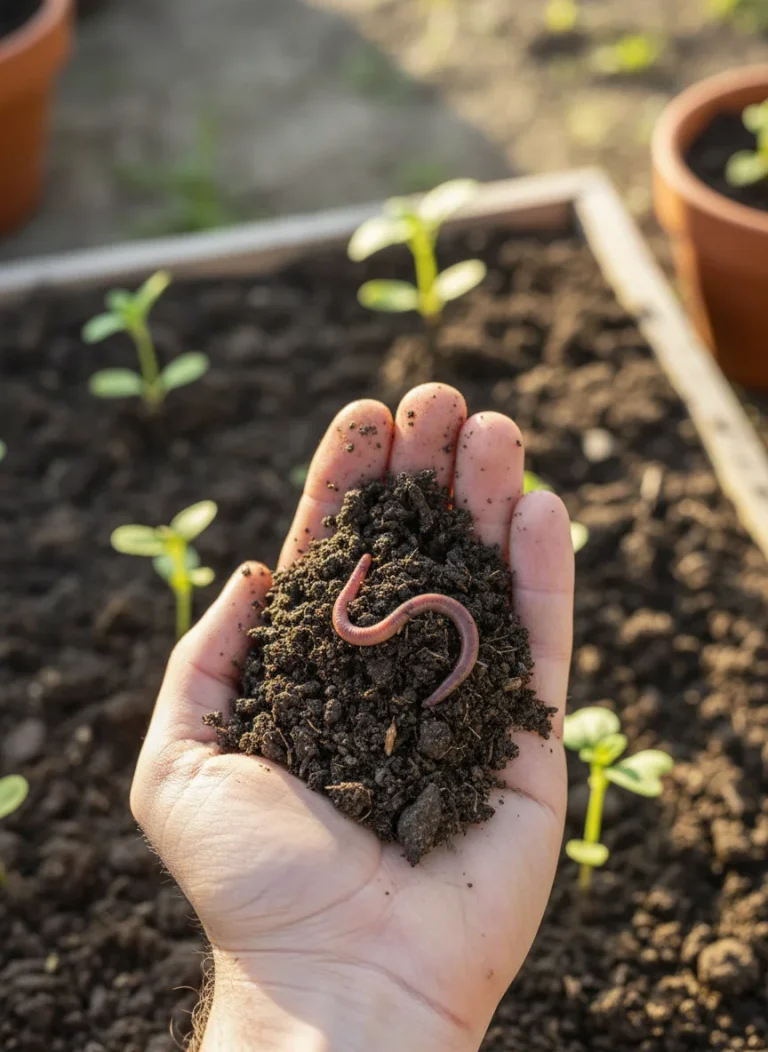
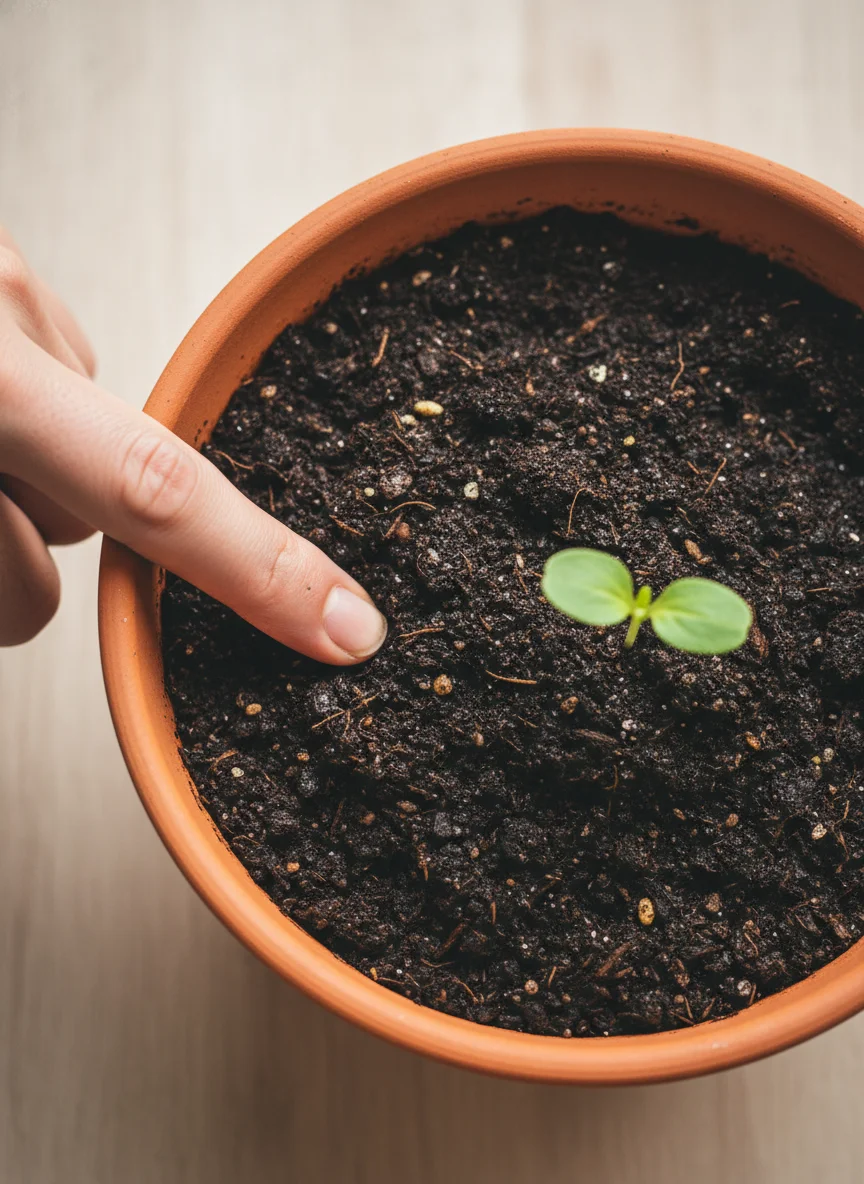
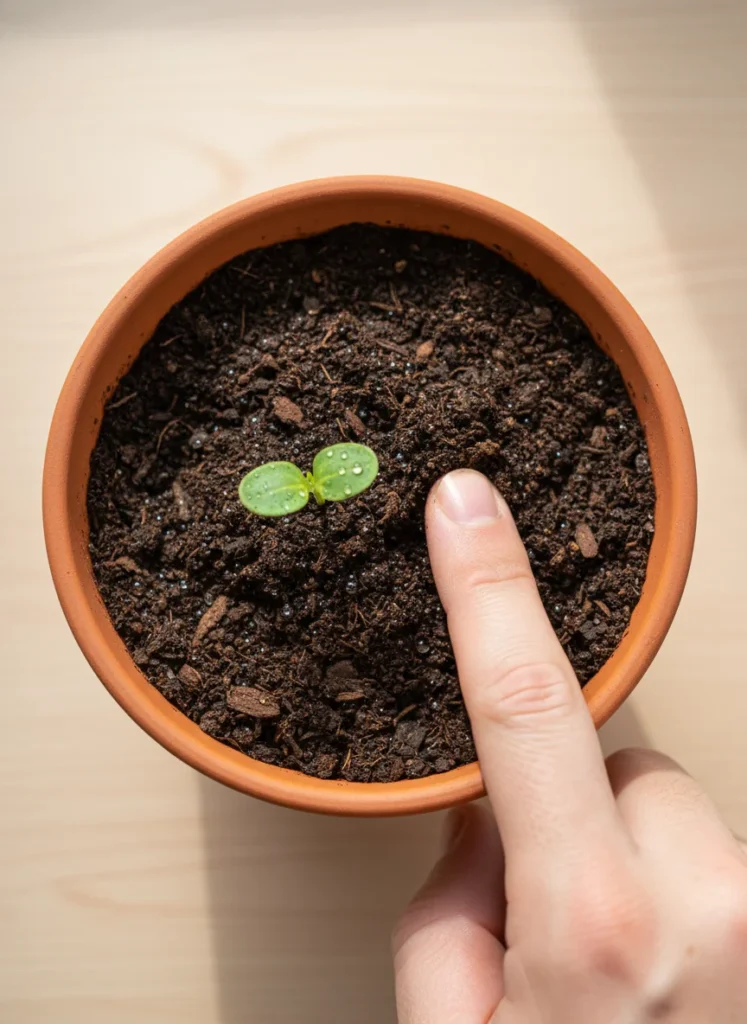
Stick your finger one inch into the soil. If it feels dry at that depth, water. If it still feels moist, wait.
This test takes five seconds and is more accurate than any fixed schedule because it accounts for all the variables at once, weather, pot size, plant size, soil type, and season. No guide can replace it. Everything else in this article helps you understand why the soil behaves the way it does.
The 5 Variables That Control How Often You Need to Water
1. Pot Size
Small pots dry out fast. A 6-inch pot on a warm day can go from moist to bone dry within 12 to 18 hours. A 15-gallon fabric grow bag holds enough soil volume to stay moist for two to three days in the same conditions.
As a general guide:
- Pots under 8 inches: check daily, likely water daily in warm weather
- Pots 10 to 14 inches: check daily, water every one to two days
- Pots 15 inches and above: check every one to two days, water every two to three days
2. Pot Material
The material your container is made from affects how quickly moisture escapes.
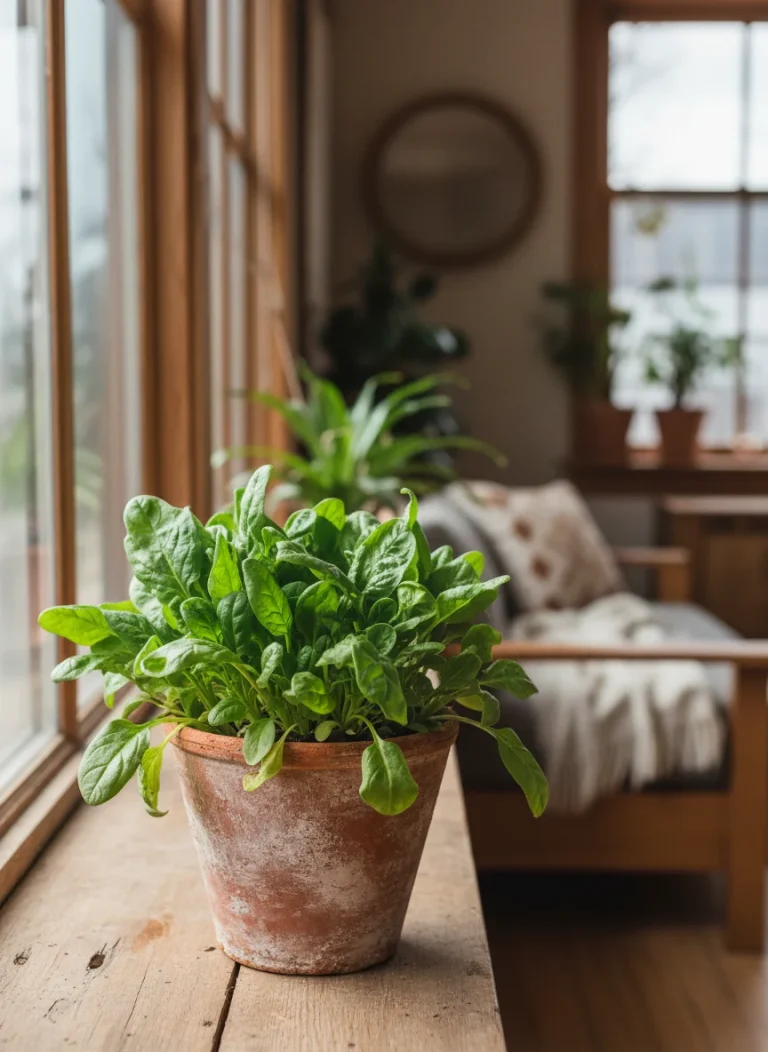
Terracotta and unglazed clay are porous. They breathe through their walls, which is excellent for root health but means they lose moisture faster than plastic or glazed pots. If you are using terracotta, plan to check your soil more frequently, especially in hot weather.
Plastic pots retain moisture longer. Fabric grow bags sit in the middle: they breathe through the sides, which improves drainage and prevents overwatering, but means they dry out faster than plastic.
3. Plant Type and Stage
Different vegetables have different thirst levels, and the same plant drinks more as it matures.
Leafy greens like lettuce, spinach, and kale prefer consistently moist soil and show stress quickly when things dry out. They have shallow roots and little tolerance for drought.
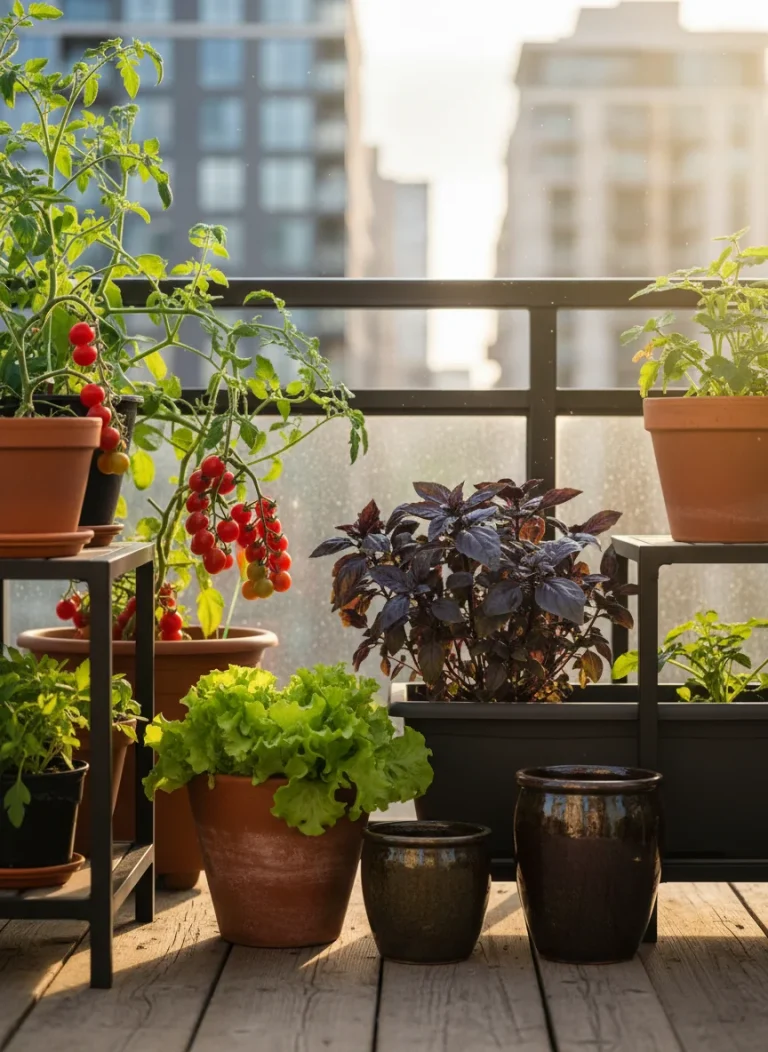
Tomatoes and peppers are deeper rooted and more tolerant of brief dry spells, but they need deep, thorough watering when you do water them. Inconsistent watering is what causes tomatoes to crack and peppers to drop flowers.
Herbs like basil want consistent moisture. Rosemary and thyme prefer to dry out slightly between waterings and can rot if kept too wet.
4. Weather and Season
In cool spring weather, a container might stay moist for two to three days between waterings. In the height of summer, the same container might need water daily or even twice daily if temperatures are high and the pot is small.
Wind also dries containers out faster than many gardeners realise. A pot in a breezy spot on a balcony will need more frequent watering than one in a sheltered corner.
5. Soil Mix
A high-quality potting mix with good structure retains moisture while still draining freely. A compacted or peat-heavy mix that has been used for more than one season will either drain too fast or hold water in anaerobic clumps, making it harder to read moisture levels accurately.
If you are unsure whether your old potting mix is still worth using, read my guide on can you reuse potting soil in containers before replanting into it.
If your soil pulls away from the sides of the pot when dry, it has hydrophobic patches that will cause water to run straight through without being absorbed. The fix is to water slowly in two passes, allowing the first to be absorbed before adding more.
A Practical Watering Schedule to Start With
Use this as a starting point, then adjust based on the finger test:
| Conditions | How Often to Water |
|---|---|
| Spring, cool weather, large pot | Every 2 to 3 days |
| Spring, cool weather, small pot | Every 1 to 2 days |
| Summer, warm weather, large pot | Every 1 to 2 days |
| Summer, warm weather, small pot | Daily, possibly twice daily |
| Leafy greens in any season | Check daily, do not let soil dry fully |
| Herbs (drought-tolerant types) | Allow top inch to dry before watering |
Morning or Evening: When Should You Water?
Water in the morning when possible. Here is why:
Morning watering gives the plant access to moisture through the hottest part of the day. Any water that splashes on the leaves has time to evaporate before nightfall, which reduces the risk of fungal disease.
Evening watering is not harmful and is far better than skipping a session entirely. Just aim the water at the base of the plant, not the leaves, and avoid soaking foliage before a cool night.
Midday watering in full sun is not as damaging as the myth suggests, but it is wasteful. High evaporation rates mean less water reaches the roots before it disappears.
How to Tell If You Are Overwatering or Underwatering
Getting this diagnosis right is more useful than any schedule.
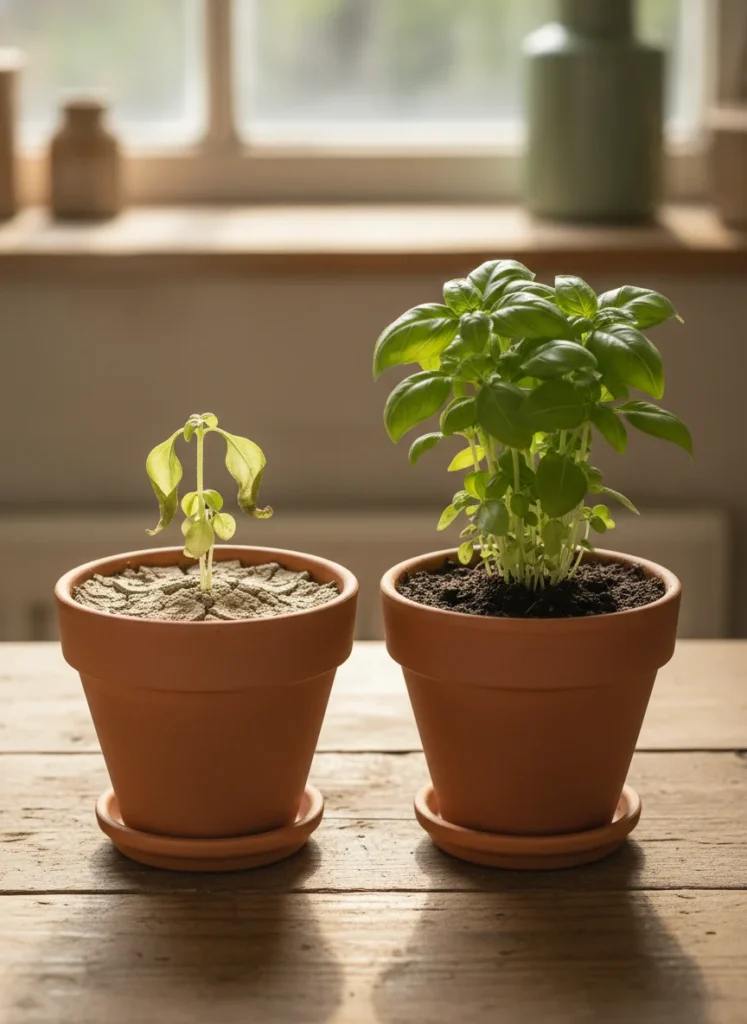
Signs of underwatering:
- Soil is dry more than one inch deep
- Leaves are wilting, especially in the morning before the heat of the day
- Leaf edges are crispy or browning
- The pot feels very light when you lift it
Signs of overwatering:
- Soil stays wet for days without drying
- Leaves are yellowing, especially lower leaves
- Stems feel soft or mushy at the base
- There is a sour smell from the soil
- Fungus gnats appear near the surface
The most common mistake beginners make is seeing yellowing leaves and adding more water. Yellow leaves are more often a sign of overwatering than underwatering. Always check the soil before responding.
Tools That Make Watering Easier
The finger test is free and always accurate. But a few tools help if you are managing several containers or travelling.
Moisture meter: A basic soil moisture meter removes the guesswork entirely. Push the probe into the soil and it gives you a reading. Particularly useful for beginners who are not yet confident reading soil by feel. Check moisture meters on Amazon.
Self-watering pots: These have a reservoir at the base that the plant draws from as needed. They are excellent for leafy greens and herbs and can extend the time between waterings significantly. Browse self-watering pots on Amazon.
Watering spikes: Terracotta or plastic spikes that you attach to a bottle of water and insert into the soil. A simple low-cost solution for short trips away.
How Much Water to Give at Each Session
When you water, water deeply. That means pouring slowly until water runs freely from the drainage holes at the bottom of the pot. This ensures moisture reaches the root zone rather than just wetting the surface.
If water runs straight through without the soil absorbing it, your mix has become hydrophobic. Slow down and water in two passes with a few minutes between each.
Shallow, frequent splashes train roots to stay near the surface where they are most vulnerable to heat and drought. Deep, thorough watering encourages roots to grow downward, making the plant more resilient.
One More Thing: Make Sure Your Pot Drains
None of this works without proper drainage. A pot without drainage holes, or with holes blocked by compacted soil, will waterlog regardless of how carefully you water. Check that water drains freely every few weeks and clear any blockages with a thin stick or skewer.
The Bottom Line
Check the soil daily with your finger. Water deeply when the top inch is dry. Adjust for pot size, material, plant type, and season. Watch the plant for signs of stress and learn to read whether it is thirsty or waterlogged.
That is the whole system. No rigid schedule will serve you as well as learning to read your containers directly.