How to Compost at Home for Free
Estimated reading time: 6 minutes
The Ultimate Guide to Free Home Composting
Learning how to compost at home is the single most impactful step you can take for your garden and the planet. It transforms your daily kitchen scraps and yard waste into “black gold,” a nutrient dense soil amendment that costs you absolutely nothing. Many people assume composting requires expensive tumblers or complex science, but that is false. At its core, composting is simply managing the natural decomposition process that happens on the forest floor every day. By understanding a few basic rules about ingredients and airflow, you can start this process in your backyard immediately. This guide provides the definitive answer on how to compost at home effectively, efficiently, and entirely for free.
How to start composting at home for beginners?
The first step is selecting the right location. You need a dry, shady spot near a water source for your compost pile or bin. Placing it directly on bare soil is ideal because it allows beneficial worms and organisms to enter the pile and speed up decomposition. You do not need to buy a plastic bin to start. A simple pile in the corner of the yard works perfectly well.
Once you have your location, you must start thinking about your end goal. If you are already planning your garden layout, consider placing the compost pile within easy reach of your vegetable beds. This minimizes the effort required to move the finished soil later. Start by laying down a few inches of twigs or straw to ensure good drainage and airflow at the base.
What are the 4 ingredients in compost?
A successful compost pile relies on four essential elements working in harmony. If you master the balance of these four items, your compost will break down quickly without producing bad odors.
- Nitrogen (Greens): This includes vegetable scraps, fruit peels, fresh grass clippings, and coffee grounds. These materials provide the raw nutrients for the microorganisms.
- Carbon (Browns): This includes dry leaves, cardboard, newspaper, straw, and sawdust. Carbon provides the energy for the microbes and prevents the pile from becoming a slimy mess.
- Water: Your pile needs moisture to function. It should feel like a damp sponge. Without water, the process stops; with too much, the pile rots anaerobically.
- Air: Oxygen is vital. Without air circulation, beneficial bacteria die, and the pile will start to smell like a swamp.
What is the best homemade compost?
The best homemade compost comes from a balanced ratio of the ingredients listed above. The golden rule for high quality compost is to use a ratio of roughly two parts brown materials to one part green material. This ensures that the nitrogen rich greens break down efficiently without becoming compacted.
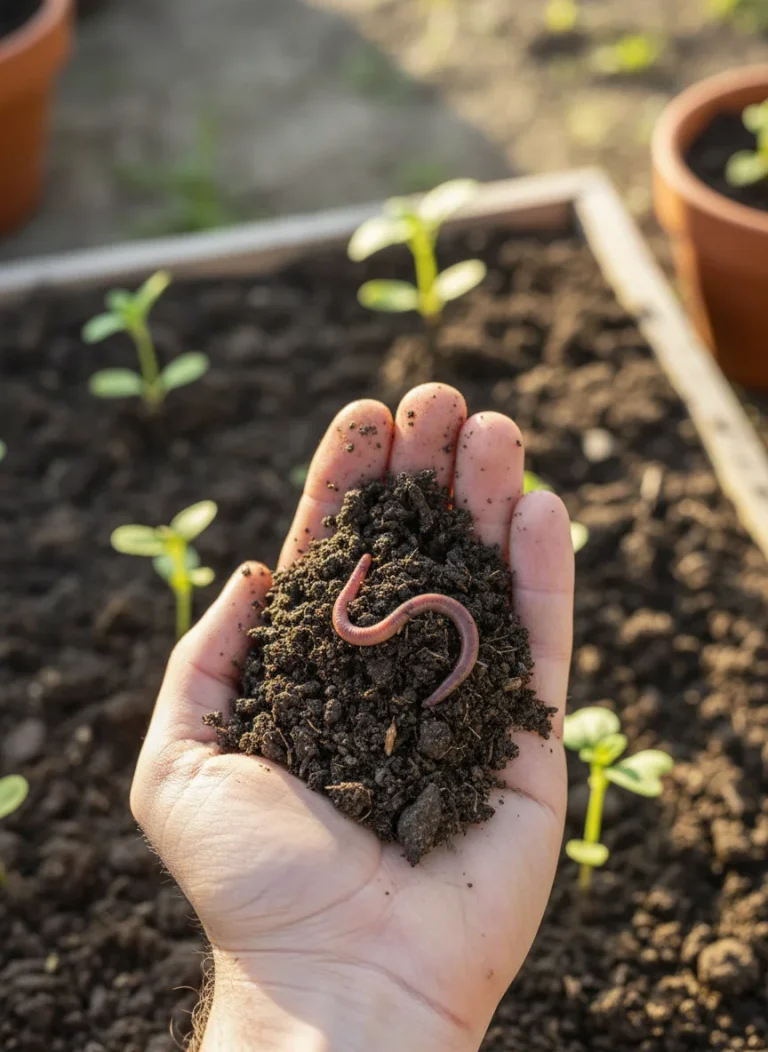
The texture should eventually look dark, crumbly, and uniform. You should not be able to recognize the original items, like apple cores or leaves. The best compost smells like fresh earth or a forest floor after rain. If you achieve this balance, you are producing a soil amendment superior to anything you can buy at a garden center.
Can I put banana peels in my compost?
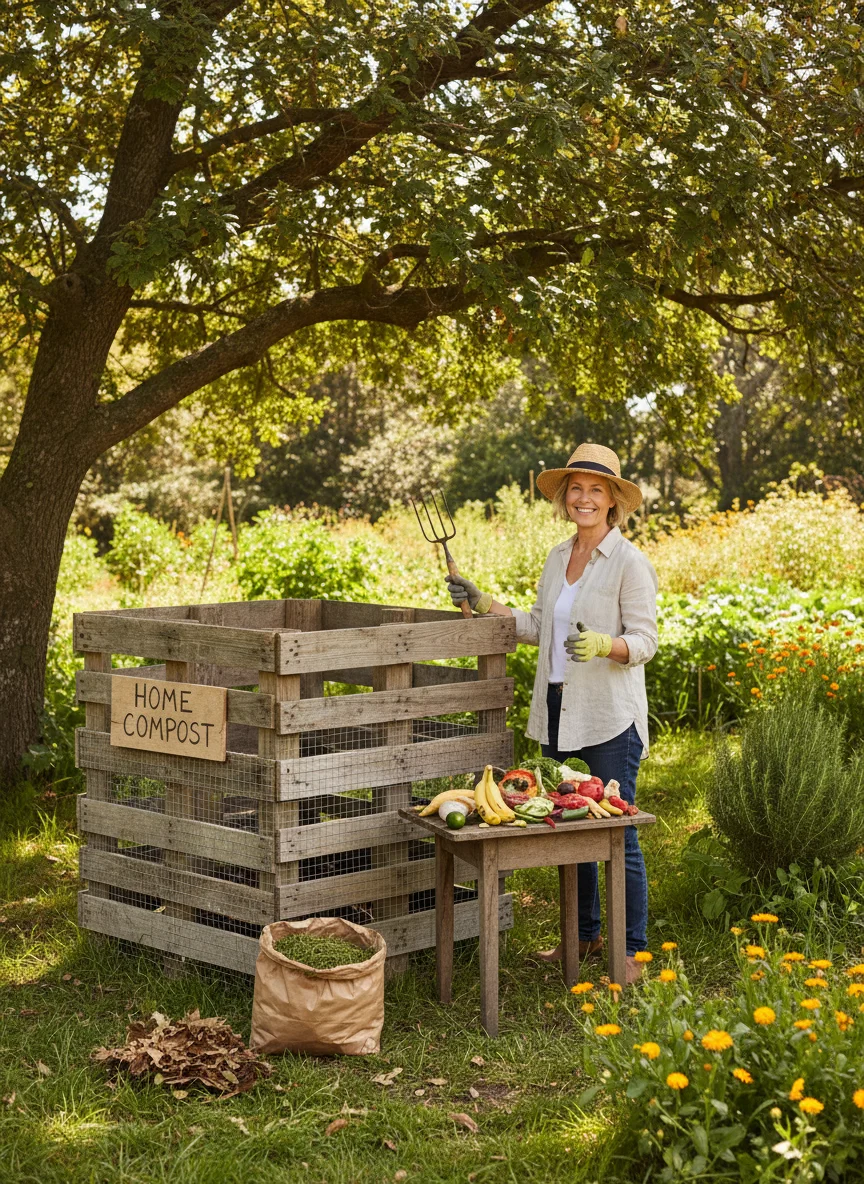
Yes, banana peels are an excellent addition to your compost pile. They break down easily and add valuable potassium, calcium, and magnesium to the finished soil. To speed up the process, you can chop the peels into smaller pieces before tossing them in.
You can also include other common kitchen items like eggshells, tea bags (remove the staple), and stale bread. However, you must avoid adding meat, dairy, oils, or pet waste. These items attract pests and can introduce harmful pathogens to your pile. Stick to plant based waste to keep your system safe and free of rodents.
How to make compost at home with kitchen waste
Integrating composting into your daily routine is simple. Keep a small container or bowl on your kitchen counter to collect scraps as you cook. When the container is full, take it out to your pile.
Whenever you add a bucket of fresh kitchen waste (greens), you must immediately cover it with a layer of dry leaves or shredded cardboard (browns). This practice, often called the “lasagna method,” is crucial. It traps odors and discourages fruit flies. If you consistently layer your kitchen waste between carbon materials, you will never have issues with pests or smells.
How to make compost in 7 days
Making compost in strictly seven days requires a technique known as “hot composting.” This is an aggressive method that requires effort and precision. You need to build a large pile all at once, roughly three feet cubed, with an optimized carbon to nitrogen ratio (30:1).
To achieve this speed, you must chop all materials into pieces smaller than one inch. You also need to turn the pile every single day to inject massive amounts of oxygen. This activity causes the pile to heat up significantly, often reaching 130 to 160 degrees Fahrenheit. This heat cooks the material and breaks it down rapidly. While difficult for beginners, it is the fastest way to get results.
10 steps on how to make compost
Follow this definitive checklist to build your pile from scratch:
- Select a Site: Choose a level, well drained spot on the earth.
- Gather Browns: Collect dry leaves, twigs, and paper.
- Gather Greens: Collect kitchen scraps and lawn clippings.
- Chop Materials: Shred everything to increase surface area.
- Build the Base: Lay down coarse twigs for airflow.
- Layer Ingredients: Alternate layers of browns and greens.
- Add Water: Sprinkle water on each layer until damp.
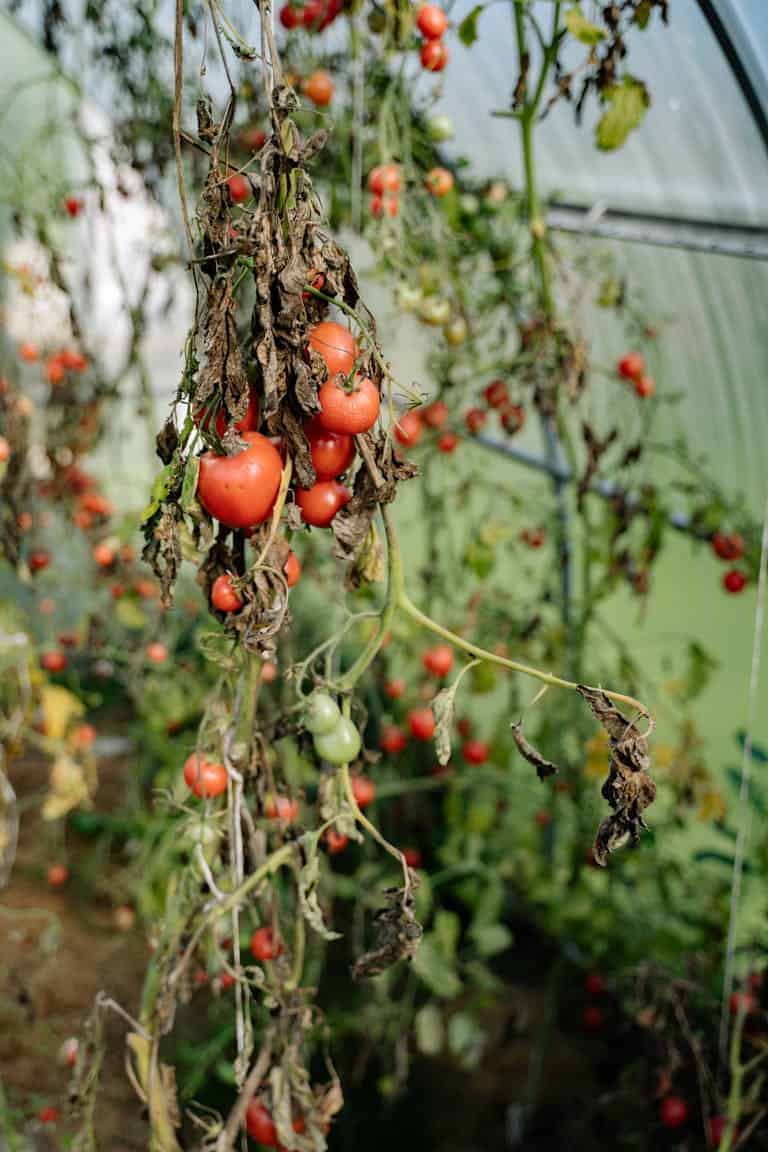
- Add Garden Waste: Toss in the trimmings from your tomato plants as a great nitrogen source.
- Turn the Pile: Mix the pile with a pitchfork every few weeks to aerate.
- Harvest: Wait until the material is dark and crumbly, then sift and use.
Making compost at home for beginners
If you are new to this, do not stress about perfection. “Cold composting” is the easiest method for beginners. You simply add materials to the pile as you generate them and let nature take its course. It might take six months to a year for the pile to decompose fully, but it requires almost no effort.
The most common mistake beginners make is letting the pile dry out. Check it weekly. If it looks dusty or gray, add water. If it smells rotten, add more brown leaves and turn it over to dry it out. Nature wants to decompose these materials; you are just helping it along.
Compost bin
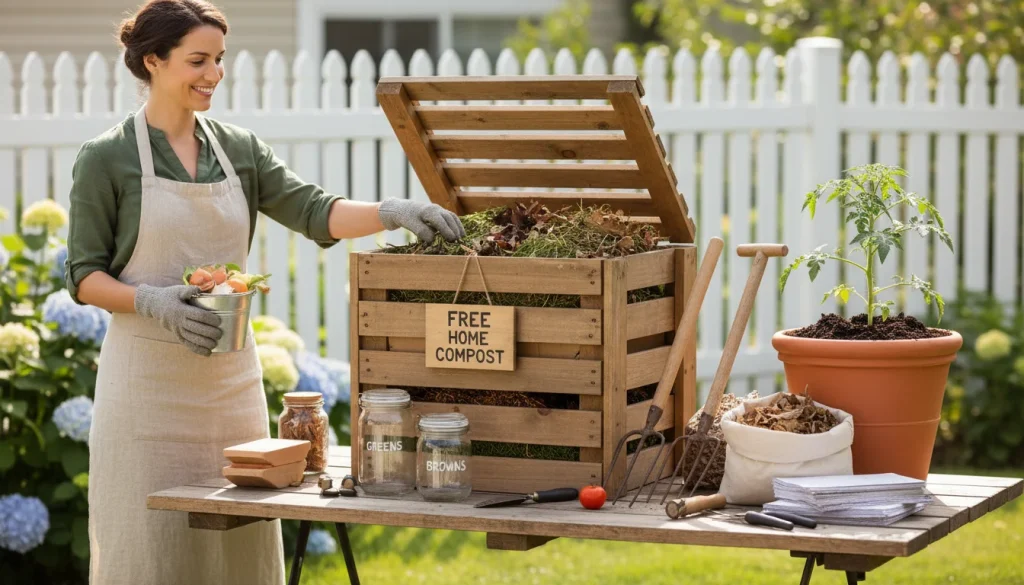
While you can compost in an open pile, a bin helps keep things tidy and retains heat. You do not need to buy one. You can build a highly effective bin using free wooden shipping pallets. Wire three or four pallets together to form a square box. This structure holds a large volume of material while the slats allow for necessary airflow.
Another free option is a wire mesh cylinder. Buy a length of chicken wire or hardware cloth and tie it into a circle. This is lightweight, portable, and provides maximum oxygen exposure for the pile.
Compost bin for home
If you live in an urban environment with limited space or strict HOA rules, your “bin” might need to be more contained. You can repurpose a large plastic storage tote or a heavy duty garbage can. Drill holes in the bottom for drainage and along the sides for airflow.
Place the lid on top to keep rain out and moisture in. To mix the contents in this type of bin, you can secure the lid with bungee cords and roll the can across the yard, or simply use a shovel to stir it manually. This allows you to compost discreetly and for free, regardless of your living situation.
Key Takeaways
- Balance is Key: Aim for two parts brown carbon materials to one part green nitrogen materials.
- Air and Water: Your compost is alive; ensure it stays damp like a sponge and gets oxygen through turning.
- Preparation Matters: Chopping or shredding waste speeds up decomposition significantly.
- Cover Your Greens: Always bury fresh kitchen scraps under a layer of browns to prevent odors and pests.
- It is Free: You do not need expensive tumblers; pallets or open piles work perfectly.
Frequently Asked Questions
Does compost smell bad?
No. A healthy compost pile should smell like earth. If it smells like rotten eggs or garbage, it indicates a lack of oxygen or too much nitrogen. Turning the pile and adding dry leaves usually fixes the odor immediately.
Can I compost in the winter?
Yes. The decomposition process slows down significantly in cold weather, but you can continue adding scraps. The pile will freeze and then resume breaking down once the temperatures rise in the spring.