Mastering Plant Hydration: The Science of Watering Correctly
Executive Summary & Direct Answer
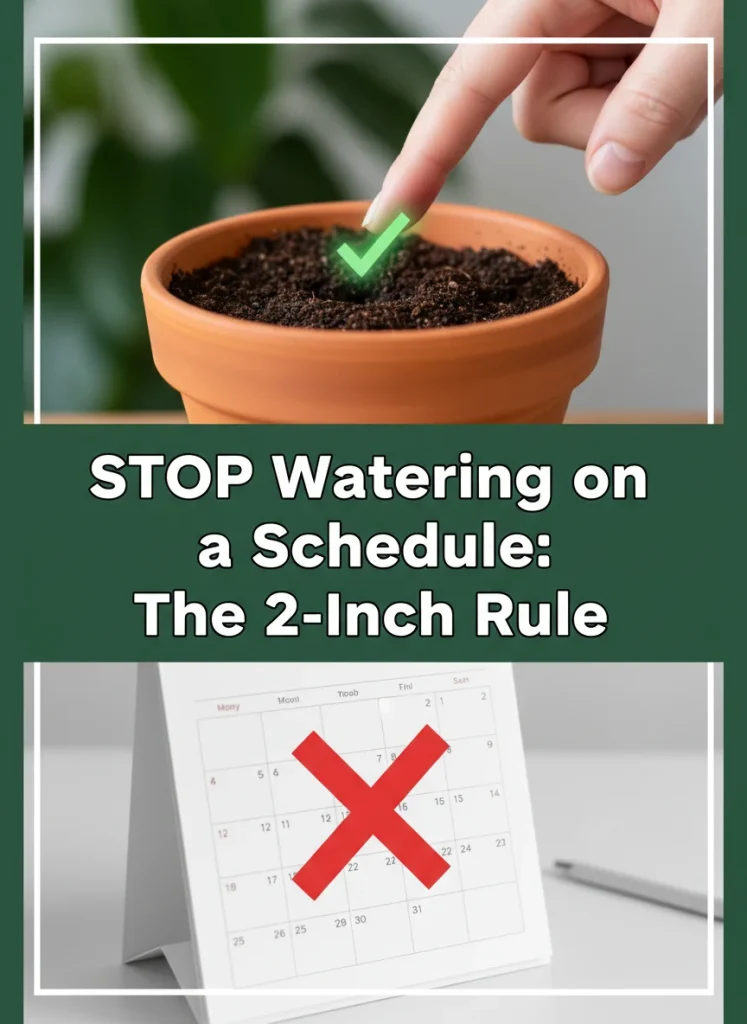
Stop watering on a calendar schedule immediately. The only accurate way to water is based on real-time soil needs. Insert your finger two inches into the soil; if it feels dry, water thoroughly until liquid drains from the bottom. If it is damp, wait. Factors like plant species, light intensity, temperature, and soil composition dictate frequency, meaning a schedule that works in summer will rot your plants in winter.
Overwatering kills more houseplants than neglect ever will, yet most growers are never taught how to actually read the soil.
The Biology of Hydration: Why Schedules Fail
The most common mistake novice gardeners and houseplant enthusiasts make is treating water like a weekly bill payment. They water every Saturday morning, regardless of the plant’s actual physiological state. This is a recipe for disaster because plants are dynamic living organisms, not static furniture.
Transpiration—the process by which water moves through a plant and evaporates from aerial parts is driven by environmental variables. A plant sitting in a 75°F room with low humidity will process water twice as fast as the same plant in a 65°F room with high humidity. By sticking to a rigid schedule, you are ignoring the physics of evaporation and the biology of root respiration.
Roots need oxygen just as much as they need water. When you water on a schedule without checking the soil, you risk creating a hypoxic (low oxygen) environment in the pot. This suffocation leads to root rot, a fungal condition that is often irreversible once visible symptoms appear on the leaves.
The “Digital” Diagnostic: The Finger Test
The most sophisticated tool you have for plant care is your own hand. While moisture meters exist, they can often be calibrated incorrectly or give false readings in loose, chunky soil mixes. The tactile feedback of the “Finger Test” is superior.
How to execute it properly:
- Depth Matters: don’t just touch the surface. The topsoil dries out within hours due to airflow. You need to know what is happening in the root zone. Insert your index finger up to the second knuckle (approx. 2-3 inches deep).
- Interpret the Data:
- Soggy/Muddy: Do not water. Ensure drainage holes are not blocked.
- Cool/Damp: Do not water. The roots have access to hydration.
- Dry/Dusty: Water immediately.
Advanced Strategy: The Weight Heuristic
For hanging baskets or dense plants where sticking a finger in the soil is difficult, use the weight heuristic. Lift the pot immediately after a thorough watering to establish a baseline of “full saturation weight.” Lift it again when the plant is dry. The difference is stark.
Over time, you will develop muscle memory for the specific weight of a dry pot. This is often the preferred method for commercial growers who manage thousands of plants and cannot physically touch the soil of each one.
Variables That Change the Equation
Understanding when to water requires analyzing the variables that accelerate or decelerate soil drying. If you ignore these, you are flying blind.
1. The Vessel: Terra Cotta vs. Plastic vs. Glazed
The material of your container fundamentally changes the watering frequency. Terra cotta and unglazed ceramics are porous; they wick moisture away from the soil and allow it to evaporate through the walls of the pot. This is excellent for succulents but means you must water more frequently.
Plastic and glazed ceramic pots are impermeable. They hold moisture in, acting like a sealed ecosystem. A fern in a plastic pot might need water once a week, while the same fern in terra cotta might need it every three days.
2. Soil Composition: The Drainage Factor
Water retention is dictated by particle size.
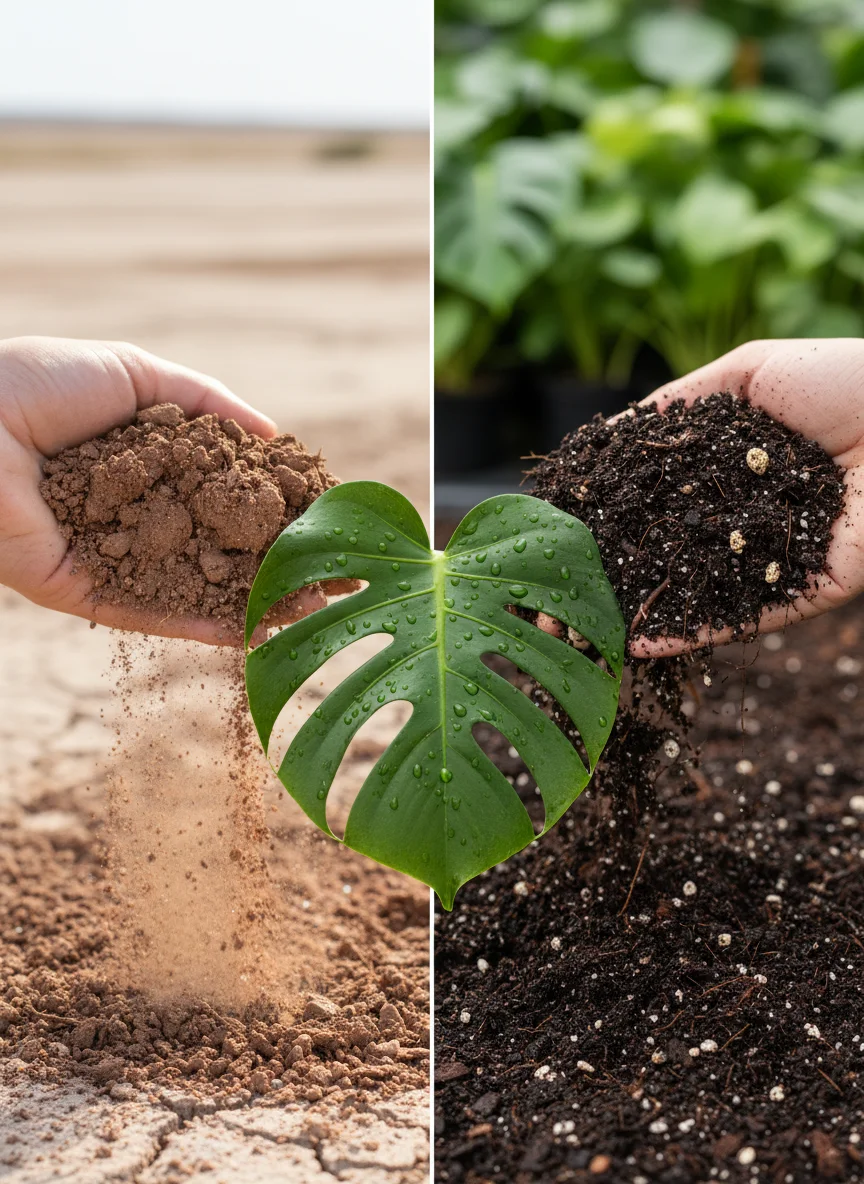
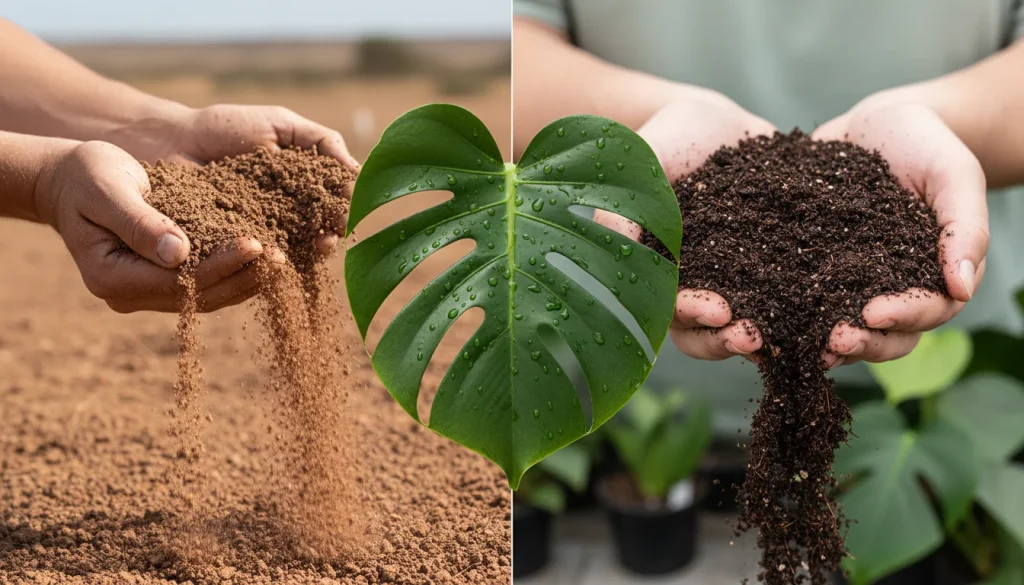
- Clay Soils: Composed of microscopic particles that pack tightly. They hold water for a long time but drain poorly. Great for moisture-loving plants but dangerous for succulents.
- Sandy Soils: Large particles with massive air gaps. Water runs straight through. Excellent for cacti but requires frequent replenishment.
- Loam/Potting Mix: The ideal balance. High-quality potting mixes use peat moss or coco coir for retention, mixed with perlite or pumice for aeration.
3. Light and Temperature (VPD)
Botanists look at Vapor Pressure Deficit (VPD). Simply put, hot and dry air pulls water out of leaves faster. If your plant is in a south-facing window in July, its transpiration rate is high, and the soil will dry rapidly. In December, with lower light levels, the plant’s metabolism slows down, and it drinks significantly less.
The Blueprint: How to Water for Deep Root Growth
Shallow watering is a silent killer. Giving a plant a “sip” (a small cup of water) keeps the top inch of soil moist but leaves the bottom roots dry. This encourages roots to grow upward toward the surface, making the plant unstable and susceptible to drought stress.
The Soak and Dry Method:
- Wait for Dryness: Verify the soil is dry using the finger test.
- Saturate Fully: Pour water evenly over the soil surface until water flows freely out of the drainage holes.
- Wait and Repeat: Let it drain for 5 minutes, then pour water through again. This ensures that dry pockets of hydrophobic soil are fully re-saturated.
- Discard Excess: Never let a plant sit in a saucer of standing water. This is the fastest way to cause root rot. dump the saucer after 15 minutes.
Special Scenario: Bottom Watering
For plants that hate water on their leaves (like African Violets) or plants in soil that has become hydrophobic (repels water), bottom watering is an advanced technique.
Place the pot in a basin of water filled halfway up the side of the pot. Let it sit for 20-30 minutes. Through capillary action, the soil will suck the water up through the drainage holes, fully saturating the root ball without compacting the topsoil. Once the top of the soil feels moist, remove the plant and let it drain.
Pin This Strategy!
Diagnostics: Reading the Distress Signals
Plants communicate their needs through their foliage. However, the signals for overwatering and underwatering can look confusingly similar. Here is how to distinguish them.
The Signs of Underwatering
When a plant is thirsty, turgor pressure drops. The cells lose water and literally deflate.
- Crispy Edges: Leaves turn brown and brittle, starting at the tips.
- Uniform Wilting: The entire plant droops simultaneously.
- Soil Separation: The soil ball shrinks and pulls away from the edge of the pot, creating a gap.
- Slow Growth: New leaves are small or deformed.
The Signs of Overwatering (The Danger Zone)
Overwatering is more insidious because the damage happens underground first. By the time you see it on the leaves, the roots are already compromised.
- Yellowing Lower Leaves: A classic sign. Older leaves turn yellow and drop, while new growth might still look okay initially.
- Mushy Stems: The base of the plant feels soft or squishy to the touch.
- Fungus Gnats: Tiny black flies hovering around the soil are a bio-indicator of constantly damp topsoil.
- Mold on Soil: White fuzzy growth on the soil surface indicates a lack of airflow and excess moisture.
- Edema: Blisters or bumps on leaves caused by roots absorbing more water than the leaves can transpire.
Tailoring to Plant Types
One rule does not fit all. You must categorize your collection.
The Desert Dwellers (Cacti & Succulents)
These plants evolved to store water in their parenchyma cells. They are camels. They want their soil to dry out 100%—bone dry—before seeing another drop of water. In winter, you might only water them once every 4-6 weeks. Overwatering these is fatal within days.
The Tropical Floor (Ferns, Calatheas, Peace Lilies)
These plants grow on the rainforest floor, where the soil is constantly moist but well-draining. They panic if they dry out completely. Aim to keep the soil consistently damp, like a wrung-out sponge. Water when the top half-inch is dry, rather than waiting for the 2-inch depth.
The Epiphytes (Orchids, Air Plants)
In nature, these grow on trees, not in soil. Their roots are exposed to air. Never pot them in standard dense potting soil. They need bark chunks or moss. They prefer a “drench and dry” cycle where water rushes over their roots, followed by immediate airflow.
Common Questions (FAQ)
Q: Can I use tap water for all my plants?
A: Generally, yes, but with caveats. Tap water often contains chlorine and fluoride. While most hardy plants handle this fine, sensitive plants like Calatheas, Spider Plants, and Dracaenas may develop brown tips (fluoride toxicity). For these, use distilled water, rainwater, or let your tap water sit out for 24 hours to allow chlorine to off-gas.
Q: Should I water more when I fertilize?
A: You should never fertilize a dry plant. This can cause “fertilizer burn” on the roots. Always water the plant lightly first to moisten the roots, then apply the fertilizer solution. This buffers the roots against chemical shock.
Q: What time of day is best to water?
A: Morning is the gold standard. Watering in the morning allows the plant to absorb moisture before the heat of the day maximizes evaporation. It also ensures that any water splashed on leaves has time to dry before nightfall, reducing the risk of fungal infections.
Q: My soil is hard and water just runs off the sides. What do I do?
A: Your soil has become hydrophobic (water-repellent) due to extreme dryness, often common with peat-based mixes. Top watering won’t work here. You must use the bottom-watering method (soaking the pot in a basin) for at least 30 minutes to rehydrate the peat moss so it can retain water again.
Q: How do I handle watering when I go on vacation?
A: Do not just “overwater” them before you leave; this will cause rot. For short trips (1 week), water thoroughly right before departure. For longer trips, use self-watering spikes, wick watering systems, or group plants together to increase local humidity, which slows down their water consumption.
Relevant Reads
A Masterclass in Growing and Using Aloe Vera
The One Vegetable Every Gardener Should Grow (A Complete Guide)
How to Grow a Surprising Amount of Food in a Tiny Space (Even If You’ve Killed Every Plant You’ve Ever Owned)