11 Indoor Herbs That Actually Survive and Taste Amazing
Bring the Garden Inside
Let’s be honest. There are few things more frustrating than buying those expensive plastic clamshells of herbs at the grocery store. You use a few sprigs for dinner, put the container in the fridge, and find a slimy, wilted mess three days later. It feels wasteful because it is wasteful.
We can solve this problem permanently. Growing herbs indoors is not just for people with green thumbs or extensive outdoor gardens. It is a practical way to ensure you have fresh, punchy flavors available every single day of the year. Whether it is the dead of winter or the height of summer, cutting a fresh stem of rosemary or basil transforms a meal from average to restaurant quality.
However, indoor gardening does require a shift in strategy. Plants that thrive outdoors in the ground face different challenges inside our climate-controlled homes. We need to look at light, water, and humidity differently. This guide will walk you through the eleven best herbs for indoor growing and exactly how to keep them alive.
Save this pin to your Pinterest gardening board to easily find it later
The Fundamentals of Indoor Success
Before we select our plants, we must establish the ground rules. Most indoor herbs die because of two specific reasons. They either drown from too much water, or they starve from a lack of light.
The Light Reality
Here is the reality of growing indoors. Your eyes adjust to dim rooms, but plants do not. What looks like a bright living room to you might be a dark cave to a basil plant. Most culinary herbs need at least six hours of direct sunlight every day. This means placing them directly in a south-facing window is usually your best option.
If you do not have a sunny window, you are not out of luck. You just need to supplement. Simple LED grow lights are affordable and effective. They ensure your plants get the energy they need to produce flavorful oils. If your herbs look spindly, pale, or are stretching toward the nearest light source, they are telling you they are hungry for more sun.
Watering and Drainage
Watering is where most well-intentioned gardeners go wrong. We often love our plants to death by watering them too frequently. Indoor plants do not have the wind and heat of the outdoors to dry their soil quickly. If the soil stays wet constantly, the roots will rot. Once root rot sets in, the plant is usually finished. Period.
Boring, but essential. You must use pots with drainage holes. If your stylish ceramic pot does not have a hole in the bottom, keep the plant in a plastic nursery pot and set that inside the decorative one. When you water, take the plastic pot out, water it at the sink, let it drain completely, and then put it back. You should only water when the top inch of soil feels dry to the touch.
The Top 11 Herbs for Your Indoor Garden
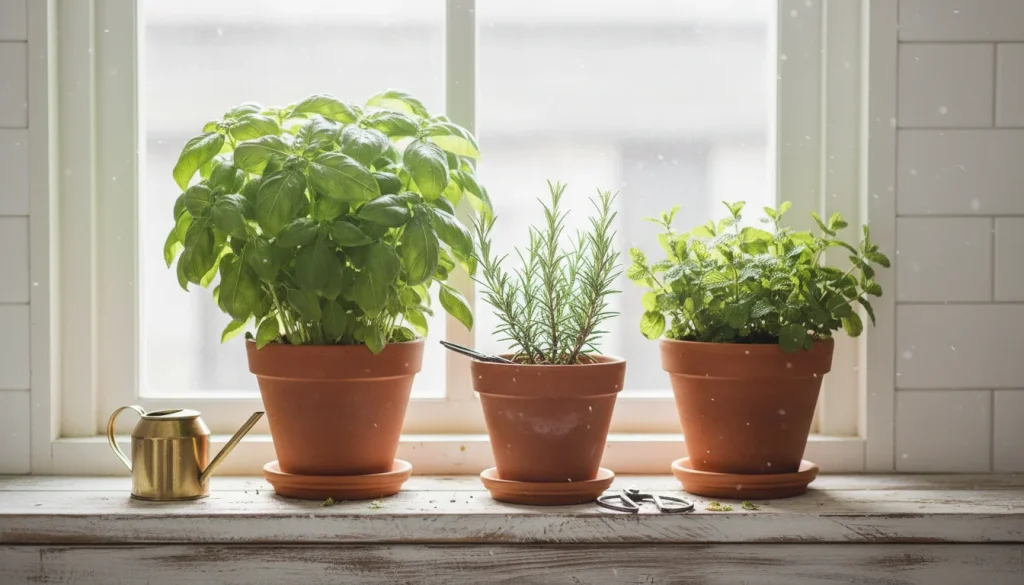
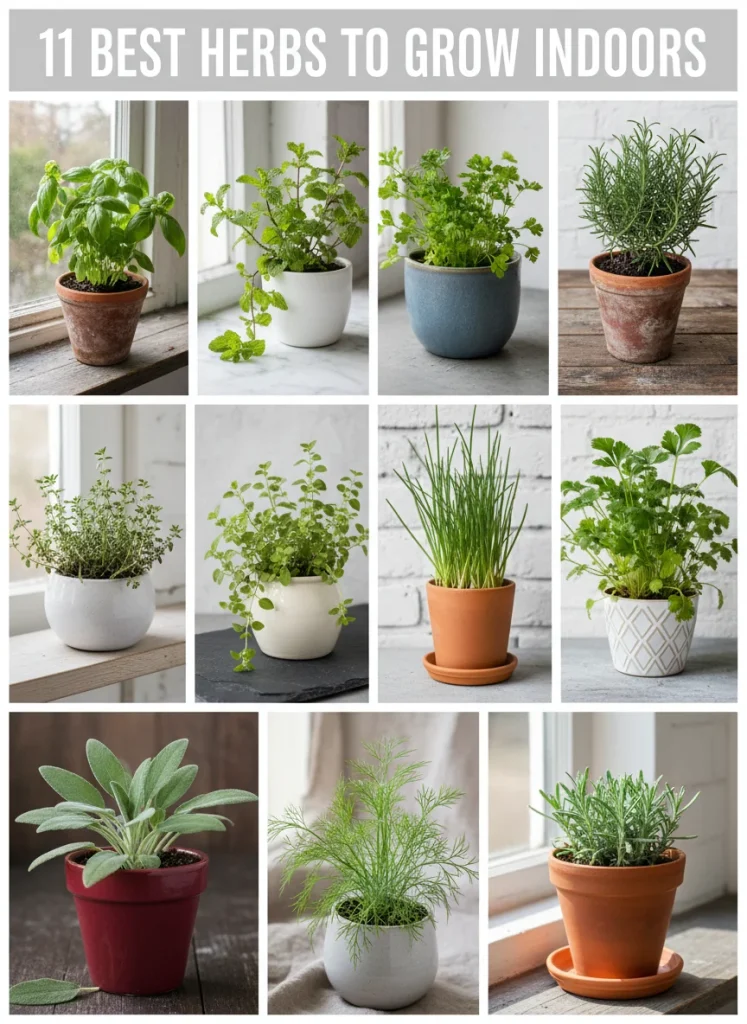
Now that we have the environment set, let us look at the best candidates for your indoor garden. These eleven herbs are resilient, flavorful, and generally happy to live on a windowsill.
1. Basil
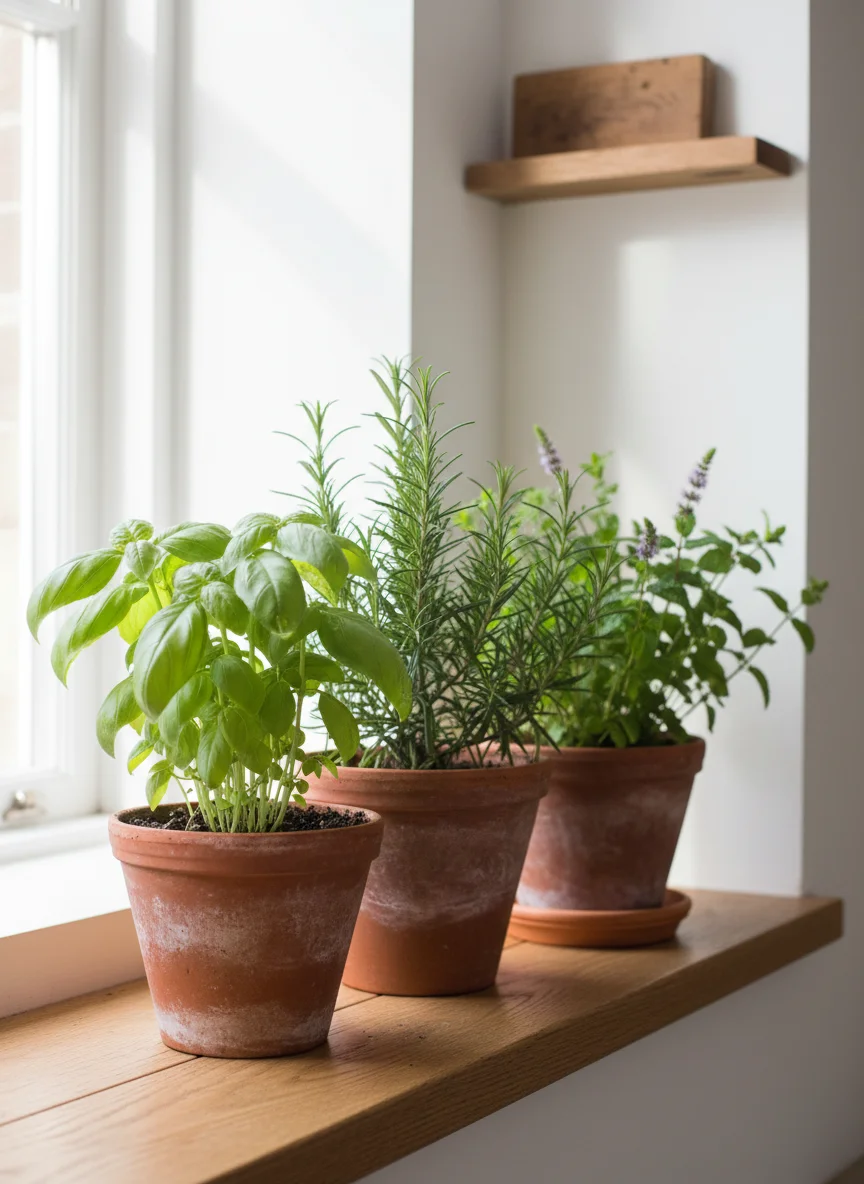
Basil is the king of indoor herbs for a reason. It is incredibly fast-growing and provides a scent that defines summer. However, it is a heat-loving plant. It hates cold drafts, so keep it away from air conditioning vents or drafty window frames in winter.
The secret to bushy basil is harvesting. You must pinch the stems. Locate a set of leaves and snip the stem just above them. Two new stems will grow from that point. If you see a flower bud forming, pinch it off immediately. If basil flowers, the leaves turn bitter. Keep it pinched and it will keep producing for your Italian dishes.
2. Mint
Mint is vigorous and enthusiastic. In the garden, we often warn people that mint is invasive and will take over a flowerbed. Indoors, this aggressive growth makes it an excellent candidate for a pot. It is hard to kill.
You can grow mint in potting soil, or you can even grow clippings in a jar of water for a long time. It is perfect for fresh teas, cocktails, or chopped into salads. If it starts to look leggy, cut it back hard. It will spring back with fresh growth very quickly.
3. Chives
If you are new to gardening, start with chives. They are unfussy and space-efficient. Chives grow vertically, meaning they do not take up much width on a crowded windowsill. They offer a mild onion flavor that is perfect for garnishes, eggs, and potatoes.
Harvest chives by snipping the hollow leaves down near the base of the plant. Do not just cut the tips off. Cutting low encourages the plant to push up new, healthy growth from the roots. They prefer cooler temperatures, so they often do better in winter than heat-loving basil.
4. Parsley
Parsley adds a clean, fresh note to almost any dish. You will generally find two types: curly and flat-leaf (Italian). Flat-leaf usually has a better texture for cooking, while curly is great for garnishes.
This plant grows from the center out. When you harvest, always cut the stems on the outside of the plant. Leave the new, small leaves in the center alone so they can mature. This ensures a continuous cycle of growth. Parsley is a biennial, meaning it has a two-year life cycle, but indoors we usually treat it as an annual replanted every year for the best flavor.
5. Rosemary
Rosemary is a woody Mediterranean shrub. It is incredibly aromatic and essential for savory meats, roasted vegetables, and breads. However, it can be tricky indoors if you do not have enough light. It needs the brightest spot you have.
Rosemary creates a strong root system but grows slowly from cuttings. It is often best to buy a small starter plant rather than trying to root it yourself. Watch out for powdery mildew, which looks like white dust on the leaves. Good air circulation is the best prevention for this.
6. Thyme
Thyme is a powerhouse in the kitchen. The tiny leaves pack a massive aroma that holds up well against long cooking times in soups and stews. Like rosemary, it is drought-tolerant. It prefers to be on the dry side rather than sitting in wet soil.
Because the leaves are so small, you can harvest entire sprigs. Strip the leaves off by running your fingers down the stem against the grain. There are many varieties, including lemon thyme, which adds a wonderful citrus note to fish and chicken.
7. Oregano
Oregano is another hardy plant that craves bright light. It is essential for that classic pizza and pasta sauce flavor. Interestingly, oregano is one of the few herbs that often tastes better dried than fresh. The drying process concentrates the oils.
When growing it indoors, ensure the soil drains very well. It is susceptible to rot if kept damp. Harvest it regularly to prevent the plant from becoming woody and straggly. Regular haircuts keep it compact and lush.
8. Sage
Sage offers a distinct, earthy flavor that we associate with holiday stuffings and poultry. The leaves are soft and velvety. It is a beautiful plant that adds texture to your indoor display.
Sage is a strong herb. You do not need much of it to flavor a dish. A single plant will likely provide all the sage you need for a year. It grows steadily and is generally pest-free. Like the other Mediterranean herbs, do not overwater it.
9. Dill
Dill is fantastic for fish dishes, potatoes, and homemade pickles. Unlike woody herbs like rosemary, dill is delicate. It grows very quickly from seed. In fact, it is best to direct sow dill seeds right into your pot.
The challenge with dill is that it matures fast. It will try to flower and produce seeds quickly, at which point the leafy production stops. This is often overlooked, but you may need to do succession planting. This means planting a few new seeds every few weeks to ensure you always have fresh dill ready to harvest.
10. Cilantro
Cilantro is a polarizing herb, but for those who love it, it is essential for salsas, curries, and tacos. It is similar to dill in its growth habit. It grows fast and has a short lifespan. It tends to “bolt” (go to seed) very quickly when it gets warm.
To keep a steady supply, cut it frequently and keep the room cool if possible. You can regrow cilantro from scraps in water for a short time, but growing from seed is usually more reliable for a long-term harvest. Plan on replanting this one regularly.
11. Lemongrass
For a unique addition to your indoor garden, consider lemongrass. It brings a bright, lemony-ginger flavor that is crucial for many Asian dishes and teas. It looks like a tall, ornamental grass.
Lemongrass differs from the Mediterranean herbs because it actually likes water. It needs plenty of moisture and plenty of sun. You can often start this plant by buying a stalk from the grocery store, placing it in water until roots form, and then potting it up. It can grow quite large, so give it a generous pot.
Harvesting for Health
Many new gardeners are afraid to cut their plants. They think they are hurting them. The opposite is true. Regular harvesting is essential for the health of the herb.
When you snip off the top leaves, you disrupt the plant’s primary growth hormone. This signals the plant to send energy to the side shoots, making the plant bushier and stronger. If you never harvest, the plant will become tall, weak, and eventually topple over. Make it a habit to snip a little bit every week, even if you do not need it for cooking immediately. You can freeze or dry the excess for later.
Gardening indoors is a rewarding journey. It connects you to your food and brings life into your home. Start with one or two herbs from this list, master their care, and then expand your collection. Before long, you will have a full spectrum of flavors right at your fingertips.
Read More
The Ultimate Guide to Growing Broccoli in Containers for Small Spaces
The Mosquito Shield: Plants That Repel Mosquitoes
Harvesting Ginger: How and When To Harvest Ginger For Best Result?