The Only Gardening Tools You Actually Need: A No-Nonsense Guide for Beginners
Stop Buying Gadgets. Start Building a Toolkit.
Let’s be honest. Walking into a garden center is overwhelming. You are bombarded with walls of shiny gadgets, specialized weeders, and ergonomic wonders that promise to revolutionize the way you pull a dandelion. Here is the reality of gardening retail: most of those products are designed to catch your eye, not to last ten years in the soil.
New gardeners often make the mistake of buying cheap, plastic tools or over-buying specialized equipment they will never use. The secret to a thriving garden isn’t having a tool for every single distinct task; it is having a curated selection of high-quality, versatile instruments that become an extension of your body.
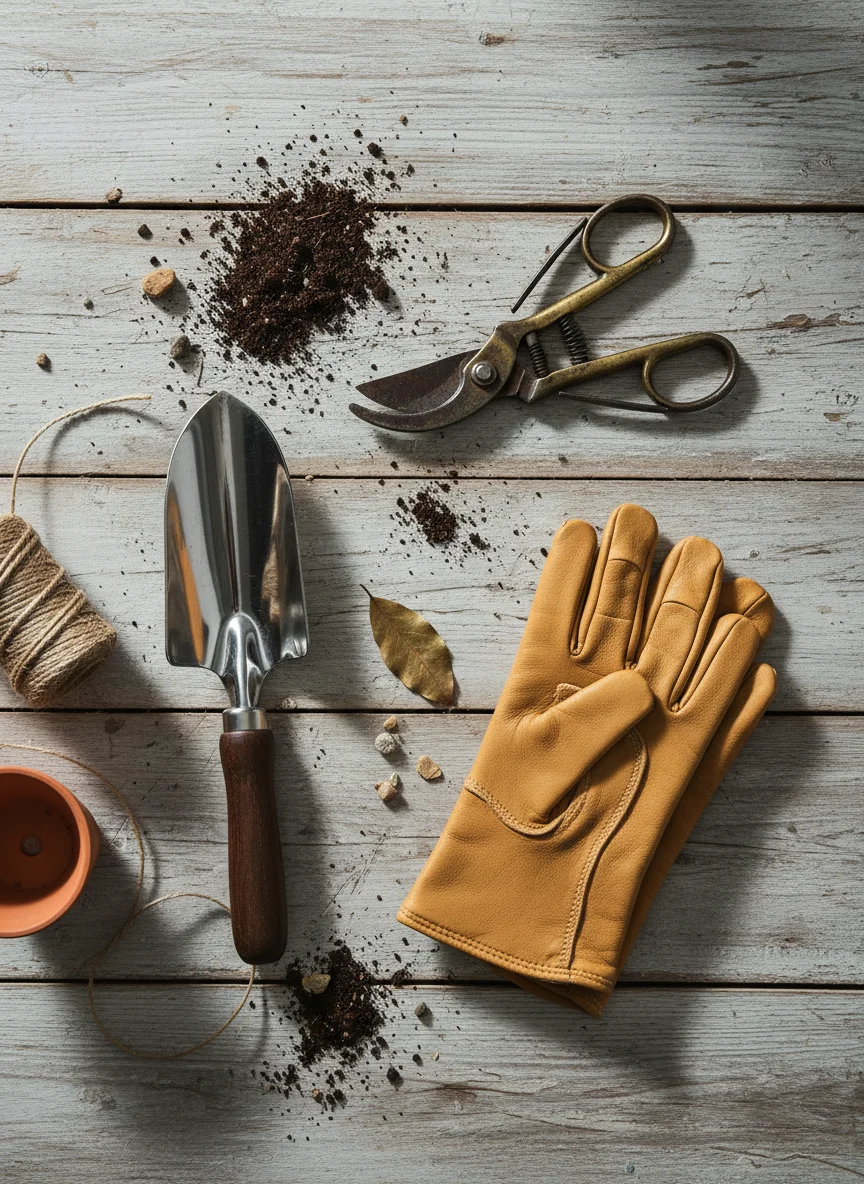
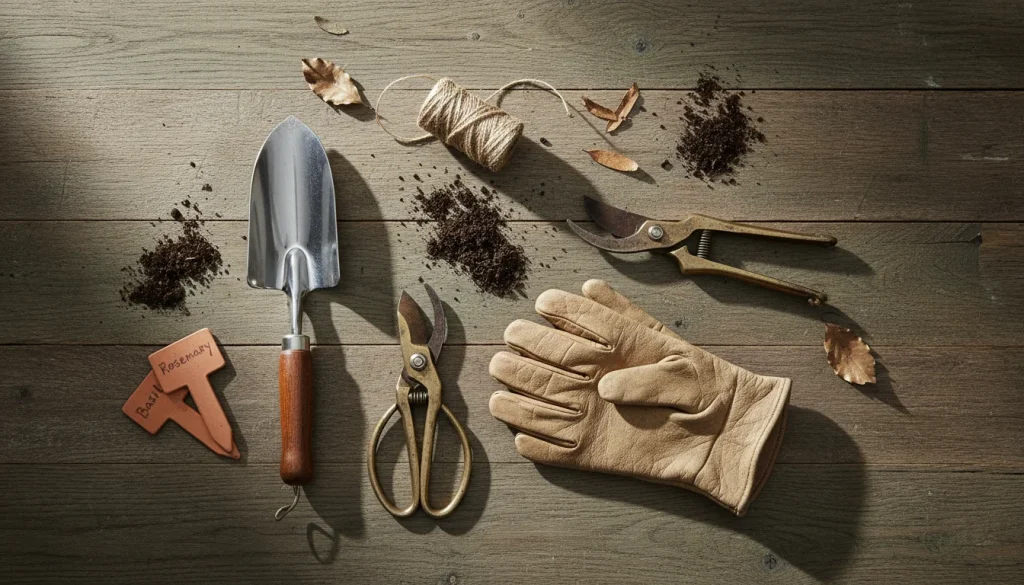
You do not need a shed full of clutter. You need a capsule collection of steel and wood that performs reliably season after season. This guide breaks down the physics, materials, and ergonomics of the essential kit you actually need to start growing. Period.
The Science of Material and Ergonomics
Before diving into specific tools, we must address quality. This is often overlooked, but the material of your tool head dictates its lifespan. Avoid stamped metal. It bends under the pressure of clay soil. Instead, look for forged stainless steel or carbon steel.
- Stainless Steel: Rust-resistant and easy to clean. It slides through the soil with less friction, making digging easier on your wrists.
- Carbon Steel: Stronger and holds a sharper edge than stainless, but requires oiling to prevent rust. This is the choice for serious cutting tools.
- Ash Wood Handles: Wood absorbs shock better than fiberglass or plastic. When you strike a rock with a shovel, a wood handle dampens the vibration that would otherwise travel straight to your elbows.
Essential Hand Tools: The Extension of Your Hands
Gardening is an intimate act. You are interacting directly with the microbiome of the soil and the cellular structure of plants. Your hand tools are for precision work, planting, weeding, and harvesting.
1. The Hori Hori (Soil Knife)
If you only buy one tool, make it this one. Originating in Japan, the Hori Hori is a serrated soil knife that replaces the trowel for many experts. One side is sharp for slicing roots; the other is serrated for sawing through tough fibrous stems. The shape is concave, allowing you to scoop soil, and most come with measurement markings on the blade so you can plant bulbs at the precise depth required.
2. The Classic Hand Trowel
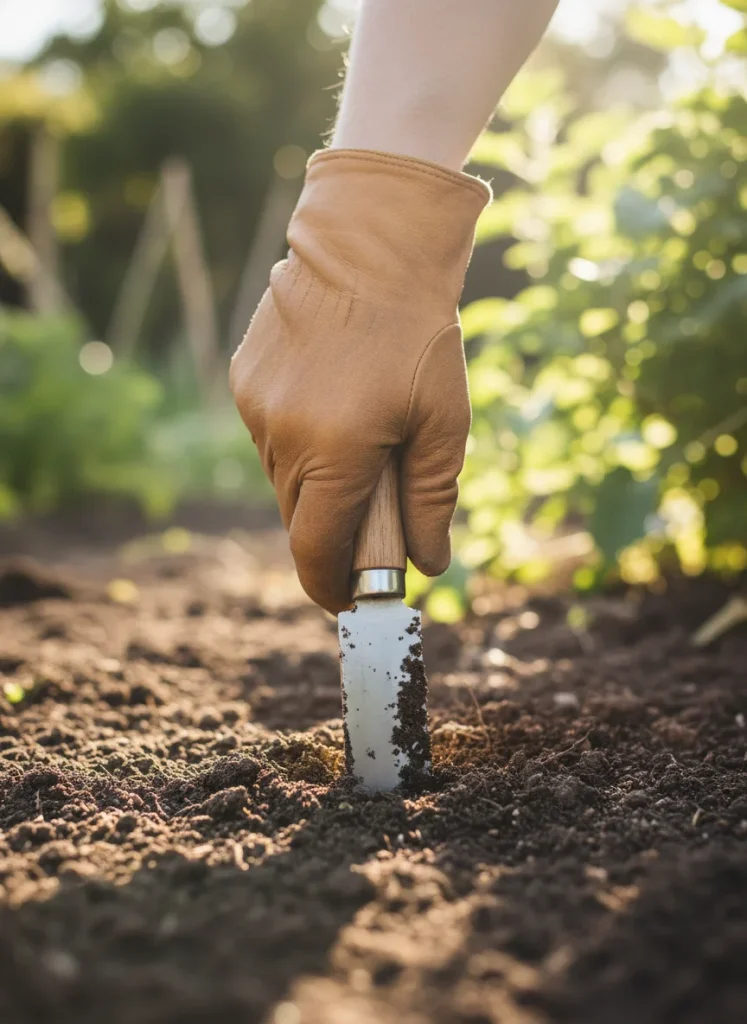
While the Hori Hori is versatile, a classic trowel is still superior for moving volume. When selecting a trowel, look for a tang (the metal neck) that is forged as one piece with the blade. If the neck is welded on, it will snap. You want a broad scoop for transplanting seedlings without disturbing their root balls. The goal here is to move soil efficiently to reduce wrist strain.
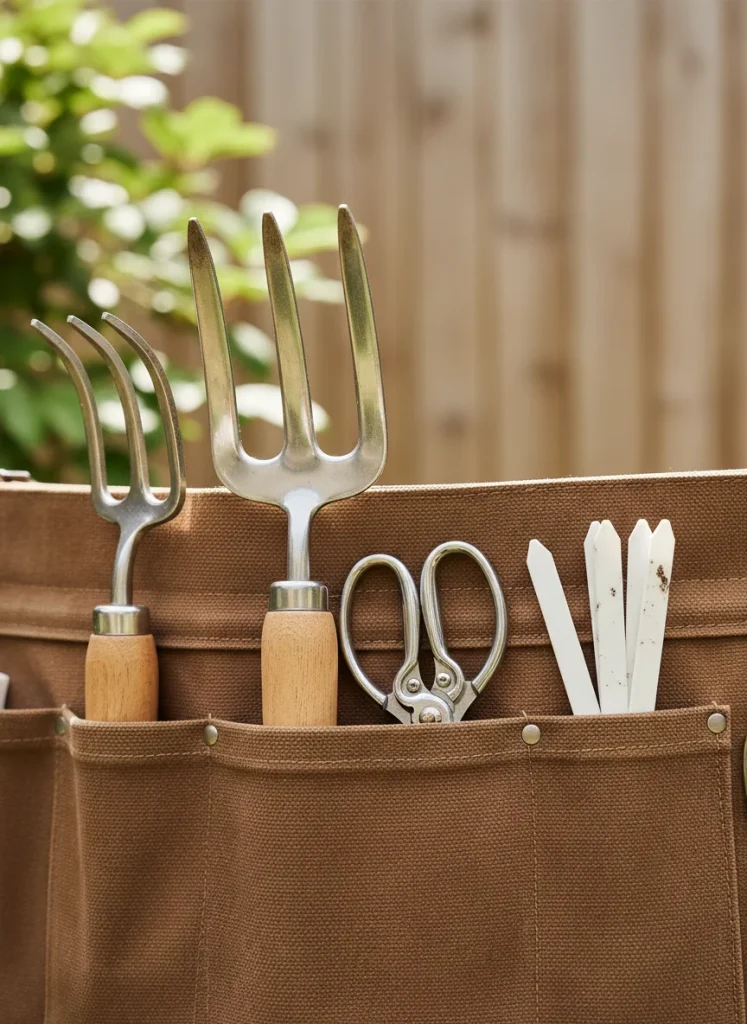
3. Bypass Pruning Shears (Secateurs)
There is a massive difference between “bypass” and “anvil” pruners, and using the wrong one damages your plants. Anvil pruners crush the stem against a flat surface, which is fine for dead wood but disastrous for live tissue. Bypass pruners work like scissors, with two sharp blades passing each other to create a clean cut that heals quickly. Invest in a pair with replaceable springs and blades.
4. The Hand Fork
Boring, but essential. A hand fork allows you to aerate the soil and mix in compost without turning the soil over completely, which can disrupt the fungal networks beneficial to plant health. It is also the superior tool for weeding; the tines can get under the root system of a weed to lever it out, whereas a trowel often slices the weed in half, leaving the root to regrow.
Long-Handled Tools: Physics and Leverage
When you move from container gardening to raised beds or in-ground rows, you need leverage. Using short tools for big jobs forces you to crouch, compressing your diaphragm and straining your lower back. Long-handled tools allow you to work from a standing position, utilizing the larger muscles of your legs and core.
5. The Spade vs. The Shovel
These terms are often used interchangeably, but they are distinct instruments with distinct physics.
- The Shovel: Has a concave, pointed blade. It is designed for scooping and moving loose material like mulch, gravel, or compost.
- The Spade: Has a flat, square blade. It is designed for cutting. You use a spade to edge garden beds, slice through sod, and dig precise straight-sided planting holes.
For a beginner, a sturdy digging spade is often more versatile than a shovel. It cuts through compacted soil more effectively due to the smaller surface area of the blade edge.
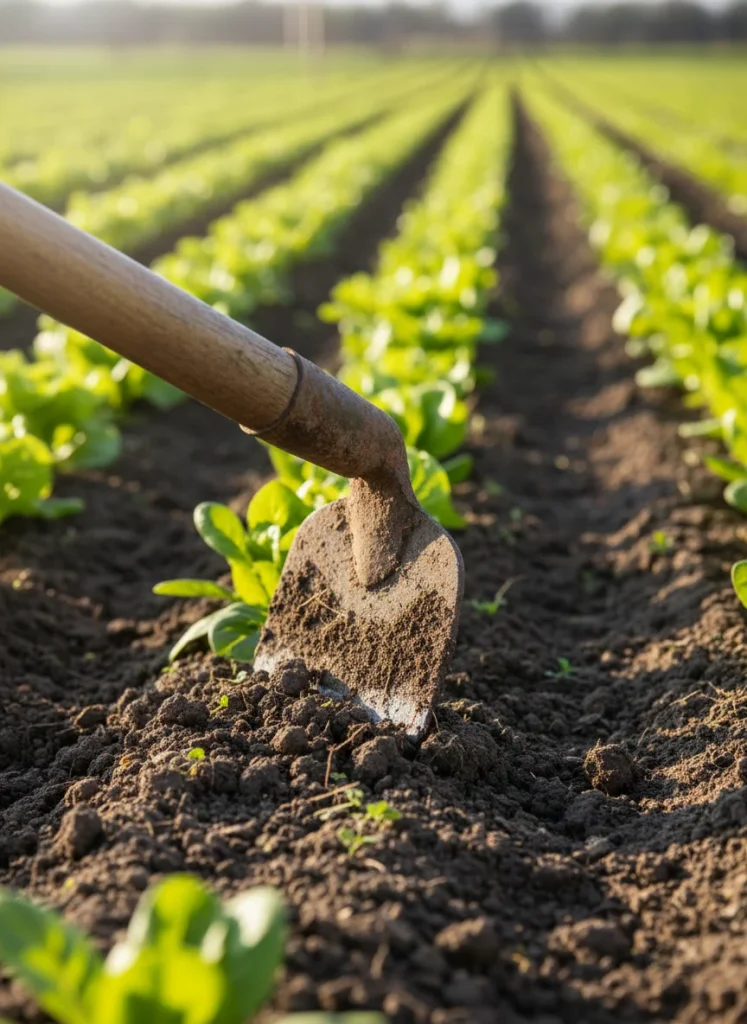
6. The Garden Hoe
Weeding is the task that drives most beginners to quit. A hoe changes the equation. By slicing just below the soil surface, you sever the weed tops from their roots. The key is to sharpen your hoe. A dull hoe simply pushes dirt around; a sharp hoe glides. Look for an oscillating hoe (also called a stirrup hoe), which cuts on both the push and pull stroke, doubling your efficiency.
Watering and Logistics
Moving water and material is the heavy lifting of gardening. This is where ergonomics matters most.
7. The Right Watering Can
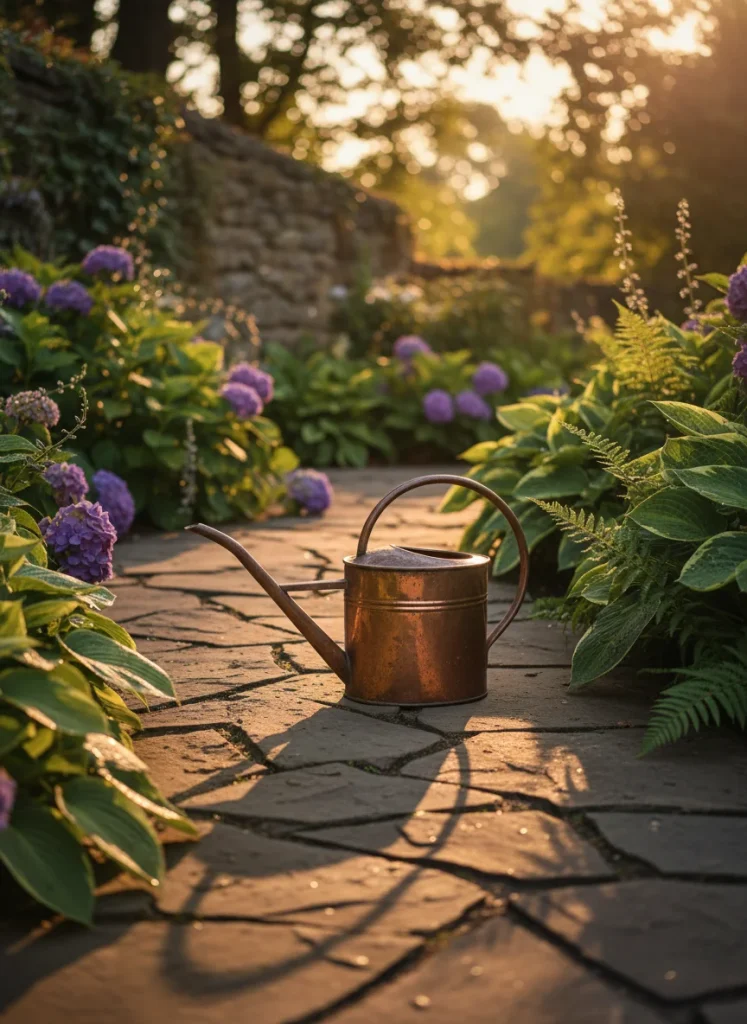
You might think any vessel holding water will do. However, the “rose” (the sprinkler head) is critical. A high-quality metal watering can with a fine brass rose delivers a gentle shower that mimics soft rain. A cheap plastic can often dumps water in a heavy stream, which washes away topsoil and exposes delicate roots. For larger gardens, a hose is mandatory, but for seed starting and container care, the precision of a balanced can is unmatched.
8. The Wheelbarrow
If you have ground to cover, carrying bags of soil by hand is a recipe for injury. A wheelbarrow acts as a mobile mixing station. You can mix your soil amendments, compost, and fertilizers right in the barrow before dumping them onto the beds. Look for a model with a pneumatic tire (filled with air) rather than solid plastic; the air cushion absorbs the bumps of uneven garden terrain, making the load feel lighter.
The Maintenance Mindset
Owning these tools is only half the battle; maintaining them is what makes you a gardener. Sap is acidic and will corrode metal. Soil holds moisture that rots wood. At the end of every session, wipe your tools down. Once a season, sand the wooden handles and rub them with boiled linseed oil to prevent splintering.
Gardening is not about conquering nature with plastic technology. It is about stewardship. By choosing tools that are built to last, you are setting a standard for your garden: quality, patience, and care. Start with these essentials, master them, and your garden will thank you.
Read More
A Masterclass in Growing and Using Aloe Vera
How to Start a Vegetable Garden for Beginners (Step-by-Step)