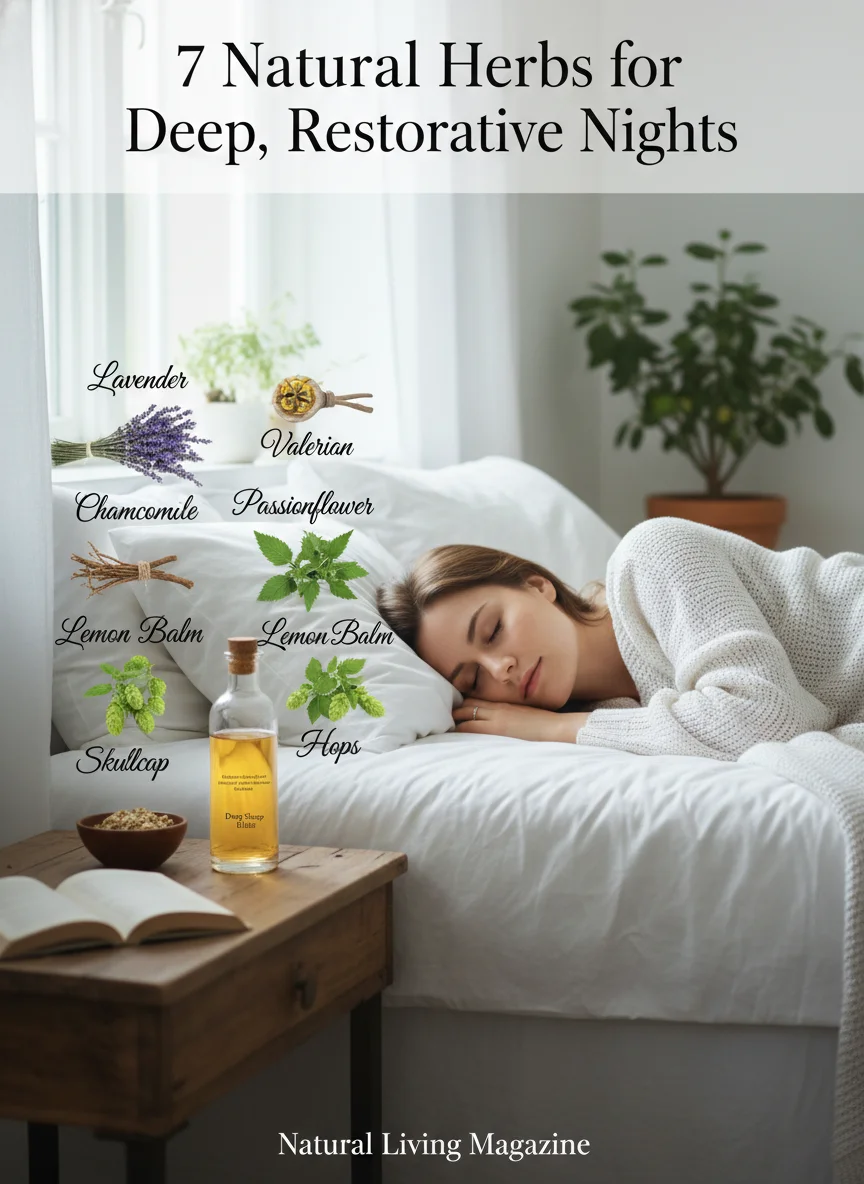
Sleep Like a Baby: 7 Natural Herbs for Deep, Restorative Nights
Estimated reading time: 6 minutes
The 7 Best Natural Herbs for Sleep: An Evidence-Based Overview
You are likely here because you are tired of staring at the ceiling. To achieve deep, restorative sleep without the “hangover” effect of pharmaceutical sedatives, you need herbs that target GABA receptors (the brain’s “brakes”) or lower cortisol (the stress hormone).
According to clinical data from the U.S. Department of Veterans Affairs and sleep research organizations, these are the top 7 natural herbs for sleep optimization. I am listing these immediately so you can find the right match for your specific sleep struggle:
- Valerian Root: The heavy hitter. Best for chronic insomnia and reducing the time it takes to fall asleep. It functions similarly to sedatives by increasing GABA levels in the brain.
- Chamomile: The gentle relaxer. Best for mild restlessness. It contains apigenin, an antioxidant that binds to receptors in the brain promoting sleepiness.
- Passionflower: The anxiety reducer. Best for those who wake up in the middle of the night. It calms brain activity and is often paired with Valerian.
- Lavender: The aromatic sedative. Best for calming the nervous system before bed. While often used as aromatherapy, oral lavender oil preparations have shown efficacy in improving sleep quality.
- Lemon Balm: The mood stabilizer. Best for stress-induced insomnia. A member of the mint family, it reduces alertness and improves mood.
- Magnolia Bark: The cortisol blocker. Best for “tired but wired” sleepers. It helps lower stress hormones that keep you awake.
- Ashwagandha: The adaptogen. Best for long-term sleep cycle regulation. It doesn’t sedate you immediately but lowers overall stress to improve sleep quality over time.
What is the most powerful herb for sleep?
Valerian Root is widely considered the strongest herbal sleep aid available without a prescription.
Research suggests that Valerian is most effective when taken consistently over two weeks, rather than as a one-off quick fix. It is particularly potent because it inhibits the breakdown of GABA in the brain, resulting in a sedative effect similar to—though milder than—benzodiazepines.
- Best for: Chronic insomnia and trouble falling asleep.
- Dosage: Typically 300–600 mg taken 30 minutes to two hours before bedtime.
- Note: Valerian has a distinct, earthy odor that some find unpleasant. Capsules are often preferred over tea for this reason.
What can I take to make me sleep deeply?
To target deep sleep (Slow Wave Sleep), you need to lower your body temperature and cortisol levels. Ashwagandha and Magnolia Bark are your best options here.
Unlike sedatives that just knock you out (often at the expense of sleep quality), Ashwagandha contains trimethylene glycol, which promotes sleep induction. More importantly, as an adaptogen, it regulates the hypothalamic-pituitary-adrenal (HPA) axis, reducing the cortisol spikes that cause fragmented, shallow sleep.
How to sleep more deeply naturally:
- Temperature: Keep your room between 60–67°F (15–19°C).
- Darkness: Total blackout is required for melatonin production.
- Magnesium: Combine your herbs with Magnesium Glycinate to physically relax muscles.
Herbs that make you sleep instantly
If speed is your priority, California Poppy (often used in blends) and Passionflower tinctures are fast-acting options.
While no herb works as “instantly” as a pharmaceutical knockout pill, liquid tinctures (extracts dropped under the tongue) bypass the digestive system and enter the bloodstream faster than capsules or teas.
- Passionflower: Increases gamma-aminobutyric acid (GABA) quickly to quiet brain activity.
- Hops: Often paired with Valerian, Hops have a rapid sedative effect, though they are bitter in taste.
Strongest natural sleep aid
The strongest natural sleep aid is often a synergistic blend rather than a single herb. The most clinically backed combination is Valerian Root + Hops.
Studies indicate that this pairing creates a “stacking” effect. Valerian handles the anxiety and racing thoughts, while Hops lowers body temperature and induces physical sedation. Many high-quality sleep supplements use this specific ratio to maximize potency.
Herbs for sleep and anxiety
If your sleep issues are caused by racing thoughts or general anxiety, Lemon Balm and Lavender are the superior choices.
- Lemon Balm: In a study cited by multiple health authorities, 81% of people taking a Lemon Balm and Valerian combination reported sleeping much better than those taking a placebo. It specifically targets the nervousness that prevents sleep onset.
- Lavender: Oral lavender supplements (specifically Silexan) have been shown to be as effective as low-dose lorazepam (Ativan) for generalized anxiety, without the risk of addiction or sedation hangover.
What to drink for deep sleep?
Liquid rituals can signal the body it is time to rest. The best beverages for deep sleep include:
- Tart Cherry Juice: One of the few natural sources of melatonin. Drinking this twice a day has been shown to increase sleep time and efficiency.
- Chamomile Tea: The classic standard. It is mild, safe for children, and effective for relaxing the body.
- Golden Milk (Turmeric + Milk): Warm milk contains tryptophan, and turmeric reduces inflammation that might disrupt sleep.
- Passionflower Tea: More potent than chamomile for adult insomnia.
Herbs for sleep and dreams
Be aware that some herbs affect your dream cycles.
- Mugwort: Historically used to induce lucid dreaming and vivid imagery. If you want deep, dreamless sleep, avoid this.
- Valerian Root: A common side effect of Valerian is vivid, sometimes bizarre dreams. This happens because Valerian can increase the duration of REM sleep.
- Cannabis (CBD/THC): While not an herb in the traditional culinary sense, THC often suppresses REM sleep (where dreaming happens), leading to dreamless nights. When you stop taking it, you may experience “REM rebound” with intense dreams.
Deep sleep herbal supplement side effects
Natural does not always mean safe. While generally safer than prescription drugs, herbal sleep aids have side effects:
- Morning Grogginess: High doses of Valerian or Melatonin can leave you feeling “hungover” or foggy the next day.
- Drug Interactions: St. John’s Wort and Valerian can interact negatively with antidepressants and anesthesia. Always consult a doctor before surgery.
- Liver Toxicity: Kava (Kava Kava) is a potent relaxant but has been linked to liver damage in some studies; use with extreme caution or avoid it in favor of safer alternatives like Chamomile.
- Dependency: While physical addiction is rare, psychological dependency on a nightly ritual can occur.
Key Takeaways
- For Power: Choose Valerian Root if you have chronic insomnia.
- For Anxiety: Choose Passionflower or Lemon Balm to quiet a racing mind.
- For Deep Sleep: Choose Ashwagandha to lower cortisol and stay asleep longer.
- For Speed: Use Tinctures (liquid drops) instead of pills or teas for faster absorption.
- Safety: Always check with your doctor if you are already taking sedatives or anti-anxiety medication.
Frequently Asked Questions
Can I mix different sleep herbs together?
Yes, many herbs work better together. Common effective pairings include Valerian with Hops, and Lemon Balm with Chamomile. However, avoid mixing herbs with alcohol or prescription sleep medications.
How long before bed should I take sleep herbs?
For teas and tinctures, 30 to 45 minutes before bed is ideal. For capsules (like Valerian or Ashwagandha), take them 1 to 2 hours before bed to allow for digestion and absorption.
Disclaimer: This information is for educational purposes. Please consult a healthcare provider before trying new herbal remedies. Please read our full disclaimer here.




One Comment