Natural Remedies for Joint Pain You Can Make at Home
Estimated reading time: 7 minutes
The Power of DIY Pain Relief: Why Your Kitchen Holds the Key
You don’t always need a trip to the pharmacy to find Natural Remedies for Joint Pain. While chronic conditions like arthritis often require medical oversight, the most effective day-to-day management tools are likely already in your pantry or refrigerator.
The secret to natural joint relief lies in two mechanisms: reducing inflammation and improving circulation. When you learn to harness natural ingredients—like capsaicin found in chili peppers or the anti-inflammatory properties of tart cherries—you stop masking the pain and start addressing the root cause. Whether you are dealing with an old sports injury or an arthritis flare-up, the remedies below bridge the gap between medical advice and holistic self-care.
What is the best home remedy for joint pain?
There is no single “magic bullet,” but the most universally effective home remedy is temperature therapy (Hot and Cold Compresses). It is simple, free, and backed by orthopedic experts.
- Cold Therapy (Ice): Best for acute pain and fresh inflammation. It constricts blood vessels to reduce swelling.
- Heat Therapy: Best for stiffness and chronic dull aches. It increases blood flow and relaxes tight muscles around the joint.
According to the Orthopedic Institute of San Francisco, alternating these therapies is highly effective, but they warn to avoid extreme temperatures if you have circulatory issues or nerve damage.
How to make oil for joint pain at home?
Creating a massage oil allows you to deliver anti-inflammatory compounds directly through the skin. A classic, effective recipe uses Mustard Oil and Garlic.
The Recipe:
- Take ½ cup of warm mustard oil (a natural stimulant for blood flow).
- Crush 3-4 cloves of garlic and add them to the oil.
- Heat the mixture gently until the garlic turns brown (do not burn it).
- Let it cool to a comfortable warm temperature.
Why it works: Garlic contains allicin, which has anti-inflammatory properties, while the heat and massage improve circulation to the stiff area. Alternatively, you can mix a carrier oil (like coconut or olive oil) with a few drops of Eucalyptus or Peppermint essential oil for a cooling, analgesic effect.
What juice is good for joint pain?
If you are looking to drink your pain away, Tart Cherry Juice is the gold standard.
Research suggests that tart cherries are rich in anthocyanins—powerful antioxidants that reduce oxidative stress and inflammation in the body. It is particularly famous for helping with gout (a complex form of arthritis).
Other beneficial juices include:
- Pineapple Juice: Fresh pineapple contains bromelain, an enzyme that fights inflammation.
- Celery Juice: Known for its ability to lower uric acid levels in the body.
How to make pain balm at home?
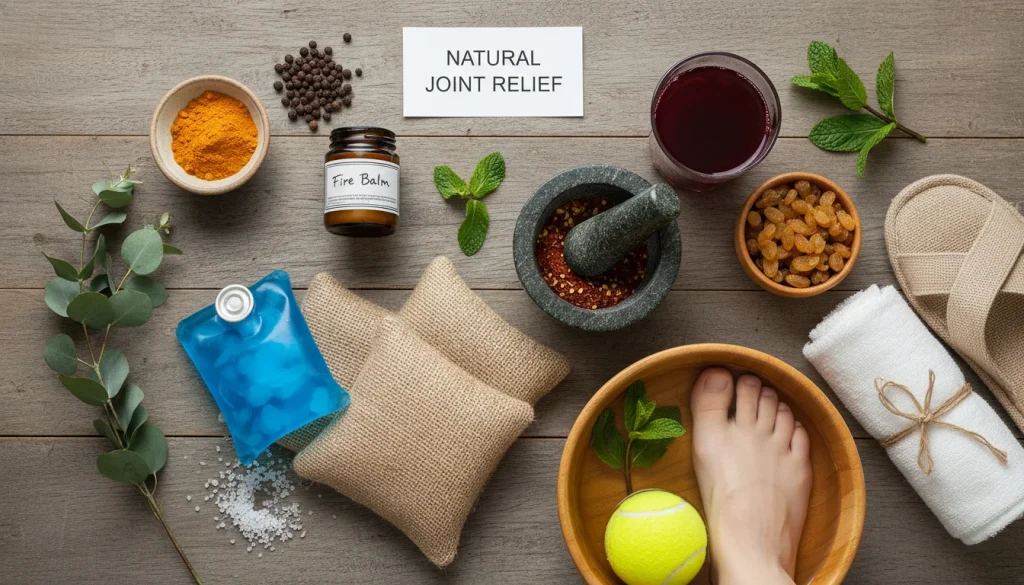
You can make a potent “DIY Tiger Balm” using Cayenne Pepper (Capsaicin). Capsaicin depletes “Substance P,” a neurotransmitter that sends pain signals to your brain.
The “Fire Balm” Recipe:
- Base: Melt ½ cup of Coconut Oil and 2 tablespoons of Beeswax pellets in a double boiler.
- Active Ingredient: Stir in 2 teaspoons of Cayenne powder (start with less if you have sensitive skin).
- Cooling Agent: Add 10 drops of Peppermint oil.
- Set: Pour into a small jar and let it harden.
Caution: Wash your hands thoroughly after applying. Do not touch your eyes.
Old time remedies for arthritis
Before modern pharmaceuticals, people relied on folk remedies that have surprisingly stood the test of time.
- Gin-Soaked Raisins (“Drunken Raisins”): This involves soaking golden raisins in gin until the liquid evaporates. Users eat nine raisins a day. The theory is that the sulfur in the raisins and juniper berries in the gin reduce inflammation.
- Apple Cider Vinegar (ACV): Many swear by drinking a tablespoon of ACV mixed with water and honey each morning to alkalize the body and reduce joint stiffness.
- Epsom Salt Soaks: A bath rich in magnesium sulfate allows magnesium to absorb through the skin, relaxing muscles and loosening stiff joints.
What is the fastest way to relieve arthritis pain?
For immediate relief, topical application combined with rest is the fastest method.
- Apply a counter-irritant: Use your homemade cayenne balm or a menthol rub. This distracts the brain from the deep joint pain.
- Elevate and Rest: As noted by Wake Forest Baptist Health, following the RICE method (Rest, Ice, Compression, Elevation) is crucial for fast relief during a flare-up.
- NSAIDs: While not a “kitchen remedy,” over-the-counter anti-inflammatories (like Ibuprofen) are the fastest chemical intervention for acute spikes in pain.
How to cure arthritis permanently
It is important to be honest here to maintain your trust: There is currently no permanent medical cure for arthritis (Osteoarthritis or Rheumatoid).
Arthritis is a degenerative or autoimmune condition. However, you can achieve remission or a state where you are pain-free. This requires a lifestyle overhaul rather than a one-time fix. This includes maintaining a healthy weight to reduce load on joints, consistent low-impact exercise, and an anti-inflammatory diet.
How to reduce joint inflammation quickly
To drop inflammation levels fast, you must attack it from the inside and outside simultaneously.
- Internal: Consume high doses of Turmeric (Curcumin) with black pepper. Curcumin is a potent anti-inflammatory compound that rivals some drugs in effectiveness.
- External: Apply ice packs for 15 minutes at a time.
- Physical: Medical News Today highlights that physical methods, including gentle massage and hydrotherapy, can help flush inflammatory fluids away from the joint.
How to cure arthritis in feet
The feet bear the weight of your entire body, making them susceptible to pain. While you cannot “cure” the bone changes, you can eliminate the pain:
- Contrast Baths: Soak feet in hot water for 3 minutes, then cold water for 1 minute. Repeat 3 times. This pumps inflammation out of the foot.
- Tennis Ball Roll: Roll the sole of your foot over a tennis ball to loosen the plantar fascia and connective tissues.
- Proper Support: Never walk barefoot on hard floors. Wear supportive slippers inside the house.
Treatment for joint pain and stiffness
Stiffness usually occurs when you have been inactive (like waking up in the morning). The best treatment is motion.
“Motion is lotion.” Gentle movement stimulates the production of synovial fluid, which lubricates the joints.
- Morning Routine: Before getting out of bed, gently rotate your ankles, wrists, and knees.
- Low-Impact Cardio: Swimming or water aerobics are ideal because the water supports your weight while the resistance strengthens the muscles around the joints.
How to cure rheumatoid arthritis permanently
Rheumatoid Arthritis (RA) is an autoimmune disease, not just “wear and tear.” It cannot be cured permanently, but it can go into remission.
Achieving remission often requires medication (DMARDs) prescribed by a rheumatologist, paired with a strict anti-inflammatory diet (often called the AIP diet). Reducing stress is also vital, as stress triggers autoimmune flare-ups.
What is the most effective medication for arthritis
While this guide focuses on natural remedies, the most effective medical treatments are:
- NSAIDs (Non-Steroidal Anti-Inflammatory Drugs): Ibuprofen or Naproxen for pain and swelling.
- Corticosteroids: Injections for severe, targeted inflammation.
- DMARDs & Biologics: Specifically for Rheumatoid Arthritis to stop the immune system from attacking the joints.
Always consult your doctor before mixing herbal remedies with prescription medications.
Key Takeaways
- Heat vs. Cold: Use cold for sharp, new pain/swelling; use heat for old, stiff aches.
- Kitchen Pharmacy: Turmeric, Tart Cherry Juice, and Apple Cider Vinegar are powerful anti-inflammatories.
- Topical Relief: Homemade balms with Cayenne (capsaicin) or essential oils can distract the brain from pain.
- No Magic Cure: Arthritis is managed, not cured. Consistency with diet, movement, and remedies is key to a pain-free life.
Frequently Asked Questions
Can drinking water help joint pain?
Yes. Dehydration reduces the volume of synovial fluid (joint lubricant), leading to more friction and pain. Staying hydrated keeps the cartilage soft and hydrated.
Is walking good for arthritis?
Absolutely. Walking strengthens the muscles that support the joints without placing heavy stress on them. Avoid high-impact running, but keep walking to maintain mobility.
Disclaimer: This information is for educational purposes. Please consult a healthcare provider before trying new herbal remedies. Please read our full disclaimer here.