Houseplants That Like Coffee Grounds: The Beginner Guide to Natural Fertilizer
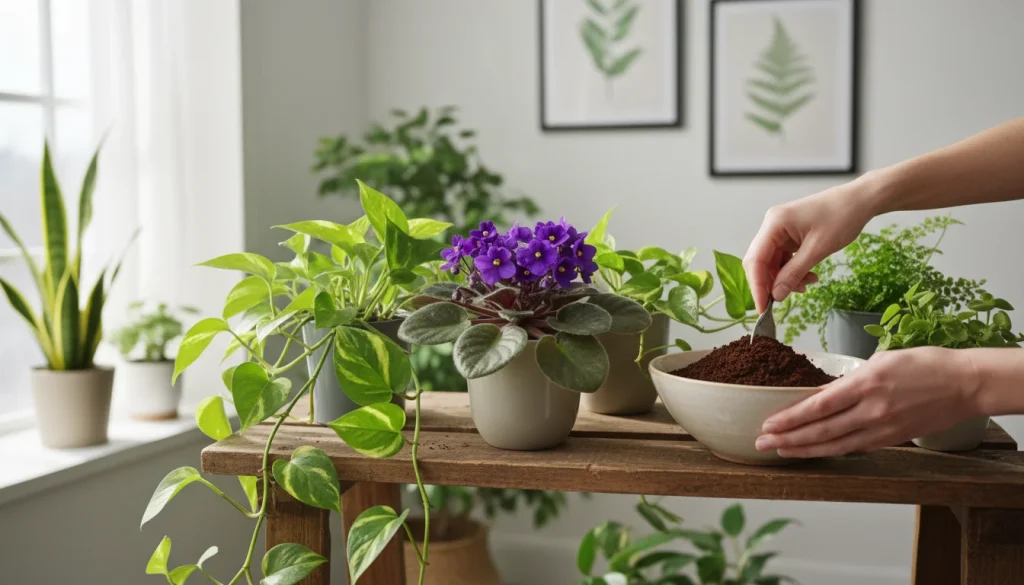
Quick Summary & Direct Answer
The houseplants that benefit most from used coffee grounds are acid-loving varieties such as African Violets, Peace Lilies, Pothos, Philodendrons, Spider Plants, and Ferns. These plants utilize the nitrogen boost for foliage growth. However, grounds must be dried first or composted to prevent mold, and used sparingly to avoid soil compaction. Avoid using them on succulents or cacti.
While tossing your morning grounds directly into a plant pot seems like an easy eco-hack, doing it incorrectly can actually turn your thriving indoor jungle into a moldy graveyard within weeks.
The Science Behind Coffee Grounds in Gardening
Before we start sprinkling leftover espresso grounds into every pot in the living room, it is crucial to understand what coffee grounds actually do to the soil. In our experience, many gardeners view coffee grounds as a magical cure-all, but they are a potent organic amendment that changes soil chemistry.
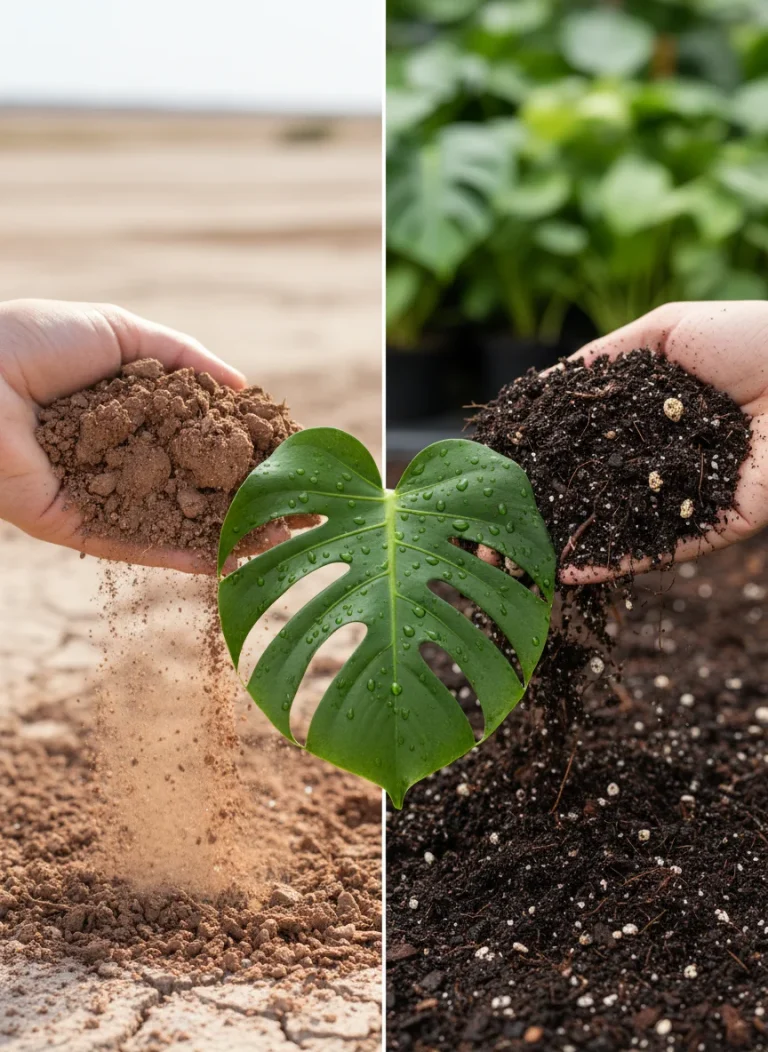
Used coffee grounds are relatively rich in nitrogen, a primary macronutrient responsible for leafy green growth. They also contain smaller amounts of potassium and phosphorus, along with micronutrients like magnesium and copper. However, their most significant characteristic is their acidity. While brewing removes much of the acid, used grounds typically maintain a pH between 6.5 and 6.8, leaning toward neutral but still beneficial for acid-loving plants.
The danger lies in the texture and moisture retention. Coffee grounds are fine particles that can compact easily. If applied too thickly, they form a crust that repels water or, conversely, traps too much moisture, leading to fungal issues. This is why knowing which plants can handle this amendment is vital for their survival.
Top Houseplants That Thrive on Coffee Grounds
The following plants generally respond well to the nitrogen boost and slight acidity provided by coffee grounds. However, moderation is always the rule. We recommend observing your plants closely after the first application.
1. African Violets
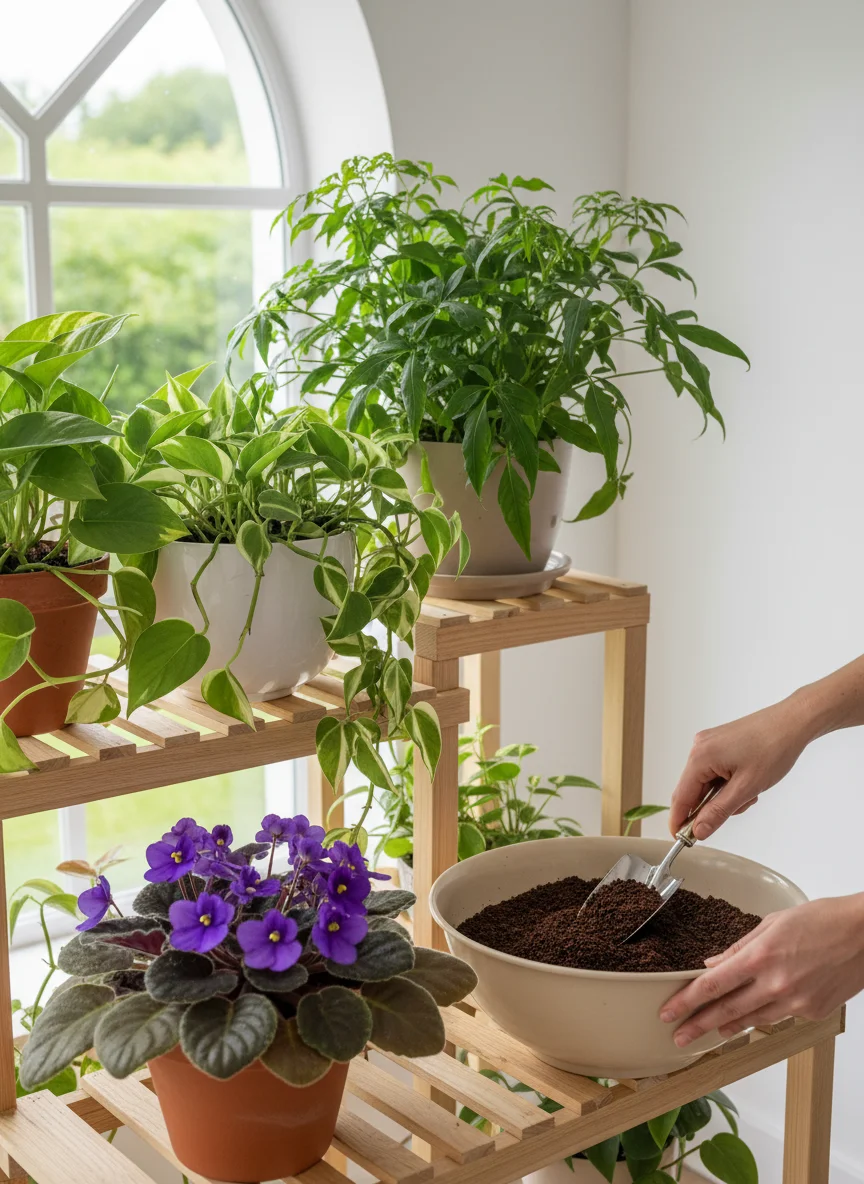
African Violets are perhaps the most famous lovers of acidic soil. These delicate flowering plants rely on a steady supply of nitrogen to maintain their fuzzy, deep green leaves and vibrant blooms. Because African Violets are sensitive to synthetic fertilizers, organic options like composted coffee grounds are often safer. The slight acidity helps them absorb nutrients more efficiently.
2. Peace Lilies
Known for their dramatic white spathes and air-purifying qualities, Peace Lilies are heavy feeders. They appreciate soil rich in organic matter. A light dusting of dried grounds mixed into the soil can encourage deeper green leaves and more frequent flowering. Since Peace Lilies already enjoy moist soil, the water-retention properties of coffee grounds can be beneficial here, provided drainage remains adequate.
3. Pothos and Philodendrons
These vining plants are incredibly hardy and are often the gateway plants for new gardeners. Both Pothos and Philodendrons are foliage-heavy plants, meaning their primary need is nitrogen. They are not particularly fussy about soil pH, but they thrive in the forest-floor-like conditions that coffee grounds can mimic. We have found that occasional feeding with diluted coffee tea helps maintain their variegated patterns and lush growth.
4. Spider Plants
Spider plants are vigorous growers that constantly produce “spiderettes” (baby plants). This reproduction requires significant energy. The nitrogen in coffee grounds supports this rapid growth. Spider plants are also quite resilient, making them a safer candidate for experimentation with natural fertilizers compared to more sensitive species.
5. Ferns (Boston Ferns, Maidenhair Ferns)
Ferns naturally grow on forest floors where decaying organic matter is abundant. This environment is typically acidic and rich in nitrogen. Coffee grounds mimic this natural mulch. Ferns also require consistent moisture, and mixing grounds into the potting mix can help the soil retain water without becoming waterlogged, assuming the pot has drainage holes.
6. Snake Plants (Sansevieria)
This is a controversial entry, but Snake Plants can benefit from coffee grounds if used very sparingly. While they are technically succulents, they are more adaptable than cacti. A very light mix can provide nutrients, but you must ensure the soil dries out completely between waterings to prevent root rot.
7. Christmas Cactus
Unlike desert cacti, the Christmas Cactus is an epiphyte hailing from Brazilian rainforests. It prefers higher humidity and richer soil than its desert cousins. A small boost of coffee grounds a few months before blooming season can enhance flower production and stem health.
Pin This for Later!
Found this helpful? Save it to your Pinterest board so you can find it again whenever you need a refresh.

How to Use Coffee Grounds Safely
The difference between a fertilizer and a plant killer is often the method of application. Simply dumping wet grounds from your filter into a pot is a recipe for mold. Follow these best practices to ensure safety.
1. The Drying Method
Never apply wet coffee grounds directly to indoor plants. Wet grounds are a breeding ground for gray mold and fungal gnats. Spread your used grounds on a baking sheet or newspaper and let them dry out completely in the sun or a warm oven. Once they are a dry powder, they can be sprinkled lightly.
2. Composting (The Gold Standard)
The absolute best way to use coffee grounds is to compost them first. Mixing grounds with brown matter (like dried leaves or shredded paper) allows them to break down into a balanced, nutrient-rich humus. This stabilizes the pH and eliminates the risk of caffeine toxicity or mold. If you have a vermicompost (worm bin), your worms will love the grounds.
3. The “Coffee Tea” Liquid Fertilizer
For those worried about soil compaction, liquid fertilizer is a safer route. Soak two cups of used coffee grounds in a five-gallon bucket of water overnight. Strain the liquid and use it to water your plants. This provides a diluted dose of nutrients without the risk of the grounds forming a crust on your topsoil.
Plants to Avoid: Who Hates Coffee?
Not all plants enjoy a caffeine kick. In fact, for some, it can be fatal. The high nitrogen content and moisture retention are detrimental to plants that evolved in dry, nutrient-poor soils.
- Succulents and Cacti: These plants require rapid drainage and sandy soil. Coffee grounds retain moisture and can cause root rot very quickly. Furthermore, the nitrogen levels are often too high for them, leading to soft, weak growth.
- Mediterranean Herbs: Plants like Rosemary, Lavender, and Thyme prefer neutral to alkaline soil (lime-rich). Adding acidic coffee grounds can stunt their growth and yellow their leaves.
- Seedlings: Young plants are incredibly sensitive. The caffeine content in grounds, even if trace, can inhibit germination and stunt early root development.
Common Problems and Troubleshooting
If you have applied coffee grounds and notice your plants struggling, look for these signs.
Yellowing Leaves
While nitrogen usually promotes green growth, an overload can lock out other nutrients or alter the pH too drastically. If leaves turn yellow, flush the soil with water to remove excess acidity.
Mold Growth on Soil
White fuzz appearing on top of the soil means you likely used wet grounds or applied a layer that was too thick. Scrape off the top inch of soil immediately and replace it with fresh potting mix. Ensure the plant is in a spot with good airflow.
Fungal Gnats
These pests are attracted to decaying organic matter and moisture. If you see tiny black flies, stop using organic amendments like coffee grounds immediately and let the soil dry out. You may need to treat the plant with neem oil or hydrogen peroxide diluted in water.
Final Verdict
Coffee grounds can be a fantastic, free resource for the indoor gardener, but they are not a universal solution. By focusing on acid-loving, foliage-heavy plants like Pothos and Peace Lilies, and by ensuring you dry or compost the grounds first, you can turn your morning waste into plant food. Always start with small amounts and observe how your specific plants react before making it a regular part of your care routine.
Read Next
10 Powerful Medicinal Herbs You Must Grow for a Complete Home Pharmacy
15 Houseplants That Thrive With Zero Sunlight
5 Clever Spots You Have Probably Never Thought to Put a Plant