8 Houseplants That Actually Reduce Indoor Dust: The Science of Bio-Filtration
Quick Summary & Direct Answer
Do plants really help with dust? Yes. Certain houseplants like the Rubber Plant and English Ivy actively reduce airborne particles through two main mechanisms: physically trapping dust on textured or waxy leaves and increasing indoor humidity. Higher humidity causes floating dust to become heavier and settle on surfaces rather than remaining airborne. While they are excellent for improving air quality, they function as a supplement to, not a replacement for, your vacuum cleaner.
It is a common misconception that air-purifying houseplants act like miniature vacuum cleaners, sucking debris out of the air. The reality of how they clean your home is far more passive, yet the biological science behind it is fascinating and incredibly effective if you choose the right species.
The Science: How Plants Fight Dust and Allergens
In our experience analyzing indoor air quality solutions, we have found that plants are often oversold as magic cures but undervalued as biological filters. To understand which plants to buy, you first need to understand the mechanism of action. Plants do not “eat” dust. Instead, they manage it through three specific processes.
1. Electrostatic and Physical Trapping
Leaves generate a static charge. This subtle electrical field attracts airborne particles, including dust, pollen, and mold spores. Once these particles make contact with the leaf surface, especially on plants with waxy or fuzzy textures, they stick. This removes the particulate matter from the breathing zone, effectively trapping it until you wipe the leaf down.
2. Transpiration and Humidity Control
Dry air is a dust haven. When the air is dry, dust particles remain light and float freely, making them easy to inhale. Plants release water vapor through pores in their leaves called stomata. This process, known as transpiration, increases local humidity. As moisture binds to floating dust particles, they become heavier and fall to the floor. While this means you still have to vacuum, it also means you are not breathing that dust in.
3. Phytoremediation (Toxin Removal)
Beyond simple dust, many of the plants listed below filter Volatile Organic Compounds (VOCs) like formaldehyde and benzene. These are invisible gases emitted by furniture, paint, and carpets that often bind to dust particles. By breaking down these toxins, plants reduce the overall chemical load of the dust in your home.
Top 8 Dust-Reducing Houseplants
Not all foliage is created equal when it comes to particulate matter. We have compiled this list based on leaf surface area, texture, and transpiration rates.
1. The Rubber Plant (Ficus elastica)
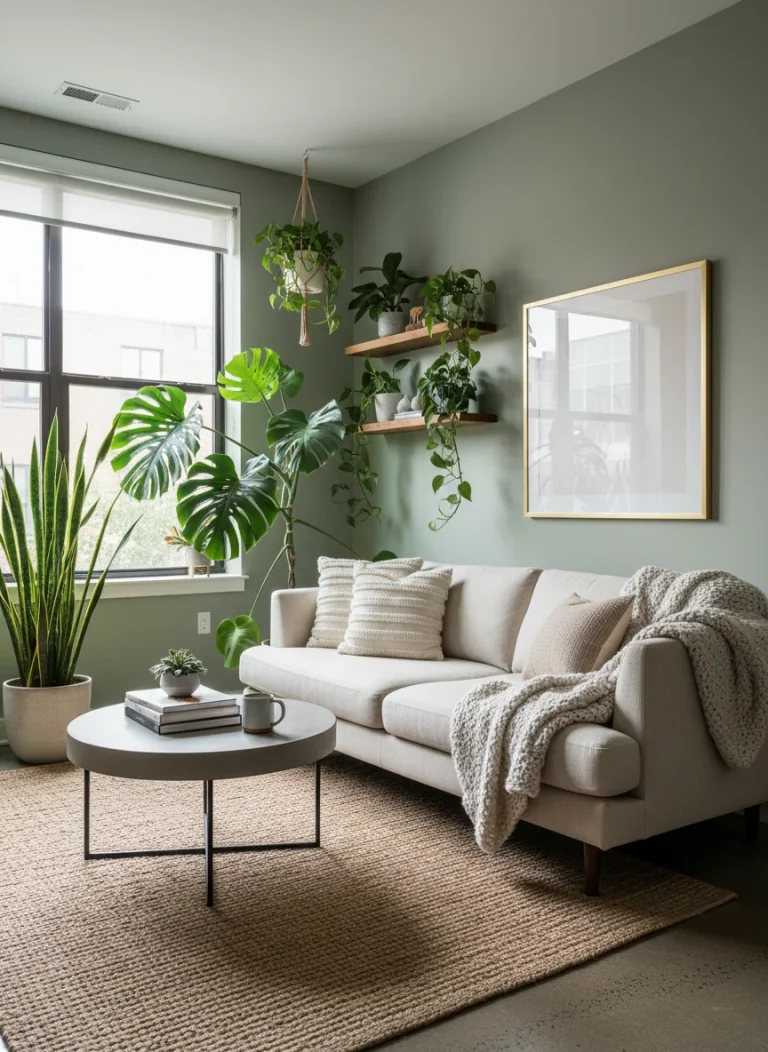
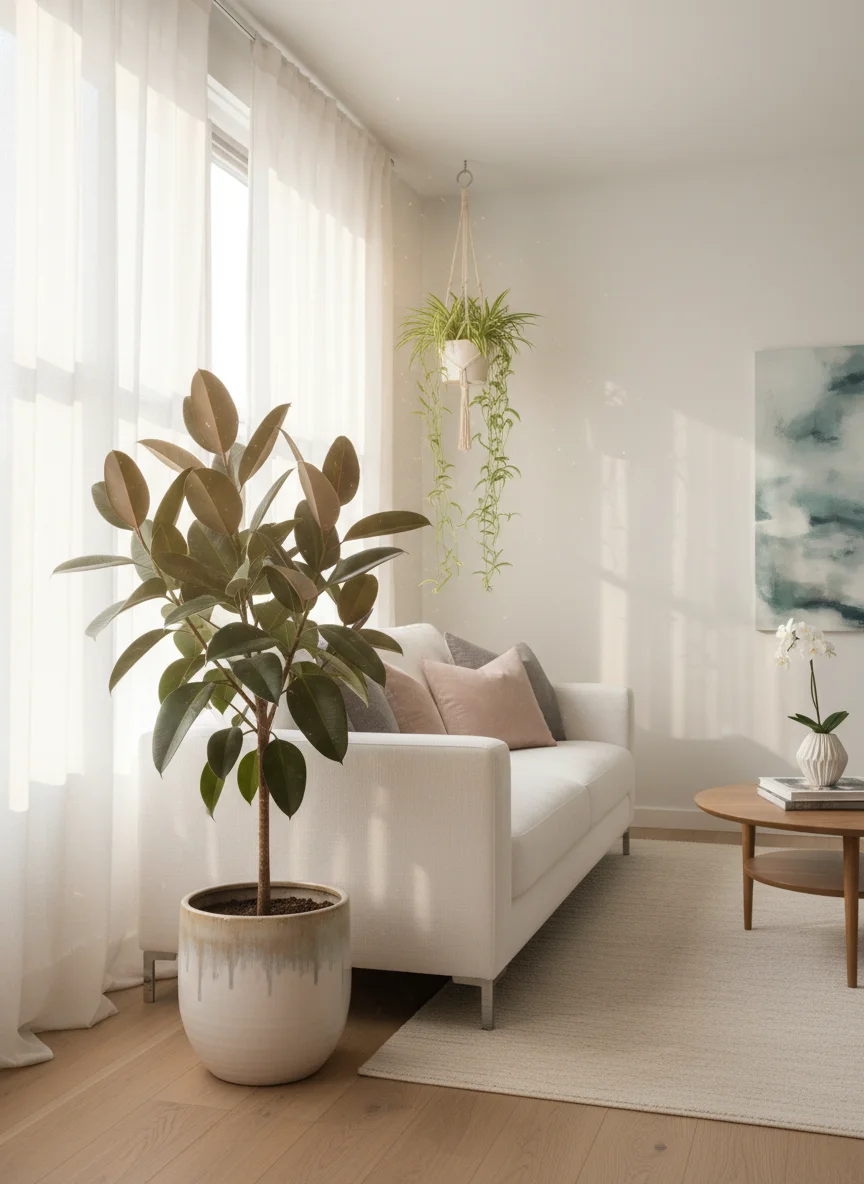
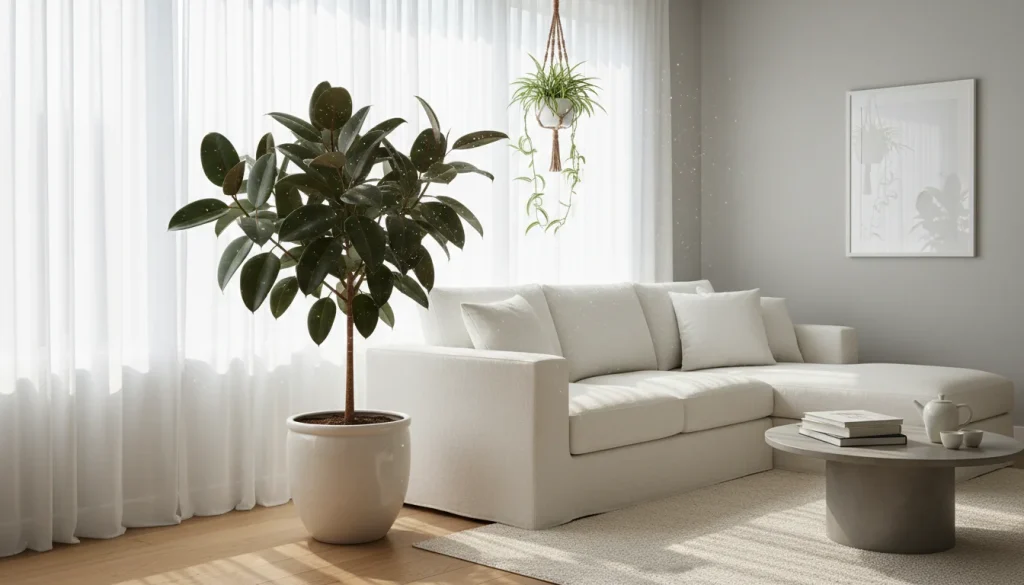
If you only buy one plant for dust control, make it this one. The Rubber Plant features massive, thick, waxy leaves. The wide surface area acts as a designated landing pad for dust. Because the leaves are glossy and smooth, the electrostatic attraction is high. They are incredibly efficient at trapping particles that would otherwise drift into your nasal passages.
- Best Placement: Near entryways or windows where airflow brings in dust.
- Care Tip: You must wipe these leaves weekly. A dusty Rubber Plant cannot photosynthesize efficiently.
2. English Ivy (Hedera helix)
English Ivy is aggressive against airborne pollutants. Studies have suggested that this plant is particularly effective at reducing airborne fecal-matter particles and mold spores. Its dense growth habit creates a complex web of foliage that traps particulates as air circulates through it. It is an excellent choice for bathrooms or damp areas where mold spores contribute to “dust” allergies.
3. Spider Plant (Chlorophytum comosum)
The Spider Plant is the workhorse of air purification. While its thin leaves do not have the surface area of a Ficus, the sheer volume of foliage creates a net. It is highly rated for removing formaldehyde from the air. In our experience, this plant is ideal for high shelves where dust tends to settle unnoticed. It absorbs allergens and contributes significantly to indoor humidity levels.
4. Peace Lily (Spathiphyllum)
The Peace Lily is a transpiration powerhouse. It releases a high volume of moisture into the air, which is crucial for settling dust. Beyond humidity, the Peace Lily is known for absorbing acetone and benzene. Its broad, dark green leaves provide ample surface area for collecting settled dust. Note that this plant is toxic to pets, so placement is key.
5. Snake Plant (Sansevieria)
Also known as Mother-in-Law’s Tongue, this plant is unique because it releases oxygen and opens its stomata at night (CAM photosynthesis). This makes it the perfect bedroom companion. While you sleep, the Snake Plant continues to circulate air and filter formaldehyde. Its vertical, sword-like leaves are stiff and act as a barrier to airflow, allowing dust to collect on the surface rather than circulating around your bed.
6. Bamboo Palm (Chamaedorea seifrizii)
If you have dry air issues, the Bamboo Palm is a top-tier natural humidifier. A healthy palm can transpire a significant amount of moisture into a room. This moisture weighs down dust, pollen, and dander. The complex structure of the fronds also acts as a physical sieve, catching particles as air moves through the plant.
7. Boston Fern (Nephrolepis exaltata)
Similar to the Bamboo Palm, the Boston Fern is legendary for humidity restoration. Its fronds are textured and dense, providing millions of tiny capture points for dust. However, Boston Ferns are sensitive. If they dry out, they will drop leaflets, creating their own mess. They require consistent moisture to remain effective dust fighters.
8. Weeping Fig (Ficus benjamina)
The Weeping Fig is a large plant often used to anchor room decor. Its capability to remove airborne chemicals like xylene and toluene is well-documented. Because it is often a larger tree-like specimen, it processes a larger volume of air than a small potted plant. The dense canopy slows down airflow in a room, encouraging dust to drop out of the air near the base of the pot.
Strategizing Your Green Air Filter
Simply placing a plant in the corner will not solve a dust problem entirely. To maximize the E-E-A-T (Experience, Expertise, Authoritativeness, and Trustworthiness) of your home setup, you need a strategy.
Group Plants for Humidity Zones
Grouping plants together creates a microclimate of higher humidity. We recommend creating a “green corner” in the rooms where you spend the most time, such as the living room or bedroom. This concentrated humidity is more effective at settling dust than scattering single plants throughout the house.
The Maintenance Paradox
Here is the most critical advice we can offer: A dusty plant cannot clean the air.
When dust covers the leaves, it blocks sunlight and clogs the stomata (pores). This stops the plant from photosynthesizing and transpiring moisture. Effectively, a dusty plant turns into a statue. To maintain their dust-reducing powers, you must:
- Wipe leaves: Use a damp microfiber cloth for broad leaves like the Rubber Plant and Peace Lily.
- Shower them: For complex plants like Ferns and Palms, place them in the shower continuously for a few minutes with lukewarm water to wash away the buildup.
- Use Neem Oil: Occasionally using a leaf shine or Neem oil mixture can help repel pests and keep the leaf surface receptive to trapping more dust.
Conclusion: A Breath of Fresh Air
Incorporating plants like the Rubber Plant, Snake Plant, and Peace Lily into your home decor is a scientifically sound method for improving indoor air quality. They act as bio-filters that trap allergens and regulate humidity, forcing dust out of the air you breathe. However, they are partners in your cleaning routine, not substitutes. By combining these botanical allies with regular HEPA vacuuming, you create a home environment that is not only visually greener but physically cleaner and safer for your respiratory health.
Read Next
Zero-Budget Gardening: The Ultimate Guide to Growing Food for Free
10 Powerful Medicinal Herbs You Must Grow for a Complete Home Pharmacy