Urban Gardening for Beginners: How to Grow Food in a Tiny Space
Executive Summary & Direct Answer
To successfully grow food in tiny urban spaces, you must prioritize vertical integration and soil volume efficiency. Utilize vertical trellises and wall pockets to increase planting surface area by three times. Focus on high-yield, compact crops like ‘cut-and-come-again’ greens, dwarf cherry tomatoes, and bush beans. Success relies on creating a nutrient-dense soil matrix, mixing high-quality potting mix with compost, and mastering container hydration, as small pots dry out rapidly. Treat your space as a cubic volume, not just a square footage floor plan.
You do not need a sprawling acre of land to achieve food sovereignty; you need to stop thinking horizontally and start engineering your own micro-climate.
The Urban Yield Paradox: Why Small Spaces Can Outperform Farms
There is a pervasive myth that you need vast tracts of land to grow a meaningful amount of food. This is categorically false. In fact, urban gardening often allows for higher yields per square foot than traditional row farming. Why? Because in a small space, you have total control over the environment.
In a 50-acre field, a farmer cannot hand-water every tomato plant or inspect every leaf for aphids. On a 50-square-foot balcony, you can. This is the Urban Yield Paradox: the restriction of space forces an optimization of care, leading to healthier plants and faster harvests. However, this high-performance engine requires a specific fuel source and a rigorous maintenance protocol.
Why Most Urban Gardeners Fail
Before we build your blueprint, we must address the graveyard of withered basil plants that haunts most beginners. The failure rate in urban gardening is rarely due to a lack of “green thumb.” It is almost always a failure of Root Physics and Hydrology.
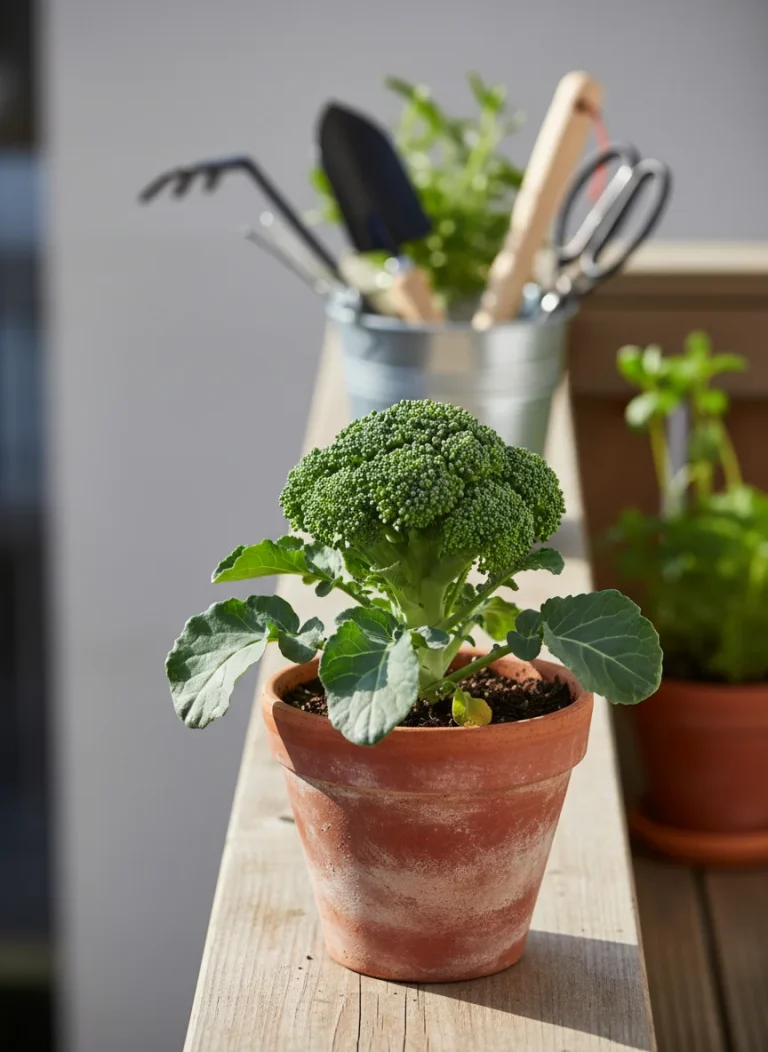
- The Teacup Mistake: Beginners often use containers that are too small. A tomato plant is an iceberg; what you see above ground is supported by a massive root system below. If you restrict the roots to a small pot, the plant becomes “root-bound,” stunts its growth, and produces zero fruit.
- The Heat Sink Effect: Concrete balconies and brick walls absorb heat. A black plastic pot on a south-facing balcony can cook a plant’s roots in hours. Urban gardening requires managing reflected heat.
- Nutrient Washout: Because containers require frequent watering, nutrients flush out of the soil rapidly. A container garden requires a completely different fertilization schedule than an in-ground garden.
The Step-by-Step Blueprint: Engineering Your Tiny Farm
To maximize a tiny footprint, we will use a hybrid approach combining Vertical Plane Utilization and High-Density Container Theory.
Phase 1: The Vertical Audit
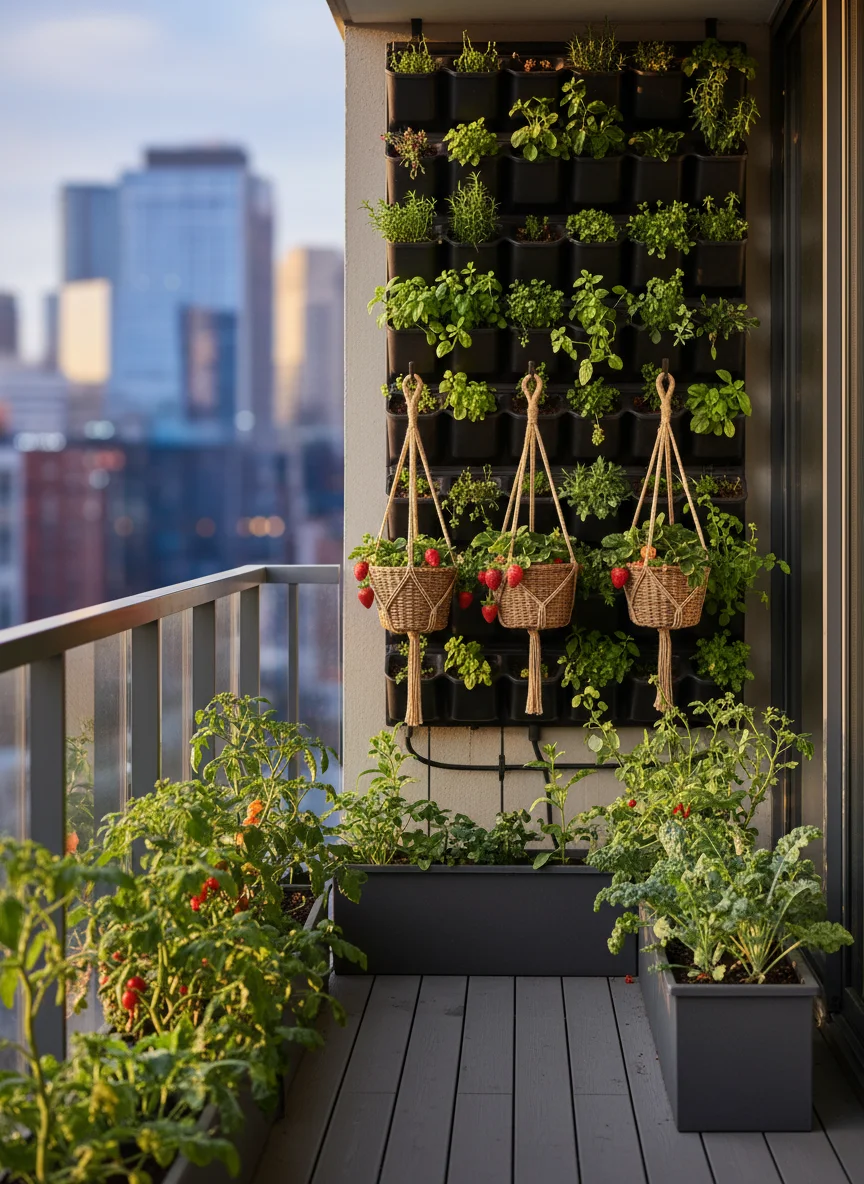
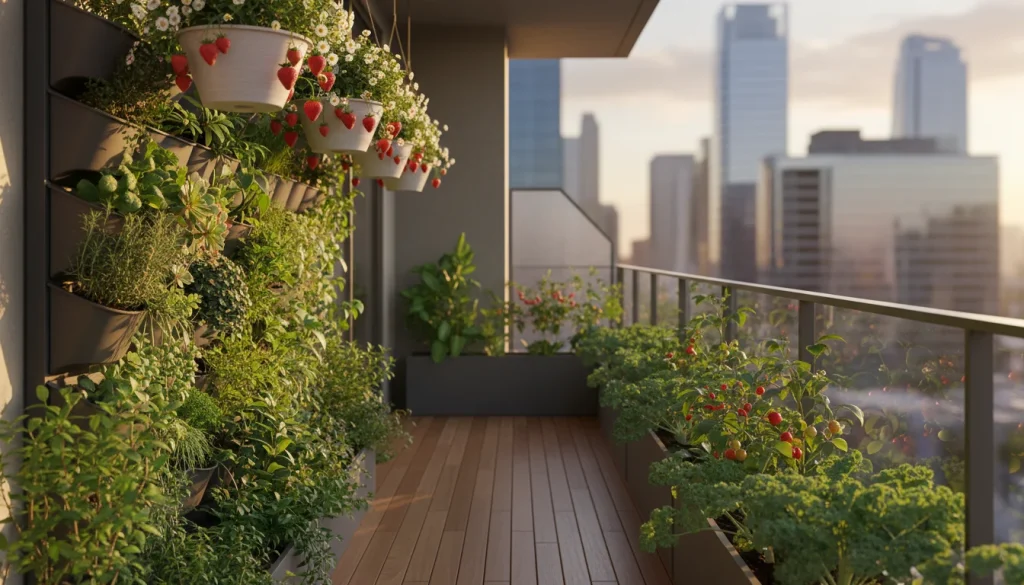
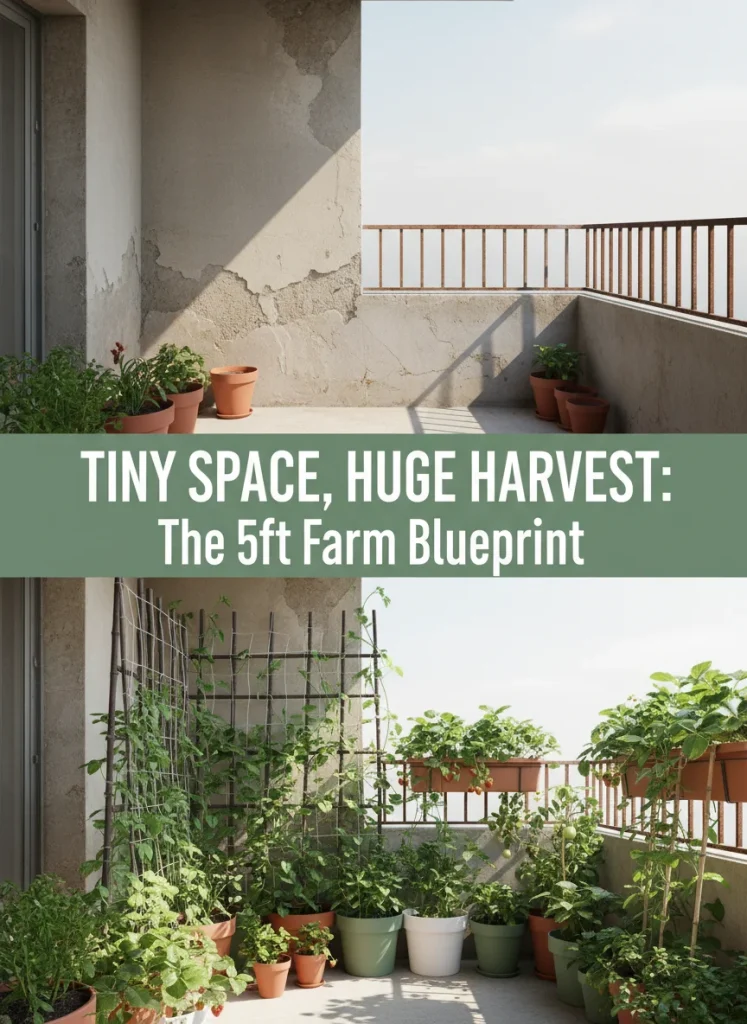
Do not look at the floor. Look at the walls, the railings, and the ceiling. If you have a 5×10 balcony, you have 50 square feet of floor. But if you have 8-foot walls on three sides, you have an additional 200+ square feet of growing space.
Advanced Strategy: The Living Wall Gradient.
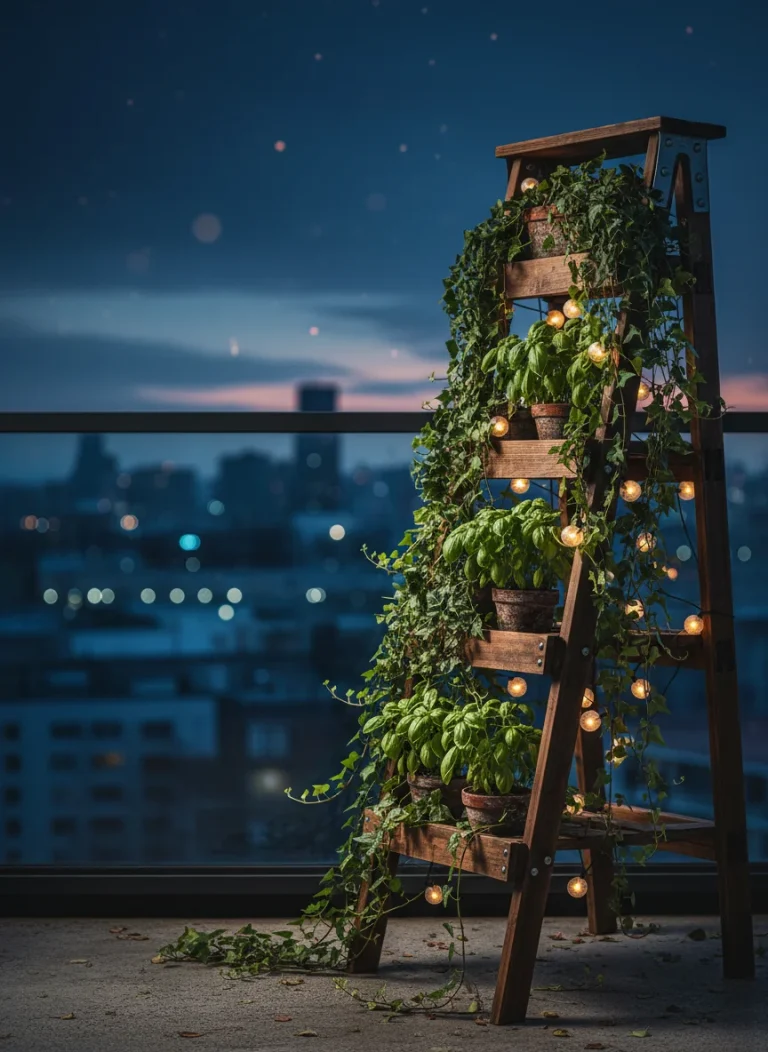
Install heavy-duty trellis netting or modular wall planters. Plant shade-tolerant leafy greens (spinach, lettuce) at the bottom of the wall and sun-loving vining crops (peas, cucumbers, pole beans) at the bottom, training them to climb up. This creates a “green curtain” that maximizes photosynthesis without occupying floor space.
Phase 2: Container Selection & Soil Architecture
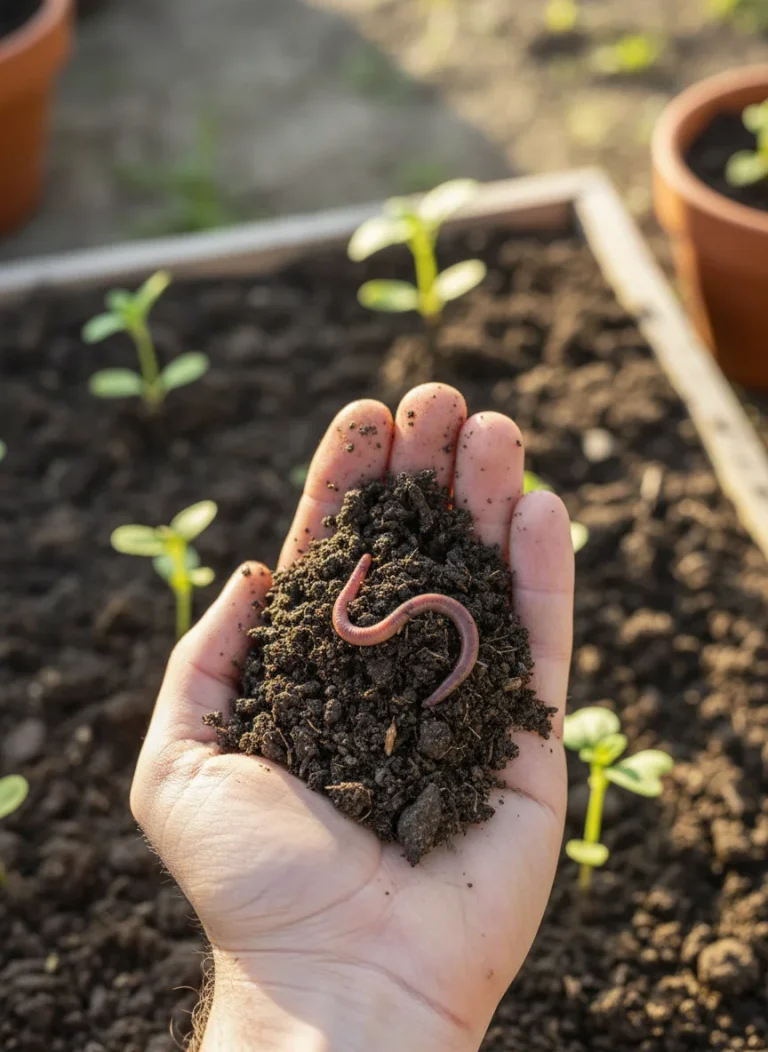
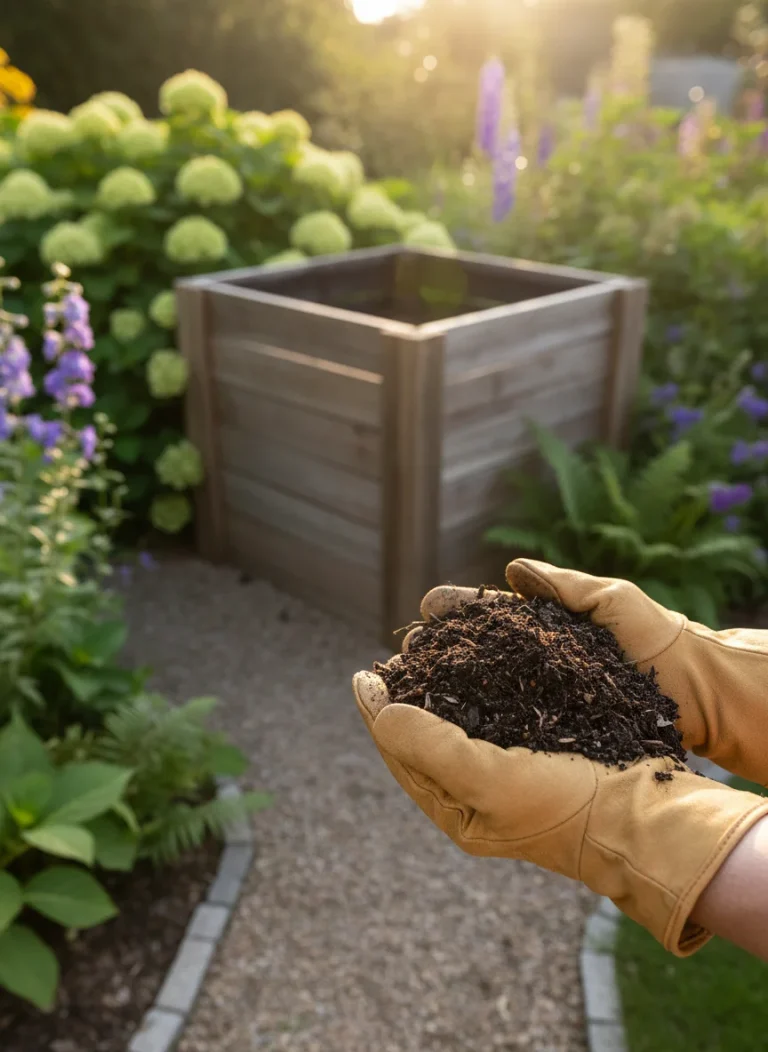
Forget standard garden soil. It is too heavy and compacts in pots, suffocating roots. You need a Soilless Potting Mix engineered for aeration.
The Golden Ratio for Urban Soil:
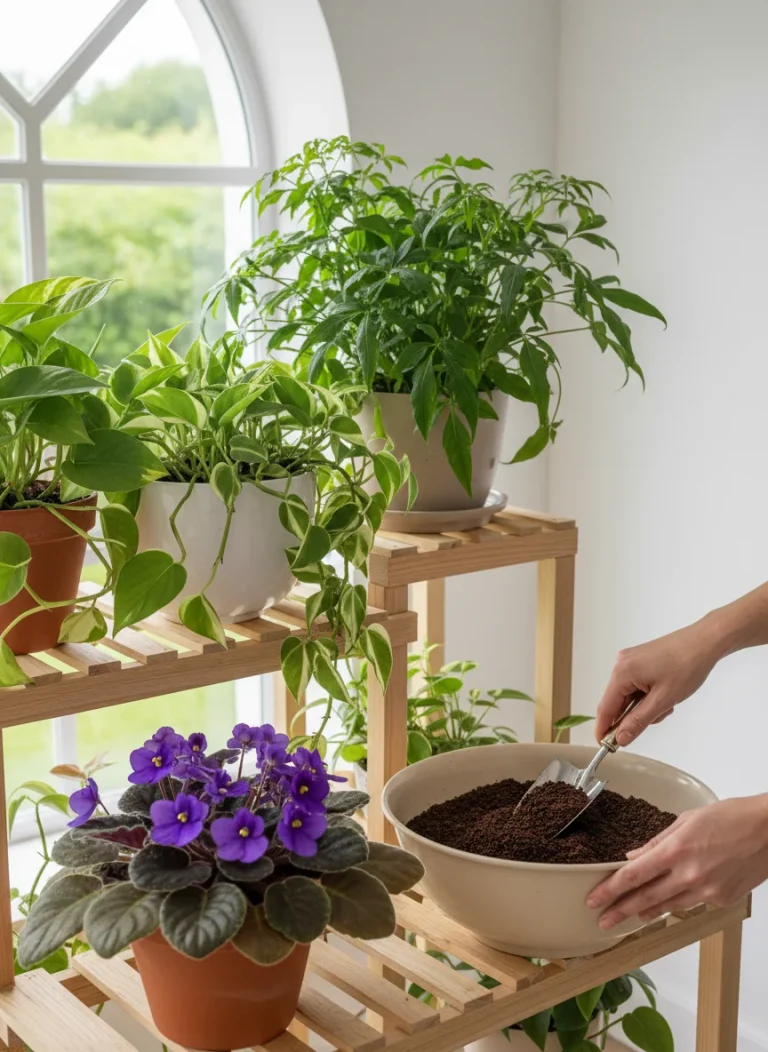
Mix 60% high-quality organic potting soil (peat or coco coir-based) with 30% compost (for slow-release nutrients) and 10% perlite or vermiculite (for drainage and aeration). This mixture ensures that when you water, the excess flows out, but moisture is retained in the micropores of the organic matter.
Vessel Selection:
For fruiting plants (tomatoes, peppers, eggplant), use Grow Bags (fabric pots). Fabric pots air-prune the roots. When a root hits the side of a plastic pot, it circles endlessly (strangulation). When it hits the side of a fabric pot, the air cauterizes the tip, forcing the plant to grow new feeder roots in the center of the soil ball. This results in a more robust root system and higher yields.
Phase 3: The Crop Matrix (What to Grow)
In a tiny space, every plant must earn its rent. Avoid “One-and-Done” crops like cabbage or head lettuce, where you wait 90 days for a single harvest. Instead, focus on “Cut-and-Come-Again” varieties.
- High-ROI Greens: Swiss Chard, Kale, and loose-leaf lettuce. You can harvest the outer leaves weekly, and the plant will continue to produce from the center for months.
- Vertical Vines: Pole beans and cucumbers. One square foot of soil can support a vine that produces 5-10 lbs of produce if trained vertically.
- Compact Powerhouses: Look for cultivar names like “Patio,” “Bush,” “Dwarf,” or “Determinate.” A ‘Tiny Tim’ tomato plant grows only 12 inches tall but can produce hundreds of cherry tomatoes.
Advanced Strategy: Succession Planting & Square Foot Math
To get a “Best-on-Web” yield, you must treat your garden like a factory line. This is called Succession Planting. Never let a pot sit empty.
The Timeline:
1. Spring: Plant fast-growing cool-weather crops like radishes and spinach. Harvest them in 30 days.
2. Summer: Immediately replace them with heat-loving seedlings like peppers or bush beans.
3. Fall: As the summer crops fade, pull them and plant cold-hardy kale or arugula that will last into winter.
By rotating crops, a single 5-gallon bucket can produce three different harvests in one year. This triples your yield per square foot compared to a static garden.
Water Management: The Critical Variable
Urban environments are often drier and windier than rural gardens. Wind on a balcony acts like a hair dryer, stripping moisture from leaves.
The Mulch Mandate:
Never leave soil exposed. Cover the top of every container with 1-2 inches of straw, pine bark, or even shredded cardboard. This reduces evaporation by up to 70%, keeps the roots cool, and prevents soilborne diseases from splashing up onto the leaves.
Pin This Strategy!
Common Questions (FAQ)
Q: Can I really grow vegetables indoors without special lights?
A: It is difficult but possible for leafy greens if you have a south-facing window with 6+ hours of direct sun. However, for fruiting plants like tomatoes or peppers, indoor window light is rarely sufficient. They will become “leggy” (tall and weak) and fail to fruit. For indoor success, a simple full-spectrum LED grow light is highly recommended.
Q: Is my balcony strong enough for a garden?
A: This is a critical safety check. Wet soil is incredibly heavy—a 15-gallon pot can weigh over 100 lbs when watered. Most modern balconies are rated for 50-100 lbs per square foot, but you should check your building codes. Place heavy pots near load-bearing walls rather than at the center or edge of the balcony to distribute weight safely.
Q: How do I handle pests in a high-rise apartment?
A: Pests like aphids and spider mites can actually be worse on balconies because there are no natural predators (like ladybugs) to eat them. Inspect your leaves weekly. If you see pests, use a spray of water to knock them off or apply organic Neem oil in the evening. Companion planting (planting marigolds or basil near your crops) can also help repel pests.
Q: Can I reuse my potting soil next year?
A: Yes, but you must revitalize it. Over a season, plants deplete the nutrients and the soil structure breaks down. At the start of the new season, dump the old soil into a bin, break up clumps, and mix in 30% fresh compost and slow-release organic fertilizer. This “recharging” process saves money and restores fertility.
Q: What is the single easiest vegetable for a total beginner?
A: Radishes or loose-leaf lettuce. Radishes go from seed to harvest in as little as 25 days, giving you a quick win. Loose-leaf lettuce is forgiving of lower light levels and can be harvested continuously without killing the plant.