
How to Start a Vegetable Garden for Beginners (Step-by-Step)
Estimated reading time: 8 minutes
The Blueprint for a Successful Harvest
Starting a Vegetable Garden for Beginners does not require a horticulture degree or expensive equipment. It requires three simple elements: sunlight, good soil, and consistent water. Your goal is to create an environment where plants want to grow rather than forcing them to survive. The most common mistake new gardeners make is going too big too fast. A small and well maintained plot will always yield more than a massive weed filled jungle. By focusing on soil health and choosing the right location, you set the stage for a thriving ecosystem right in your backyard.
How to create a vegetable garden step by step?
Creating a garden follows a logical sequence that prevents wasted effort. I recommend following this specific workflow to ensure nothing is overlooked.
- Select the Perfect Spot: Vegetables love the sun. As noted by The Old Farmer’s Almanac, most fruiting vegetables need at least six hours of direct sunlight daily. Pick a location near a water source so you do not have to haul buckets across the yard.
- Design the Layout: Decide on the size. A 10 by 10 foot area is manageable for a first attempt.
- Prepare the Soil: This is the engine of your garden. You must clear away grass and loosen the earth.
- Amend the Soil: Add organic matter like compost or aged manure to provide nutrients.
- Choose Your Crops: Pick vegetables that your family actually eats.
- Plant: Place seeds or transplants into the ground according to packet instructions.
- Mulch and Water: Cover the bare soil with straw or shredded leaves to retain moisture and keep weeds down.
What is the easiest vegetable to grow for a beginner?
Loose leaf lettuce is the absolute easiest vegetable for a novice. Unlike tomatoes or peppers that require months of care before you get a harvest, lettuce grows rapidly. You can harvest the outer leaves within thirty days while the center continues to produce.
Radishes are another top contender because they are ready to harvest in as little as three weeks. If you want something more substantial, bush beans are incredibly resilient. They produce high yields without needing trellises or complex support structures. Zucchini is also famous for being prolific, often producing more squash than a single family can eat.
In what order do you plant vegetables in a garden?
You must plant according to the temperature preferences of the crop. Planting order is dictated by the seasons rather than alphabetical order.
- Cool Season Crops (Early Spring): As soon as the soil can be worked, plant hardy vegetables that tolerate frost. This includes peas, spinach, lettuce, kale, and onions. These plants wither in high heat, so getting them in early is vital.
- Warm Season Crops (Late Spring): Wait until the danger of frost has passed completely. This is when you plant tomatoes, peppers, cucumbers, squash, and beans. These plants love heat and will perish if the temperature drops too low.
- Fall Crops (Late Summer): You can plant a second round of lettuce, spinach, and radishes as the weather cools down to maximize your yield.
How do I prepare my garden for the first time?
Preparation is primarily about removing competition and feeding the dirt. If you are starting with a patch of lawn, you must remove the sod. You can dig it out with a spade or smother it using cardboard and compost.
Once the grass is gone, test your soil. Canadian Food Focus suggests knowing your soil type is crucial for success. If the ground is hard clay or loose sand, you need to add organic matter. Mix in two to three inches of compost into the top layer of soil. This improves drainage for clay and water retention for sand. Ensure the area is level to prevent water from pooling in one spot and drowning your plants.
How to grow vegetables at home in pots
Container gardening is the perfect solution if you lack yard space. The rules for pots are slightly different than ground gardening.
First, ensure every pot has drainage holes at the bottom. Without them, water will sit at the roots and cause rot. Second, never use garden soil in a pot. Garden soil is too heavy and will compact into a brick. You must use potting mix, which is light and fluffy.
Vegetables like tomatoes need at least five gallons of soil space. Herbs and lettuce can thrive in much smaller containers. Place your pots in a sunny area and remember that containers dry out faster than the ground. You will likely need to water them daily during the heat of summer.
Vegetable garden layout
Your layout determines how easy it is to maintain the space. Traditional row gardening works well for large farm machines, but it wastes space in a home garden.
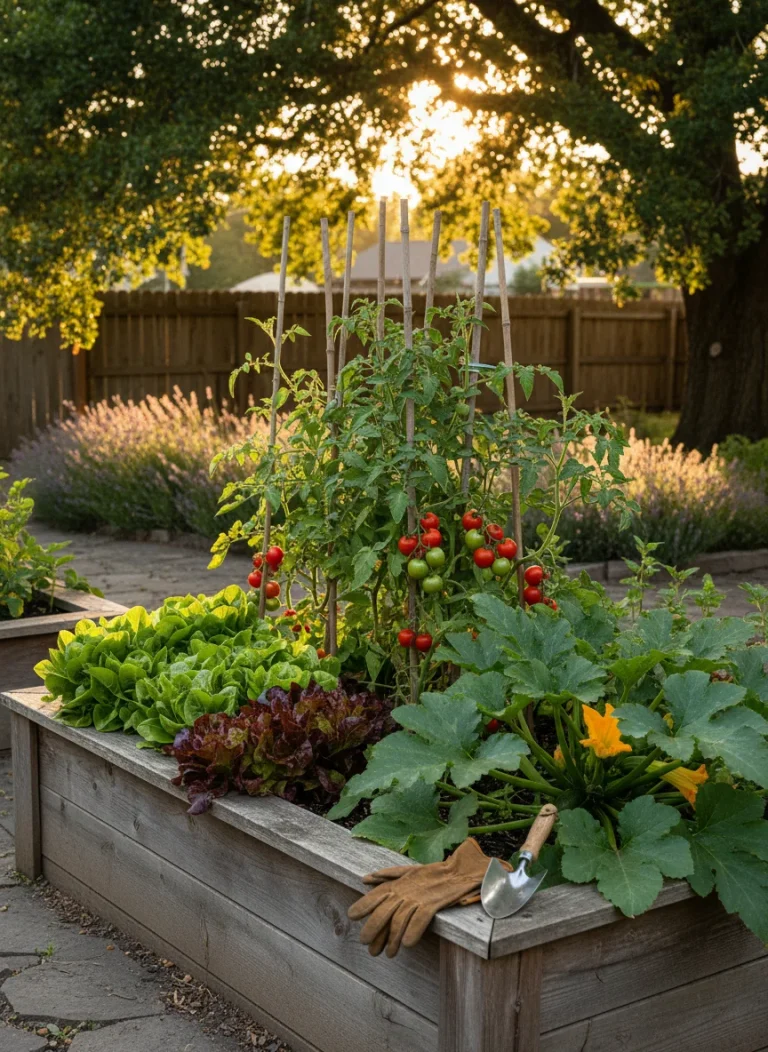
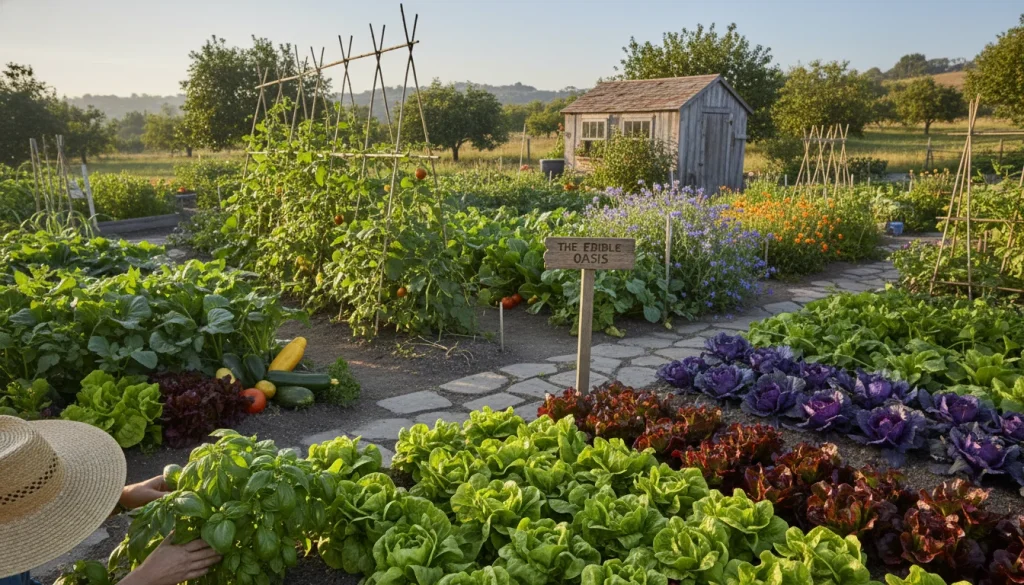
I prefer using wide beds or blocks. Instead of single rows, plant in bands that are three or four feet wide. This reduces the amount of walking paths and increases the growing area. Gardenary emphasizes that accessibility is key; you should be able to reach the center of the bed from the side without stepping into it. This keeps the soil from getting compacted by your feet. Place taller crops like corn or pole beans on the north side of the garden so they do not shade out smaller plants.
Small vegetable garden layout for beginners
For a small space, the “Square Foot Gardening” method or a simple 4×4 raised bed is ideal.
Divide your garden area into a grid of one foot squares. In each square, you plant a specific number of vegetables based on their size. For example, you can plant one tomato plant per square, four lettuce plants per square, or nine bean plants per square. This method prevents overcrowding and makes weed control very easy.
If you are working with a very narrow strip along a fence, use vertical space. Install a trellis or cattle panel and grow vining crops like cucumbers and peas upward. This doubles your growing area without taking up more ground space.
Vegetable garden at home
Having a Vegetable Garden for Beginners at home changes your daily routine. It requires observation more than hard labor.
The most critical task is watering. Consistency is better than volume. It is better to water deeply two times a week than to sprinkle water lightly every day. Deep watering encourages roots to grow down, making plants stronger.
Weeding is the other constant chore. If you catch weeds when they are small, they are easy to remove. If you let them go to seed, they will plague you for years. Spend five minutes every morning inspecting your plants. This helps you catch pests like hornworms or aphids before they destroy the crop.
How to start a garden in the ground
Starting directly in the ground is the most economical method. It saves money on lumber for raised beds and bags of soil.
- Mark Your Area: Use stakes and string to define the garden boundaries.
- Remove Debris: Clear large rocks and sticks.
- Loosen the Earth: Use a broadfork or a tiller to break up the ground. However, do not over till, as this can destroy the soil structure.
- Create Raised Rows: Mound the soil up slightly where you intend to plant. This improves drainage and warms the soil faster in the spring.
- Create Paths: clearly define where you walk. Never walk on the planting mounds.
- Feed the Soil: Top dress your planting rows with compost every single season to replenish nutrients taken by the vegetables.
Key Takeaways
- Sunlight is King: Ensure your chosen spot gets at least six hours of direct sun.
- Start Small: A 4×4 bed or a few pots is perfect for a Vegetable Garden for Beginners.
- Soil Matters: Invest in compost and quality potting mix rather than expensive tools.
- Water Wisely: Water the soil, not the leaves, and do it deeply to encourage root growth.
- Timing: Plant cool crops in spring and fall, and warm crops in the summer.
Frequently Asked Questions
How much does it cost to start a vegetable garden?
You can start for less than fifty dollars if you plant in the ground and use seeds. Costs rise if you build raised beds or buy large transplants.
Do I need to use fertilizer?
If you add plenty of organic compost, you may not need chemical fertilizer. Compost provides a slow release of nutrients that is usually sufficient for beginner gardens.