Vertical Gardening Ideas for Small Homes That Look Expensive
Estimated Read Time: 14 min read
The Executive Resolution
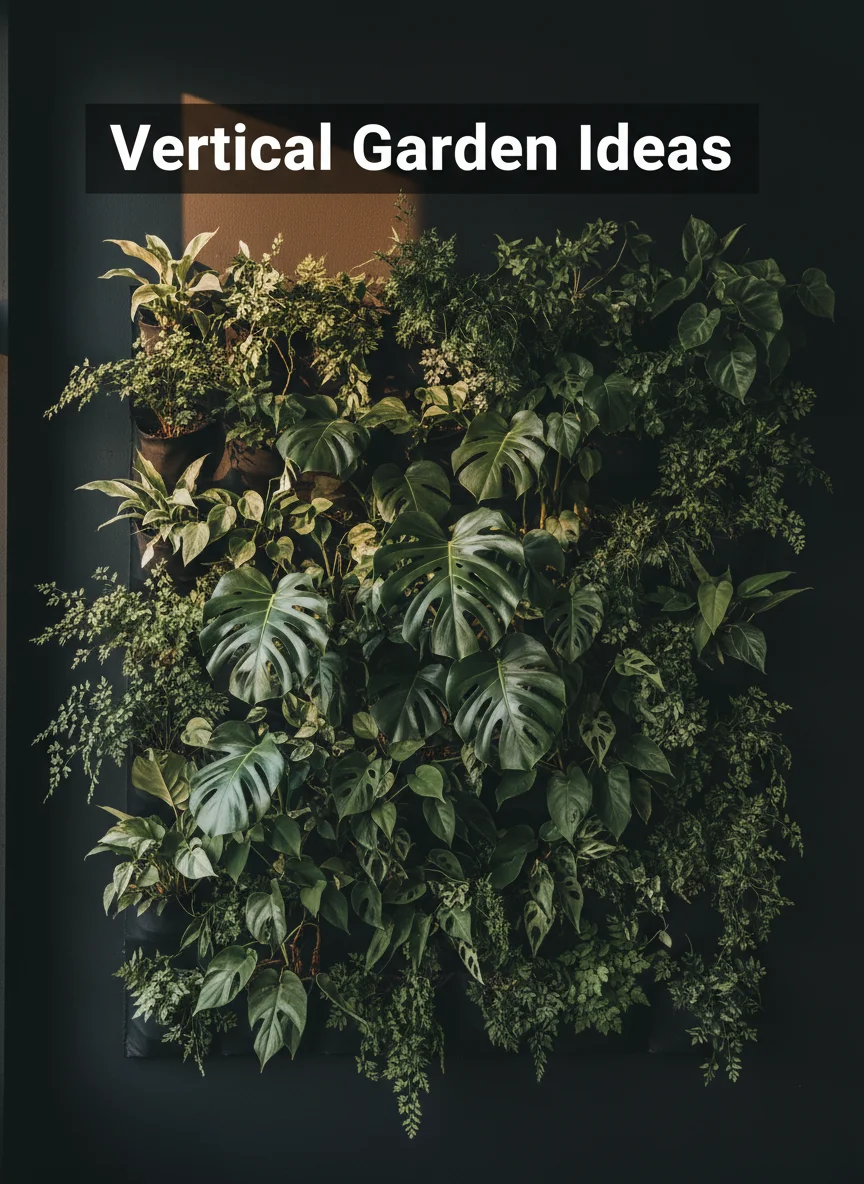
Vertical gardening ideas for small spaces maximize wall area to create architectural impact without sacrificing floor space. The secret to an expensive look is not buying rare plants, it is visual consistency. Use modular felt pocket systems or stainless steel cable trellises to create a unified green wall with a monochromatic plant palette. This transforms a cluttered collection of pots into a deliberate design element that mimics high-end hotel lobbies and costs 60% less than hiring a professional installer.
The 3-Step Framework for Vertical Garden Luxury
Most people overcomplicate vertical gardening for small spaces. They buy twenty different pots and hang them randomly. That looks like clutter. If you want that Architectural Digest look, you need a system. Here is the framework I use for every small space client:
- The Hardware Must Disappear: Your goal is to see plants, not plastic brackets. Choose mounting systems that vanish once the foliage grows in. Stainless steel cables and matte black grids blend into backgrounds.
- Density is King: You cannot skimp on plant volume in vertical garden designs. You need to pack plants tightly to hide the soil and the structure. Gaps look cheap and undermine the luxury aesthetic.
- The Rule of Three: Pick three plant varieties and repeat them throughout your living wall. Do not buy one of everything. Repetition creates rhythm and visual calm that defines high-end vertical gardening ideas.
Best Vertical Garden Systems for Small Apartments
The right system makes the difference between a Pinterest-worthy installation and a drooping mess. After testing dozens of vertical gardening ideas for small spaces, these are the systems that actually deliver.
Felt Pocket Living Wall Systems (The Industry Standard)
This is the holy grail of vertical gardening. In my early days, I tried building living walls with wood pallets. That was a mistake. Wood rots, soil falls out, and it looks messy within weeks. For a high-end result, you need specific modular technology.
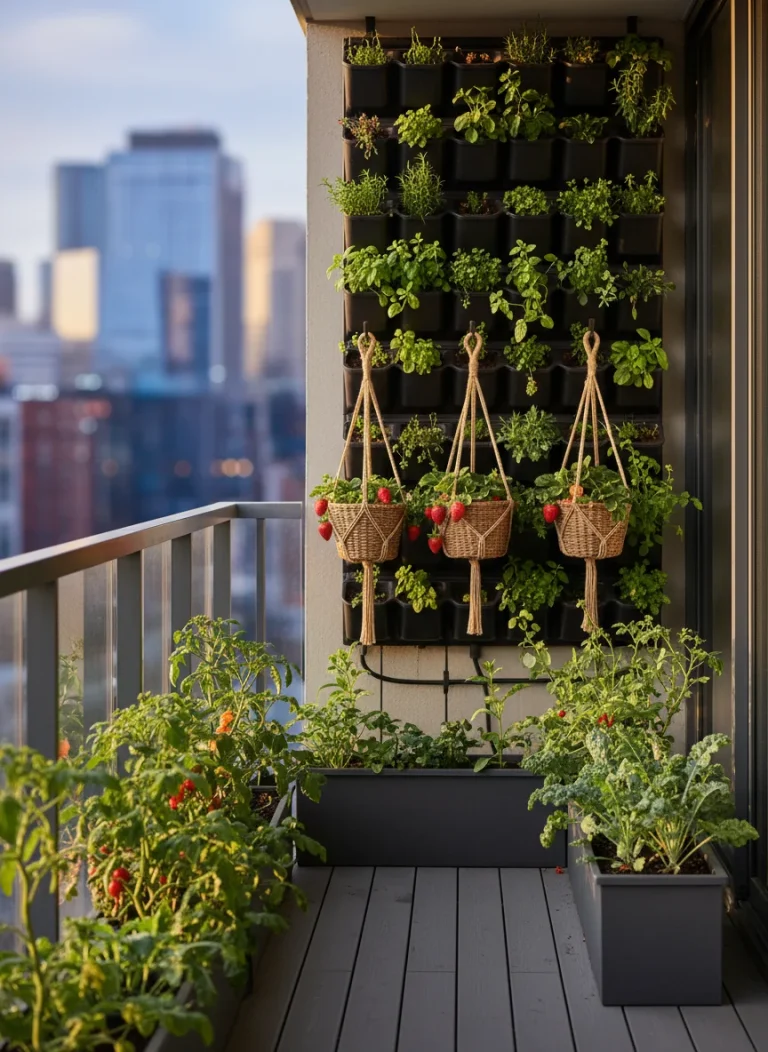
How Felt Pocket Systems Work: Felt pockets like those from WallyGro, Florafelt, or Woolly Pocket are breathable. This prevents root rot, which is the number one killer of vertical gardens. You mount these pockets in rows using wall anchors or French cleat systems. As the plants grow, they spill over the front edge. Eventually, they cover the felt entirely.
Why this works for small spaces: It sits flush against the wall. You only lose about 6 to 8 inches of depth. It creates a lush tapestry effect that muffles sound and improves air quality. In my client installations, felt pocket systems support 4-6 plants per square foot of wall space.
Cost Breakdown:
- DIY felt pocket system: $120-180 for a 4×4 foot section
- Professional modular panels: $300-500 for the same area
- Plants: $3-8 each (you’ll need 64-96 for full coverage)
Installation Steps:
- Locate wall studs and mark mounting positions
- Install moisture barrier (1/4 inch acrylic sheet or pond liner)
- Mount horizontal support rails or French cleats
- Attach felt pockets in staggered rows
- Fill with lightweight potting mix (50% peat, 30% perlite, 20% compost)
- Plant densely, starting from bottom row
Wire Grid and Hook Vertical Gardens
If you prefer a cleaner, more industrial look for your vertical gardening ideas, use a wire mesh grid. You can find these in matte black or white powder-coated finishes. Mount the grid securely to your wall using masonry anchors. Then, use S-hooks to hang identical ceramic or terracotta pots.
The trick here is uniformity. Every pot must be the same color. Every pot must be the same size. This discipline makes the installation look like a piece of modern art rather than a storage rack.
This system works brilliantly for apartment vertical gardens because it is completely removable. When you move, you unscrew the grid and take it with you. No patching, no paint touchups.
Best for: Herbs, succulents, trailing pothos, and small flowering plants Weight capacity: Check that each S-hook supports at least 5 pounds when wet
DIY Vertical Garden Ideas That Look Professional
Sometimes you cannot drill into walls. If you are renting, you need freestanding vertical gardening ideas for small spaces that still look intentional.
The Modern Ladder Shelf System
Forget the rustic, chipping paint look. Go for a sleek, powder-coated metal ladder shelf in matte black or brushed brass. Place it leaning against a wall at a 75-degree angle for stability.
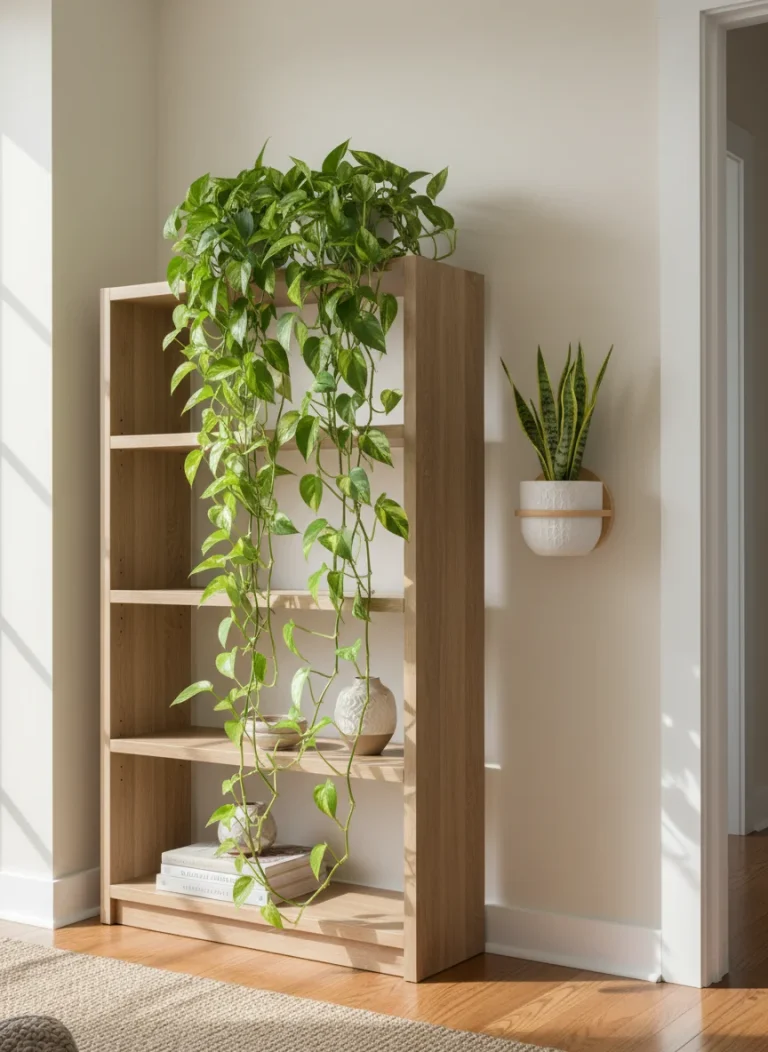
The key here is plant placement strategy: Put trailing plants like Pothos, String of Pearls, or Philodendron on the higher shelves. Let them drape down to the shelves below. This connects the levels visually and creates a cascading green wall effect.
Place upright structural plants like Snake Plants or ZZ Plants on middle shelves for height variation. Use the bottom shelf for your largest container, this acts as a visual anchor and keeps the unit stable.
Cost: $80-150 for quality metal ladder shelf
Suspended Hanging Garden Clusters
Hanging planters often look cheap because of the plastic hooks. Swap those out. Use leather straps, brass chains, or high-quality macramé hangers. Hang them from a sturdy curtain rod mounted specifically for plants (not a regular tension rod, those fail under weight).
By grouping three or five hanging plants at different heights, you create a “floating garden” effect that draws the eye upward. This is one of my favorite vertical gardening ideas for small balconies where floor space is at a premium.
Pro tip: Stagger the heights by 8-12 inches. Uniform heights look static and cheap. Varied heights create visual interest and make the space feel taller.
High-End Trellis Systems for Vertical Gardens
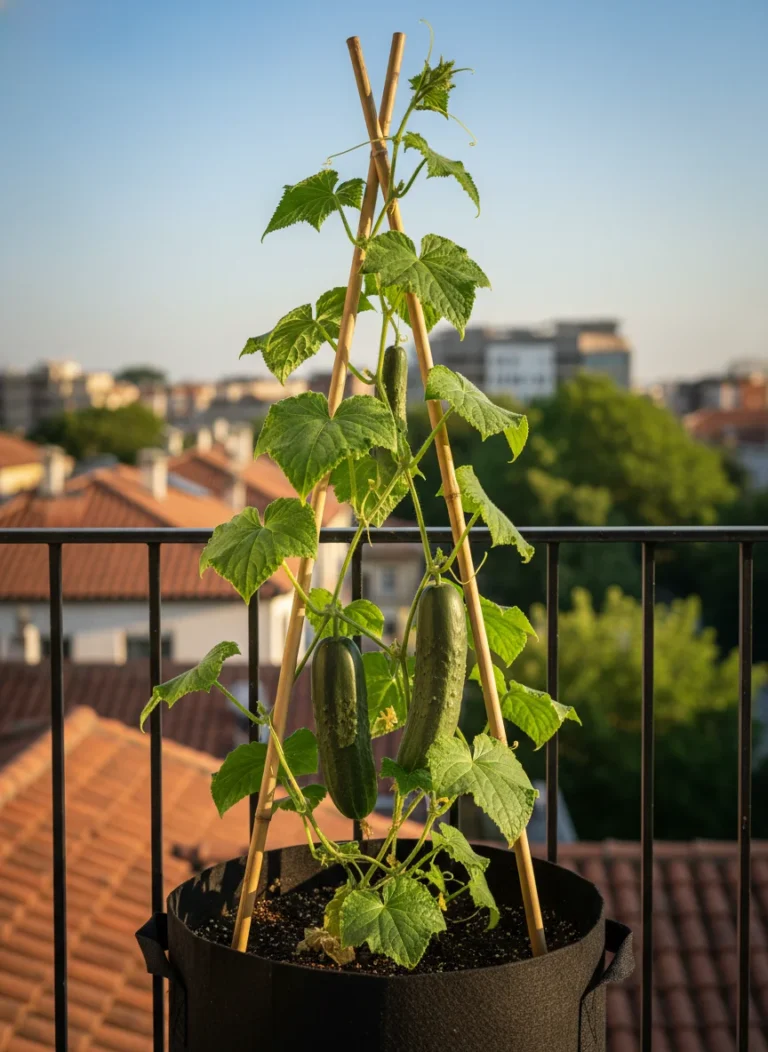
Climbing plants are the most efficient way to get greenery from floor to ceiling in small space vertical gardening. They require very little soil volume relative to their leaf surface area. This is perfect for narrow balconies where you cannot have large planters.
The Invisible Cable Trellis System
This is my favorite technique for a modern aesthetic. You install stainless steel tension cables vertically from the floor to the ceiling using turnbuckles and eye bolts. You plant a vigorous climber like Star Jasmine, Clematis, or Climbing Hydrangea at the base.
The plant winds its way up the thin cable (2-3mm diameter). From a distance, the support structure is invisible. It looks like a green column floating in the air. This is extremely popular in luxury hotel design because it feels magical and airy.
Installation for renters: Use tension rods that press between floor and ceiling (no drilling). These work up to 9 feet and support 15-20 pounds of plant weight.
Best climbing plants for vertical gardens:
- Star Jasmine: Fragrant, evergreen, tolerates partial shade
- Clematis: Dramatic flowers, needs 6+ hours sun
- Pothos (indoor): Fastest growing, thrives in low light
- English Ivy: Dense coverage, very hardy
The Privacy Screen Trellis
For small patios that face neighbors, a structural wooden trellis serves two purposes in vertical gardening. It supports plants and blocks sightlines. To keep this looking expensive, avoid the cheap, diamond-pattern lattice you see at big box stores.
Look for horizontal slat designs with 2-3 inch spacing. Paint it a dark charcoal or black. Dark colors make the green foliage pop and recede visually, making the space feel larger.
Mount the trellis 12 inches away from the wall to allow air circulation behind the plants. This prevents mildew and gives the vines room to weave through.
Best Plants for Vertical Gardens in Small Spaces
Plant selection makes or breaks vertical gardening ideas. You need varieties that stay compact, tolerate container life, and create visual density quickly.
Low-Light Vertical Garden Plants (For North-Facing Walls)
Pothos (Epipremnum aureum): Nearly unkillable. Trails 6-10 feet. Tolerates neglect. This is the workhorse of indoor vertical gardens.
Philodendron (Heartleaf variety): Similar to Pothos but with thicker, darker leaves. Excellent for creating texture in living walls.
Ferns (Boston, Maidenhair, Bird’s Nest): Add feathery texture but need higher humidity. Mist twice weekly or use a pebble tray beneath.
Snake Plant (Sansevieria): Provides vertical structure. Extremely drought tolerant. Heavy, so mount securely.
Bright Light Vertical Garden Plants (For South-Facing Balconies)
String of Pearls (Senecio rowleyanus): Cascading succulent. Dramatic visual impact. Needs excellent drainage.
Burro’s Tail (Sedum morganianum): Another trailing succulent. Grows 2-4 feet long. Tolerates full sun.
Petunia (Cascading varieties): Seasonal color for vertical gardens. Massive flower coverage. Deadhead weekly.
Herbs (Basil, Thyme, Oregano): Functional vertical gardening. Plant in upper pockets where they get maximum light.
Common Vertical Gardening Mistakes (And How to Avoid Them)
I have seen many beautiful installations die within a month. Here is the brutal truth about why vertical gardens fail.
Underestimating Water Management in Vertical Systems
Water flows down. In a vertical garden system, the top plants dry out fast. The bottom plants drown. You must water the top row more frequently and ensure the bottom row has excellent drainage.
The Fix: Install a drip irrigation system on a timer for living walls larger than 6 square feet. For smaller vertical gardening setups, use a pump sprayer to direct water precisely to root zones. Water top pockets until you see slight runoff, then move down.
If you are using a felt pocket system, buy one with a “moisture barrier” back so you do not ruin your drywall. I always mount a thin sheet of polycarbonate behind any wall-mounted vertical garden as insurance.
Ignoring Weight Limits (The Catastrophic Error)
Wet soil is heavy. A 4×4 foot vertical garden can weigh over 100 pounds when saturated. Do not use drywall anchors. You must drill into studs or use masonry anchors rated for 50+ pounds each.
The Fix: Use a stud finder. Mark stud locations. Install mounting hardware directly into studs. If your wall is concrete or brick, use tapcon screws or expanding anchors. If you are unsure, use a floor-standing vertical garden unit instead of wall-mounted systems.
For renters doing vertical gardening in apartments, stick to lightweight systems under 40 pounds total or use freestanding options.
The Light Miscalculation
Just because you have a wall does not mean you have light. Most vertical walls face inward. They often get less light than you think. Unless you are on a sunny south-facing balcony, you will likely need supplemental grow lights.
The Fix: Perform a light audit. Download a light meter app. Measure foot-candles at different times of day. Low light = under 100 fc. Medium = 100-500 fc. Bright = 500+ fc.
I recommend sleek, track-style grow lights that mount to the ceiling. They look like gallery lighting, but keep your plants alive. Position them 12-18 inches from the top of your vertical garden. Run them 12-14 hours daily for foliage plants.
Best grow lights for vertical gardens:
- Soltech Solutions (aesthetic ceiling-mount LEDs)
- Sansi LED track lights (budget-friendly, effective)
- GE BR30 Grow Bulbs (fit standard ceiling fixtures)
Advanced Strategy: The Edible Vertical Garden
You can grow food without your home looking like a farm. The trick is treating vegetables like ornamental plants in your vertical gardening design.
The Gutter Garden System
Paint aluminum gutters matte black. Mount them horizontally on a balcony railing using heavy-duty brackets. Plant compact lettuces, strawberries, and spinach. The dark background makes the bright greens and reds pop.
This is one of the most space-efficient vertical gardening ideas for small balconies. Each 4-foot gutter section holds 6-8 lettuce plants or 4 strawberry crowns.
Cost: $15 per 10-foot gutter section, $8-12 for mounting brackets
The Herb Sconce Wall
Treat herbs like wall sconces. Use individual, high-end wall planters for basil, mint, and thyme right next to your kitchen window. It is functional decor that doubles as a vertical garden.
Mount ceramic wall pockets in a grid pattern (3 across, 2 down). Plant culinary herbs in the top row where they get maximum light. Use trailing varieties like oregano or thyme in the bottom row to create cascading greenery.
This vertical gardening idea costs under $100 and provides fresh herbs year-round.
Save This Blueprint
Vertical Gardening FAQ
Q: How do you make a vertical garden in a small space?
A: Start with a wall-mounted grid system or felt pocket planter. Choose 3 plant varieties that thrive in your light conditions. Mount the system to wall studs or use freestanding ladder shelves if renting. Plant densely (4-6 plants per square foot) and water top sections more frequently than bottom. Total cost for a 4×4 foot DIY vertical garden ranges from $150-300.
Q: Do vertical gardens cause mold on indoor walls?
A: They can if you skip the moisture barrier. You must use a system with plastic or waterproof backing. Never let soil or felt touch drywall directly. I always recommend mounting a thin sheet of acrylic or polycarbonate behind vertical garden installations. Use proper ventilation and avoid overwatering bottom pockets.
Q: How much does a vertical garden cost?
A: DIY vertical gardening systems cost $150-400 for a 4×4 foot section including plants. Felt pocket systems run $120-180. Grid and hook systems cost $80-150. Plants add $50-150 depending on variety and size. Professional living wall installations start at $150-200 per square foot installed.
Q: How do you water a living wall without making a mess on the floor?
A: Use a pump sprayer for small vertical gardens under 16 square feet. It allows you to direct water precisely to roots without splashing. For larger installations, a drip irrigation system on a timer is superior, but requires a nearby water source and careful calibration to prevent overflow. Always use a collection tray or moisture barrier.
Q: What are the best plants for a low-light vertical garden?
A: Pothos, Philodendrons, and Ferns are the trifecta of low-light vertical gardening. Pothos is nearly unkillable and trails beautifully. Ferns add great texture but need more humidity (60%+). Snake plants work well for height but are heavy, so ensure your pockets are secure. Avoid succulents and flowering plants in low light, they will stretch and decline.
Q: Is a vertical garden worth the effort for renters?
A: Absolutely, but choose freestanding vertical gardening systems. Tension rod trellis systems, leaning ladder shelves, and wire grid panels give you the luxury look without deposit risk. They are easy to disassemble and move to your next apartment. Avoid permanent installations that require drilling into studs.
Q: Do vertical gardens need a lot of maintenance?
A: Yes, more than traditional container gardens. Vertical garden systems dry out 40-60% faster due to increased air exposure. Expect to water 2-3 times weekly in summer, once weekly in winter. Budget 15-30 minutes weekly for watering, pruning, and fertilizing. Use slow-release fertilizer pellets every 3 months to reduce feeding frequency.
Q: Can you grow vegetables in a vertical garden?
A: Yes, but choose compact varieties. Lettuce, spinach, strawberries, herbs, cherry tomatoes, and radishes work well in vertical gardening systems. Avoid large vegetables like full-size tomatoes, squash, or melons, they require too much soil volume and support. Focus on leafy greens and herbs for the best results in small-space vertical gardens.
Relevant Reads
Composting for Beginners: The Ultimate No-Fail Guide
Stop Ruining Your Harvest: The Simple Science of Storing Produce
The Mosquito Shield: Plants That Repel Mosquitoes
The Final Word on Vertical Gardening for Small Spaces
Creating a vertical garden in a small space is not about stuffing as many plants as possible onto a wall. It is about curation. The difference between a messy balcony and a high-end oasis is restraint. Pick one system. Pick three plants. Keep your materials consistent.
Here is the unsexy truth: Vertical gardens are high maintenance. They dry out faster than ground plants. They need pruning. They need attention. But if you treat them like a living pet rather than a piece of furniture, the payoff is huge. You get a lush, breathing sanctuary in the middle of the city.
Start with one small grid or a single row of felt pockets. Master the watering schedule. Then expand. Your walls are waiting.