What Size Grow Bag for Tomatoes? I Got It Wrong the First Time. Here Is the Answer.
This post contains affiliate links. If you buy through them, I earn a small commission at no extra cost to you. I only recommend products I would use myself.
My first grow bag tomatoes were a disaster.
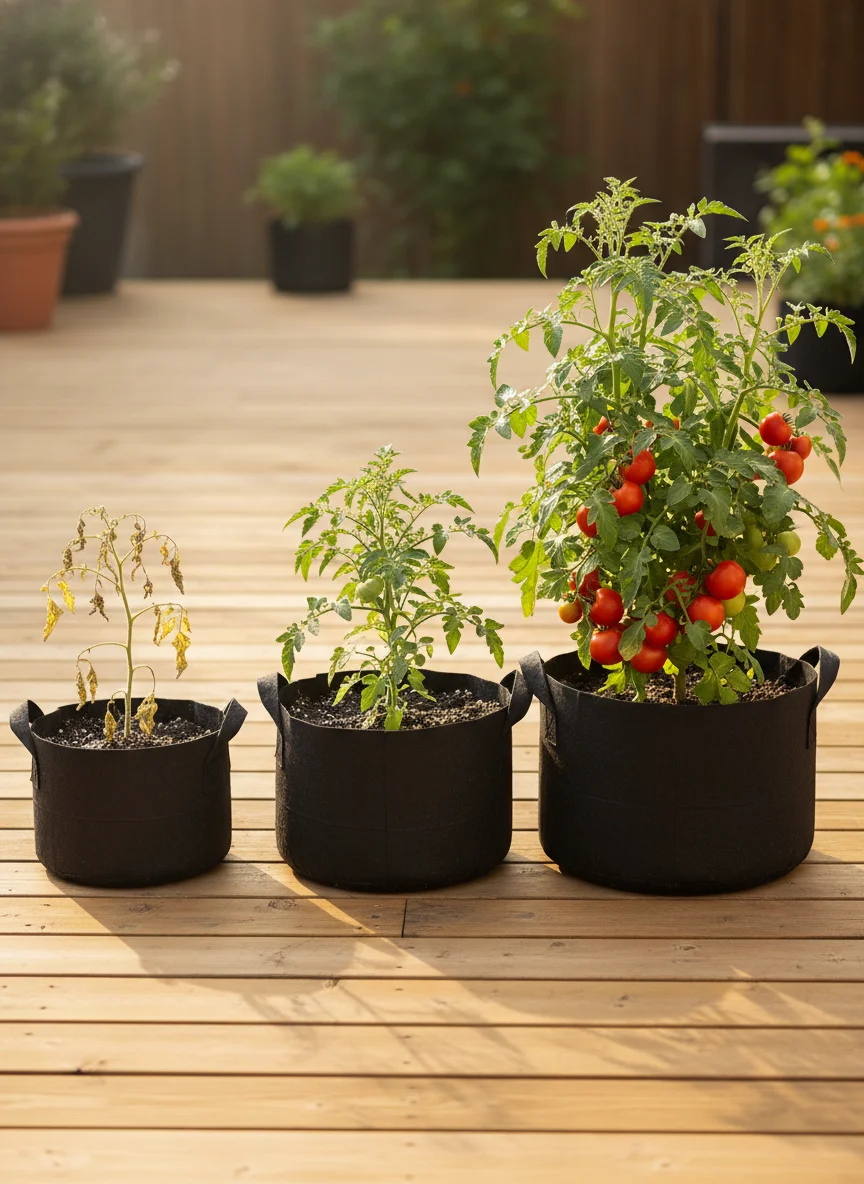
Not because of pests. Not because of too little sun. Not because I forgot to water. I killed them because I bought the wrong size bag. I grabbed two 5-gallon bags from the garden center, planted two perfectly healthy tomato seedlings, and watched both plants slowly struggle through the season producing almost nothing.
The plants looked fine for the first few weeks. Then they stopped growing. The leaves started curling. The fruit that did appear was small and sparse. I blamed the variety. I blamed the weather. I blamed myself for being a bad gardener.
It took me until the following season to understand what actually went wrong. The roots had nowhere to go. A tomato plant in a bag that is too small is like a person trying to run a marathon in shoes two sizes too small. Everything suffers.
This guide covers exactly what size grow bag you need for every type of tomato, why size matters more than most people realize, and the one rule that will save you from making the same mistake I did.
Why Grow Bag Size Matters More Than You Think
Tomatoes are deep rooting, heavy feeding plants. They are not like herbs or lettuce that can get by in a small container. A tomato plant needs significant soil volume to do three things well.
First, to develop a root system strong enough to support a plant that may grow several feet tall and carry pounds of fruit. Second, to hold enough water to stay consistently moist between waterings because tomatoes that dry out and rewet repeatedly crack their fruit and develop blossom end rot. Third, to hold enough nutrients to feed the plant through a long growing season without constant intervention.
A bag that is too small fails on all three counts. The roots hit the walls of the bag early, growth slows, stress sets in, and yield drops significantly. You can compensate with more frequent watering and more fertilizer, but you are fighting against the container the entire time instead of letting the plant thrive.
The good news is that choosing the right size is simple once you understand the two main types of tomato plants.
Determinate vs Indeterminate: The Decision That Changes Everything
Before you choose a bag size, you need to know which type of tomato you are growing. This single distinction determines whether you need a 10-gallon bag or a 20-gallon bag.
Determinate tomatoes grow to a fixed height, usually two to four feet, produce all their fruit in a concentrated period of four to six weeks, and then stop. They are compact, bushy plants that are naturally suited to container growing. Popular determinate varieties include Roma, Celebrity, and Rutgers. Most patio and dwarf varieties are also determinate.
Indeterminate tomatoes keep growing until the season ends or frost kills them. They produce fruit continuously rather than all at once. They can reach six feet or more in height and require staking or caging. Most heirloom varieties are indeterminate. Beefsteak, Cherokee Purple, Sun Gold, and most cherry tomatoes fall into this category.
The practical difference for grow bag sizing is significant.
Grow Bag Size Guide by Tomato Type
Dwarf and Patio Varieties
Recommended size: 5 to 7 gallons
Small patio tomatoes bred specifically for containers, like Tumbling Tom, Tiny Tim, or Patio Princess, can grow successfully in 5 to 7-gallon bags. These varieties were developed with compact root systems and limited growth habits that match smaller containers.
Even here, bigger is better if you have the space. A 7-gallon bag will always outperform a 5-gallon bag for the same variety because the extra soil volume holds more moisture and nutrients.
Do not put standard tomato varieties in 5-gallon bags. It is one of the most common mistakes container tomato growers make and it causes most of the disappointment people experience growing tomatoes in bags for the first time.
Determinate Tomatoes
Recommended size: 10 to 15 gallons
Most determinate varieties including Roma, Celebrity, and compact heirlooms do best in a 10-gallon bag as a minimum. A 15-gallon bag is better if you have the space for it.
At 10 gallons you get a plant that produces well with regular watering and feeding. At 15 gallons you get a plant that is more forgiving of missed waterings and needs less frequent fertilizing because the larger soil volume buffers both moisture and nutrients more effectively.
The 10-gallon size is the sweet spot for most balcony and patio gardeners growing determinate tomatoes. It is manageable in weight when filled, easy to move around to chase sunlight, and large enough to support a full season of production.
Indeterminate Tomatoes
Recommended size: 15 to 20 gallons
Indeterminate tomatoes need significantly more root space than most people expect. A 15-gallon bag is the minimum you should consider for any standard indeterminate variety. A 20-gallon bag is the recommended size for reliable results.
This sounds large. It is large. But indeterminate tomato plants in undersized containers are one of the most consistently disappointing results in container gardening. The plant grows tall, looks healthy from a distance, and then produces a fraction of the fruit it would in an appropriately sized container.
If you are growing large vining varieties like Beefsteak, Brandywine, or Big Boy, go with 20 gallons. If you are growing these on a rooftop or balcony where weight is a concern, check your load limits before filling a 20-gallon bag with wet soil. A filled 20-gallon bag is heavy.
Cherry Tomatoes
Recommended size: 10 to 15 gallons
Cherry tomatoes confuse a lot of gardeners because the fruit is small. But most cherry tomato varieties are indeterminate, meaning the plant itself grows large and produces continuously all season. Sun Gold, Sweet Million, and Black Cherry are all indeterminate.
Do not put cherry tomatoes in small bags because the fruit is small. The plant size determines the container requirement, not the fruit size.
A 10-gallon bag will grow cherry tomatoes that produce adequately. A 15-gallon bag will grow cherry tomatoes that produce abundantly. The difference in yield between the two sizes is noticeable by midsummer.
The Complete Grow Bag Size Reference
| Tomato Type | Minimum Size | Recommended Size |
|---|---|---|
| Dwarf and patio varieties | 5 gallons | 7 gallons |
| Determinate varieties | 10 gallons | 15 gallons |
| Cherry tomatoes | 10 gallons | 15 gallons |
| Indeterminate varieties | 15 gallons | 20 gallons |
| Large heirloom varieties | 20 gallons | 25 gallons |
What Happens When You Go Too Small
Going too small does not just reduce yield. It creates a cascade of problems that most gardeners blame on other factors.
Root bound plants stop taking up water and nutrients efficiently even when both are present in the soil. This leads to yellowing leaves that look like a nutrient deficiency when the real problem is that the roots cannot function properly in the compressed space.
Small bags dry out dramatically faster than larger ones, especially in hot summer weather. A 5-gallon bag in full sun on a hot day can go from moist to bone dry in a few hours. This means you are watering once or twice a day during summer peaks, and any missed watering results in stress that shows up as blossom drop or fruit cracking.
Temperature extremes are amplified in small containers. The soil in a small bag heats up faster in sun and cools faster at night. Tomato roots prefer consistent temperatures, and the swings in a small container stress the plant continuously.
The honest lesson from my first failed season was that I was not a bad gardener. I had just put a plant with large needs into a container that made those needs impossible to meet.
How Many Tomato Plants Per Grow Bag
One plant per bag is the answer for almost every situation.
Tomatoes are competitive plants. Two plants sharing one bag compete for the same water, nutrients, and root space. You end up with two half-fed plants instead of one well-fed plant. The total yield from two plants in one bag is usually lower than one plant in its own correctly sized bag.
The only exception is dwarf or micro varieties in a large 25-gallon bag, where some gardeners successfully grow two compact plants with careful management. But for standard growing, one plant per bag is the rule.
Grow Bag Material: Fabric vs Plastic
Always choose fabric grow bags over plastic for tomatoes.
Fabric bags allow air to reach the roots. This triggers a process called air pruning, where roots that reach the edge of the bag are naturally stopped and branch back inward rather than circling the container as they do in plastic pots. Circling roots are less efficient at taking up water and nutrients. Branching roots are more efficient.
Fabric also provides better drainage and prevents the waterlogging that plastic bags are prone to in heavy rain or after overly generous watering.
The one trade-off with fabric is faster drying. Fabric bags dry out faster than plastic, which means more frequent watering during hot periods. This is manageable and worth the improved root health.
Grow Bags Worth Buying
When shopping for grow bags, look for bags with reinforced handles that can hold the weight of a fully filled large bag without tearing. Handles that are stitched through the bag rather than attached to the outside rim will last multiple seasons.
Look for bags described as non-woven fabric. This material is breathable, durable, and BPA-free, which matters when growing food.
For determinate tomatoes, a quality 10 or 15-gallon fabric grow bag with handles works perfectly and is available on Amazon at very reasonable prices. For indeterminate varieties, invest in a 20-gallon bag with strong stitched handles.
10-gallon fabric grow bags with handles, 15-gallon fabric grow bags with handles, 20-gallon fabric grow bags with handles
Three Things That Make a Difference Beyond Size
Choosing the right size is the most important decision. These three things determine what happens after.
Use potting mix, not garden soil. Garden soil compacts in containers and suffocates roots. A quality potting mix stays loose, drains well, and holds the right amount of moisture. Look for a vegetable specific potting mix or add perlite to a standard mix to improve drainage.
Feed regularly. A tomato plant in a container cannot reach into the surrounding soil for nutrients the way a garden-planted tomato can. Everything the plant needs must come from you. A slow release granular fertilizer mixed into the soil at planting plus a liquid feed every two weeks keeps production strong through the season.
Support early. Put your stake or cage in place when you plant the seedling, not when the plant is already two feet tall. Trying to add support to a large established plant without disturbing the roots is difficult and sometimes causes damage. Setting the support at planting takes 30 seconds and saves considerable frustration later.
The Rule I Wish Someone Had Told Me
When in doubt, go bigger.
A tomato plant never suffers from having too much root space. It always suffers from having too little. The cost difference between a 10-gallon and a 15-gallon bag is small. The difference in yield and how much attention the plant needs from you is significant.
If you are standing in the garden center or scrolling through Amazon and you are unsure whether to go with the 10-gallon or the 15-gallon, buy the 15-gallon. You will not regret it.
My failed first season cost me more in wasted seedlings, wasted soil, wasted water, and wasted time than the extra few dollars a larger bag would have cost. Do not make the same mistake.
Frequently Asked Questions
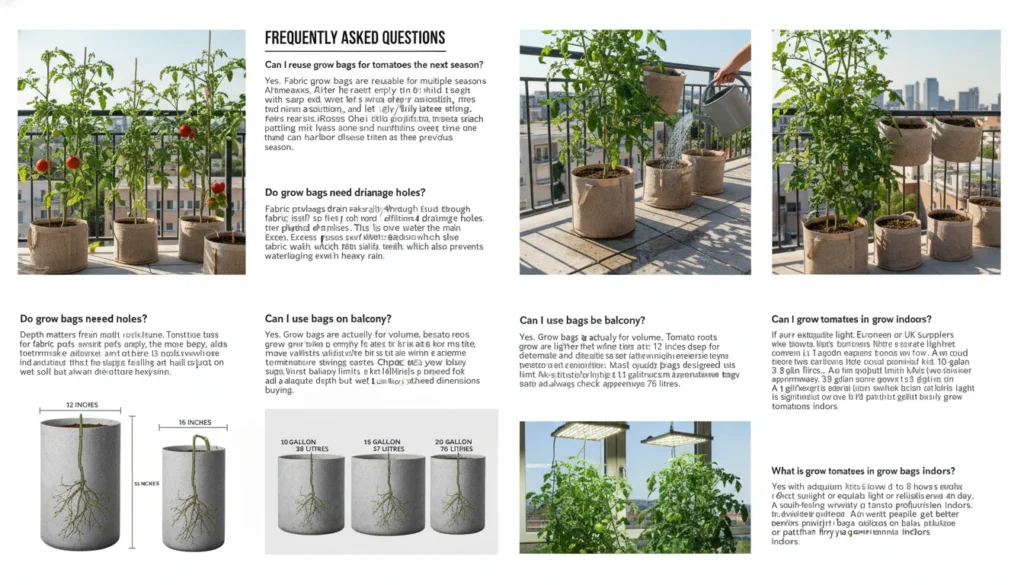
Can I reuse grow bags for tomatoes the next season? Yes. Fabric grow bags are reusable for multiple seasons. After harvest empty the bag completely, wash it with a mild soap and water solution, rinse thoroughly, and let it dry fully before storing. Replace the potting mix each season rather than reusing it. Old potting mix loses structure and nutrients over time and can harbour disease from the previous season.
Do grow bags need drainage holes? Fabric grow bags drain naturally through the fabric itself so they do not need additional drainage holes. This is one of the main advantages over plastic containers. Excess water passes through the fabric walls which also prevents waterlogging even in heavy rain.
Can I use grow bags on a balcony? Yes. Grow bags are actually ideal for balconies because they are lighter than ceramic or terracotta pots when empty, easy to move around to chase sunlight, and the fabric sides allow airflow which prevents the extreme temperature swings that solid plastic pots on hot balconies create. Check your balcony weight limits before filling large 20-gallon bags with wet soil as these become significantly heavy.
How deep should a grow bag be for tomatoes? Depth matters as much as volume. Tomato roots grow down as much as they grow outward. Look for grow bags that are at least 12 inches deep for determinate varieties and 16 inches or more for indeterminate varieties. Most quality grow bags designed for vegetables are built with adequate depth but always check the dimensions before buying.
What is the difference between gallons and litres for grow bags? If you are shopping from European or UK suppliers who list sizes in litres, the rough conversion is 1 gallon equals approximately 3.8 litres. A 10-gallon bag is approximately 38 litres. A 15-gallon bag is approximately 57 litres. A 20-gallon bag is approximately 76 litres.
Can I grow tomatoes in grow bags indoors? Yes with adequate light. Tomatoes need a minimum of 6 to 8 hours of direct sunlight or equivalent grow light coverage per day. A south-facing window rarely provides enough light for reliable tomato production indoors. A dedicated grow light setup can work but the investment is significant. Most people get better results growing in bags outdoors on a balcony or patio than trying to grow tomatoes indoors.