15 Garden Drainage Ideas That Actually Fix Waterlogged Soil
15 Garden Drainage Ideas That Actually Fix Waterlogged Soil
Few things are as frustrating for a gardener as looking out at a waterlogged garden. I’ve been there more times than I care to admit, seeing precious plants struggle and sometimes even die because their roots are suffocating in soggy soil. It’s not just an aesthetic problem; poor drainage can lead to root rot, nutrient leaching, and an open invitation for pests and diseases.
Through years of trial and error in my own garden, I’ve learned that understanding why your garden holds water is the first step. Once you know the cause, you can implement effective garden drainage ideas to transform your waterlogged patch into a thriving oasis. I’m going to share the practical, real-world solutions that have worked for me.
What Causes Poor Garden Drainage?
Before diving into solutions, let’s quickly touch on the common culprits behind waterlogged soil. Often, it’s a combination of these factors:
Soil Composition
Heavy clay soil is the most common reason. Clay particles are tiny and pack together tightly, leaving little room for water to percolate through. This acts like a sponge, holding onto moisture.
Soil Compaction
Heavy foot traffic, machinery, or even rain beating down can compress soil, especially clay or loamy soils. This reduces pore space, making it difficult for water and air to penetrate. I’ve seen this happen in high-traffic areas of my own garden.
Topography and Slope
A flat garden or one that slopes towards your house or a low-lying area will naturally collect water. Gravity is a powerful force, and water always seeks the lowest point. Even a subtle depression can become a persistent puddle.
Hardpan Layer
Sometimes, a dense layer of compacted soil or rock, known as hardpan, can sit below the topsoil. This impermeable layer prevents water from draining downwards, causing it to back up and saturate the soil above it. You might not see it, but its effects are unmistakable.
15 Garden Drainage Ideas That Actually Fix Waterlogged Soil
Ready to tackle that standing water? Here are my top garden drainage ideas, ranging from simple fixes to more involved projects.
1. Amend Soil with Organic Matter
This is often the first thing I recommend, and it’s transformative for clay soils. Incorporating generous amounts of compost, well-rotted manure, or leaf mold breaks up heavy clay, improving its structure. It creates larger air pockets, allowing water to drain more freely while still retaining enough moisture for plants.
Aim for at least a 3-4 inch layer of organic matter worked into the top 6-12 inches of soil. This isn’t a quick fix, but a long-term investment in soil health. It benefits everything you try to grow.
2. Install a French Drain
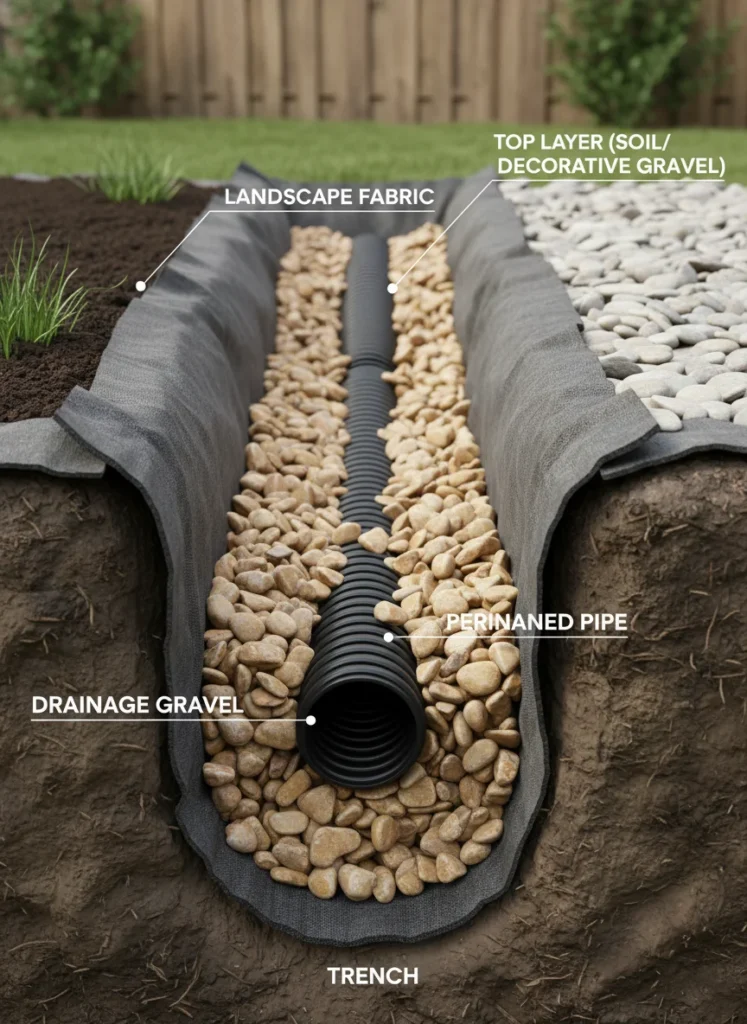
If you have a persistent wet spot or water running into your home, a French drain is a classic and highly effective solution. It’s essentially a trench filled with gravel and a perforated pipe that redirects water away from problem areas.
To install one, dig a trench with a slight slope, line it with landscape fabric to prevent soil from clogging the pipe, lay the perforated pipe, cover it with gravel, and then fold the fabric over before backfilling with soil or more gravel. This system collects subsurface water and channels it to a more suitable discharge point.
3. Create Gravel Trenches or Swales
For less severe problems or as a decorative element, gravel trenches or swales can manage surface runoff. A swale is a shallow, wide, vegetated ditch designed to slow and absorb stormwater runoff. A simple gravel trench without a pipe can still help direct water away from a foundation or a particular planting bed.
These solutions are excellent for creating permeable pathways or borders that allow water to infiltrate slowly into the surrounding soil. They are more visually appealing than a simple ditch and require less excavation than a full French drain.
4. Build Raised Garden Beds
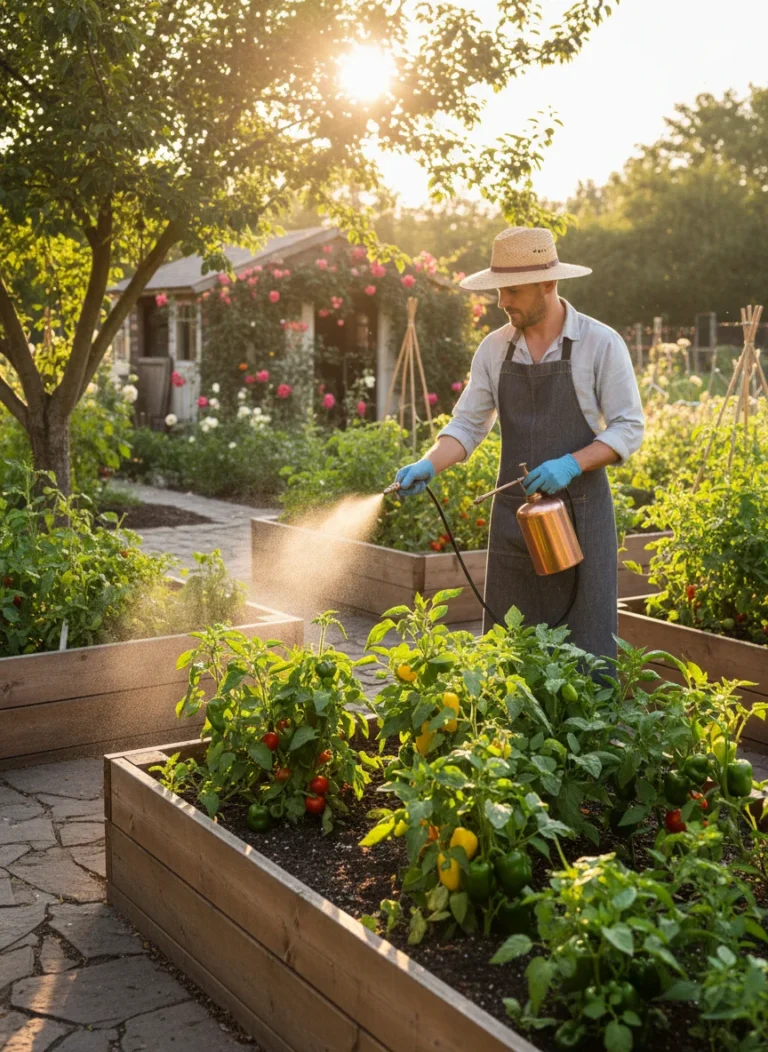
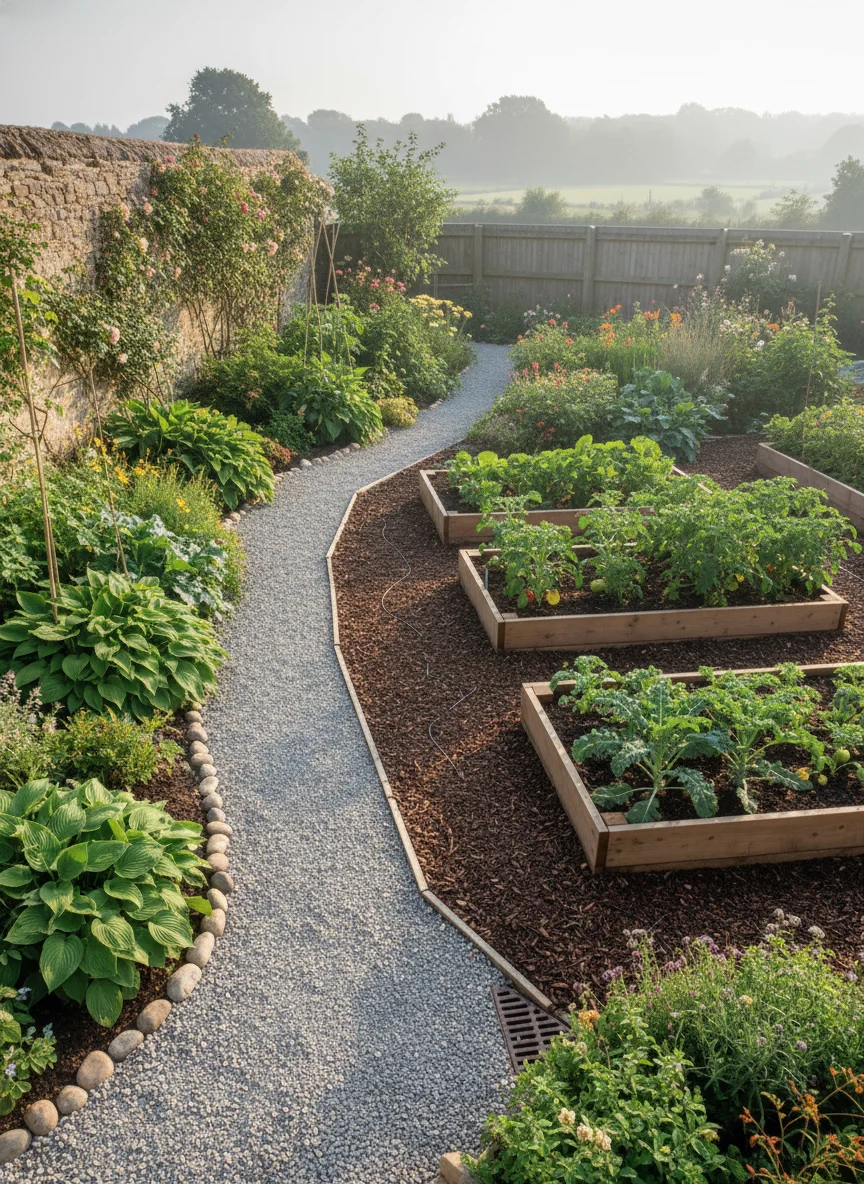
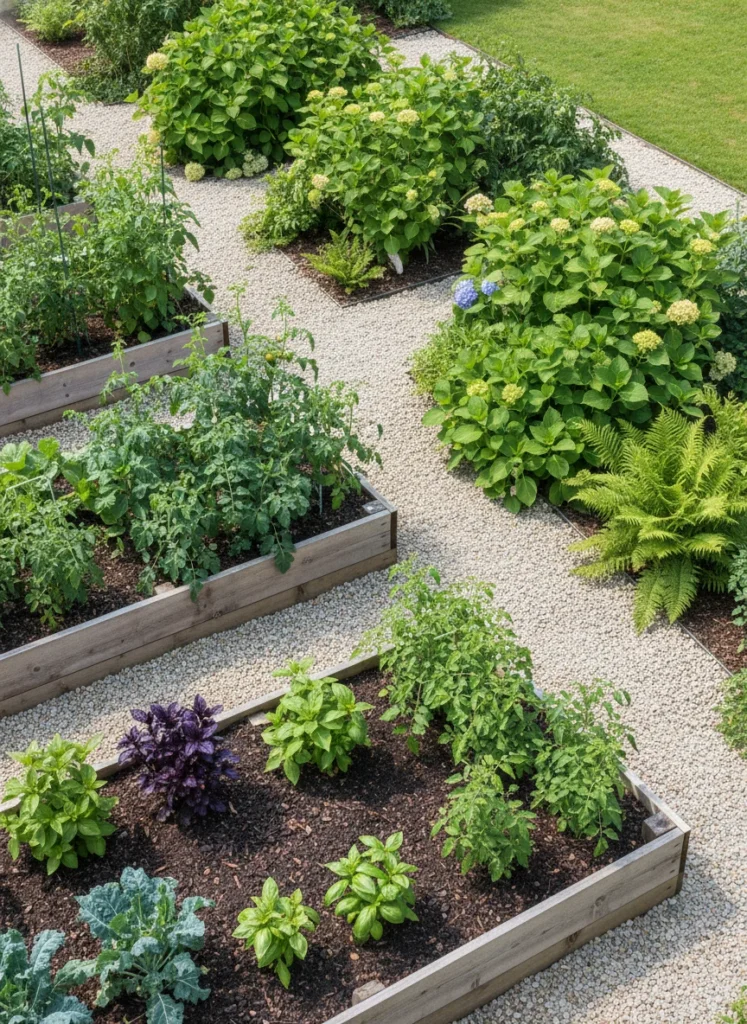
For areas with chronically poor drainage or very heavy clay, raised beds are a game-changer. By building beds above the existing grade and filling them with high-quality, well-draining soil, you completely bypass your native soil problems. I’ve found this to be incredibly effective for growing vegetables.
You gain control over your soil composition, which is vital for plant health. Plus, they warm up faster in spring and are easier on your back. For tips on what soil to use, check out my guide on Best Soil for Container Vegetables: What I Use and Why. You can also successfully grow plants like peppers in containers or raised beds.
5. Improve Surface Grading and Sloping
This is fundamental. If your garden slopes towards your house or creates low spots where water collects, regrading can direct water away. This involves altering the land’s contours to ensure a gentle slope away from structures and planting areas.
Even a subtle 1-2% slope is often enough to prevent pooling. This might require professional help for significant changes, but for smaller areas, you can often achieve it with a shovel and a rake.
6. Dig a Dry Creek Bed or Rain Garden
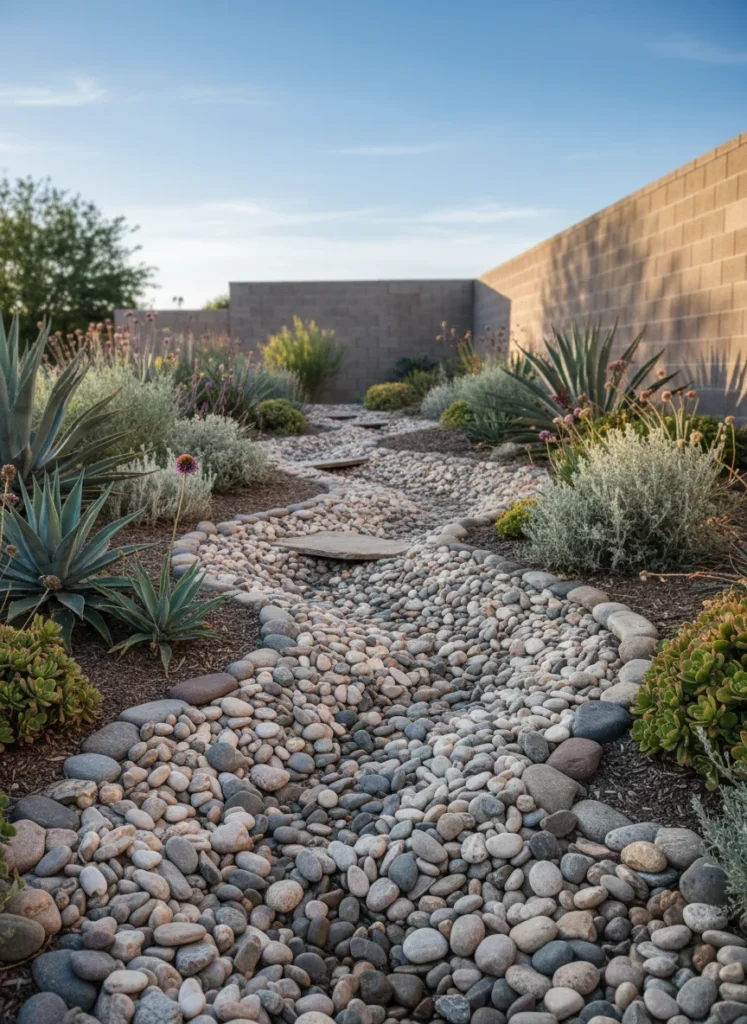
These are beautiful and functional solutions. A dry creek bed is a trench lined with landscape fabric and filled with various sizes of river rock and stones, mimicking a natural stream. It’s designed to carry water during heavy rainfall but remains dry otherwise.
A rain garden is a shallow depression planted with water-loving native plants. It’s designed to temporarily hold and absorb stormwater runoff, allowing it to slowly filter into the ground rather than running off into storm drains. Both are excellent for environmental benefit and aesthetics.
7. Incorporate Permeable Paving
If you have patios, pathways, or driveways contributing to runoff, consider permeable paving materials. Instead of solid concrete or asphalt, options like permeable pavers, gravel, or decomposed granite allow water to seep through their surfaces or gaps into a base layer below.
This reduces the amount of runoff from hard surfaces, helping to manage water closer to where it falls. It’s an investment, but one that can significantly reduce drainage issues in urban gardens.
8. Install a Sump Pump (for Extreme Cases)
For very severe, localized water problems, especially in basements or extremely low-lying areas of the garden that consistently flood, a sump pump might be the only viable option. It collects water in a basin and then pumps it away through a discharge pipe.
This is usually a last resort for chronic, deep-seated issues that other methods can’t fully resolve. It requires professional installation and electricity.
9. Use Downspout Extensions
A surprisingly simple fix, but often overlooked! If your downspouts discharge directly onto your garden or close to your foundation, extend them. Diverting this concentrated flow of water further away, or into a rain barrel, prevents localized saturation and erosion.
You can find inexpensive downspout extensions at any hardware store. They’re a quick win for preventing a lot of localized soggy spots.
10. Plant Water-Tolerant Species
Sometimes, embracing the wetness is the smartest approach. If you have areas that remain consistently moist despite your best efforts, consider planting species that thrive in boggy conditions. This might include certain willows, dogwoods, ferns, sedges, irises, or marsh marigolds.
Choosing the right plant for the right place can turn a problem area into a beautiful feature. Research native plants for your region that naturally tolerate wet feet.
11. Aerate Your Lawn
Compacted lawns often suffer from poor drainage, leading to moss and patchy growth. Aeration involves removing small plugs of soil, which creates channels for water, air, and nutrients to penetrate deeper into the soil.
You can rent an aerator or hire a professional service. Combine aeration with topdressing (spreading a thin layer of compost) for even better results. I usually aerate my lawn in the fall or spring.
12. Add Catch Basins and Grates
For specific low spots in paved areas or near foundations, a catch basin can be very effective. It’s a box with a grate on top that collects surface water and then channels it into a drainage pipe system.
These are often connected to a main drainage line, like a French drain or a storm sewer, to carry the water away. They prevent standing water in high-traffic or critical areas.
13. Subsurface Drains (Perforated Pipe Systems)
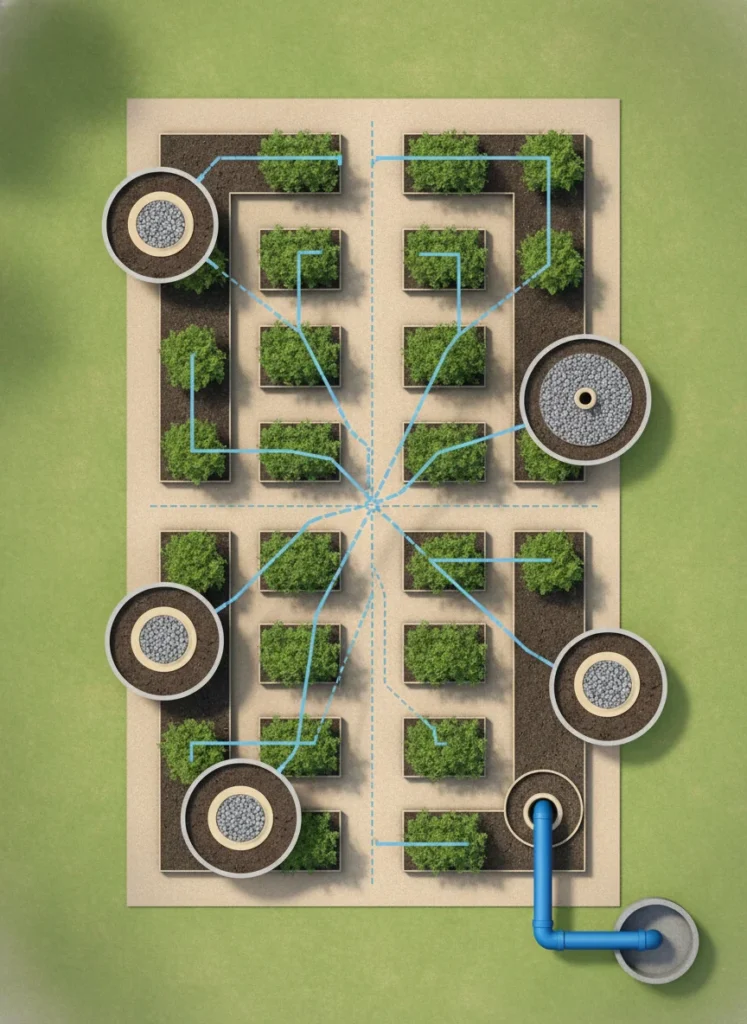
Similar to a French drain but often more extensive, a system of subsurface drains uses perforated pipes buried throughout the garden. These pipes collect excess groundwater and channel it to an outlet. They can be laid in a herringbone pattern or parallel lines, depending on the area’s needs.
This is a more involved project, often requiring professional design, but it offers comprehensive drainage for large, chronically wet gardens. The pipes are usually covered with gravel and then soil, making them invisible once installed.
14. Consider a Bog Garden
If you have an area that simply refuses to drain, instead of fighting it, you could lean into it and create a bog garden. This is a specialized type of garden designed for plants that love consistently wet, acidic soil.
You might line the area with pond liner, puncture it in a few places for very slow drainage, and fill it with a mixture of sand, peat, and compost. It’s a commitment to a specific aesthetic, but it can be stunning with the right plants.
15. Deep Tilling (with Caution)
For compacted soil without a hardpan layer, deep tilling can break up compaction and improve drainage. This involves turning the soil to a depth of 12-18 inches using a rototiller or broadfork.
However, use caution: excessive tilling can destroy soil structure and disrupt beneficial microorganisms, leading to more compaction over time if done incorrectly or too frequently. It’s best used as a one-time intervention to break up a seriously compacted layer, followed by consistent organic matter amendment.
Conclusion
Dealing with waterlogged soil can feel overwhelming, but I promise you, there’s a solution. From simple organic amendments to more elaborate French drains and beautifully designed rain gardens, these garden drainage ideas offer a spectrum of approaches to suit any problem or budget. The key is to assess your specific situation, understand the cause of the poor drainage, and then choose the method that best fits your garden’s needs. A well-drained garden is a happy garden, and with a little effort, yours can be too.
FAQ
What are the first signs of poor garden drainage?
The most obvious sign is standing water after rain that takes a long time to soak in. Other clues include plants with yellowing leaves (a sign of root suffocation), stunted growth, a soggy or squishy feel to the soil underfoot, and a strong, unpleasant odor from anaerobic conditions.
Can clay soil ever drain well?
Yes, absolutely! While clay soil is inherently slow-draining, its structure can be significantly improved by consistently incorporating large amounts of organic matter like compost. This creates larger aggregates in the soil, allowing water and air to move through more easily. It takes time, but it’s very effective.
How do I know if I have a hardpan layer?
You can dig a test hole about 2-3 feet deep. If you hit a very dense, impermeable layer that’s difficult to dig through, and water collects above it after a rain, you likely have a hardpan. It’s usually a distinct, compact layer below the topsoil.
What’s the cheapest way to improve drainage?
The most cost-effective solution is often amending your soil with organic matter, especially if you have access to free compost or leaves. Improving surface grading with a shovel and rake for minor slopes, or extending downspouts, are also very low-cost and can yield significant results for localized issues.