27 Front Yard Landscaping Ideas That Look Expensive But Are Not
Spring is the best time to rethink your front yard. Not because of any rule, but because everything is waking up and even the smallest change looks dramatic against fresh growth. A few stones placed right. A new border. A low-maintenance planting that fills in by June and asks for nothing in return.
This list is for people who want a yard that looks intentional without hiring a landscaper or spending a fortune. Every idea here is achievable on a real budget, and several of them work just as well in small front yards as they do in large ones.
No filler. Just 27 ideas worth actually doing.
1. A River Rock Path to the Front Door
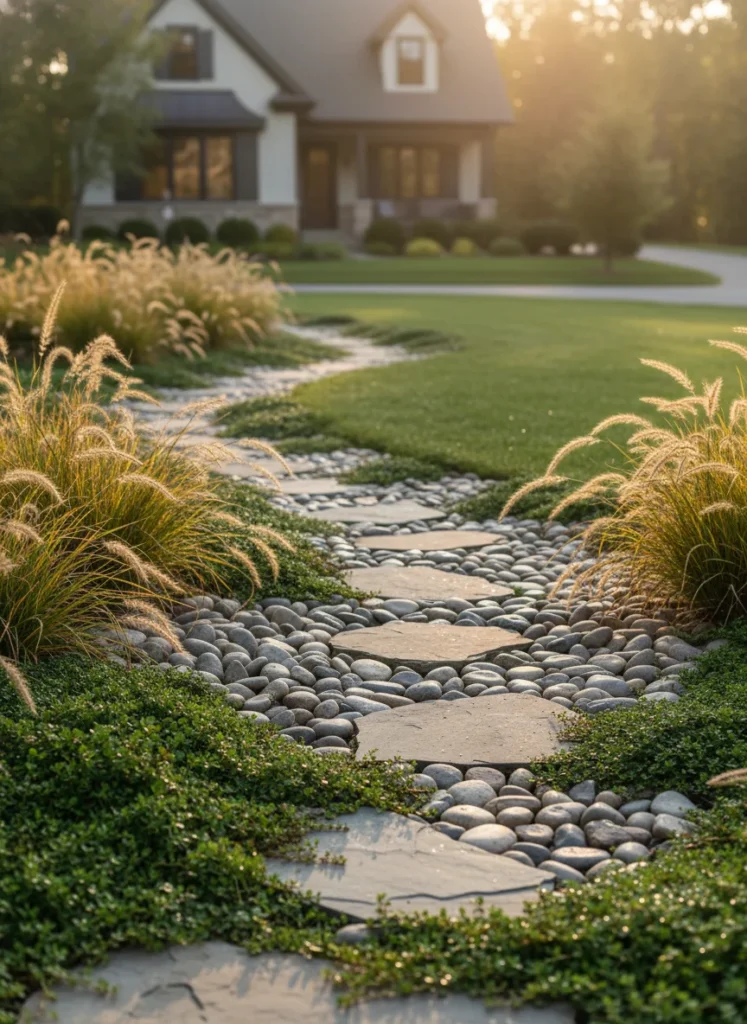
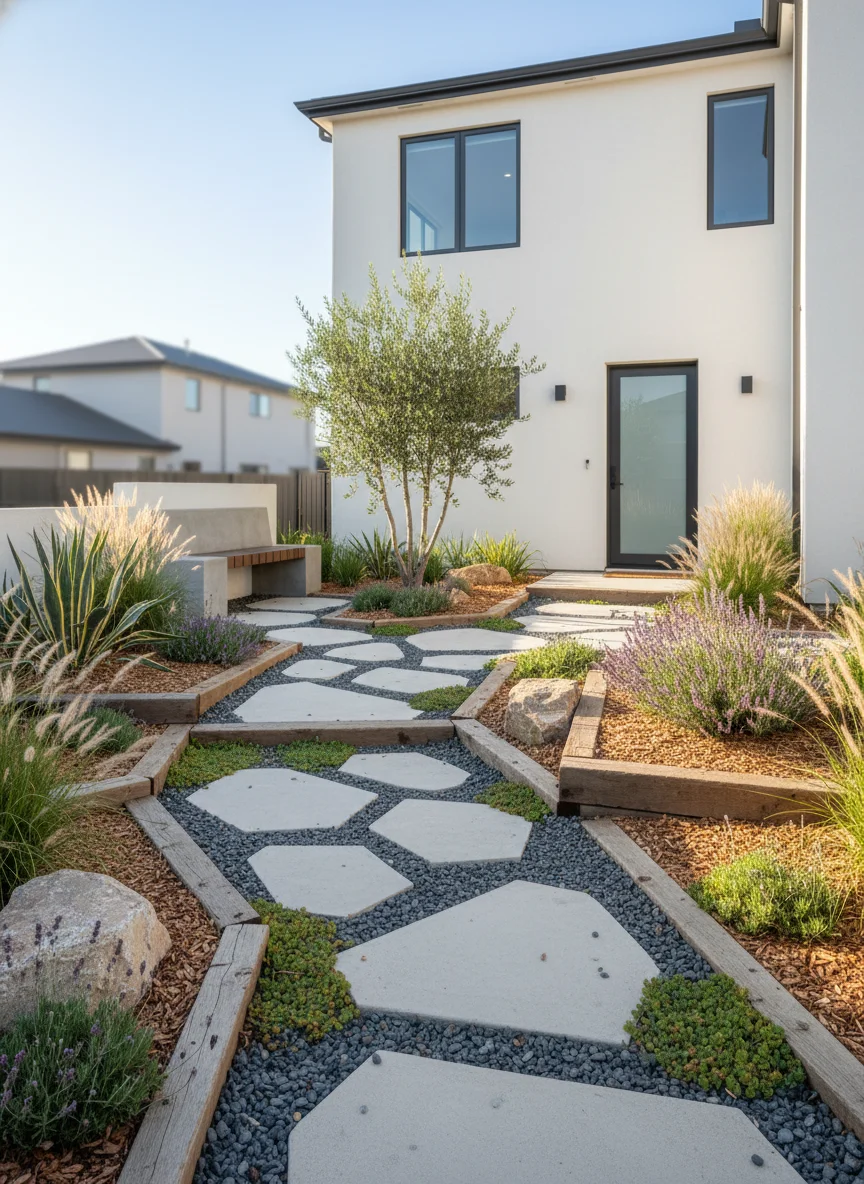
River rocks are one of the most budget-friendly materials you can use in a front yard. A simple winding path from the sidewalk to your front door using mixed river rocks and a few flat stepping stones transforms a plain lawn into something that looks deliberately designed.
The key is the border. Edge each side of the path with something low, either ground cover plants, compact ornamental grasses, or a clean line of garden edging. Without a defined border, a rock path looks scattered. With one, it looks planned.
River rocks also solve a drainage problem if your front yard holds water after rain. Replacing grass in those low spots with a rock bed improves garden drainage naturally while adding a design element at the same time.
2. Low-Maintenance Rock Garden With Native Groundcover
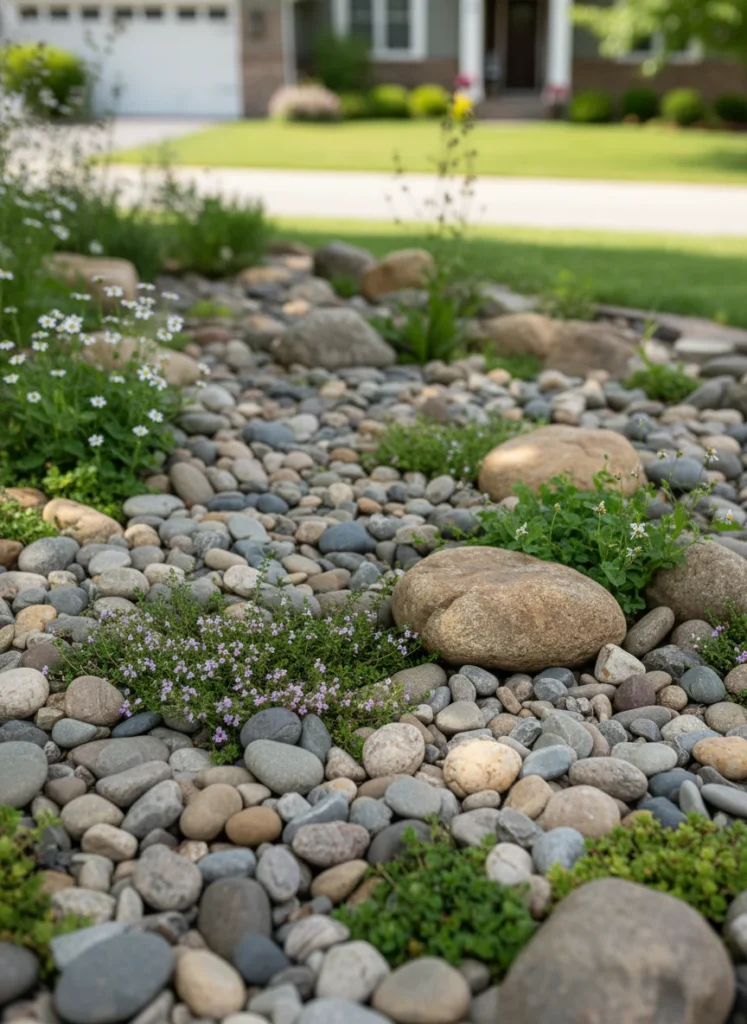
A rock garden in the front yard is the closest thing gardening has to a set-it-and-forget-it solution. Arrange rocks of varying sizes across a prepared bed, tuck in drought-tolerant groundcovers like creeping thyme, sedum, or ice plant between them, and the yard essentially manages itself.
Creeping thyme fills gaps quickly, releases fragrance when walked near, and stays low enough never to need trimming. Sedum handles heat and dry spells without complaint. Both look better as they spread, not worse.
For a front yard landscaping design that works specifically on a budget, a rock garden replaces the cost of mulch, edging, and repeat annuals with a one-time investment in rocks and perennial groundcover.
3. Raised Planting Beds Along the Foundation
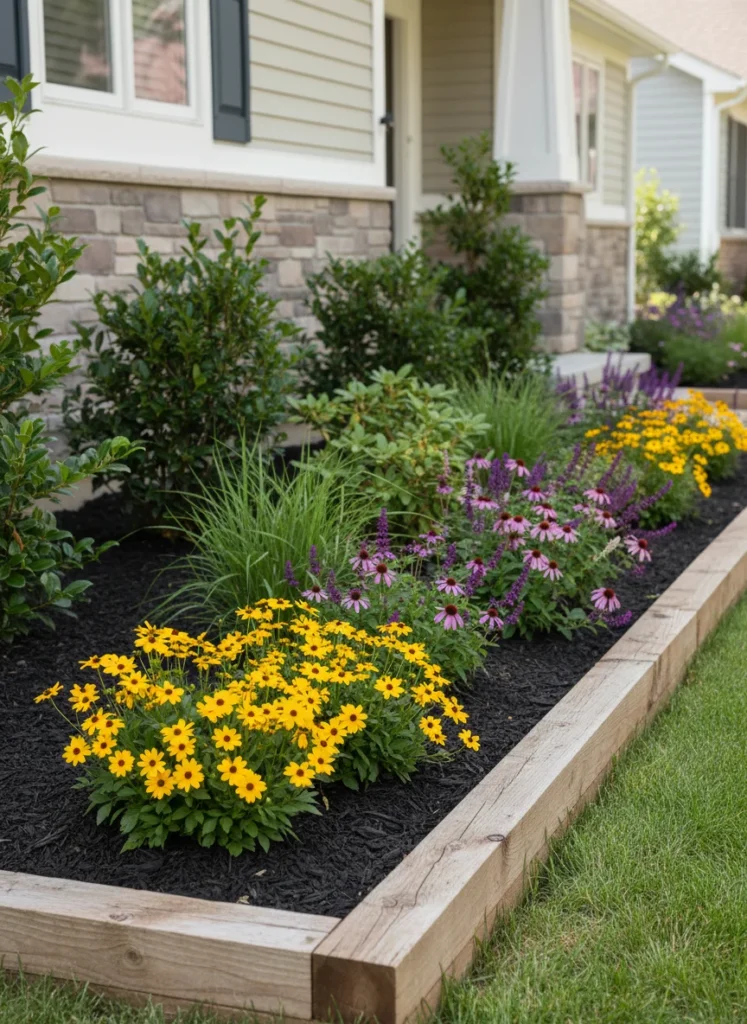
The strip of ground along your house foundation is often the most neglected part of the front yard. A low raised bed with simple wooden borders or stacked stone edging turns it from dead space into the most eye-catching part of the yard.
Layer plants by height. Put the tallest shrubs or ornamental grasses closest to the house. Medium flowering perennials in the middle. Low groundcover or trailing plants at the front edge. That layering creates depth from the street and makes a small planting area look much larger.
Dark-colored mulch between plants finishes the look and suppresses weeds without any ongoing effort.
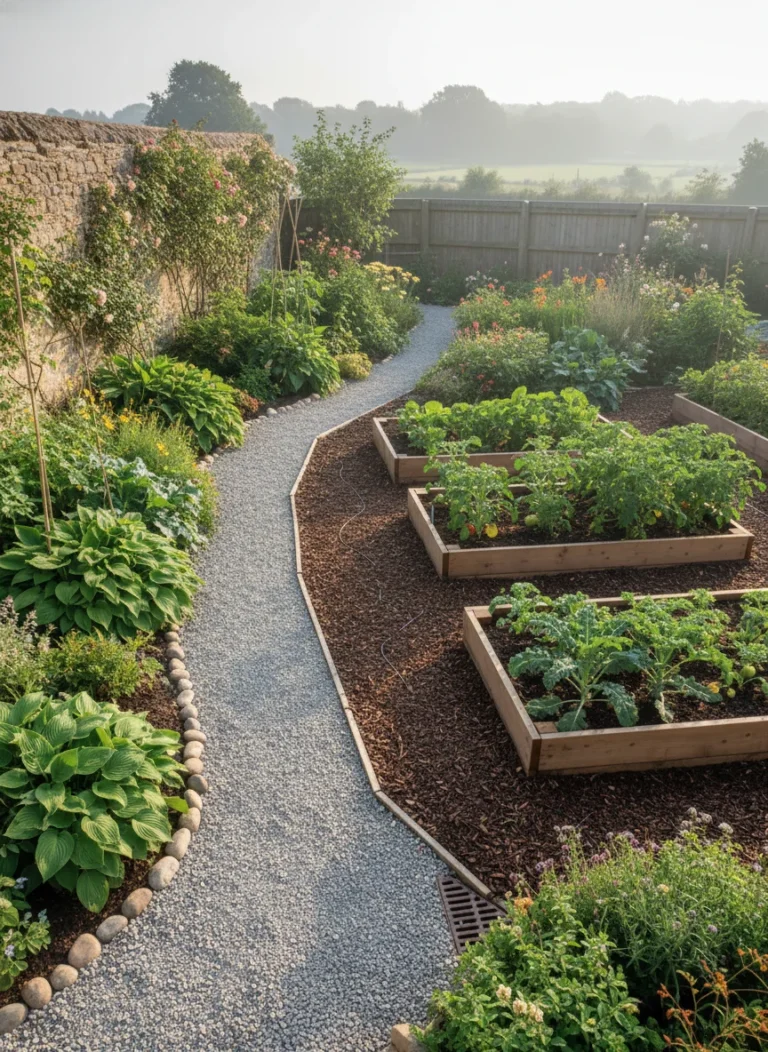
4. A Front Yard Vegetable Garden That Doubles as Curb Appeal
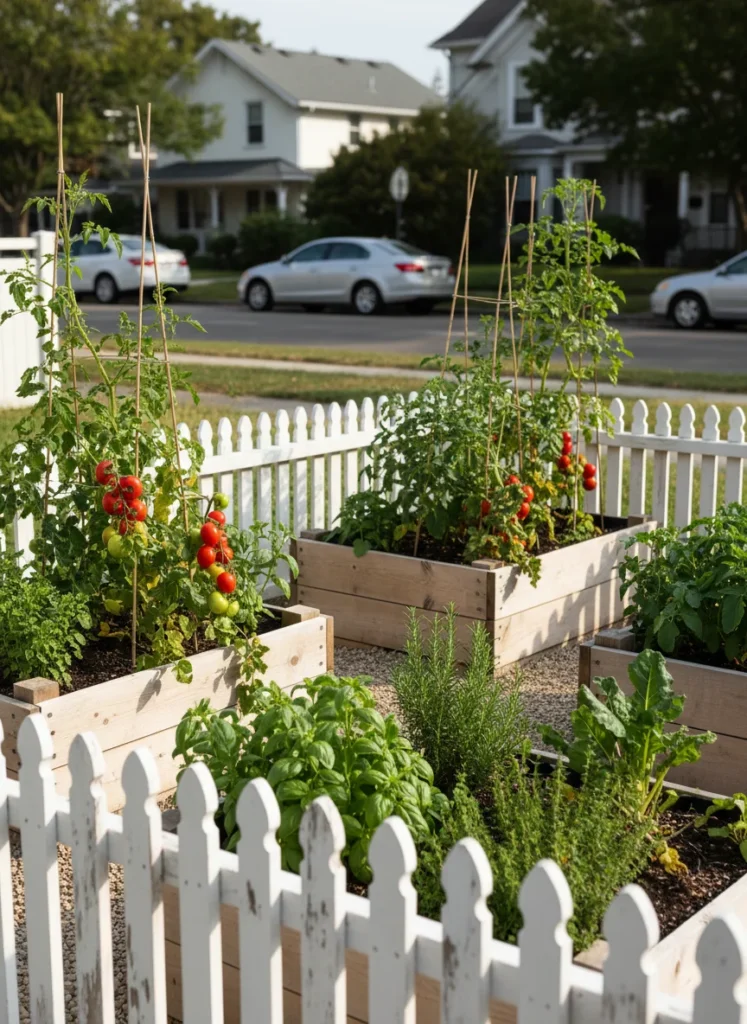
Front yard vegetable gardens are having a moment and for good reason. A well-designed raised bed vegetable garden in the front yard looks intentional, productive, and completely different from every other lawn on the street.
The trick is structure. A haphazard collection of containers looks messy. Two or three matching raised beds arranged symmetrically, with a defined border and a clear path between them, looks like a design choice.
Grow compact varieties that stay tidy and look attractive even mid-season. Herbs like basil and rosemary, compact tomatoes, and leafy greens all work well in a front-facing garden. If you are new to growing in containers or raised beds, the best soil for container vegetables makes a significant difference in how plants look and perform through the season.
5. Ornamental Grasses for Low-Maintenance Structure
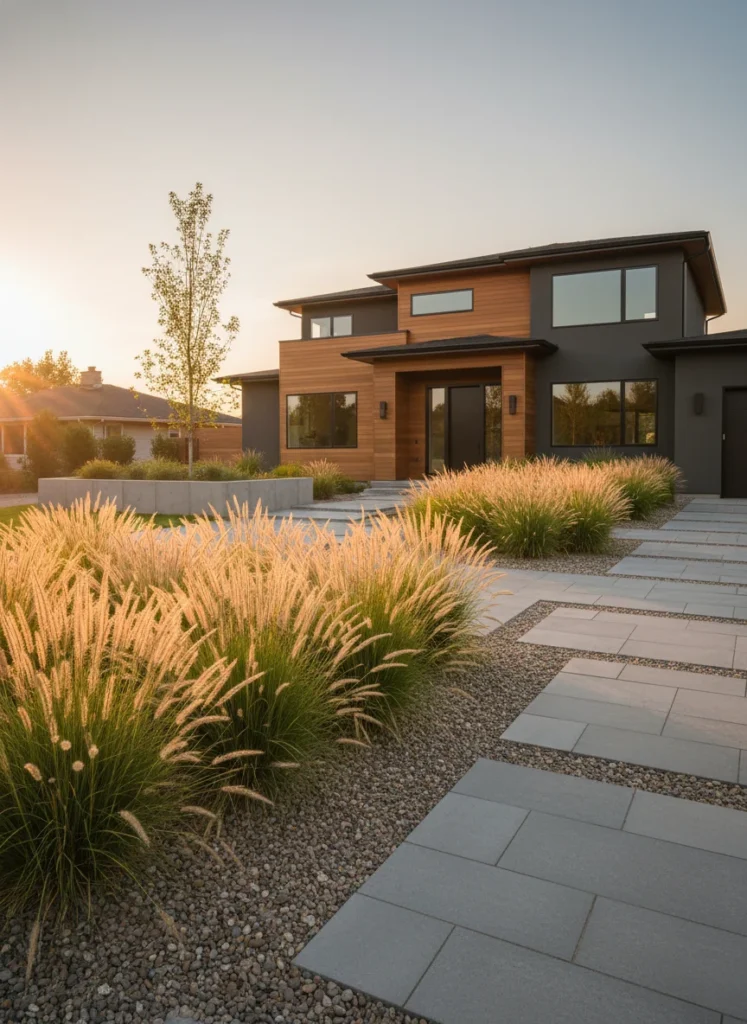
Ornamental grasses do three things that almost nothing else in a front yard does simultaneously: they provide structure, they move in the wind in a way that makes a yard feel alive, and they need almost no maintenance.
Plant them in groupings rather than single specimens. A cluster of three or five plants of the same variety looks intentional. One lonely grass planted in the middle of a bed looks like an afterthought.
Blue fescue, Karl Foerster feather reed grass, and Mexican feather grass all stay compact enough for front yards without taking over. All three look good from spring through late autumn, and all three return reliably each year with no intervention.
6. Mulched Planting Islands That Replace Grass
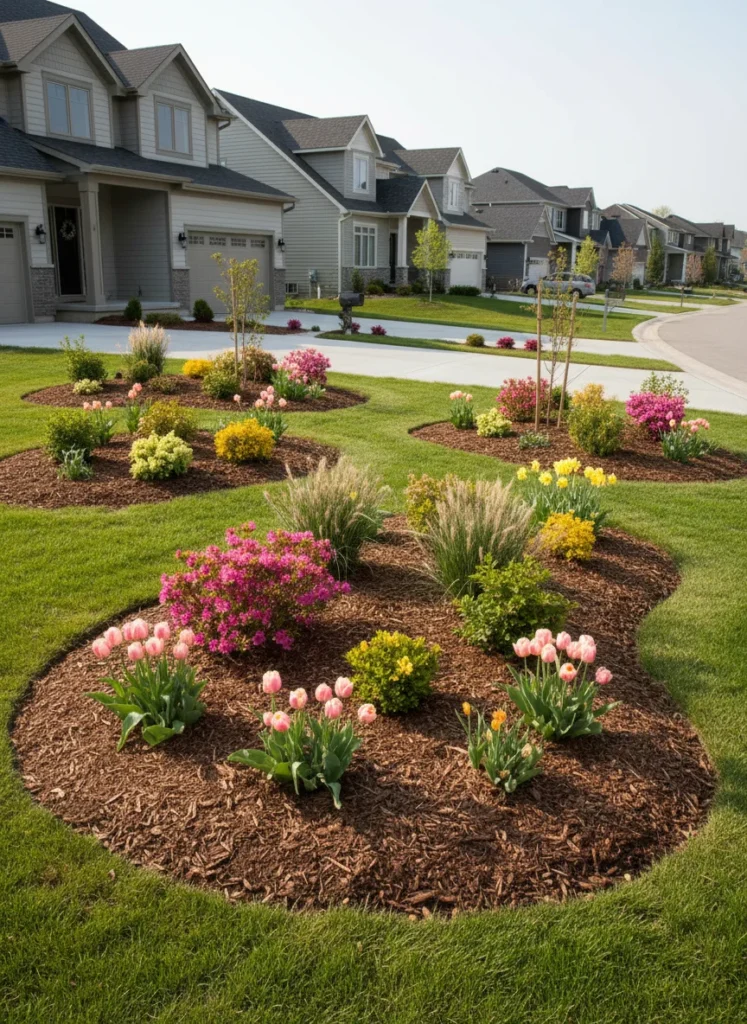
Removing grass and replacing it with mulched planting islands is one of the most effective low-maintenance front yard landscaping ideas on a budget. Grass costs money to maintain every single week. A mulched bed costs almost nothing once it is established.
Use a curved, organic shape rather than a straight rectangle. Curves read as designed rather than practical. Cut the edge cleanly with a half-moon edger and fill with a mix of shrubs, perennials, and spring bulbs that provide color across different seasons.
This approach also reduces your lawn area, which reduces watering costs and eliminates the need to mow those sections entirely.
7. A Dry Creek Bed for Drainage and Design
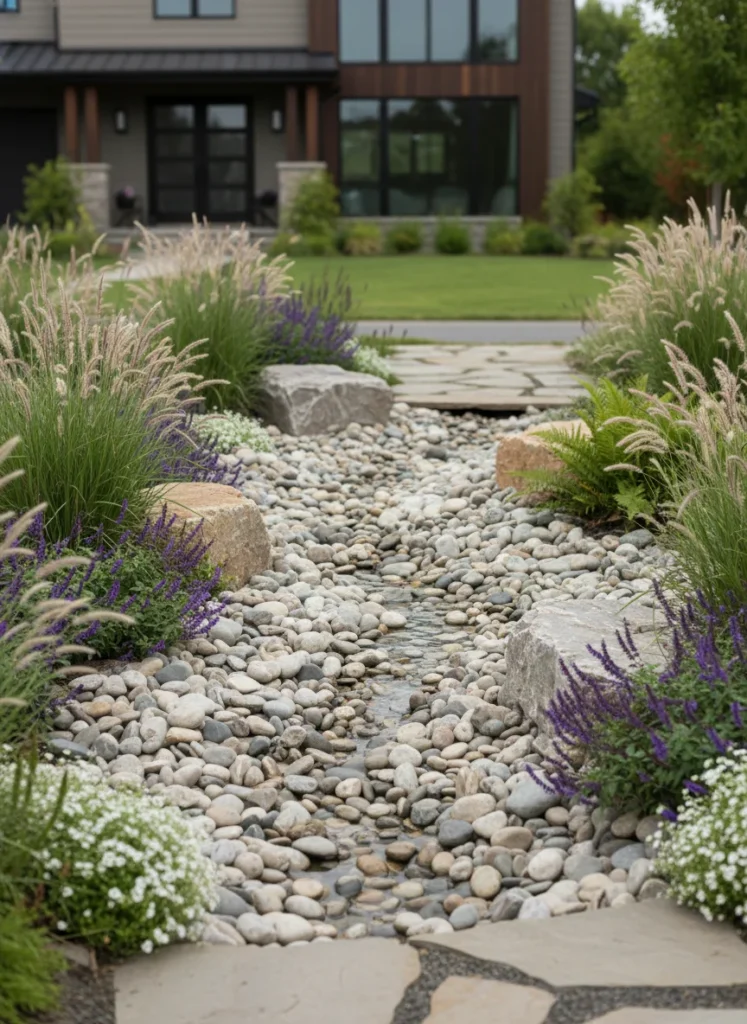
A dry creek bed is one of those front yard landscaping ideas that solves a problem and looks beautiful doing it. If your yard slopes toward the house or holds water after rain, a dry creek bed channels that runoff away from the foundation while creating a natural, rock-garden aesthetic.
Line the bed with smooth river rocks in varying sizes. Use larger rocks along the edges to anchor the design and smaller stones in the center to suggest water flow. Plant drought-tolerant ornamental grasses and low perennials along both edges so the bed looks lush even when dry.
Proper garden drainage is the practical function. The design is the bonus.
8. Front Yard Landscaping with Rocks and Succulents
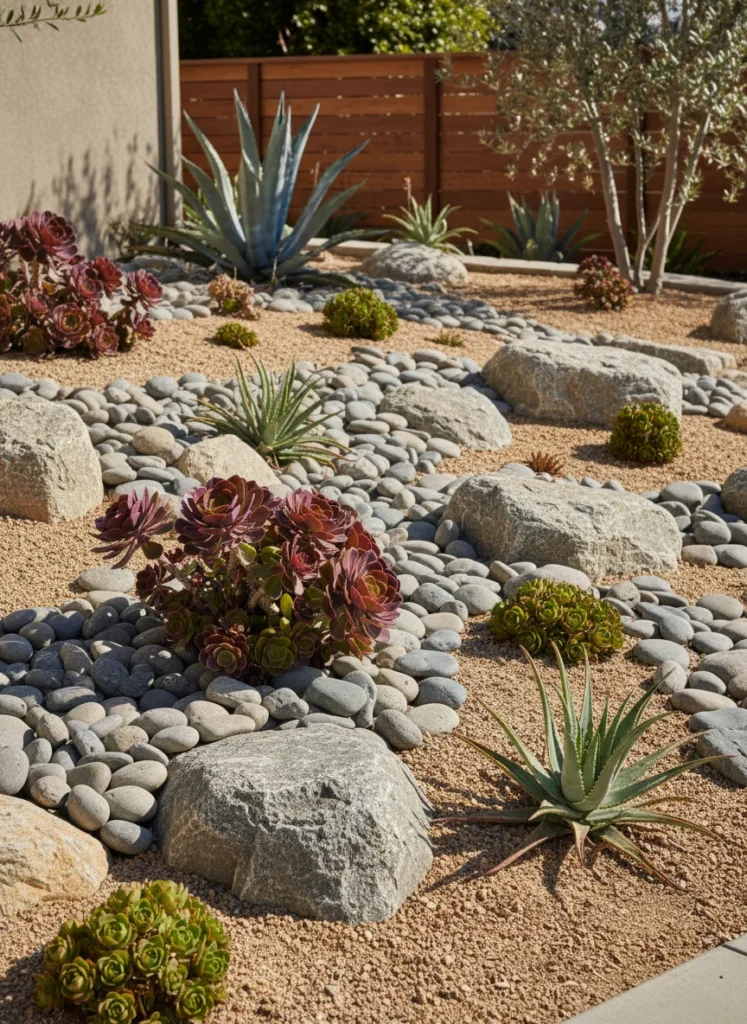
Rocks and succulents together is one of the most drought-tolerant and visually striking combinations available for a front yard. The rocks provide structure and weight. The succulents provide texture and slow, seasonal change as they mature and offset.
This works especially well in warmer climates where conventional grass lawns are expensive to water. Replace the lawn entirely with a gravel or decomposed granite base, arrange statement rocks and boulders in natural groupings, and plant succulents in the gaps.
The result requires almost no watering, no mowing, and no seasonal replanting. It also looks completely unlike any conventional front yard on the street.
9. Small Front Yard Landscaping: The Layered Border
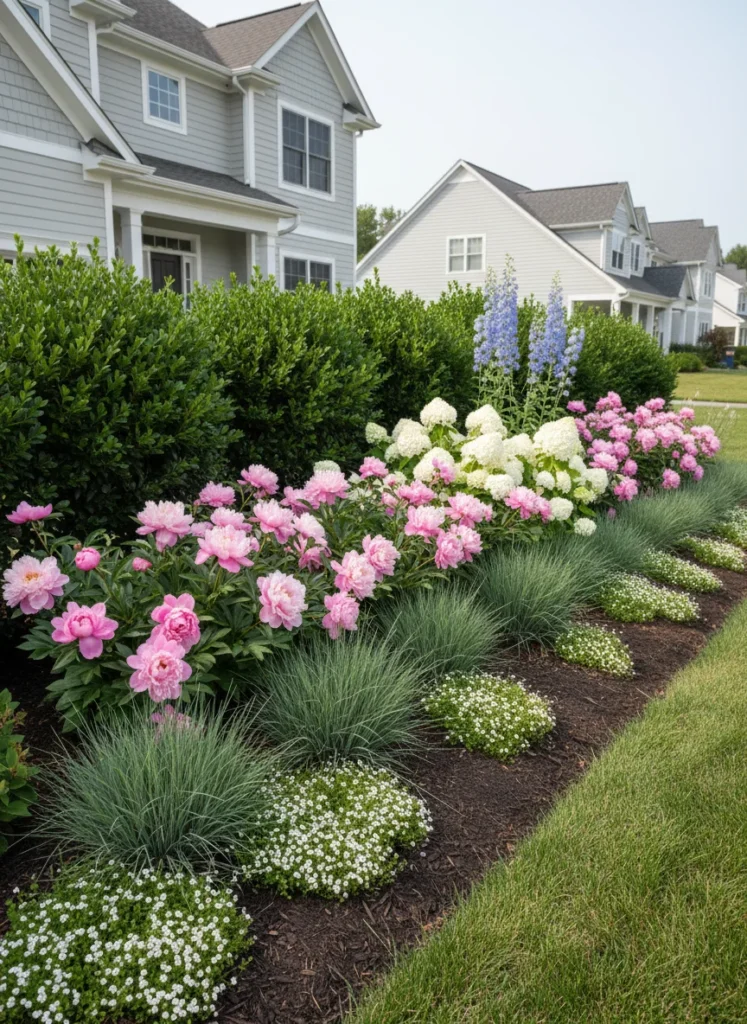
Small front yards benefit from depth over width. A single thin border planting along the property edge looks sparse. A deep, layered border that graduates from tall at the back to low at the front makes even a narrow front yard look fully designed.
Work with the scale of the space. In a small front yard, you do not need large statement plants. Compact shrubs, mid-sized perennials, and low-growing groundcover in a three-row depth creates the layered effect without overwhelming the space.
Light colors work well in small front yard landscaping because they read clearly from the street even when the overall planting area is limited.
10. A Moss and Stone Japanese-Inspired Front Path
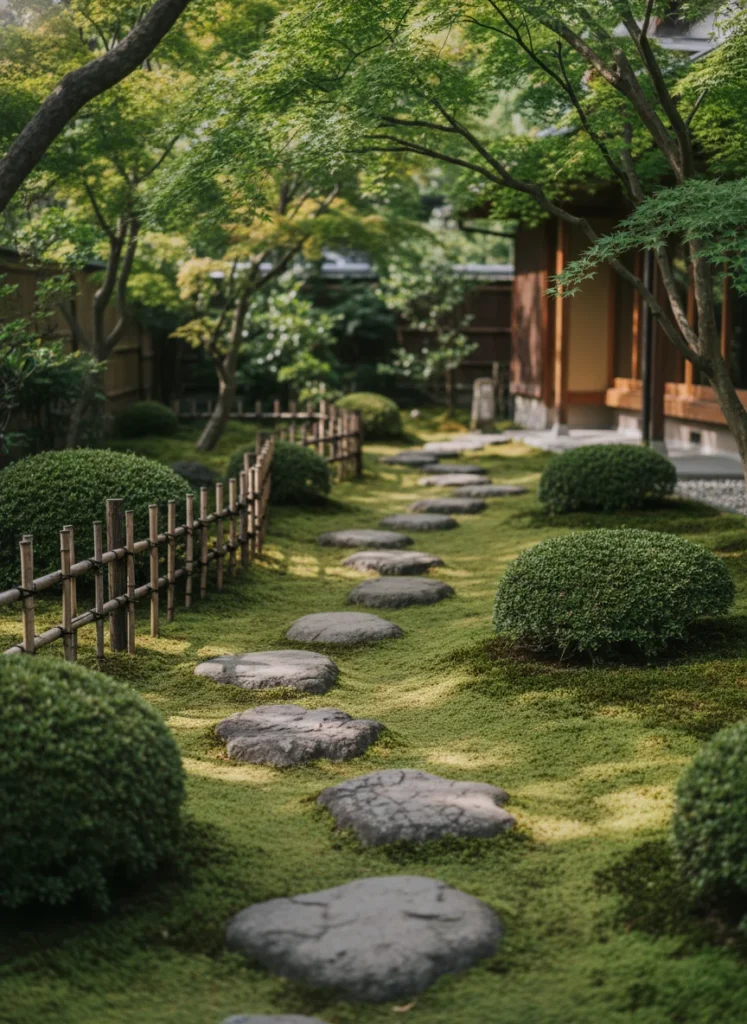
Moss between stepping stones is one of the most understated front yard upgrades available. It requires no mowing, grows on its own once established in shade or partial shade, and gives a front yard that calm, intentional quality that formal landscaping often misses.
Lay irregular flat stones with gaps wide enough for moss to fill. In humid climates, moss will colonize those gaps within a season. In drier climates, sheet moss can be pressed directly onto prepared gaps and kept moist until established.
This works best in yards with some shade. Full-sun front yards will not support moss without consistent moisture, and there are better options for those conditions.
11. Budget-Friendly Flowering Perennial Borders
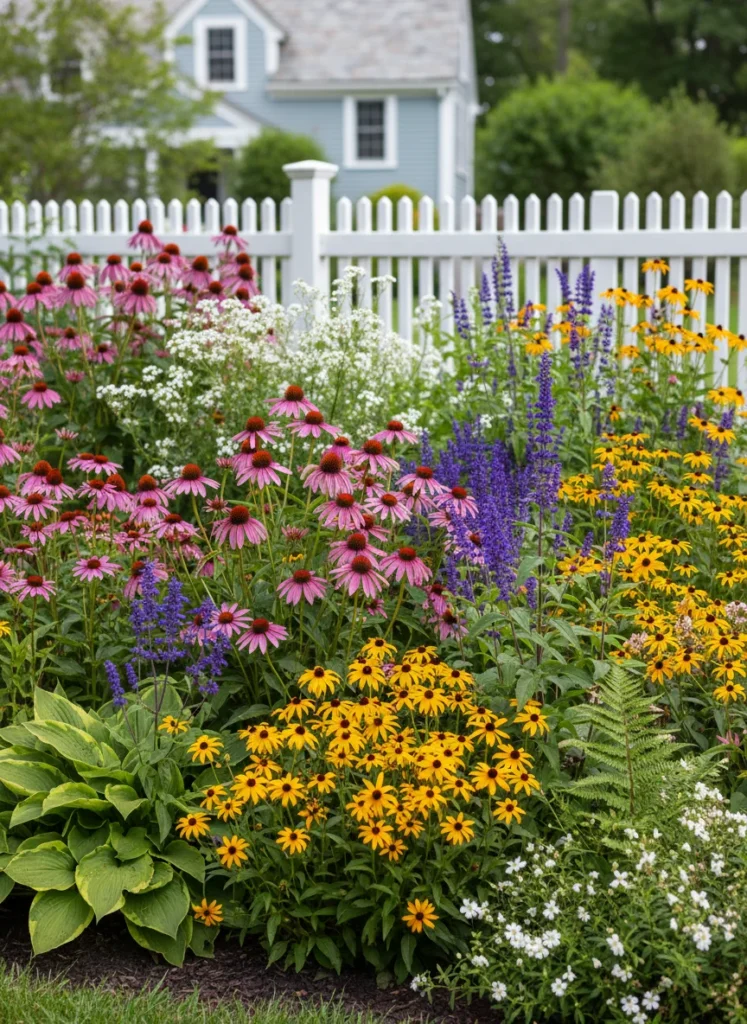
Perennial borders are the highest return-on-investment planting for front yard landscaping on a budget. You plant once and the border comes back and expands every year. By year three, a perennial border that started with a modest investment looks like it cost far more than it did.
Choose plants with different bloom times so the border has color across the whole season. Echinacea and black-eyed Susan for summer. Sedum and rudbeckia for autumn. Spring bulbs tucked between the perennials for the earliest color.
Buy smaller plants rather than larger ones. Perennials establish quickly and a small plant bought for a fraction of the price of a mature specimen will catch up within one growing season.
12. Front Yard Landscaping Design with a Focal Point Tree
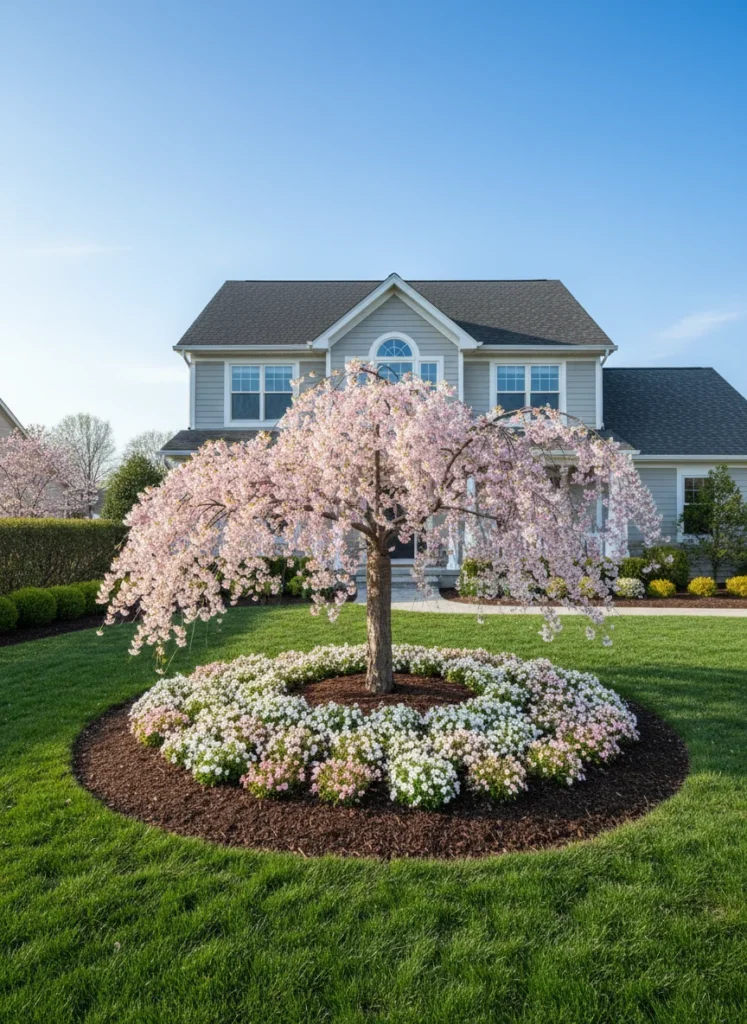
A single well-chosen tree planted as a focal point transforms the visual structure of a front yard more than almost any other single change. The tree anchors the design, provides seasonal interest, and creates a natural hierarchy that everything else in the yard relates to.
Choose a compact ornamental tree rather than a large shade tree. Japanese maple, serviceberry, flowering dogwood, and crabapple all stay at a manageable size while offering serious visual impact through spring bloom, summer foliage, and autumn color.
Surround the base with a circular mulched bed and low groundcover. That defined base makes the tree look intentionally placed rather than dropped in.
13. Gravel Front Yard Landscaping Ideas
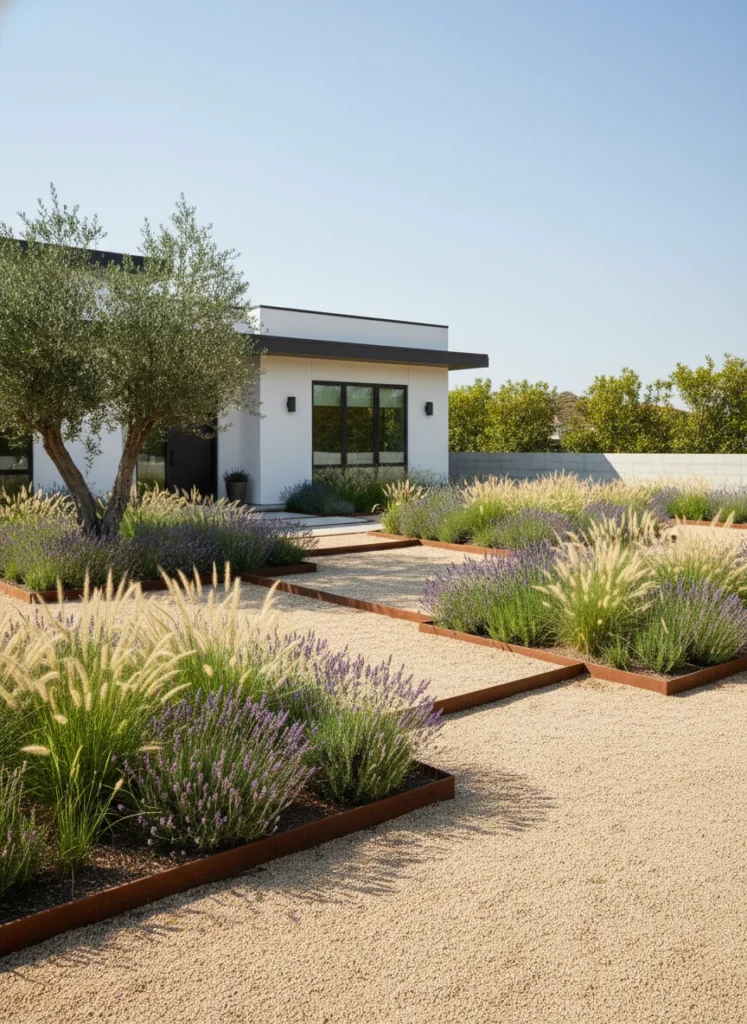
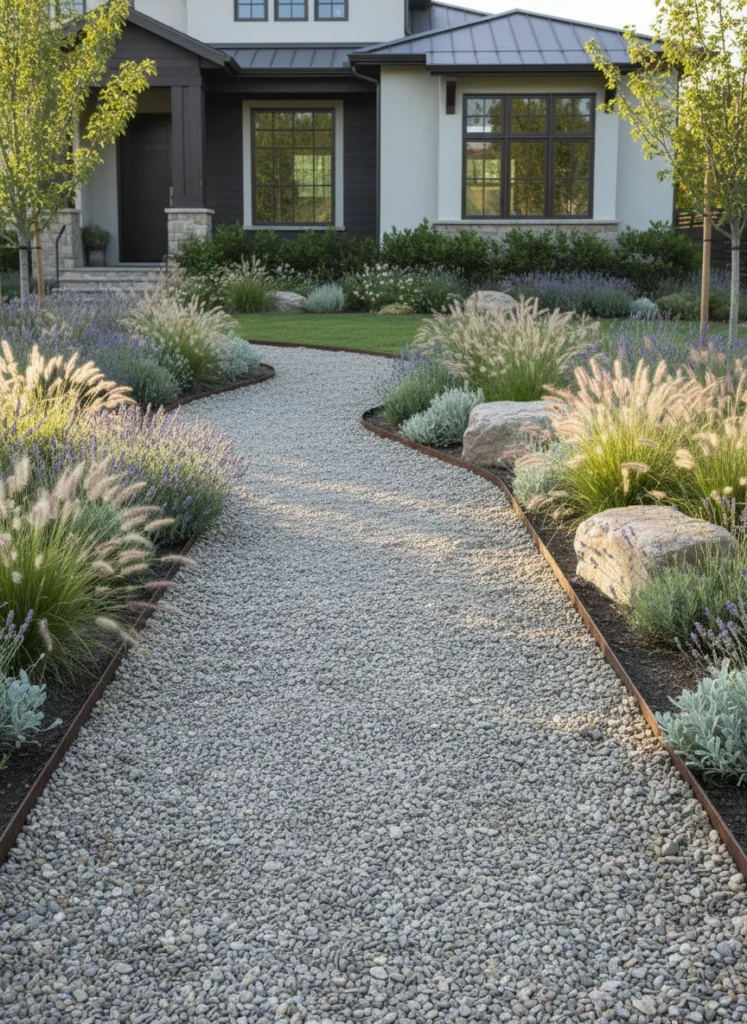
Gravel-based front yards have moved well beyond the plain parking-pad aesthetic. A well-designed gravel front yard using decomposed granite or pea gravel as a base, with clearly defined planting beds and deliberate plant selection, looks genuinely contemporary and requires almost zero maintenance.
Lavender, rosemary, and ornamental sage all thrive in gravel-based designs. They prefer sharp drainage, tolerate dry conditions, and look beautiful through multiple seasons. The contrast between silvery gravel and green-grey aromatic plantings is one of the most consistent front yard design combinations that works.
Lay landscape fabric under the gravel to prevent weed breakthrough. Edge the planting beds with steel or cor-ten edging for a clean separation between gravel and soil.
14. Spring Bulb Mass Planting for Seasonal Impact
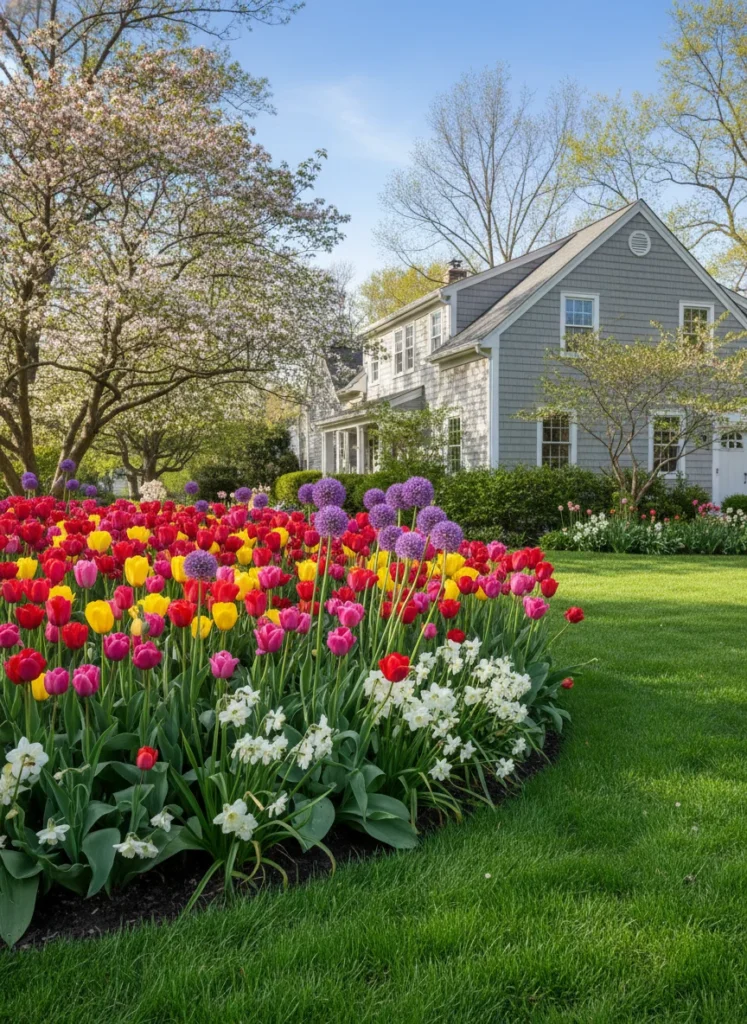
Mass planting spring bulbs is the easiest way to make a front yard look professional with minimal effort. One hundred tulip bulbs planted in a single bold color drift in autumn costs very little and creates a front yard display in spring that looks like it belongs in a botanical garden.
The principle is concentration, not scattering. Ten tulips dotted across a large bed disappears. One hundred tulips planted tightly in a single area makes a statement that stops people on the street.
Plant in autumn for spring bloom. Tuck bulbs under perennials so the perennial foliage hides the dying bulb leaves as spring transitions to summer. The perennials fill in just as the bulbs fade.
15. Low Maintenance Front Yard Landscaping: The No-Mow Lawn Alternative
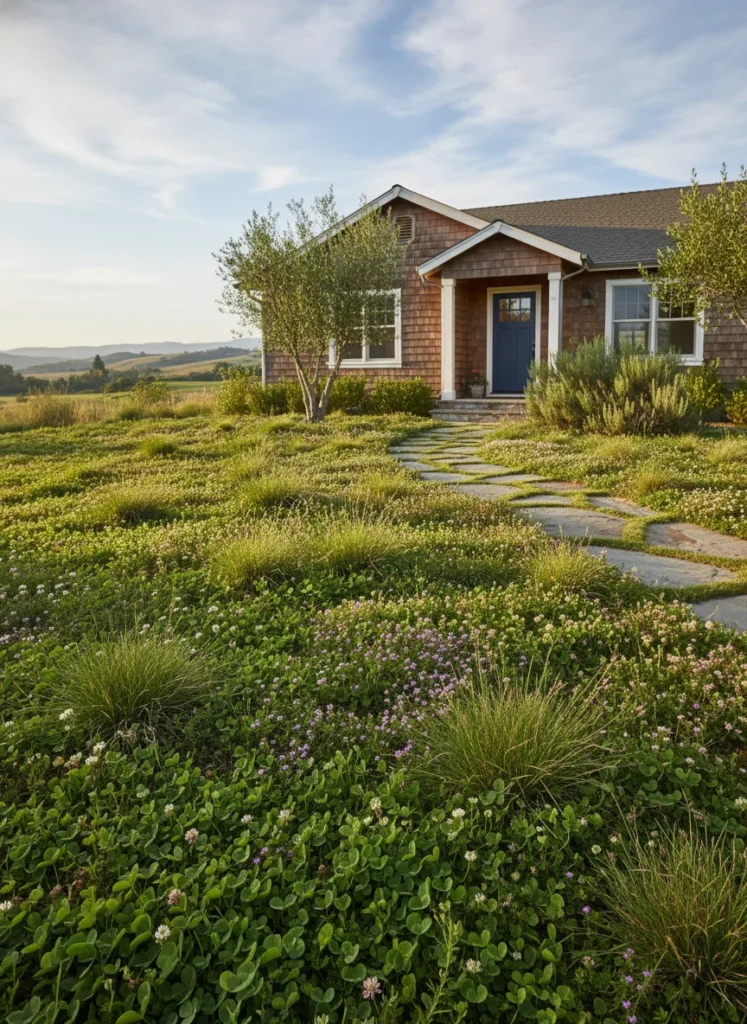
Replacing a conventional grass lawn with a low-mow or no-mow alternative is one of the most practical low-maintenance front yard landscaping ideas available. A mix of Dutch white clover, creeping thyme, and fine fescue creates a green carpet that needs mowing a fraction as often as regular grass, stays green through dry spells without watering, and fixes nitrogen in the soil naturally.
Clover is particularly valuable because it attracts pollinators through the growing season and stays lush and green even when conventional grass turns brown in summer heat.
This works as a full lawn replacement or as a gradual transition, oversowing into existing grass and letting the low-mow mix take over season by season.
16. Potted Plants at the Front Entry
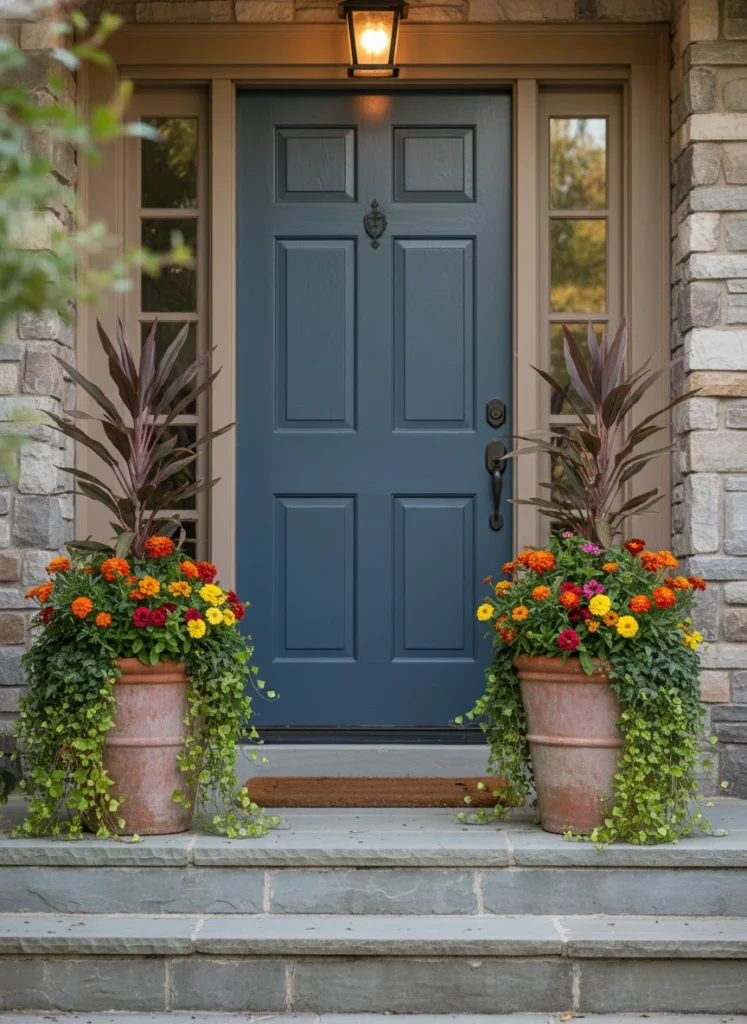
Two large matching containers flanking the front door is one of the fastest front yard upgrades possible. It costs less than a day of professional landscaping, takes an afternoon to set up, and has an immediate impact on how the entry feels from the street.
Use large pots rather than small ones. Small pots at a front entry look tentative. Large containers with height, trailing elements, and seasonal color look deliberate and welcoming.
Plant for the season. Spring calls for tulips and trailing ivy. Summer for cordyline, trailing verbena, and calibrachoa. Autumn for ornamental kale and trailing sedum. The containers change but the structure stays the same year-round.
If you enjoy growing edibles as well as ornamentals, compact pepper varieties make surprisingly attractive container plants with colorful fruit that looks almost decorative. Growing peppers in containers follows the same principles as any container planting and works well in a front entry setting.
17. Front Yard Landscaping Design Layout: The Four-Zone Approach
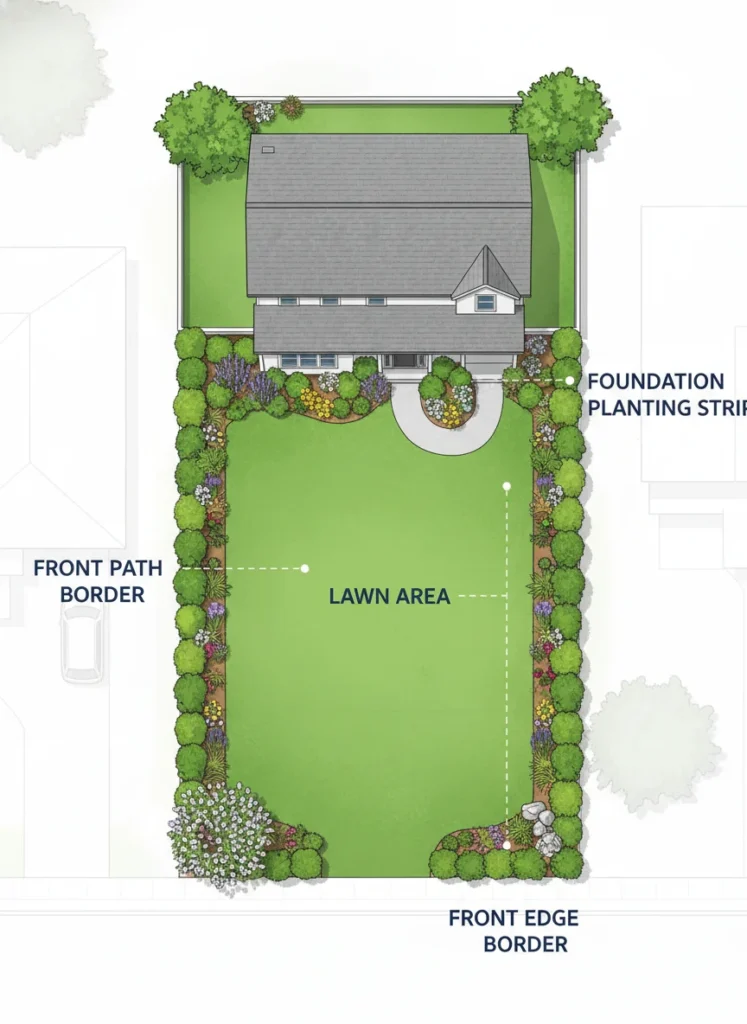
One reason front yards look undesigned is that they have no underlying structure. Plants are added over time without a plan and the result looks accumulated rather than intentional.
The simplest design layout for a front yard uses four zones: the foundation planting strip along the house, a path border on both sides of the front walk, a property edge border along the street, and lawn or gravel as the connecting surface between them.
Every plant you add belongs to one of those four zones. The zones define the structure. The plants fill it. This approach works regardless of budget because you can plant each zone gradually over multiple seasons while the design structure is already in place from day one.
18. Rock Mulch and Drought-Tolerant Shrubs
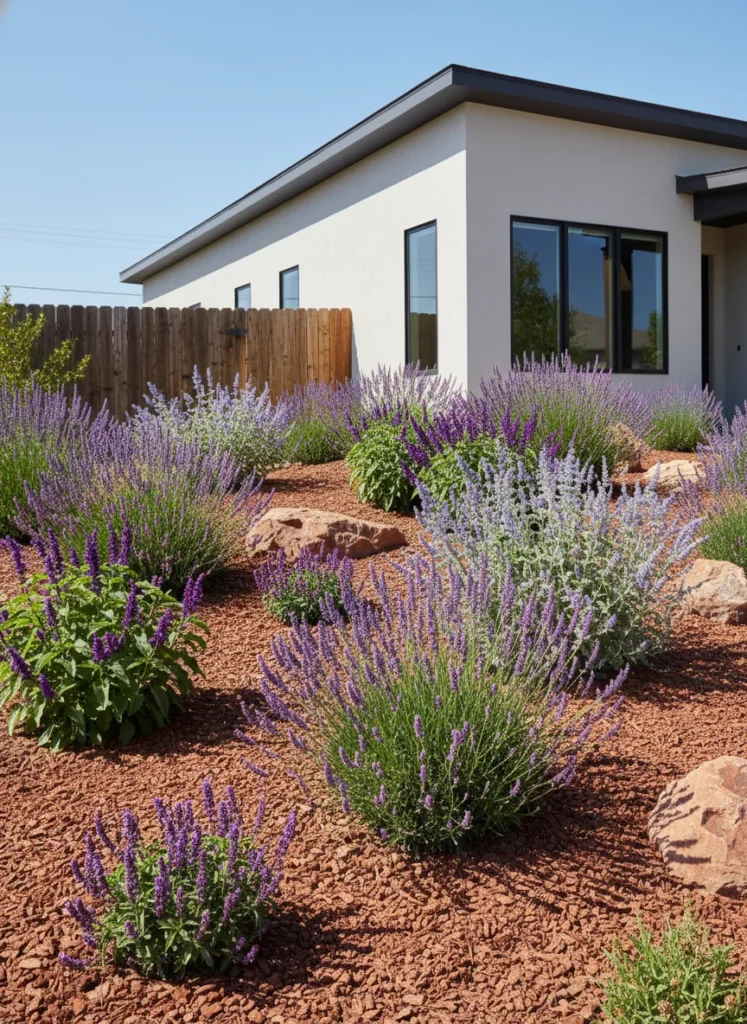
Decorative rock mulch paired with drought-tolerant shrubs is the front yard design approach that performs best in hot or dry climates. It eliminates watering, eliminates weeding, eliminates seasonal replanting, and still creates a yard with texture, color, and clear structure.
Use one type of rock across the whole bed for a clean result. Multiple rock sizes or mixed colors look cluttered. A consistent layer of one material, whether decomposed granite, red lava rock, or river pebbles, creates a unified base that makes the plants stand out rather than compete with the ground.
Lavender, Russian sage, and salvia are the most reliable performers in this type of design. All three are drought-tolerant, long-blooming, and highly attractive to pollinators through the season.
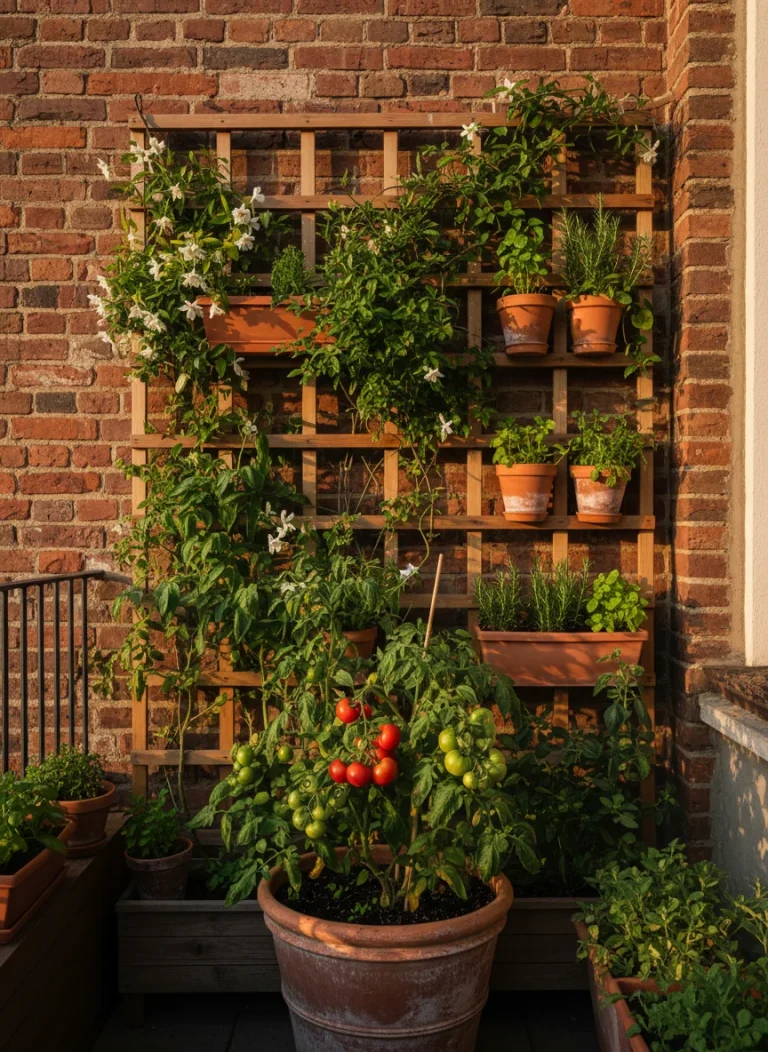
19. Climbing Plants on a Front Yard Trellis or Fence
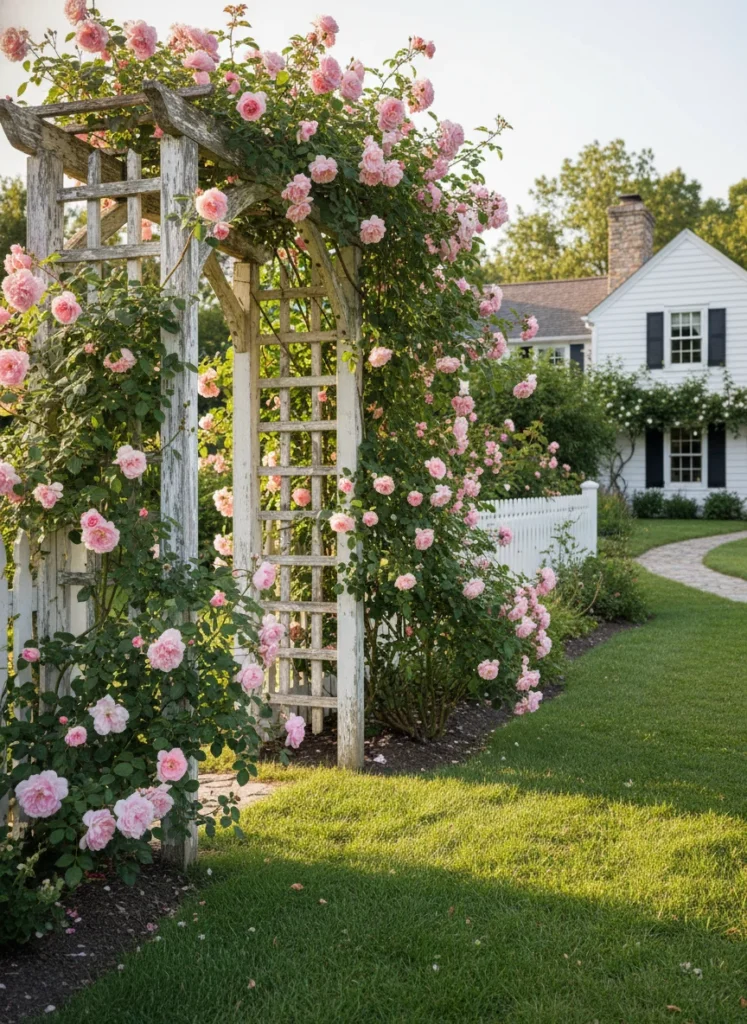
A trellis or low fence covered in climbing plants adds vertical interest to a front yard without taking up horizontal space, which makes it one of the most useful front yard landscaping ideas for small properties where ground space is limited.
Climbing roses, clematis, and jasmine all perform well on a front yard trellis. Climbing roses in particular look exceptional in early summer and the structure of the canes remains attractive through winter.
Keep the base of the trellis clean with a defined mulched planting bed. The climbing plant needs a tidy base to look intentional rather than overgrown.
20. Front Yard Landscaping Australian Style: Natives and Texture
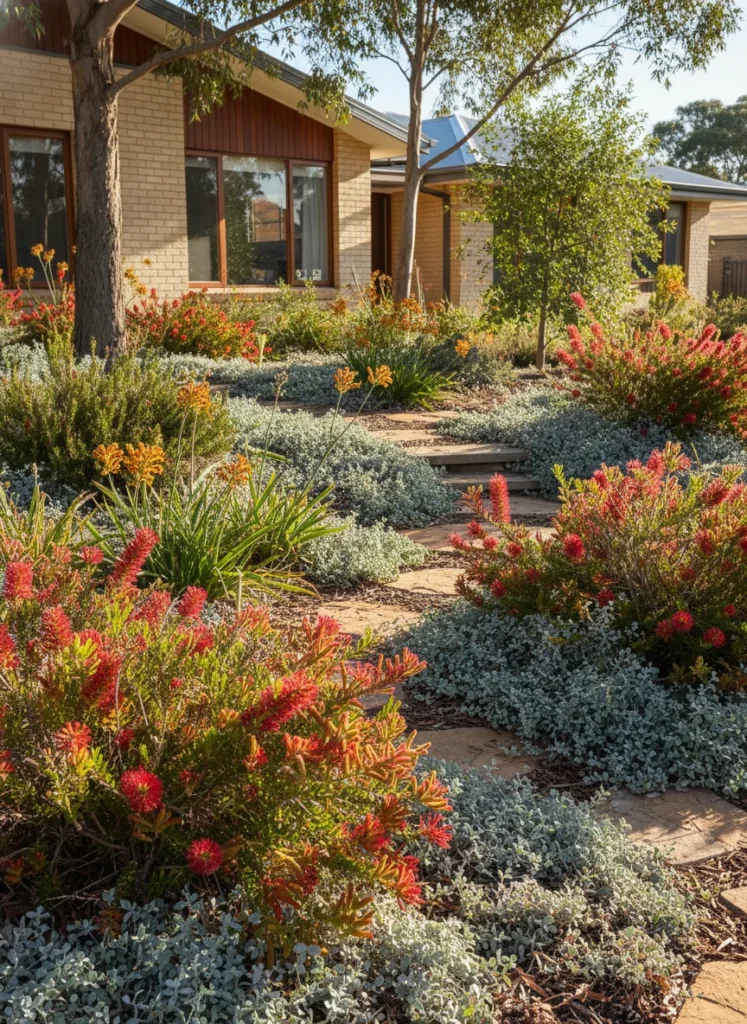
Australian native plant gardens are gaining recognition globally for combining serious drought tolerance with genuinely striking visual texture. Grevillea, kangaroo paw, lomandra grass, and banksia all perform in low-water conditions while producing flowers and forms that nothing from the conventional plant palette matches.
This approach works for Australian front yards specifically, but the principle applies anywhere: choosing plants native to your local climate dramatically reduces maintenance and water demand while creating a yard that looks distinct rather than generic.
Native plants also support local pollinators and insects in a way that exotic ornamentals cannot, which adds ecological value to the design alongside the visual appeal.
21. Symmetrical Shrub Planting for a Formal Look
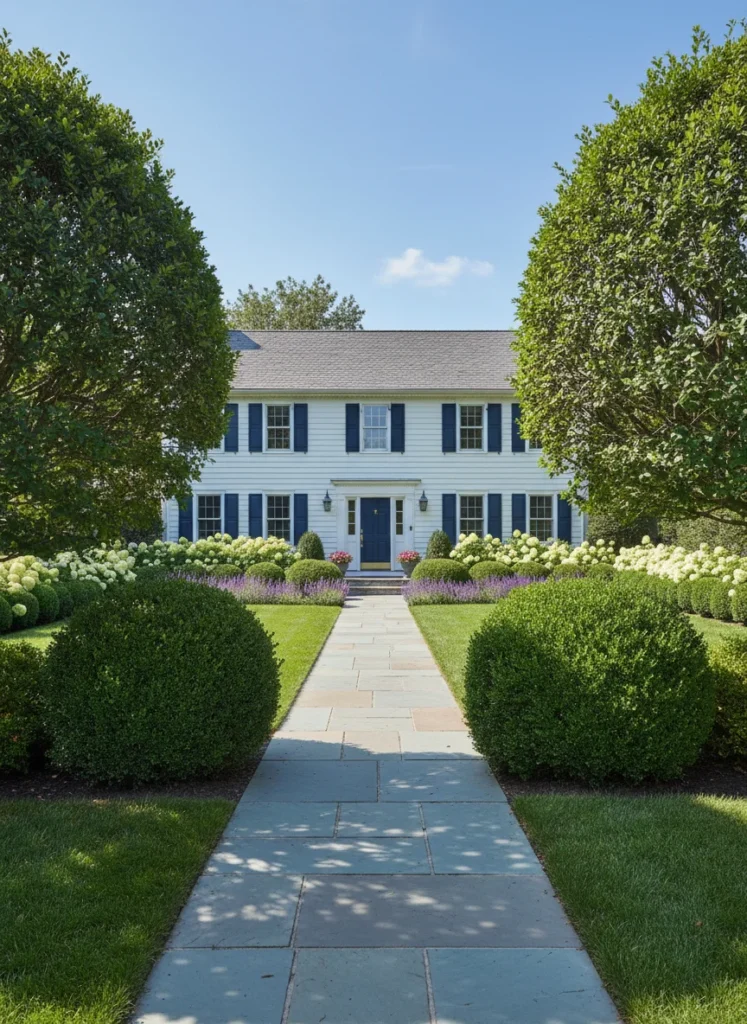
Symmetry is the fastest shortcut to a front yard that looks formally designed. Matching shrubs on both sides of the front path, matching containers at the front door, or matching planting beds on both sides of the lawn creates visual order that reads immediately from the street.
Boxwood, Japanese holly, and privet all clip into clean geometric forms and hold their shape through the season. They require one or two trims per year and nothing else.
This approach works particularly well on traditional or colonial-style homes where the symmetrical architecture of the house is reinforced rather than contradicted by the landscaping.
22. Wildflower Front Yard for Maximum Pollinator Activity
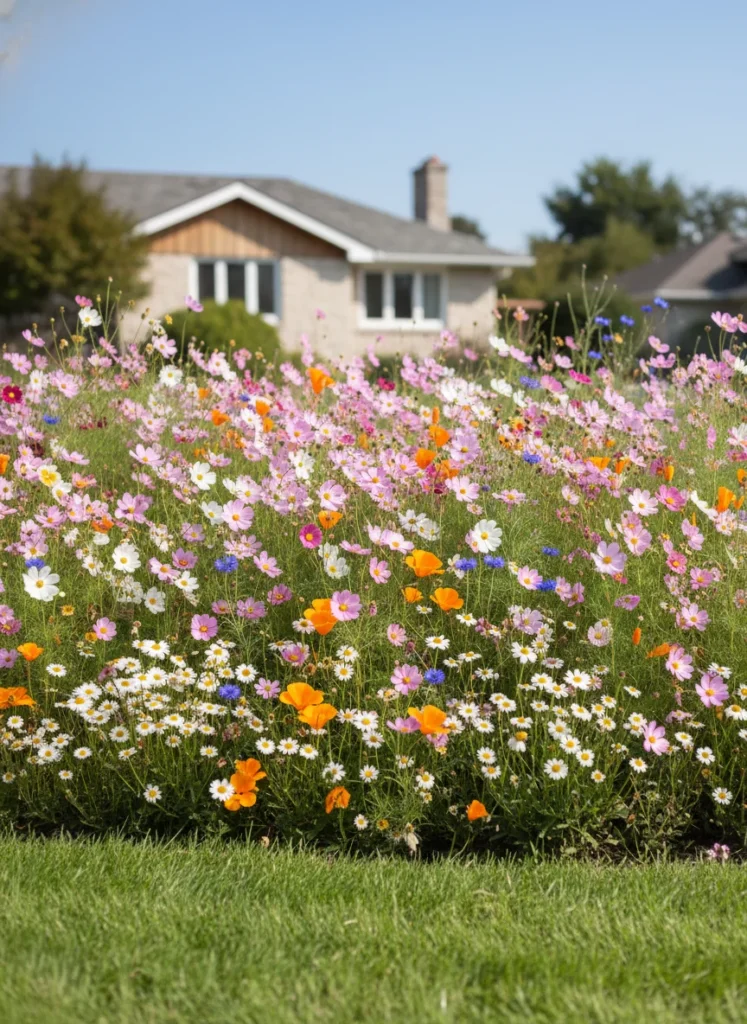
A wildflower front yard is the most ecologically valuable thing you can do with the space and one of the lowest-effort approaches once established. Sow a native wildflower mix on prepared bare ground in autumn or early spring, water once to establish, and let it run.
The key to making a wildflower front yard look intentional rather than neglected is a clean mown border around the edges. A neat edge around a wildflower planting signals that the wild interior is deliberate, not abandoned. Without that edge, even a beautiful wildflower planting reads as unmaintained to a passerby.
Wildflower gardens are exceptional for attracting beneficial insects that support the health of any vegetable garden nearby, making this a design choice that pays dividends well beyond the front yard.
23. Lavender Borders Along the Front Path
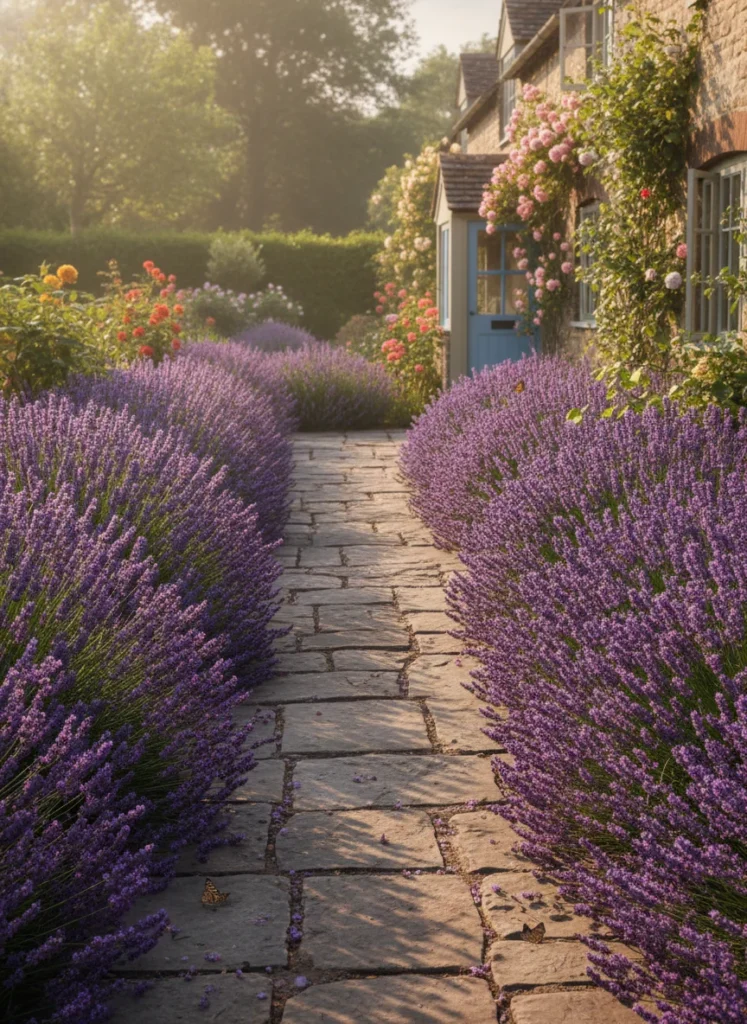
Lavender along a front path is one of those ideas that works in almost every context: small yards, large yards, formal designs, and informal ones. It stays compact, flowers reliably every summer, smells exceptional when brushed in passing, and dries beautifully if you want to cut it.
Space plants eighteen to twenty-four inches apart. They fill the gaps within two seasons and the border looks full from year two onward. Cut back by a third after flowering to keep plants compact and encourage repeat blooming.
Hidcote and Munstead are the most reliable compact varieties for path borders. Both stay at around eighteen inches tall, which is the right scale for a path planting that should frame the walk without crowding it.
24. Front Yard Landscaping with a Rain Garden
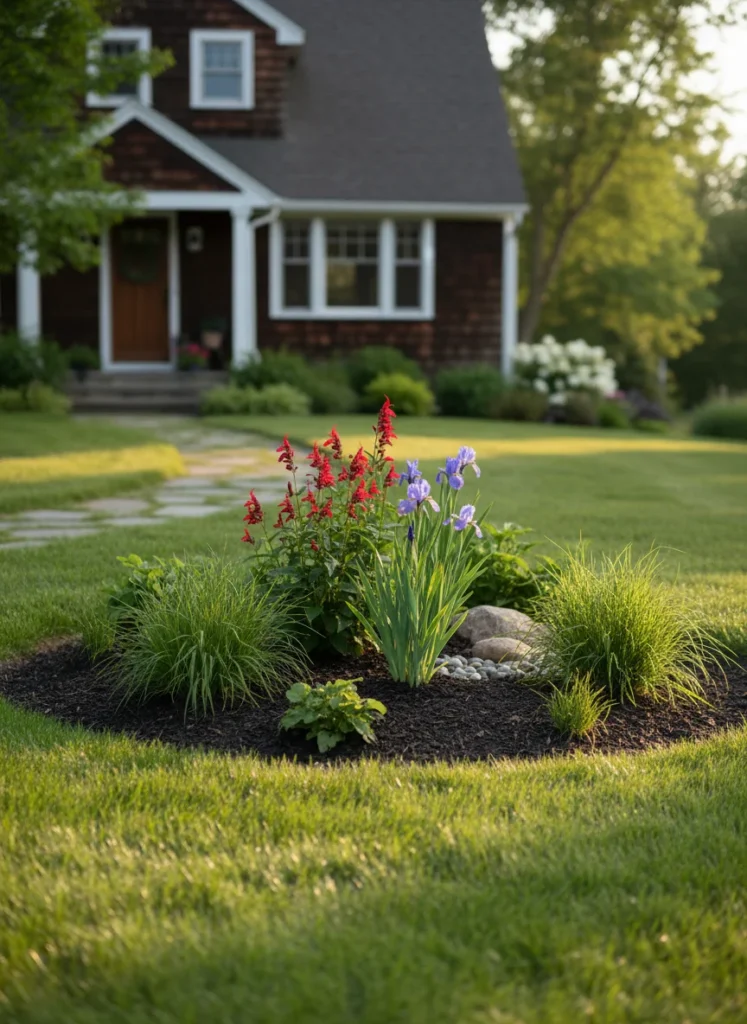
A rain garden is a shallow depression in the front yard planted with moisture-tolerant native plants that captures and slowly absorbs stormwater runoff from the driveway, roof, or lawn. It is one of the few landscaping ideas that actively reduces your water utility costs, prevents erosion, and creates a beautiful planting feature simultaneously.
Native plants like cardinal flower, blue flag iris, and swamp milkweed thrive in the boom-and-bust moisture cycle of a rain garden. They handle periods of saturation and periods of drought without complaint.
Site the rain garden at the lowest natural point in the front yard where water already tends to collect. The natural drainage pattern does most of the work for you.
25. A Simple Picket Fence With Cottage Planting
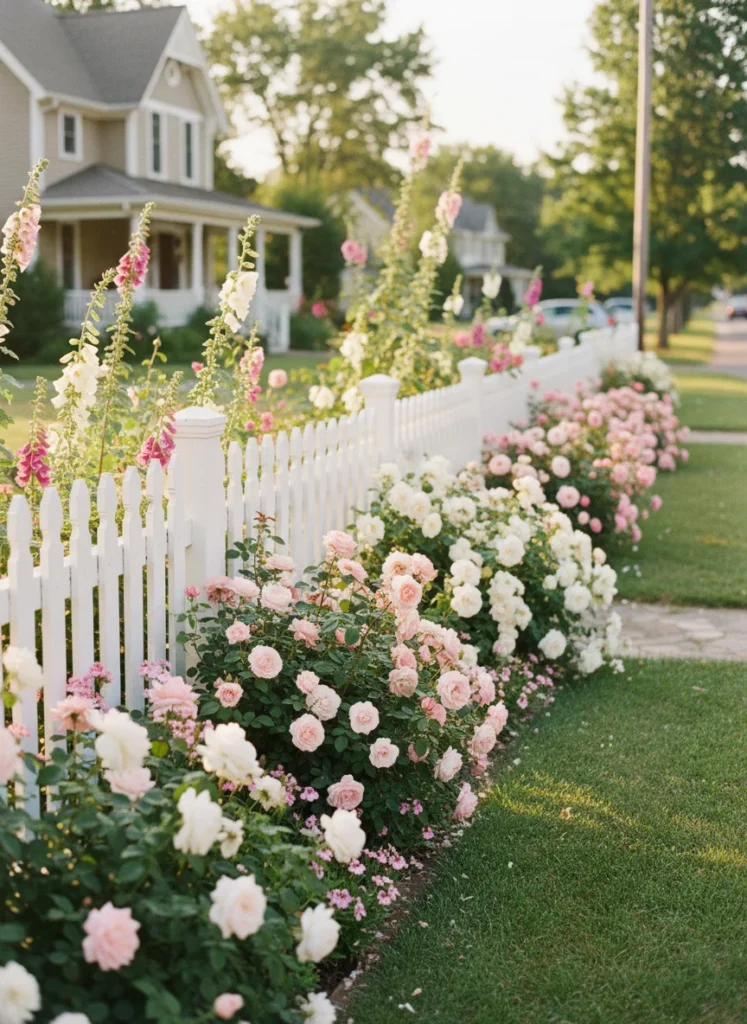
A low picket fence along the front property line with a cottage planting in front of it is one of the most enduring front yard landscaping design approaches for good reason. It works. The fence provides structure and a vertical backdrop. The planting softens it. The combination reads as welcoming from the street in a way that very few other front yard designs achieve.
Keep the fence simple and painted white or natural. Painted fences require maintenance but the clean contrast with green and flowering plants is difficult to replicate with any other material.
Plant the cottage border with a mix of old-fashioned perennials that self-seed gently and return differently each year. Foxglove, hollyhock, rose campion, and aquilegia all behave this way and give the border an evolving, natural character that a formally planted border never has.
26. Evergreen Structure Plants for Year-Round Appeal
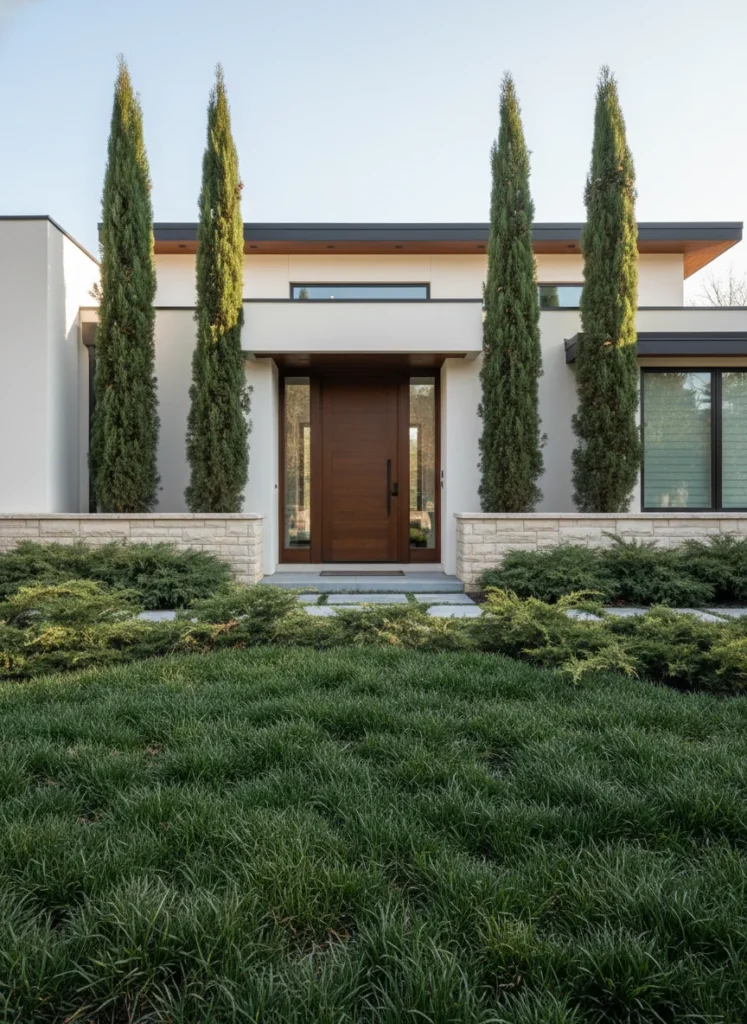
A front yard that looks good only in summer is a front yard that looks neglected for six months of the year. Evergreen structure plants solve this by providing consistent visual mass, texture, and color through every season including winter.
Italian cypress, dwarf Alberta spruce, juniper, and yew all provide strong vertical or horizontal structure that holds the yard together when deciduous plants are bare. They do not need to be the dominant plant in the design. Even two or three well-placed evergreens in a front yard create enough visual anchor that the yard reads as tended and designed year-round.
Pair evergreen structure with seasonal color plants like perennials and spring bulbs. The evergreens provide the skeleton. Everything else fills it with seasonal interest.
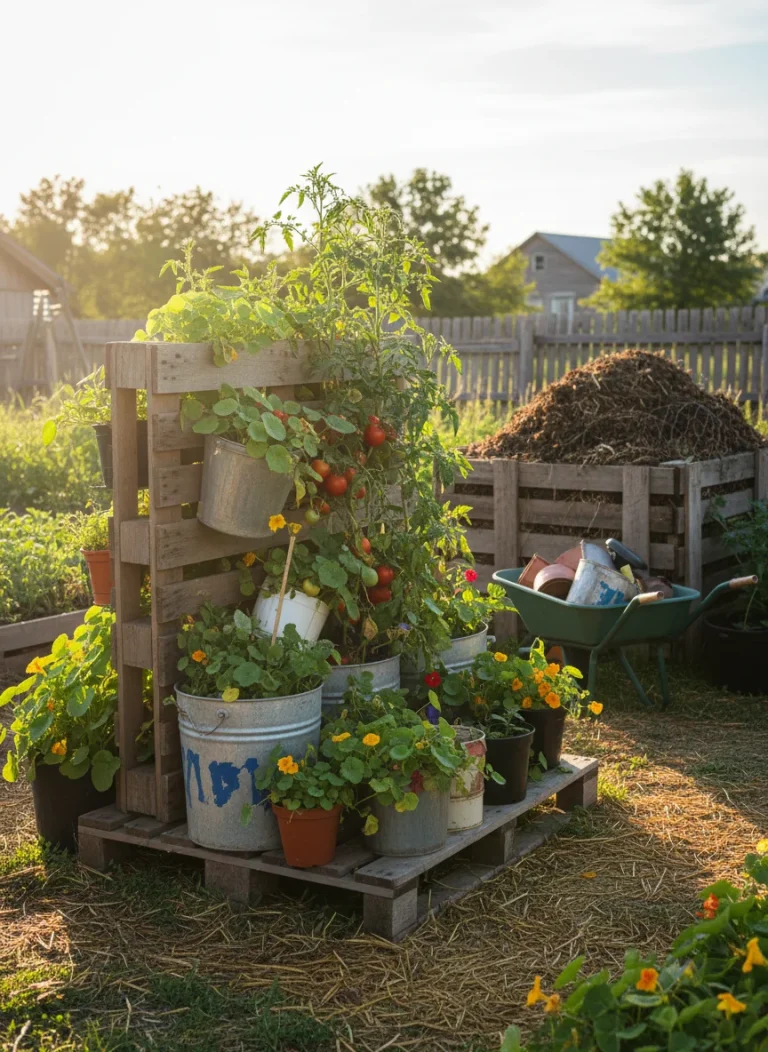
27. Container Potato and Herb Towers as Front Yard Features
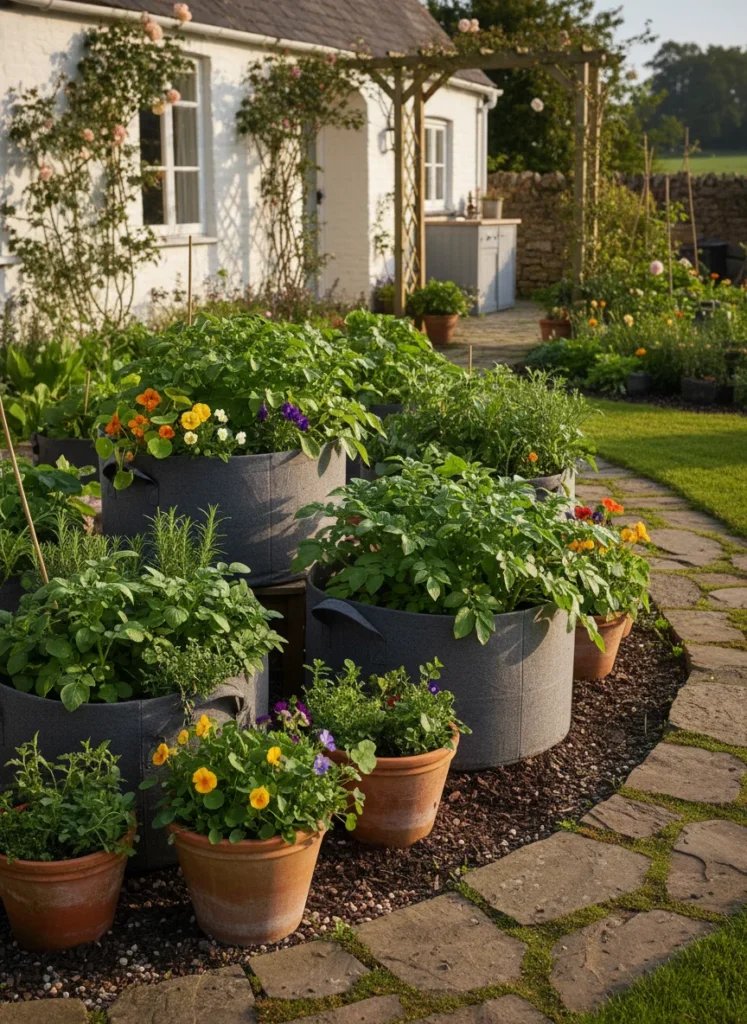
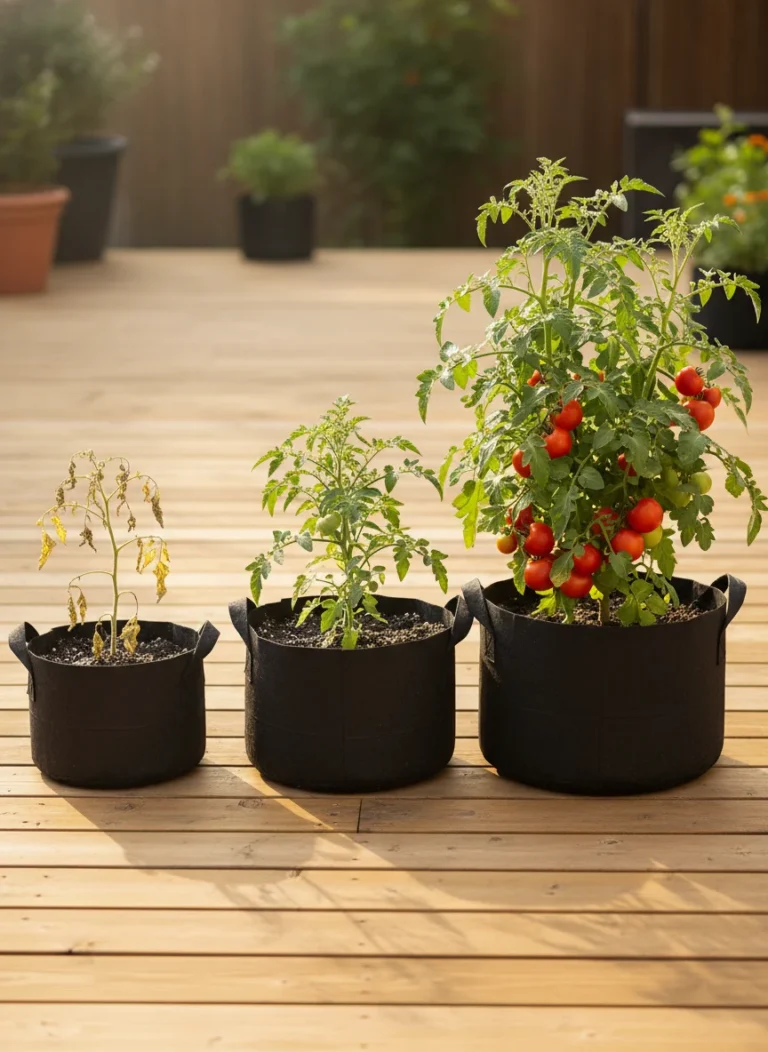
Grow bags and large containers planted with potatoes, herbs, or edible flowers are an underused front yard feature that bridges ornamental gardening and productive growing. A cluster of well-chosen containers planted with potatoes, tall herbs, and edible flowers looks deliberately curated and produces food at the same time.
The visual key is variety in container height. Tall grow bags behind medium ceramic pots behind low terracotta bowls creates the layered look that single-height container groupings never achieve.
Plant the tallest containers with something that has height and movement, potato plants, tall herbs like fennel or dill, or ornamental grasses. Fill medium containers with productive mid-height plants. Keep the front containers low and colorful with trailing edibles or edible flowers like nasturtium and calendula.
A Note on Timing
Spring is the best window for most of these ideas. Soil is workable, plants establish quickly in warming temperatures, and whatever you put in the ground now will look established and intentional by midsummer.
If you are starting seeds for any of the vegetable or edible elements, spring seed starting timing matters for getting transplants ready at the right size. Most ornamental plants from a nursery can go straight in the ground now.
Pick one idea from this list. Do that one well before adding the next. A front yard built one good decision at a time consistently outperforms one that tries to do everything at once.